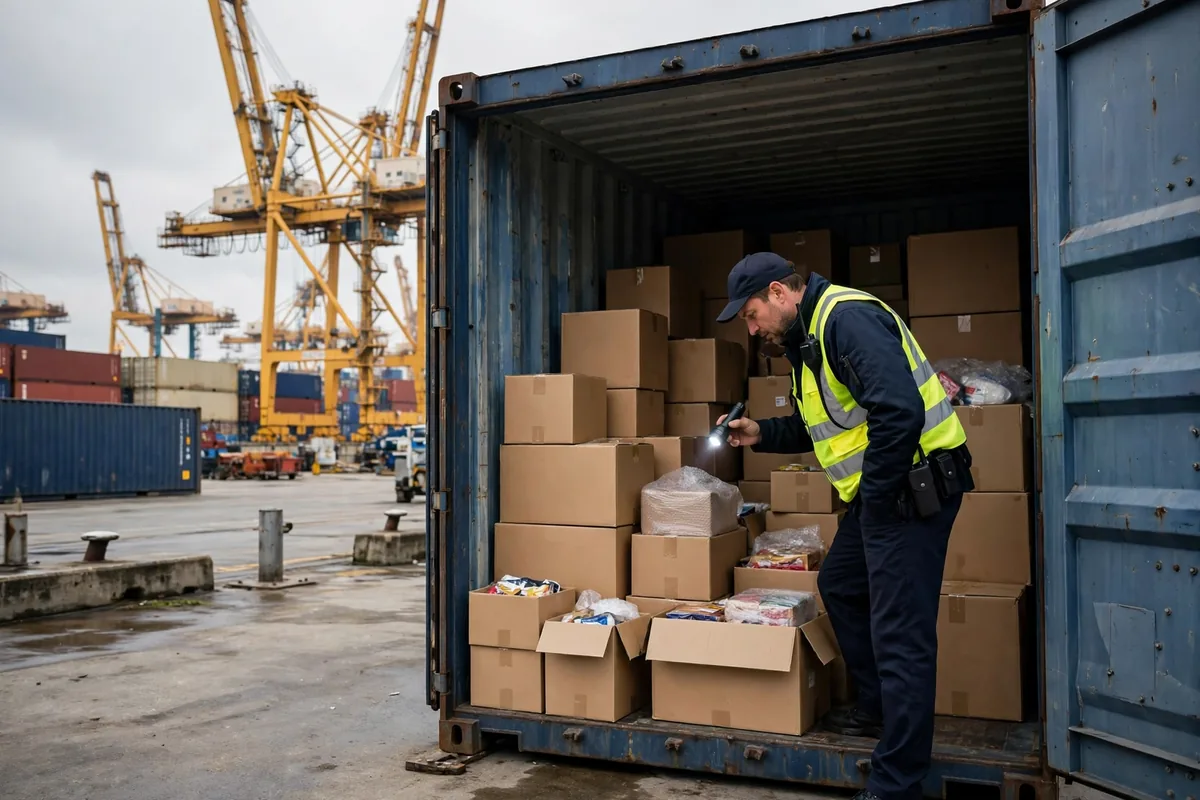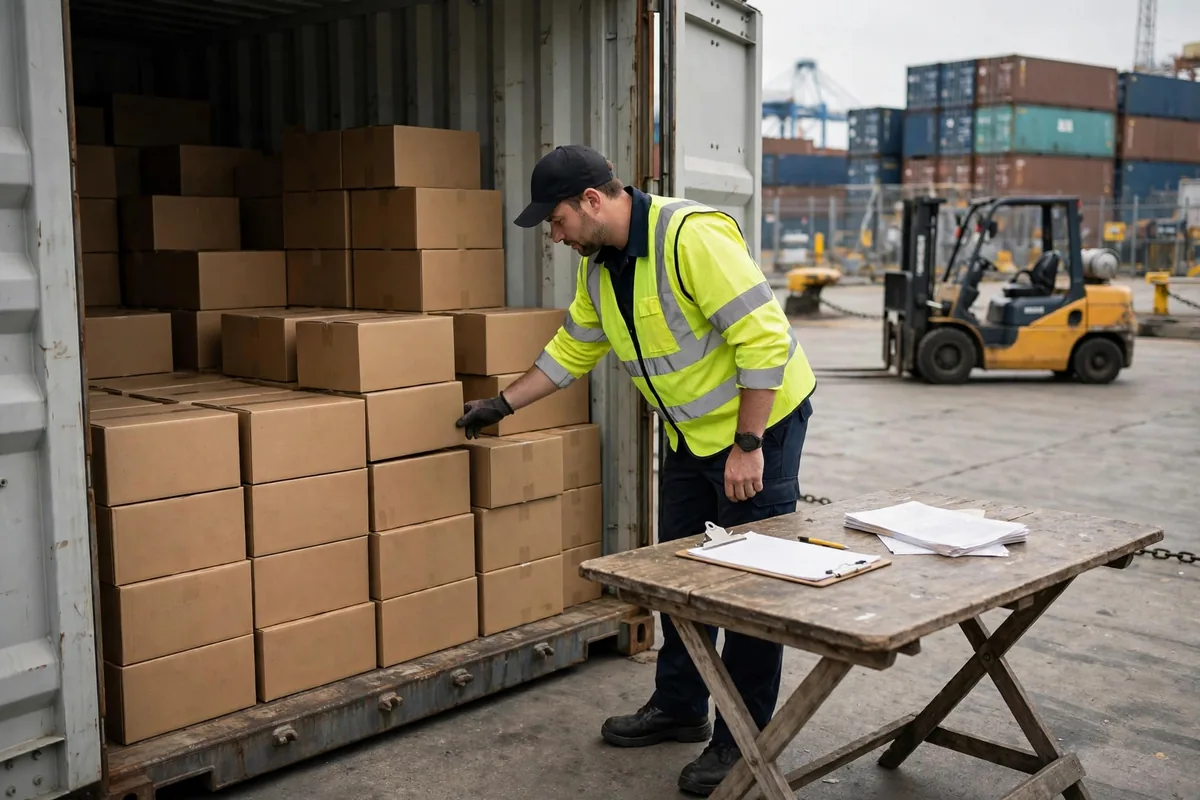
Let's start with the bill. In September 2025, a 40-foot container sailed from Shanghai to Los Angeles, cargo value $86,000. The broker mistyped one digit — the eighth — of the 10-digit HTS code, the kind of error a proper import documentation checklist catches before sailing. Customs flagged the entry for exam. The box sat at the Port of Los Angeles for three extra days, and the extra bill came to just under $4,900. What would it have cost to catch the error? A pre-filing review by the broker, typically $150–$250 per entry at current broker rates. That is the whole story of the import documentation checklist: a $200 review against a $4,900 mistake.
I run this math for clients every year. In US importing, a paperwork error is not a typo you fix with a phone call. Customs locks the entry, the lock means an exam, the exam means a queue, and everything behind the queue is billed by the day. The part that stings most: not one dollar of that $4,900 was a fine. Every line was a normal charge, normally collected — you just took three extra days to walk through the process.
One Wrong Digit on the Import Documentation Checklist: The Bill
I kept the invoice from that shipment, and I show it to every new importer client. The figures below are our warehouse's internal estimate, using commonly seen rates at Los Angeles terminals in late 2025; actual rates follow the terminal's and carrier's latest tariffs.
| Extra charge | Amount (USD) | | Exam fee, intensive cargo exam | 800 | | Terminal storage, 3 extra days | 900 | | Demurrage, 2 days past free time | 1,400 | | Amendment and re-filing fee | 350 | | Truck rebooking and waiting time | 650 | | Late-delivery chargeback from the customer | 800 | | Total | 4,900 |
See the shape of it? The exam fee itself is $800, under a fifth of the total. The real money is time and knock-on effects. Every extra day the box sits, storage and demurrage keep rolling. The truck was booked to pick up on arrival day; the box wasn't released, so the driver ran empty and the rebooking cost extra. Three days late, and the customer's chargeback clause triggered automatically.
There was an even more unfair one. In February 2026, a home-goods importer had 1,180 cartons on the packing list and 1,200 on the bill of lading — a 20-carton gap nobody caught. Customs opened the box and counted. Halfway through they found the physical count was 1,180; the paperwork was fine, the bill of lading was wrong. Nothing wrong with the cargo, and it still sat for two and a half extra days, with an extra bill over $3,000. The post-mortem was simple: the packing list came from the warehouse, the bill of lading came from the forwarder, and nobody had ever compared the two numbers.
So my judgment may run against the grain: the most expensive mistakes in import documentation are never about "not knowing the regulations." They are about the same number disagreeing across two documents. You can ask the broker about regulations. Only you can check the numbers line by line.
The Import Documentation Checklist, Line by Line
This import documentation checklist is the pre-sailing version we give US importer clients. Twelve items, check each one, and if any fails, do not let the vessel sail. Better to sail a day late than to amend paperwork in Los Angeles.
Bill of lading: consignee and notify party match the broker's instructions letter for letter, and the container number, seal number, and piece count agree across the master and house bills. Commercial invoice: amount, currency, and Incoterm match the contract, and unit price times quantity equals the total — I have seen that multiplication wrong more than once. Packing list: piece count, gross weight, and net weight match the bill of lading, and the physical count matches the packing list. HTS code: check all 10 digits one by one; the first six are the international classification, the last four are the US subdivision, and the last four are where errors hide. Origin: the certificate of origin or origin declaration is in force and the country of origin matches the entry. ISF filing: submitted 24 hours before vessel loading, all 10+2 data elements complete, and the consignee address is the current one — not the warehouse you moved out of last year. Brands and trademarks: branded goods carry authorization, with the full chain intact. Agency requirements: food, drugs, and children's products fall under FDA and other agencies — get the pre-clearance done before sailing, not after arrival. Wood packaging: pallets and crates carry the IPPC mark; unmarked wood packaging gets dealt with on arrival. Surrender and endorsement: telex release confirmed where applicable, endorsements on original bills verified. Insurance: the policy covers the cargo value and the whole voyage. Broker authority: the power of attorney is still valid — do not discover it expired at the moment of filing.
The first four items account for about eight in ten errors we have seen. A checklist taped to the wall is worthless unless someone signs it. My rule: whoever owns the shipment signs the list. Once signed, those numbers are theirs.
Three Days in Customs Exam: Where the Money Actually Goes
The exam itself is not the scary part. The scary part is what happens after Customs asks for something you cannot produce. An intensive exam is the slowest kind: dray the box to the exam site, break the seal, count, photograph, reseal — every step waits in line. Each extra day at the exam site adds another day of charges.
Here is the counterintuitive part. Most people treat an exam as bad luck — "we got picked, pay up." I don't read the numbers that way. Exams come in two kinds: random selection, and document-triggered. You cannot control random selection. But document-triggered exams are self-inflicted at least eight or nine times out of ten in my experience: one wrong HTS digit, a piece count that doesn't match, missing origin information — all catchable before sailing. In other words, about ninety percent of what you pay for exams is money you never had to spend.
Once the exam notice lands, three things hold the loss down. First, get the broker to send Customs' document list immediately and supply anything missing the same day, not the next. Second, call the trucking company to rebook right away — the earlier you rebook, the cheaper it is; by the time the box is released, drivers are booked out. Third, tell the downstream customer the real arrival date before they ask, and quote a conservative one with half a day of slack.
Now the bottom line. One pre-filing review: $150–$250. One exam, by our warehouse's internal estimate: $4,000–$5,000. Do the division: catch one bad entry in every twenty, and the reviews pay for themselves. An importer running 200 entries a year spends $40,000–$50,000 on reviews; stopping ten bad entries saves $40,000–$50,000. That is before chargebacks and lost customers.
Paperwork has no "roughly." It is either matching or it isn't. The twelve items on this checklist are twelve gates. Hold them, and the cargo flows; let one leak, and the invoice will teach the lesson for you.
By Lao Zhou, Logistics Cost Analyst