Here's my conclusion up front: this imported equipment receiving inspection checklist isn't really about inspecting equipment. It's about building a paper trail. Every word you write on that delivery receipt, every photo you take, decides whether — three months from now, when something fails — you're filing a claim or eating the cost.
Here's the thing, and it has two sides. Side one: don't let a damaged machine into your building. Everybody gets that. Side two, the one that actually matters: don't let money that should be paid to you walk out the door. A machine travels thousands of miles from Europe or Asia, changing hands four or five times — forwarder, ocean carrier, port, drayage, final-mile truck. If any link in that chain breaks something, somebody pays. The records you create at receiving decide who.
I've seen too many people lose this game by signing too fast. Two real stories.
A few years back, a 3PL warehouse in Southern California took delivery of a high-speed sorter from Italy. The crate looked fine, so the receiving clerk glanced and signed. Uncrated, the internal frame had a cracked weld — and the tilt indicator on the crate had been red all along, meaning serious tilting in transit. Nobody had looked. When they filed a claim, the carrier slapped the clean-signed delivery receipt on the table: "Exterior was fine at signing. Anything after that isn't ours." Four months of arguing. The supplier covered half the repair as goodwill; the warehouse ate the rest — tens of thousands of dollars. All for want of a ten-second glance at a sticker before opening the box.
Second story: a customer in Texas bought eight AGVs in one shipment. The crew rushed the unboxing and signed everything in without matching serial numbers unit by unit. Three months later, during commissioning, they found one unit missing its lidar navigation module option — it was right there on the packing list, but not in the box. The supplier's answer: "It's been 90 days since you signed. How do we know you didn't lose it yourselves?" They paid for the module out of pocket and waited six more weeks for it to ship. The machine wasn't the problem. The signature was — it transferred a liability that should have stayed with the supplier.
So don't treat this imported equipment receiving inspection checklist as a "process." Treat it as a self-defense manual. I've written the "why" behind each one, because once you know the why, you won't skip it when you're busy.
The Imported Equipment Receiving Inspection Checklist: 12 Items, No Shortcuts
1. Photograph first, touch later. The moment the container or truck arrives, walk around and shoot all six sides — front, back, left, right, top, plus a close-up of the shipping marks — timestamped, before the driver opens the doors. The cheapest five minutes of your entire claim.
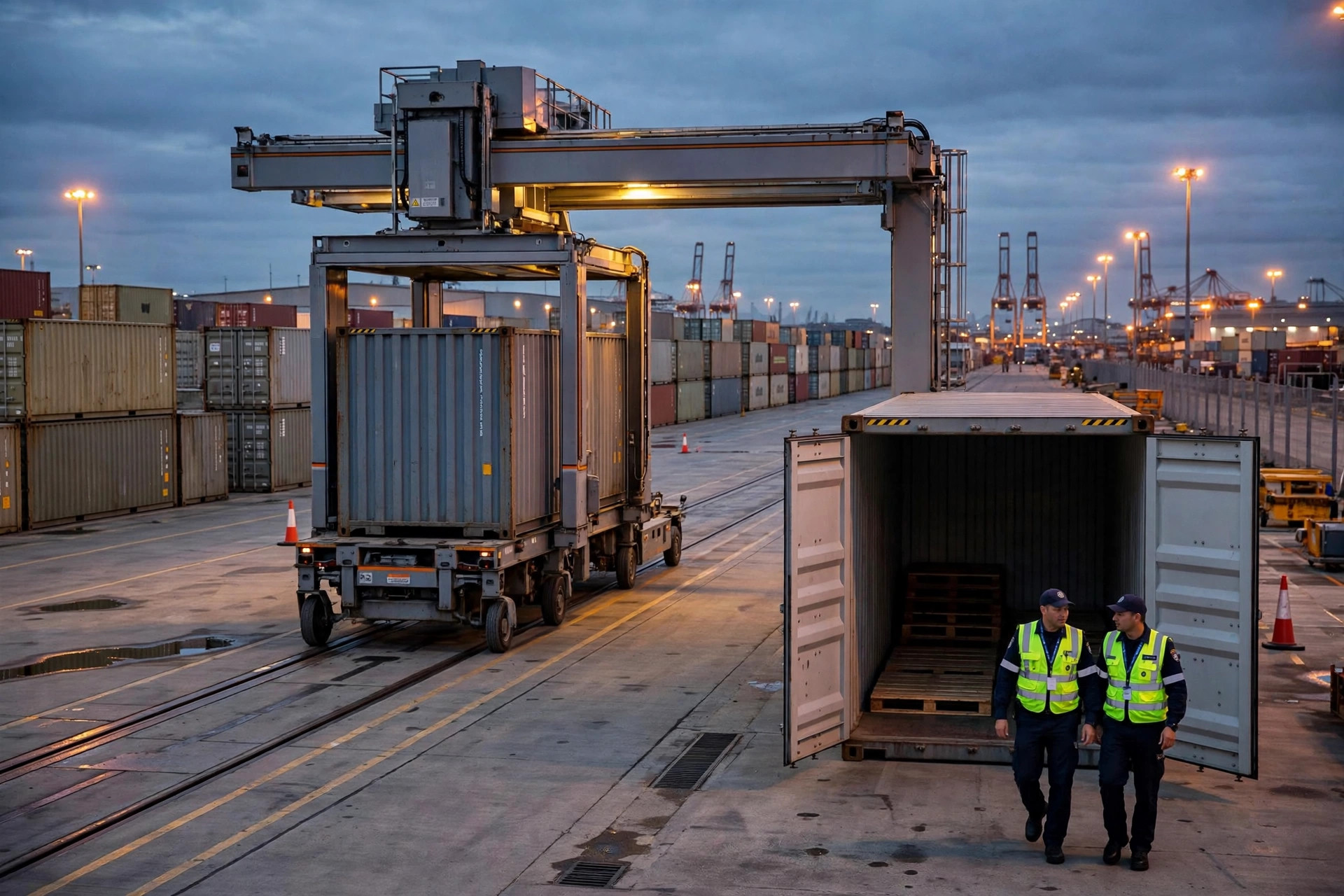
2. Match seal and container numbers to the bill of lading. For a full container load, seal and container numbers must match the B/L exactly. If they don't, don't unload — photograph everything and call your forwarder. A wrong seal means everything inside is a question mark.
3. Read the tilt/shock indicators before you open anything. Most export crates carry tilt or shock indicator labels. Red means something happened in transit. A red-tagged crate gets upgraded to "priority unboxing": continuous video, slower pace, a photo at every layer you remove. The sorter story above died on this item.
4. Cross-check marks, piece count, and purchase order — all three. Shipping marks and piece count against the bill of lading, packing list, and PO. One piece off, note it before anything comes off the truck. A wrong count makes the other eleven items theater.
5. Open the crate in the marked direction. Center-of-gravity marks and "this side up" arrows aren't decoration. Open it wrong and the machine tumbles inside the crate — precision components don't survive that. Thirty seconds to read the markings first.
6. Video the entire unboxing, uncut. Phone on a tripod, one continuous take. Video is the cheapest insurance there is — one unbroken recording beats ten pages of written description in a dispute.
7. Match model and serial numbers unit by unit. Nameplate model and serial number against the packing list and PO, one machine at a time. The serial number is the machine's ID for life — warranty, claims, spare parts, all of it. The Texas AGV lesson would have cost twenty extra minutes.
8. The three-look exterior check. Look for paint chips and dents, look for cracked welds, look for loose cable connectors. Linear guides and ball screws get extra attention — photograph any scoring up close. Exterior issues you don't log now become yours permanently.
9. Count accessories against the list. Bolt kits, manuals, spare parts, special tools — log every missing item. Remember: missing accessories hurt worse than a broken main unit. The main unit can be repaired; proprietary bolts and fixtures can't be bought off the shelf on short notice.
10. Check electrics before first power-on. Verify voltage markings, terminal connections, and oil levels before anyone flips a switch. U.S. warehouses commonly run 480V three-phase — wire it wrong and the first power-on fries the boards, which warranty won't cover.
11. Note exceptions on the spot, get the driver to sign. Write plain language on the delivery receipt — "crate 3, exterior damage, lower left corner" — and have the driver countersign. If the driver won't sign, photograph it and send the email within 24 hours. A clean-signed receipt is the single biggest trap in the claims game.
12. Send the written receiving report within 24 hours. Photos, video, exception list — bundled to the supplier and the forwarder. Verbal doesn't count; email counts. Most purchase contracts start the claim clock on the delivery date. Drag your feet a week and you've donated a week of your own claim window.
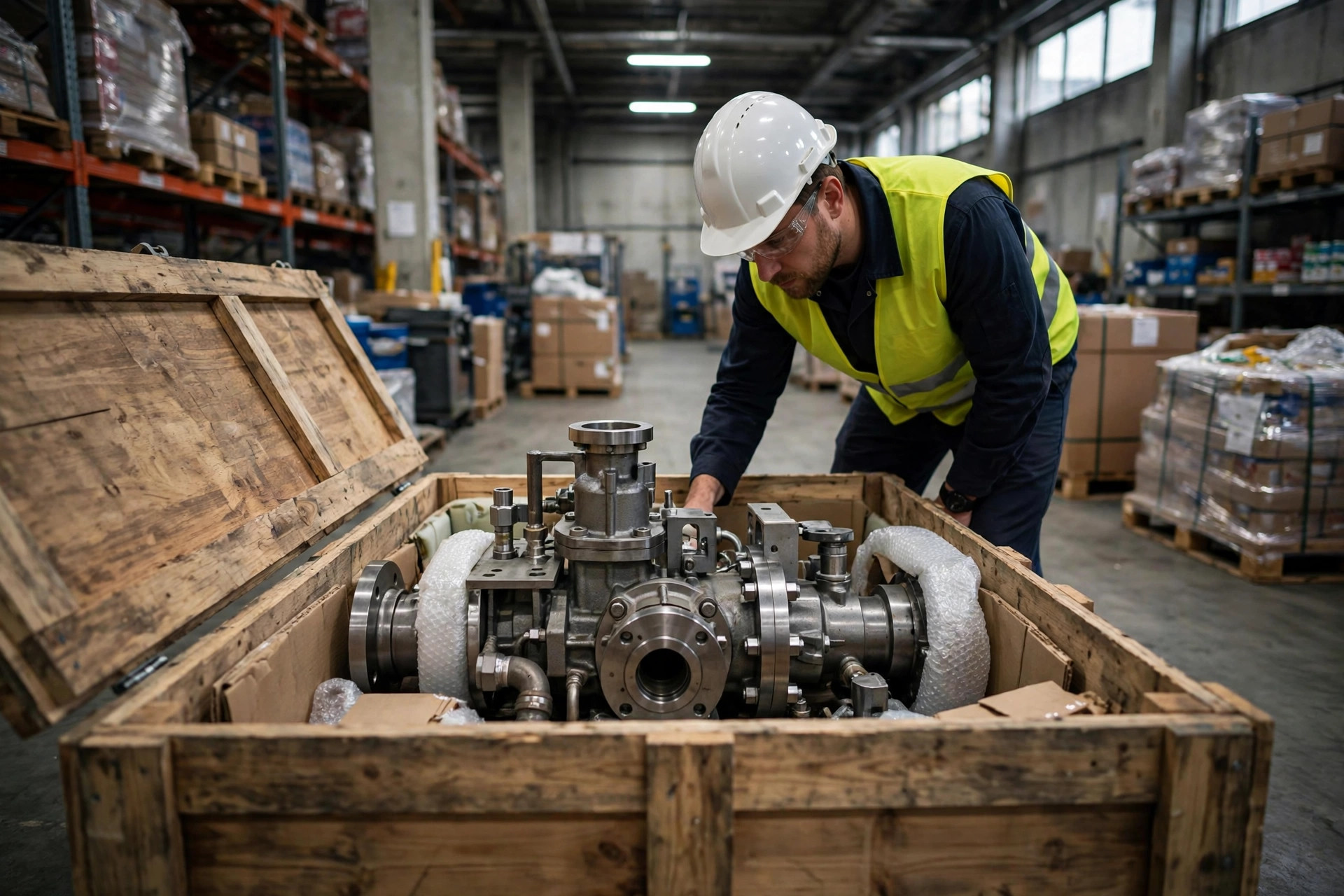
Found Damage During Your Receiving Inspection? Three Paths, Three Very Different Price Tags
Checklists are static; the dock is not. When you do find a problem, you have three options, and they don't cost the same:
| Path | Reject on the spot | Conditional acceptance (note exceptions) | Sign clean, deal with it later |
|---|---|---|---|
| Immediate cost | Driver deadheads, unloading plan blows up | 30 extra minutes for photos and notes | Zero — easiest in the moment |
| What you gain | Cleanest liability picture, title never transfers | Full claim rights preserved, unloading not delayed | Nothing |
| When it fits | Whole shipment water-damaged or crushed, obviously unusable | Damaged exterior, red indicator, wrong count | Exterior looks perfect (and you photographed per the checklist) |
| The trap | Supplier may claim "wrongful rejection" | Notes must be specific — "exterior damage" alone means nothing | They'll produce your clean-signed receipt |
Bluntly: conditional acceptance is right about 90% of the time. The driver isn't left standing at the door, and your claim rights stay intact. Write the note like a field report — which crate, what damage, where exactly.
The Counterintuitive Part: the Most Expensive Cost of Inspection Is the Delayed Go-Live
Plenty of people skip inspection because it "takes too long" — two people, half a day per machine, installers waiting behind them, the project manager pushing for go-live. Here's how that math actually works:
The cost of inspecting is half a day of labor plus half a day of schedule. Skipping saves exactly that half day. But skipping bets that "the machine is definitely fine," and losing that bet costs you this: a dead machine, spare parts shipped from overseas, two weeks at best and two months at worst, and the entire line's go-live pushed back. Half a day of labor to hedge against weeks of delay. You can do that math yourself.
And one most people don't know: for the ocean leg, the carrier's default liability is $500 per package under the U.S. Carriage of Goods by Sea Act — unless you declare a higher value on the bill of lading and pay the ad valorem charge. On a machine worth hundreds of thousands, default terms mean the carrier's payout won't cover a fraction of a real loss. So when booking heavy equipment, don't skip the declared-value option — like the inspection itself, small money buying certainty. Have your forwarder point this clause out before you book.
One last piece of advice — the first question I ask every time I walk into a customer's warehouse and see equipment arriving:
Don't ask "does the crate look okay?" Ask this first: is the unboxing camera rolling?
That question is worth the price of the machine.
Print this imported equipment receiving inspection checklist and tape it to the dock office wall. Future you will be grateful.
By Lao Mi, Supply Chain Veteran (20 yrs)