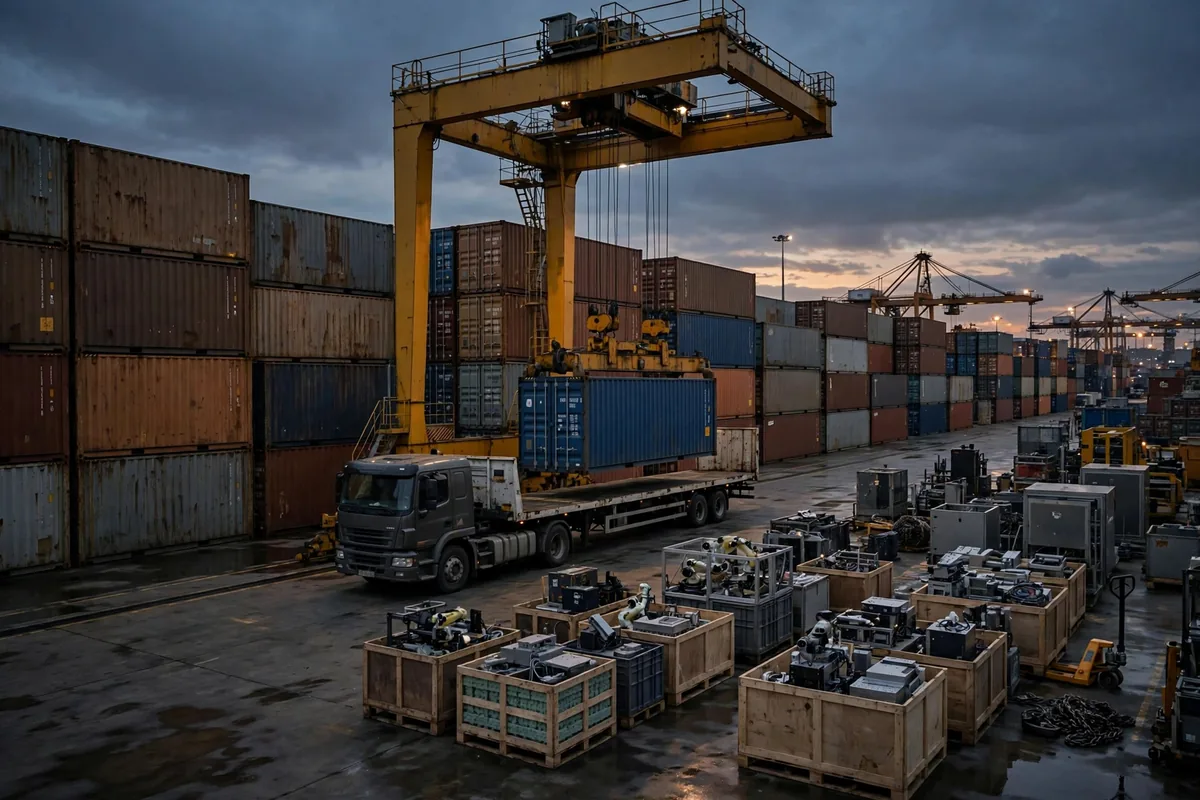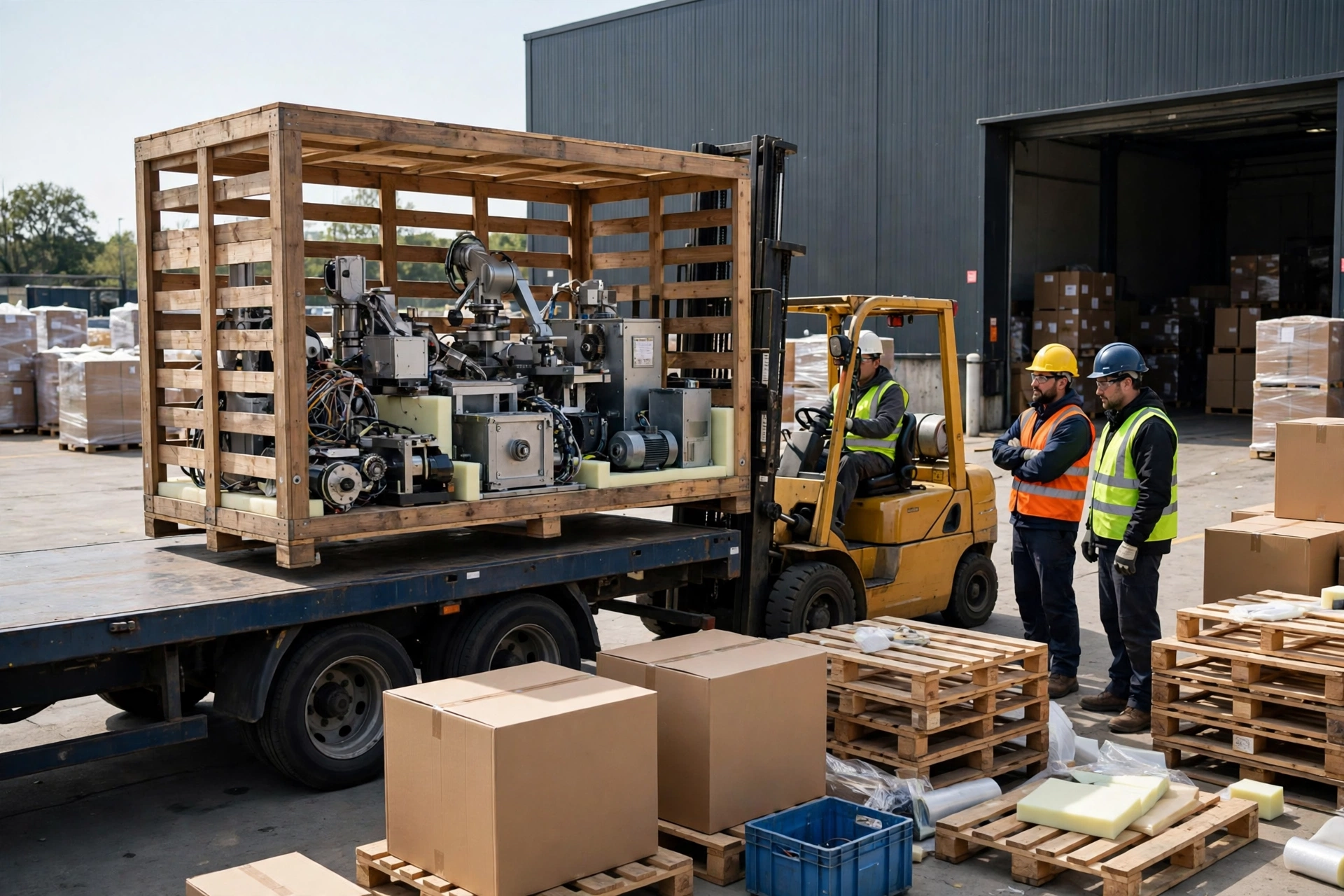
Here is the uncomfortable truth about importing warehouse equipment: the machine is rarely the part that burns you. The two lines in the contract about payment terms and delivery terms are. Import payment terms TT, LC and DAP are the three decisions that decide who holds the money, who holds the risk, and who has any leverage left when something goes wrong. Get them right and the rest is paperwork; get them wrong and you negotiate from an empty hand.
My first order taught me this the expensive way. In 2023 I helped a friend who runs a home-goods warehouse import a small sorting machine. The supplier wanted full payment in advance before they would start production, and we paid it in one wire transfer because it felt simpler. Two months later the machine arrived — with a motor one size smaller than the contract specified. The supplier's answer was one line: built to order, no returns. We had no leverage left because we had already paid for everything. Since then I have had one rule: never pay a new supplier in full up front, and always tie the final payment to inspection. Money leaves only when evidence arrives.
TT: Fast, Cheap, and Completely Unprotected
TT, telegraphic transfer, is a straight bank-to-bank wire. No bank guarantee, no conditions, no safety net. The usual split is 30% deposit and 70% balance before shipment. That structure favours the supplier: it only works if you trust the other side. Once a wire lands, it is very hard to pull back, and no bank will reverse it because you are unhappy with the goods. Chasing it through a foreign court usually costs more than you would recover.
So the way to use TT is to tie every payment to evidence, not to dates on a calendar. A deposit is fine. The balance should move only when inspection passes, or when you hold copies of the shipping documents. When I negotiate a TT deal now, I insist on three points: the deposit stays at or below 30%; the balance is triggered by a third-party inspection report or an inspection video, not by a date; and the receiving account must be the supplier's company account — a personal account ends the conversation. If a supplier will not accept those three points, the deal itself is suspect. And one red flag never changes: a supplier who pressures you with "pay today or lose your production slot" deserves the opposite reaction. A factory that is genuinely busy does not win orders by rushing payments.
TT costs almost nothing — typically a few dozen dollars in wire fees per transfer, a rounding error against the value of the goods. That is exactly what makes it seductive. It is cheap, fast and simple, and it offers zero protection. The exchange of money for goods rests entirely on the commercial relationship. With an established supplier you have worked with for two or three orders, TT is the right call. With a new supplier, TT is a bet on a stranger's character.
LC: The Bank Has Your Back, but the Paperwork Rules Everything
A letter of credit is a payment promise from the buyer's bank to the seller: present the documents specified in the credit, exactly as specified, and the bank pays. The one thing to understand is that the bank examines documents, not goods. If the documents match, the bank pays even if the container later turns out to hold the wrong machine. If a single date or spelling is off, the bank can refuse. Plenty of first-time importers assume an LC makes them safe — it does not. An LC protects payment, not quality.
LCs are not cheap either. Published industry guidance puts letter-of-credit bank fees at roughly 0.5% to 2% of the transaction value. Take a hypothetical example: a machine worth $120,000. At 0.5% the fees come to $600; at 2% they come to $2,400. Whether that is worth paying depends on the size of the order and the risk. On a $120,000 first order from a new supplier, I would happily pay $600 to $2,400 for a bank standing behind the payment. On a $20,000 to $30,000 small order, the same fees eat a much larger share of the value, and the back-and-forth over documents costs days. For small orders, TT plus inspection is usually the better deal.
The place LCs most often go wrong is document discrepancies. According to statistics cited by the International Chamber of Commerce, 60% to 70% of document sets show discrepancies on first presentation. One wrong date or one misspelled name can hold up payment for ten days or more. My routine now is to send the draft credit to the supplier for a word-by-word check before it is issued, and to have the forwarder send me scans of the documents after loading so I can check them before the originals go in the post. Half a day of checking saves a week of arguing. Ask for an irrevocable sight LC: a usance credit hands the supplier a free credit period at your expense.
DAP, FOB and DDP: Where Risk Changes Hands Matters More Than Who Pays Freight
Trade terms govern a different question: if something goes wrong in transit, whose problem is it, and who arranges freight, insurance and customs clearance? The ICC's Incoterms 2020, in force since 1 January 2020, contains 11 rules. The three that matter most to equipment importers are FOB, DAP and DDP.
FOB, free on board, applies only to sea and inland waterway transport. Risk passes to the buyer the moment the goods are placed on board the vessel the buyer nominated at the port of shipment. After that, ocean freight, insurance and destination clearance are all the buyer's job. The advantage is control over your own forwarder and freight rate; the disadvantage is that from the moment of loading, whatever happens at sea is your problem.
DAP, delivered at place, works for any mode of transport. The seller arranges carriage and bears the risk until the goods are placed at the buyer's disposal at the named destination, ready for unloading. One important limit: DAP does not cover import clearance or duties, which stay with the buyer. For importing automation equipment I use DAP most often, because the machines are bulky and high-value, and it makes sense for the seller to carry the transit risk until the goods reach the warehouse door. DDP, delivered duty paid, goes one step further: the seller also handles import clearance and pays duties and taxes, and the buyer simply receives the goods. It is the most convenient option for the buyer, but the seller prices the clearance risk into the quote — somebody always pays.
The trap most people walk into is confusing who pays freight with who bears risk. Under some terms the seller pays the freight, but risk already passed to the buyer when the goods went on board. Before signing, ask three questions and get all three answers in writing: at what point does risk transfer, who pays the freight, and who handles clearance and duties? If you can answer all three, you have chosen the right term.
A Decision Framework You Can Use on the Next Order
Here is the whole decision in one table:
| Situation | Payment | Trade term | Why | | New supplier, high value | Irrevocable sight LC | DAP | Bank backing plus seller carries transit risk | | Trusted supplier, smooth history | TT 30/70, balance tied to inspection | DAP or FOB | Saves fees, risk is manageable | | Small order, needed urgently | TT, deposit no more than 30% | DAP | Fast; do not burn LC fees on a small order | | Supplier can clear customs at destination | TT or LC | DDP | Let them handle clearance, save yourself the hassle |
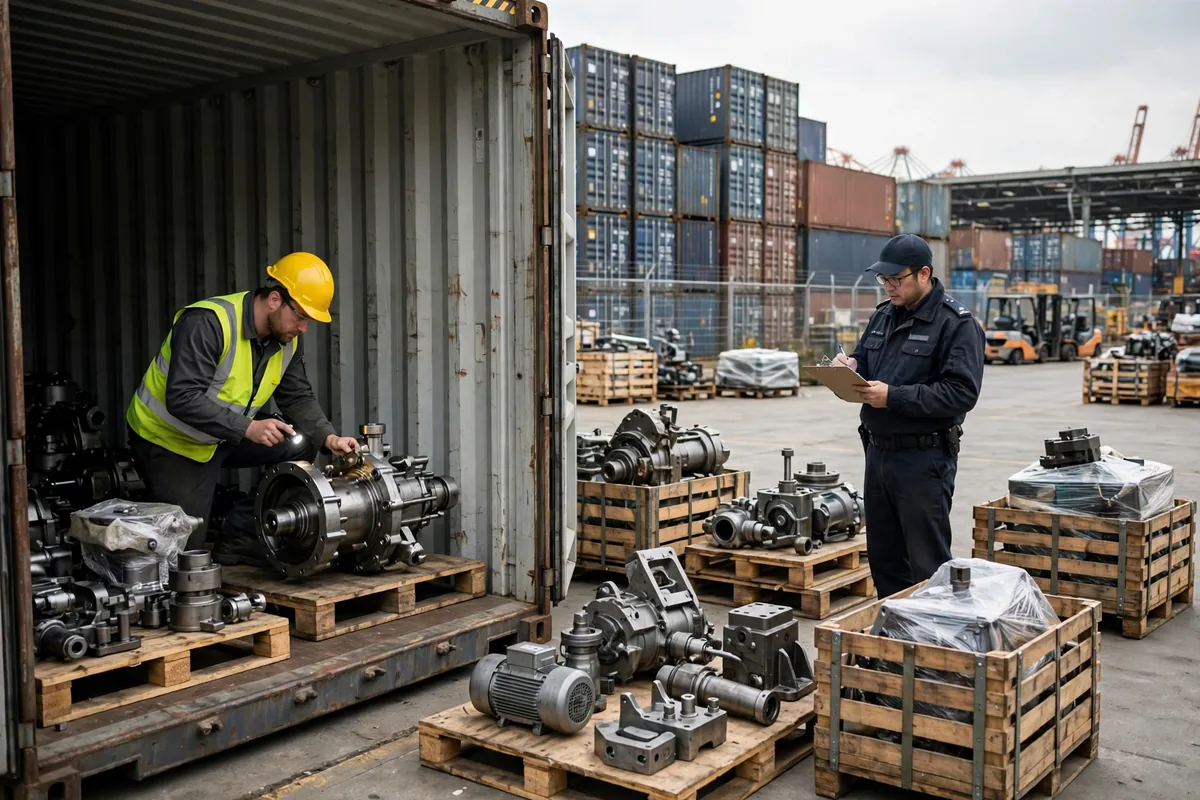
Before the equipment arrives, send the warehouse a receiving checklist — model number, serial number, motor specification, visible damage, every item spelled out. When the goods arrive, inspect before signing, and write "goods received, appearance checked, function to be tested" on the receipt. Never sign "accepted" on arrival. Once those words are on paper, arguing about a defect afterward becomes twice as hard.
Payment terms and trade terms come down to one principle: whoever carries the risk should hold the matching protection in the contract. TT is cheap and unprotected, an LC is protected but expensive and paperwork-heavy, and DAP puts transit risk on the seller without covering clearance. None of them is right for every order. Match the choice to three things — how well you know the supplier, how big the order is, and who can handle customs — and the answer usually falls out by itself. This approach has worked for me on every order since that first expensive lesson. Try it on your next one and see.
By Ah K, E-commerce Seller (5 yrs)