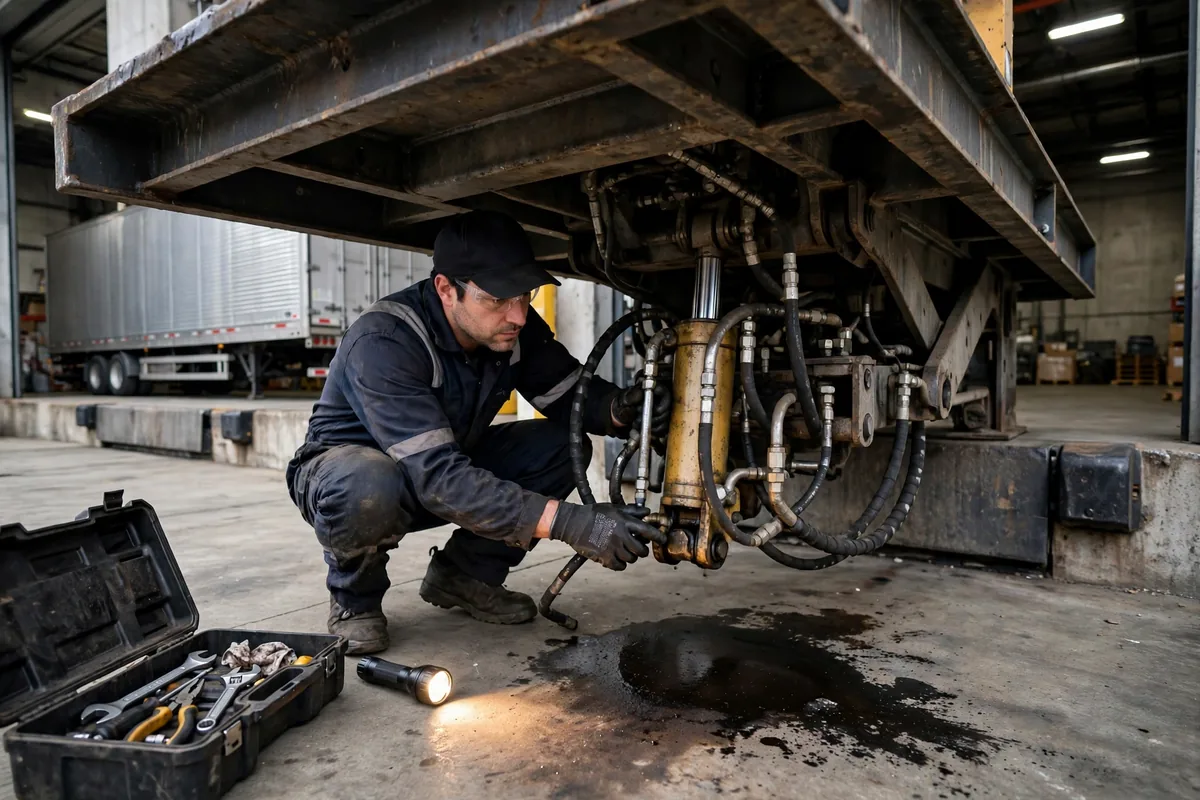
Start with the bill, from a real dock levelers repair case. A third-party warehouse in Dallas had one hydraulic leveler leaking oil in 2024. It was repaired four times that year, and the repair invoices totaled $21,000. The warehouse manager wanted to keep repairing it, because a new unit cost over $30,000. What he did not count was downtime: those four repairs stopped the dock for 38 hours combined, two bays went unusable, three trucks were pushed to the next day, and temporary overtime plus outside labor added another $16,000. Repair plus downtime came to $37,000, already past the replacement price. That money was wasted, and it was wasted because only the repair invoice was ever read.
Dock levelers repair decisions turn on one fact: the repair invoice is never the whole cost. Downtime is the bigger number. When a leveler goes down, the loss accrues by the hour: an idle bay, waiting trucks, delayed orders, idle workers, and in bad cases a lost customer. If you cannot price downtime, any repair-or-replace call is a guess dressed up as judgment.
What Dock Levelers Repair Really Costs
Break the cost into four buckets and the picture changes. First, direct repair cost: seals, cylinders, hydraulic pumps, labor. Second, downtime loss: dock hours lost multiplied by what that bay normally moves per hour, which is high in a busy warehouse and lower in a slow one. Third, knock-on cost: diverted trucks, overtime, outside labor, customer claims. Fourth, risk cost: a sinking deck or uneven plate creating forklift hazards and product damage. That last bucket is the hardest to price, but pricing it at zero is the most expensive mistake in the whole exercise.
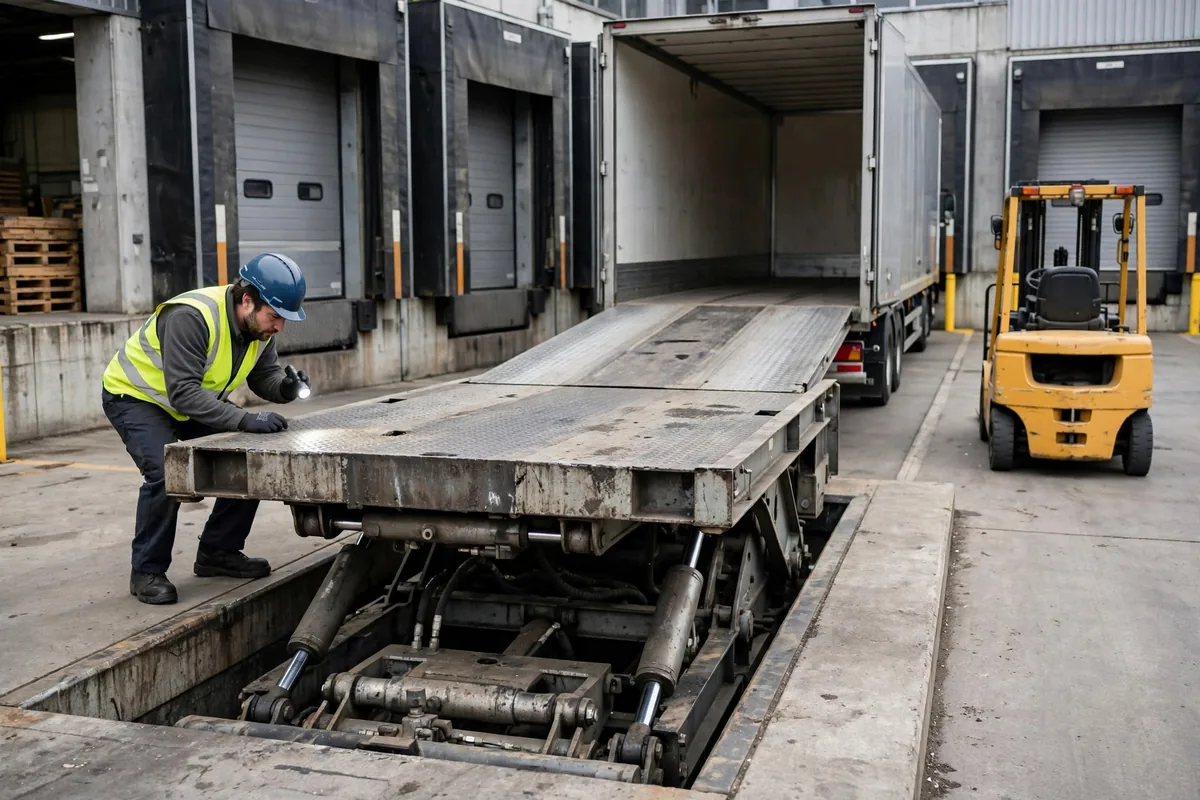
In May 2025, a warehouse handling auto parts in Ohio asked me to review their costs. Their bay 6 deck had sunk about 5 centimeters, and forklifts lurched noticeably crossing it. The repair quote for a cylinder replacement and re-leveling was $9,000. A new unit was $32,000. The manager leaned toward repair because it looked cheaper. I asked for the last 18 months of records: five prior repairs on the same unit, $24,000 already spent, 61 hours of downtime. Add this $9,000 repair and the 18-month total hit $33,000, already touching replacement price, while the unit itself was still an old unit whose next failure was only getting closer. Repair returns diminish. Replacement math had already won.
| Cost item | Repair path (18 months) | Replace path | | Direct repair spend | $33,000 | $32,000 one-time | | Downtime loss | About $20,000 | About one day for install | | Expected repair, next 3 years | Keeps recurring | Low, lower under warranty | | Failure risk | Rising | Reset to new |
The Dock Levelers Repair vs. Replace Break-Even
The rule can be written as one formula: if annual repair spend plus annual downtime loss exceeds the annualized cost of a new unit plus its annual maintenance, replace. Annualized cost is replacement price divided by expected life. A $32,000 unit over 10 years is $3,200 a year. New-unit annual maintenance runs roughly $800 to $1,500. So once annual repair plus downtime passes about $5,000, replacement already stands up financially. The Dallas unit at $37,000 in one year overshot that line seven times over. No deliberation needed.
Here is the counterintuitive part: frequent small repairs cost more than one big repair. A weeping seal costs a few hundred dollars to fix, but it comes back, and every visit means downtime, waiting for a technician, and paperwork. People call small repairs cheap because they treat each 4 to 6 hour stoppage as free. Downtime is never free. It just does not appear on the repair invoice. My rule: three repairs on the same unit within 12 months, or a single repair quote above 30% of replacement price, triggers a formal replacement evaluation. Stop renewing repairs at that point.
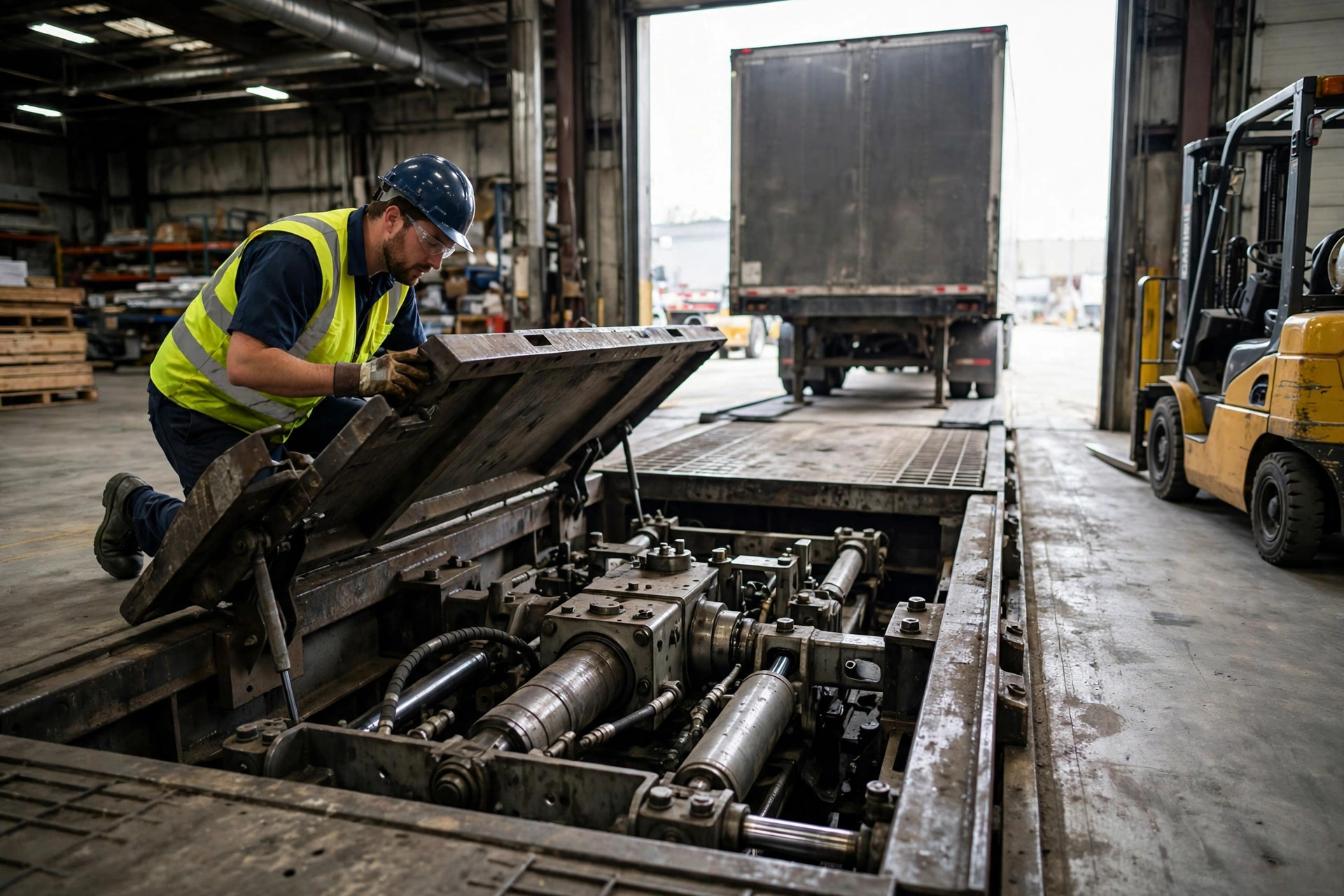
Good dock leveler maintenance pushes that decision point years later. Hydraulic oil changed on schedule, seals inspected regularly, deck level checked quarterly: small money that adds years to a unit's life. Skipping maintenance to save a little, then replacing a unit three years early, means paying back the savings several times over. Hydraulic and mechanical units also need different maintenance priorities, and maintaining the wrong way is money spent for nothing.
Where the Savings Actually Come From
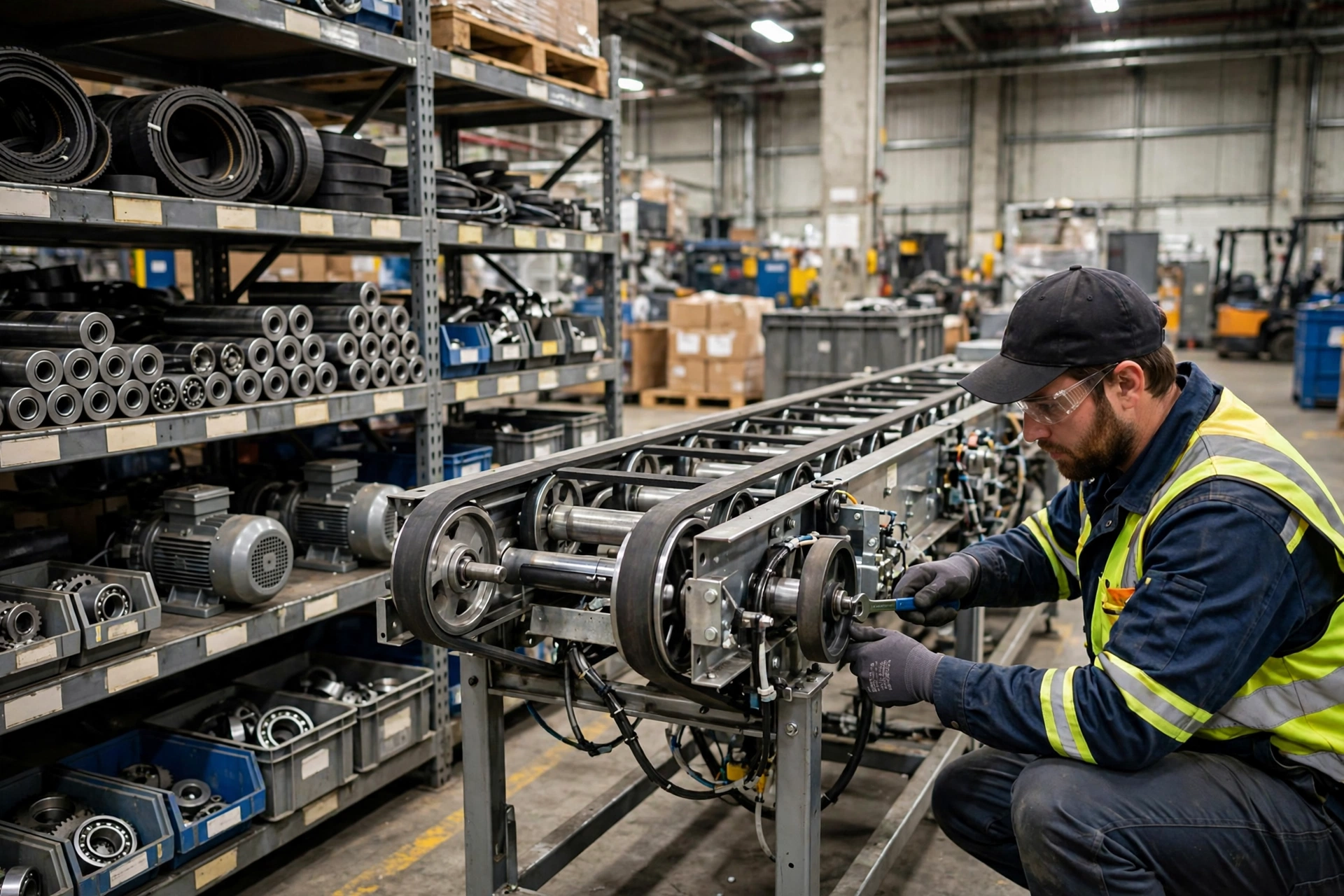
The first lever is spare parts. Keep seals and hydraulic oil for your installed models in stock, and you cut the waiting-for-parts half of most repair downtime. The second lever is the repair window. Schedule planned repairs for off-peak night shifts instead of peak outbound hours, and the same repair carries a fraction of the downtime cost. The third lever is batch decisions. A site with 10 or more aging units of the same vintage should not replace them one painful invoice at a time. Batch replacement gets better pricing, cleaner install scheduling, and one standard model that simplifies future spares.
One more lever deserves attention: the service contract itself. Many warehouses pay a flat monthly fee that covers inspections but bills every repair separately, which quietly rewards the vendor for repeat visits. Before renewing, ask for a contract that prices preventive visits and emergency callouts separately, with response-time terms in writing. A vendor who is paid to keep units running behaves differently from one who is paid each time a unit breaks. Over three years, that contract structure can move total cost more than any single repair decision, and it costs nothing to renegotiate except one uncomfortable conversation.
The conclusion is computable, not debatable. Pull the last 12 months of invoices for the problem unit, add downtime hours multiplied by the bay's hourly value, and compare with replacement price. Over 30% of replacement price, replace. Under 15%, repair. Between 15% and 30%, pay for a full inspection first and decide on evidence. Feelings and rough guesses have no seat at this table. Where the numbers point, the decision follows.
By Lao Zhou, Logistics Cost Analyst