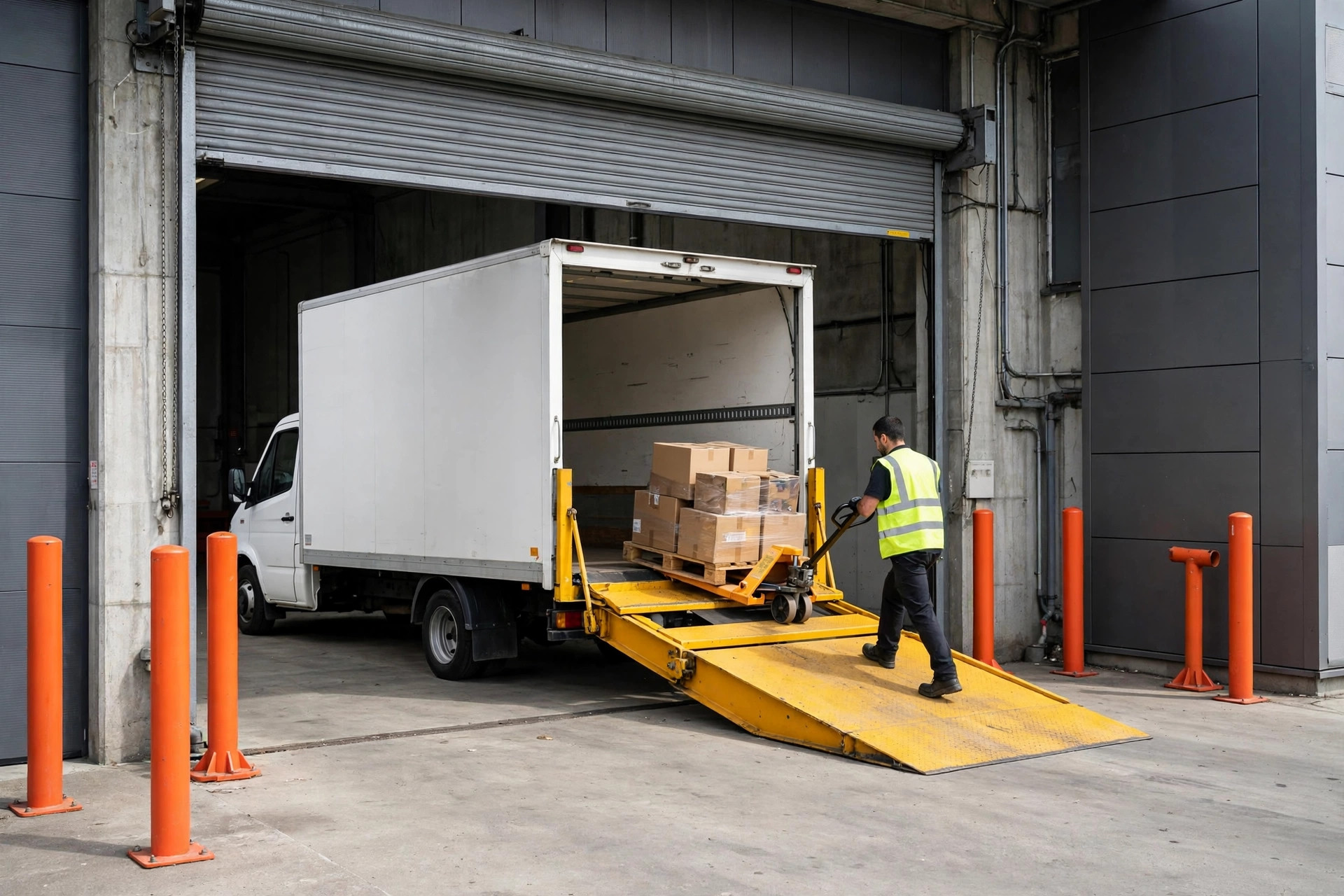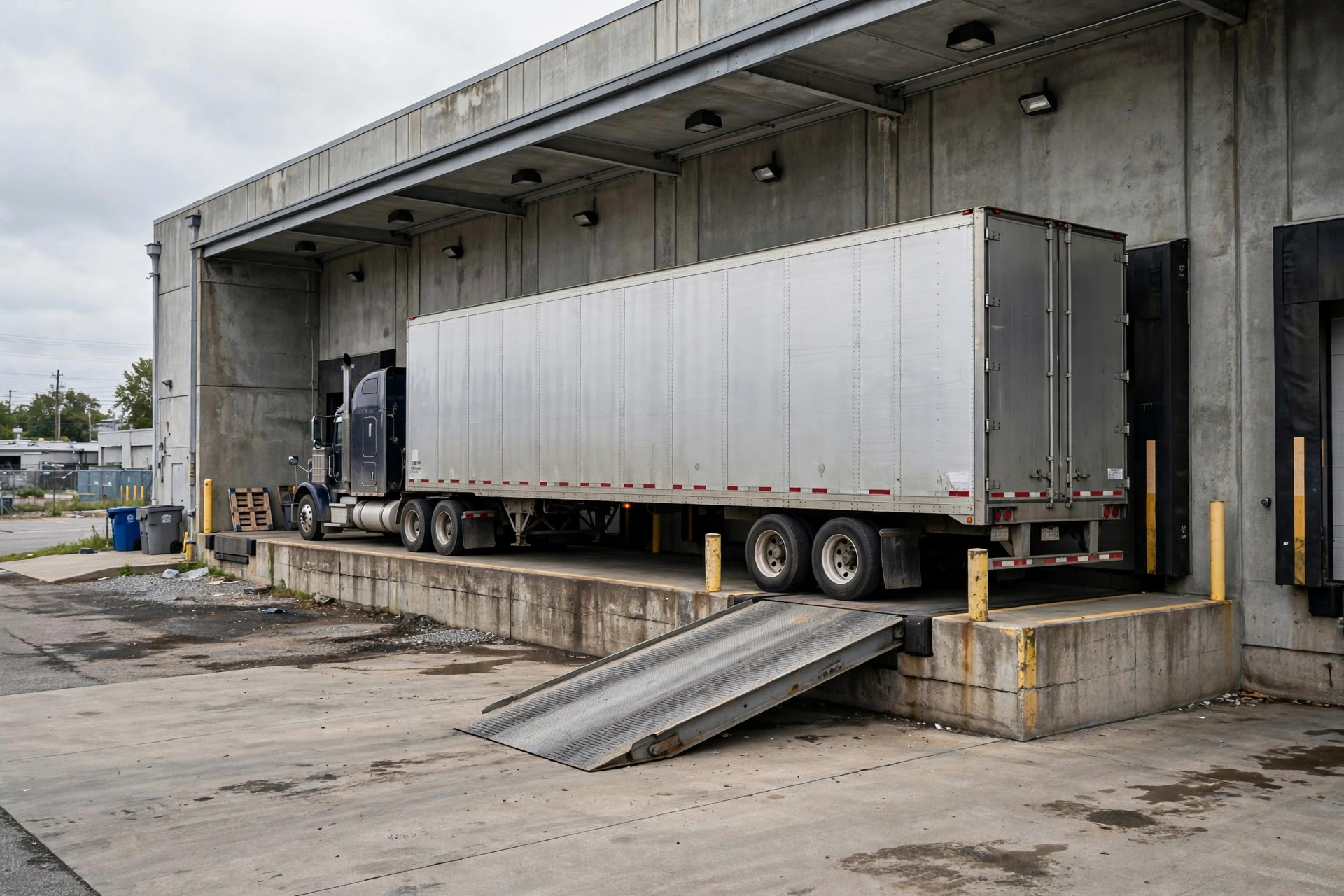
Let me tell you something about dock levelers: nobody thinks about them until one breaks, and then the whole yard waits on a slab of steel. The question drivers and dock managers keep asking is dock leveler maintenance how often — how often do you actually need to look at the thing? After fifteen years of backing trucks into docks all over the country, my answer is simple: don't ask how often. Ask whether anybody looked at it today.
A couple of winters ago, I hauled a load into a warehouse out in the Inland Empire, appointment set for eight in the morning. Two trucks were already in line ahead of me, forklifts circling the dock, but nothing coming off any trailer. The dock lead just shrugged: "Leveler won't lift. Worked fine yesterday." We waited most of the day. When the repair tech popped the plate, the hydraulic oil had leaked down to almost nothing. No oil, no lift. By then three or four more trucks had stacked up behind us, and everybody — the shipper, the drivers, the warehouse — was losing money over one piece of equipment.
Then there was last summer, a different warehouse, a mechanical leveler. They were halfway through loading when the lip snapped back with a bang while a forklift was sitting on it. The driver went white. The springs and chains had worn down and rusted out, and nobody had ever looked at them. Mechanical levelers talk to you before they quit. The squeaks, the sticking, the lip that doesn't spring back — that's the leveler yelling for help. Hydraulic levelers are different. They don't yell. They go soft on you, slow and quiet, and by the time you notice, there's a puddle of oil on the floor.
Both of those days taught me the same lesson: a dock leveler is not a "set it and forget it" piece of gear.
Hydraulic vs Mechanical: What the Difference Really Means for Maintenance
Here's the short version. A hydraulic leveler uses a cylinder full of oil to raise the deck — push a button and it goes up and down, smooth and easy. A mechanical leveler uses springs and a pull chain — you pull a ring to operate it, simple structure, no power needed.
That small difference sends maintenance down two totally different roads. Hydraulic levelers fear leaks, dirty oil, and aging seals. Mechanical levelers fear rust, tired springs, and stretched chains. I've seen both kinds run beautifully for years, and both kinds neglected until they needed replacement.
Dock Leveler Maintenance: How Often Should You Inspect?
My rule is this: eyeball it every day, hands-on check every month, open it up every quarter. Most of it is walking around the deck for a couple of minutes.
| Frequency | What to check | What to do when you find a problem |
|---|---|---|
| Daily | Cracks or bending on the deck, whether the lip sits flat on the trailer bed, any oil stains, any strange noise | Oil stains, noises, or sticking — report it the same day |
| Monthly | Hydraulic: oil level, hose fittings, seepage around seals. Mechanical: springs, chains, hinge pins; lubricate moving parts | Tighten or replace seeping seals; clean and lubricate rusted parts |
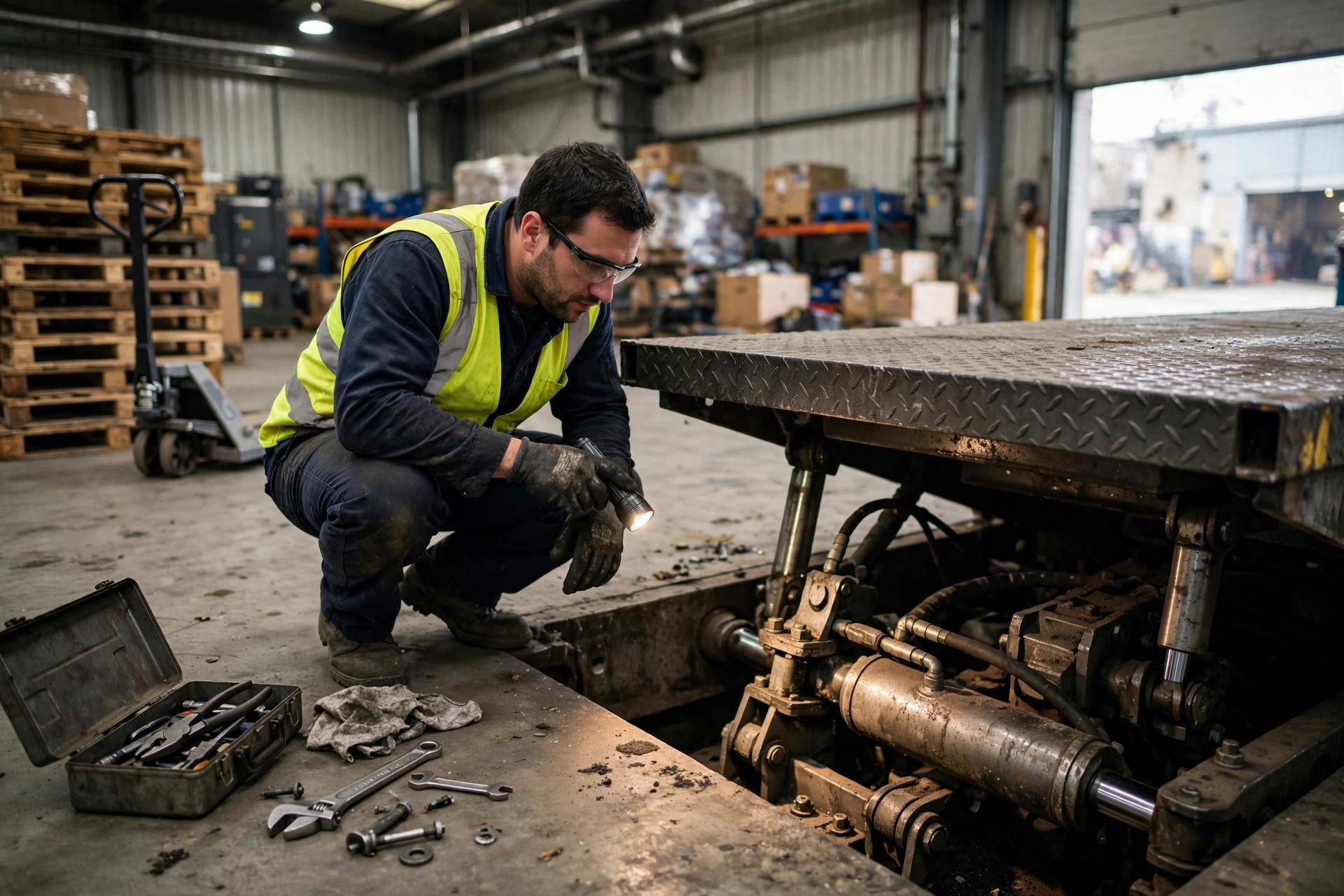
| Quarterly | Open the plate: cylinders, welds, structural members for cracks. Mechanical: chain stretch, spring pull | Cracks or clearly weakened springs — call a professional |
Now here's a counterintuitive one: the leveler most likely to fail is often not the one getting hammered every day. It's the one nobody has used in months. A busy leveler gets its problems noticed daily. A dock door that sits idle for a season grows dry seals, rusted springs, and seized hinges — and the day you suddenly need it, it hands you a major failure. So even rarely used doors need the same rhythm. Run them up and down now and then.
Leaks, Noises, and Sticking: Three Warning Signs You Don't Ignore
Hydraulic leaks come in two flavors. The first is the obvious one: oil stains on the ground, wet fittings, a damp cylinder seal. Easy — you see it, you fix it. The second is the slow leak: everything looks dry on the outside, but the oil level keeps dropping month after month and the deck rises weaker and weaker. That one is the dangerous one, because it never breaks dramatically. It quietly robs you of lifting power. My habit is to log the oil level once a month — if it's dropping, the leveler is telling you something. Topping off the oil buys you time, but if you don't fix the leak, the unit will strand you eventually.
Mechanical levelers give you louder warnings. Harder to pull up, a clunk on the way down, a lip that won't sit flat on the trailer bed — those are the springs and chains crying uncle. Springs wear out from fatigue, and fatigue never reverses itself. A stretched chain means the lip lands crooked, and a crooked lip means the forklift rocks every time it crosses. Don't let drivers "just live with it."
One warning sign is shared by both types: sticking. The deck stops halfway up, or drops down in jerks. On a hydraulic unit, that could be dirty oil or a clogged line. On a mechanical unit, a rusted hinge or a bent pin. Either way, sticking means something inside is wrong. Take the unit out of service before you use it again. A forklift and a human being stand on that deck. There is no such thing as a minor problem there.
Repair or Replace: How I Do the Math
When it comes to repair versus replace, I don't listen to sales pitches. I run three numbers.
First, the single repair bill against the price of a new unit. My own rule of thumb: if one repair quote comes in near half the cost of a new leveler, it's time to seriously consider replacing it. Why? A repaired old deck still has old parts everywhere else. Fix the cylinder this year, the hinge next year, the deck the year after — and it adds up to more than a new unit. There is no standard ratio for this; go by the written quotes from your vendor. My "half" is just my personal stop-loss line.
Second, the cost of the downtime. A leveler down for a day — how many trucks stack up at the gate? How many forklift hours sit idle? If a shipment misses its sailing, who pays the penalty? An old leveler that breaks down a few times a year might be cheap to fix each time, but the total losses from all those gate backups usually exceed the price of a replacement.
Third, age and failure frequency. There is no universal legal retirement age for a dock leveler — how long one lasts depends on how hard it works and how well it was maintained, so check the manufacturer's manual for your model. But the logic holds: if a unit has been repaired two or three times in six months, each time for something different, the whole thing is worn out. A well-maintained leveler that throws an occasional small fault, on the other hand, is worth fixing and can keep going for years.
So my dividing line isn't "is it broken." It's "is it still worth it." A repair that buys you a long stretch of trouble-free use is worth doing. A repair that buys you a few weeks before the next breakdown — right in the middle of your busiest day — is not.
Do It Yourself or Outsource?
This is a trade-off too. Daily and monthly checks, I say keep in-house. Why? Because the people on the dock every day spot trouble first. Have the forklift drivers or the dock lead walk the decks daily and run the monthly checklist. But the responsibility has to land on a named person, with a record of what was checked.
Quarterly inspections and major repairs, I say hand those to a professional. Opening the plate, checking cylinders, replacing seals, adjusting springs — that work needs tools and experience. One thing to nail down when you outsource: response time in the contract. When your leveler dies, can the vendor be there the same day? Do you get priority in peak season? If it's not in the contract, you'll be waiting in line when it counts.
One last word of advice: whether in-house or outsourced, use the right oil and the right parts. Hydraulic oil is not a "close enough" item — the wrong oil can eat your seals faster. Springs and chains aren't "looks about right" items either. For exact specs, go by the manufacturer's manual, not by memory.
There's an old saying among drivers: take care of your rig and your rig takes care of you. Same goes for a dock leveler. Give it a look every day, and it won't leave you hanging when the trucks are lined up.
By Shifu Zhao, Trucking Veteran (15 yrs)