Let me lead with the verdict: humanoid robots won't touch mainstream warehouse picking lines within the next five years. But they will gain a foothold in three corners first — and those three corners happen to be the jobs with the worst labor shortages and the thinnest margins.
That's not a guess. Over the past year I've watched pilot footage and data from four humanoid robotics companies in warehouse settings, and talked with two 3PLs currently running trials. The hype is real. The math is brutal. Here's the full picture: where things stand, the timeline, and what to do about it.
Cold water first: where humanoids actually are today
Strip away the filters and here's the reality. Bipedal walking is no longer the problem — fall rates on flat warehouse floors are impressively low. The real bottlenecks are the hands and the brain.
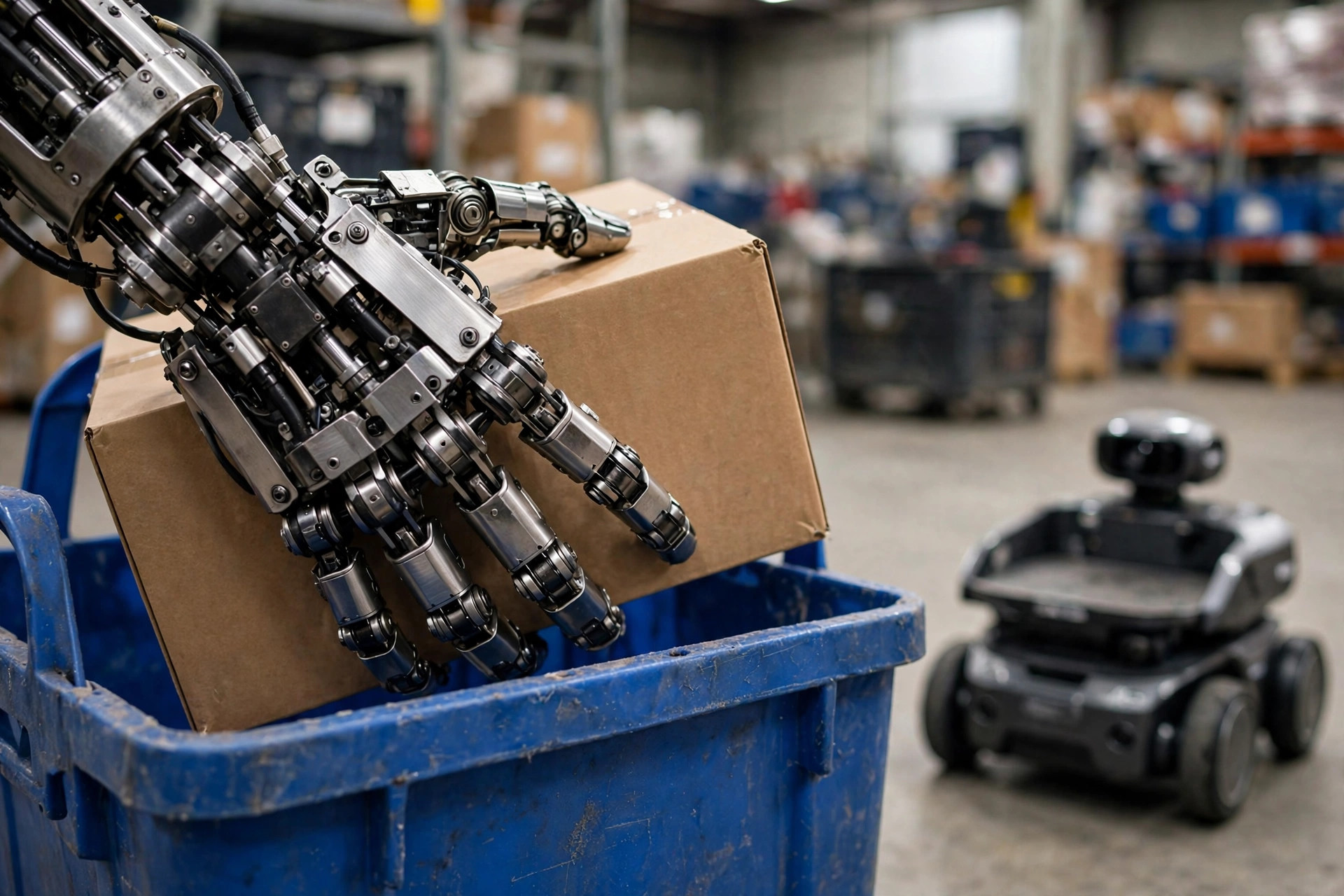
The hands bottleneck is grasp generalization. With a fixed SKU in a rigid carton, grasp success can top 99%. But an e-commerce building runs thousands of SKUs a day — soft polybags, odd-shaped items, reflective packaging — and success drops into the low 90s. Don't shrug at those few points: a pick line demands 99.5% accuracy or better. At 95%, one in twenty orders needs human intervention, and the whole line's rhythm collapses. Anyone in vision and grasping knows the last mile of generalization is where the money burns.
The brain bottleneck is exception handling. Humanoids can run the happy path fine now, but a warehouse day is nothing but exceptions: a tipped carton, an occluded label, a crooked pallet, shrink-wrap scraps on the floor. Humans handle these with twenty years of lived experience. Robots handle them with training data — and there is no public, high-quality dataset of "warehouse exceptions." Every company is collecting its own, and collection speed can't keep up with scenario complexity.
Then there's the money. Current quoted prices for a single humanoid unit generally run from tens of thousands to over a hundred thousand dollars (check the vendors' latest pricing), and that excludes integration, maintenance, and spares. A California picker's fully loaded cost runs roughly $45,000–55,000 a year. Do the math: if the robot does the work of 1.5 people and still needs a babysitter — an on-site minder — the numbers don't close today. Vendors all promise "$20,000 at scale," but scale needs orders, and orders need the math to close first. Classic chicken-and-egg.
So my verdict: anyone telling you humanoids replace pickers next year is selling courses or selling robots.
The three corners that go first: jobs people hate, where mistakes are cheap
Immature tech doesn't mean zero foothold. I see three corners landing first, all following one logic: these are the jobs humans least want.
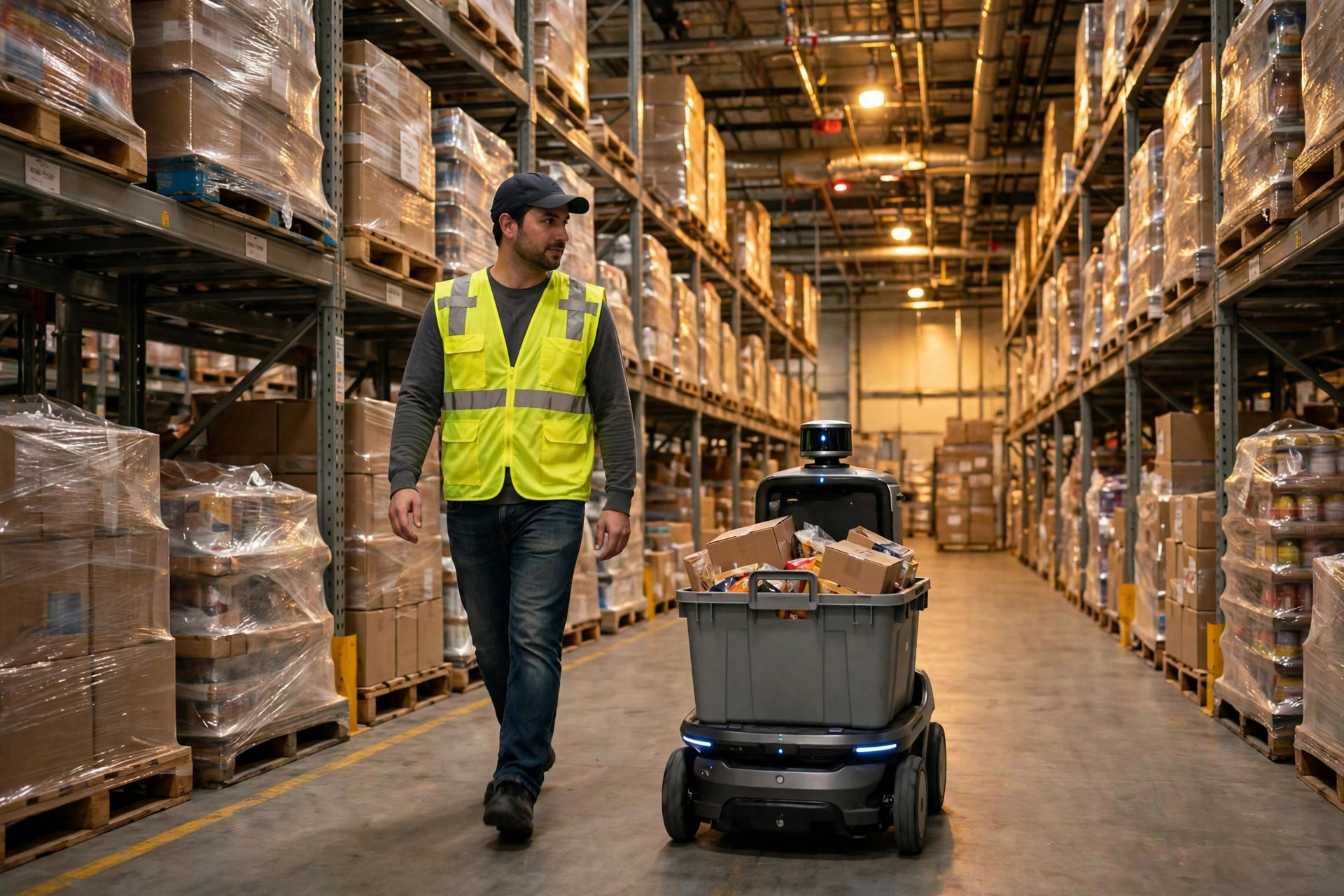
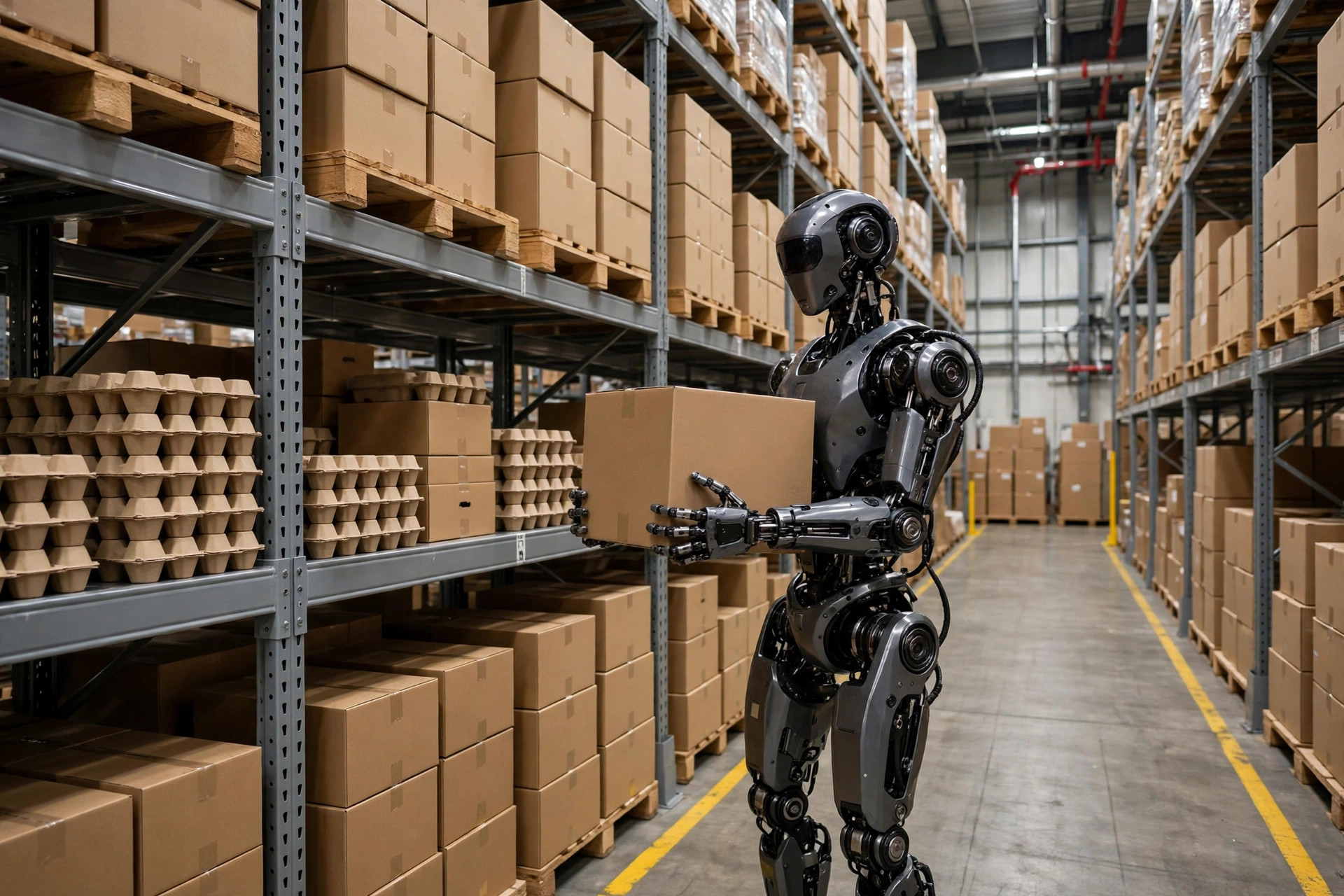
Corner one: tote handling and induction. Fixed pickup points, fixed motions, relatively uniform SKUs. Empty-and-full tote swaps at put walls and sort chutes — "move it from point A to point B" work — is where the humanoid's bipedal edge (stairs, human-designed aisles) beats AMRs. One piloting 3PL told me their units already run six straight hours in this scenario without needing human intervention.
Corner two: assisted sortation in returns. The returns area is where nobody wants to work: dirty, chaotic, SKU soup. Note the word "assisted" — the robot pre-sorts returns into coarse bins (cartons, polybags, suspected damage) while humans still make the real grading calls. Coarse sorting has forgiving accuracy requirements, so robot mistakes cost little.
Corner three: overnight replenishment and tidying. Night shifts are already hard to staff, and replenishment is planned, off-peak work with a loose takt — and a safety net, because the morning shift catches anything the robot messed up. Letting humanoids "intern" on nights while humans cover days is the lowest-risk entry point.
See the pattern? Deployment order isn't "hardest first." It's "what humans hate most, where mistakes cost least" first. That's the historical law of every automation wave in warehousing: AGVs started with overnight transport, not daytime picking.
The timeline: my calls and my reasoning
Here's my timeline, based on where the technology and cost curves actually are. If I'm wrong, I'll own it:
2026–2027: pilot validation. Leading 3PLs and large e-commerce DCs will run pilots in the tens of units, concentrated in those three corners. Everyone buying now is paying tuition — integration lessons, process rework, building their own robot maintenance crew. Don't envy them. They're scouting the trail for the industry.
2028–2029: small-scale replication. This needs two conditions at once: total cost of ownership per unit under $30,000, and MTBF (mean time between failures) above 500 hours. Then the proven scenarios start replicating across dozens of buildings — still corners, not the main line.
2030 and beyond: picking main lines become discussable. A main pick line demands 99.5% accuracy, 24/7 operation, and one unit replacing more than two people. Given the current pace of grasp-generalization progress, I don't see it before 2030. The reasoning is simple: over the past three years, grasp success on non-standard items has improved linearly, not in leaps — and the main line needs a leap.
One more variable people ignore: safety certification. OSHA and ANSI standards for humanoids working alongside people are still being written (check the latest official publications). Until they land, no large company's legal department will sign off on human-robot mixed operations at scale. That's not a technology problem, it's a compliance problem — and compliance has never cared about anyone's "technological singularity" narrative.
What to do now: don't buy, but start three things today
The conclusion is clear: now is not the time to buy a humanoid. But "don't buy" doesn't mean "don't prepare." Three things you can start today:
First, standardize your processes. Robots only do standardized work. Every step in your picking flow that currently runs on "the veteran's gut feel" is a future roadblock for automation. Write detailed SOPs, log exceptions, accumulate data — investments you make now become assets for a decade.
Second, start collecting your own scenario data. Training data for exception handling is the scarce resource. Every weird exception you hit today — the mislabeled carton, the leaking bottle, the tangled cables — photograph it, log it, file it by category. Whether you buy robots or build AI inspection later, that data is your moat.
Third, reserve interfaces in new building plans. Floor loading, aisle widths, charging areas, network coverage — leaving 20% headroom at the civil-engineering stage costs little. When the robots actually arrive, you won't be jackhammering floors.
One honest closing thought: every warehouse automation wave in the last twenty years followed the same arc — hyped to the sky, denounced as a scam, then quietly adopted in corners nobody was watching. AGVs did it. AMRs did it. Humanoids will too. The smart move isn't chasing the hype. It's getting your fundamentals right before the wave arrives.
At tomorrow's meeting, don't ask "should we buy a humanoid robot." Ask "are our picking SOPs detailed enough for a robot to follow." That's the right question for 2026.