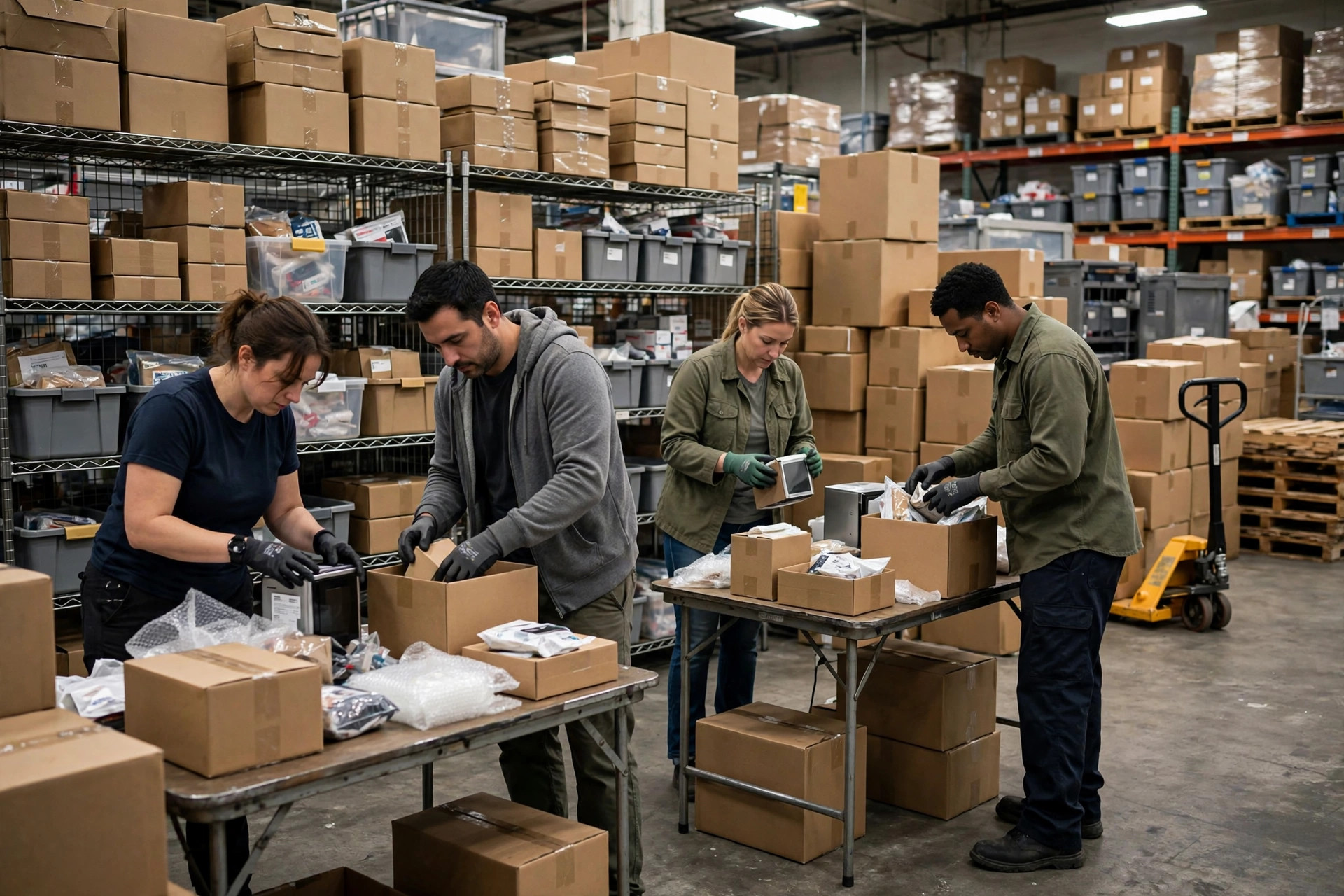
Every January, I dread opening my overseas warehouse inventory report. How to handle overseas warehouse returns is the hurdle every cross-border seller trips on — clear it and it's profit, miss it and it's all storage rent.
Peak season ends, and returns flood back in. Customers return without a second thought, the platform refunds without a second thought, and the bill lands on my desk: hundreds of returned units piled in the corner of my US warehouse, boxes stacked on boxes, sitting there for two months, eating storage fees. Most sellers either dump returns or let them rot until they expire. Both options are just burning money.
Let me start with some numbers. The NRF and Happy Returns' 2025 Retail Returns Landscape puts the 2025 US retail return rate at 15.8% — $849.9 billion in returned merchandise. Online is worse: 19.3%. Apparel is brutal — Coresight measured a 24.4% online return rate for apparel in the US. And if you're a cross-border seller, your rate runs even higher: buyers can't touch the product, so the gap between expectation and reality turns into a return label.
Radial estimates it costs about $27 to process a $100 return — freight, labor, warehousing. And only around 30% of returned merchandise ever gets resold through any channel. The rest gets liquidated, destroyed, or collects dust.
So returns aren't a "refund and forget" problem. They're a "what do we do with the stuff that comes back" problem. Here's the system I run — tested on my own SKUs, and it works.
Stop Winging It: Grade Every Overseas Warehouse Return
Most sellers handle returns in two steps: receive it, throw it back on the shelf. Then the one-star reviews roll in — a customer gets a "used" item sold as new, returns it again, leaves a nasty review. Death spiral.
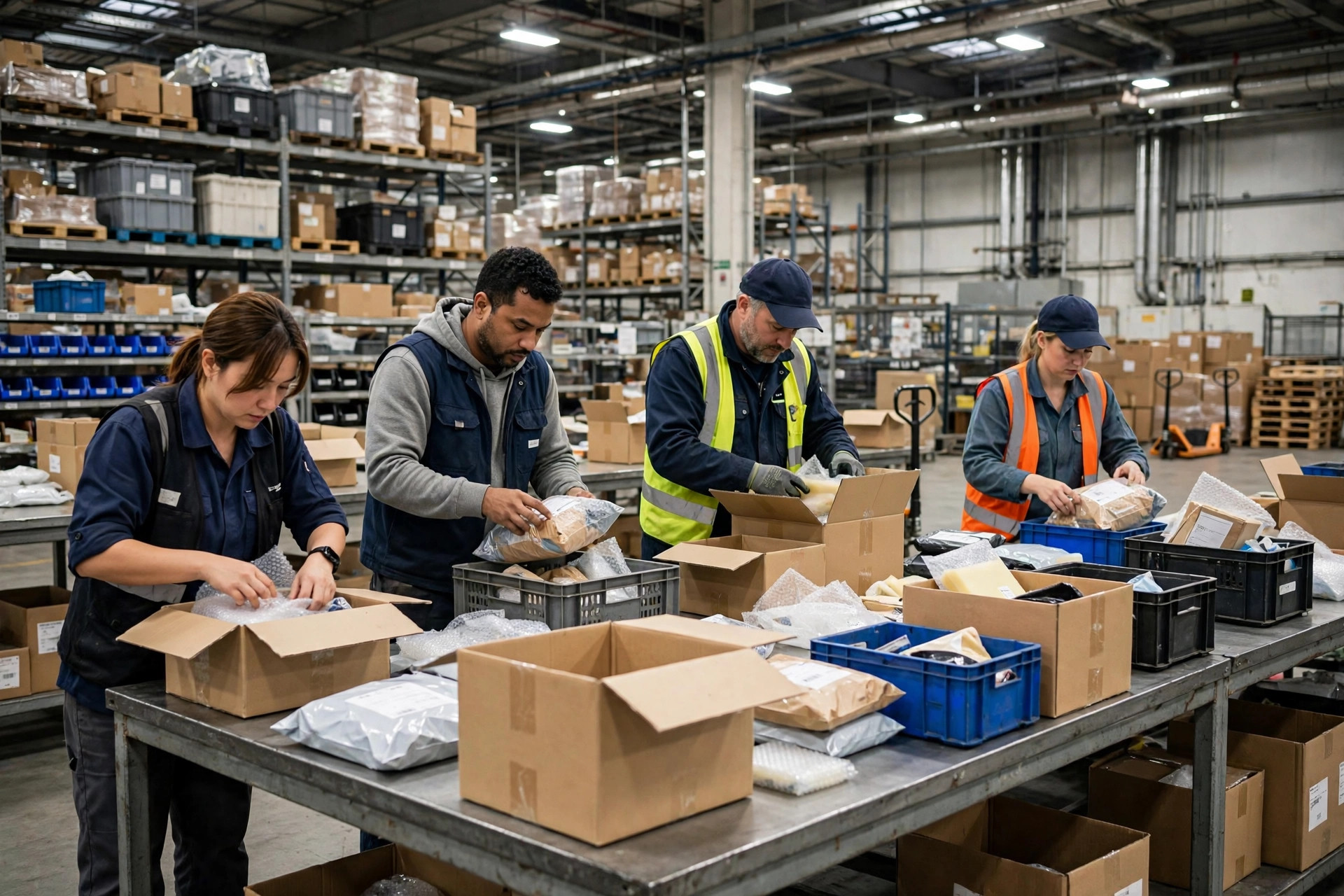
My rule: every return goes through QC first, graded A/B/C/D, and each grade has a fixed exit path.
Grade A: tags intact, packaging untouched, looks unopened. Relist as new.
Grade B: box opened, product itself fine, maybe a missing accessory or a dented box. Swap the packaging, replace the accessory, sell as open-box or refurbished.
Grade C: visible wear, minor defects, but works fine. Local liquidation or a discount sale.
Grade D: broken, missing critical parts, not worth fixing. Destroy or donate. Don't hesitate.
I keep the grading standard on a single sheet taped to the QC bench. Third-party warehouses charge per-unit QC — mine run about $1 to $2 a unit. Don't skip this to save a buck: relisting an ungraded return saves you $1 and costs you a listing's rating.
The Math: Relist, Refurbish, Liquidate, or Destroy Overseas Warehouse Returns
Each grade has different math. Take one of my desk lamps: $29.99 retail, about $11 landed cost.
Grade A (roughly 30% of returns): QC at $1.50, relist cost near zero. Back on the shelf at $29.99, margin still healthy. This is pure recovery — move fast, because every day it sits there is storage rent.
Grade B (roughly 20%): new box $1, replacement accessory $0.50, QC $1.50 — $3 total refurb cost. Amazon's FBA Grade and Resell lets you list returns as Like New, Very Good, Good, or Acceptable. Or run your own refurbished listing. I typically get 70–80% of the original price, around $21. That's $21 minus $11 minus $3 — $7 profit. Still worth it.
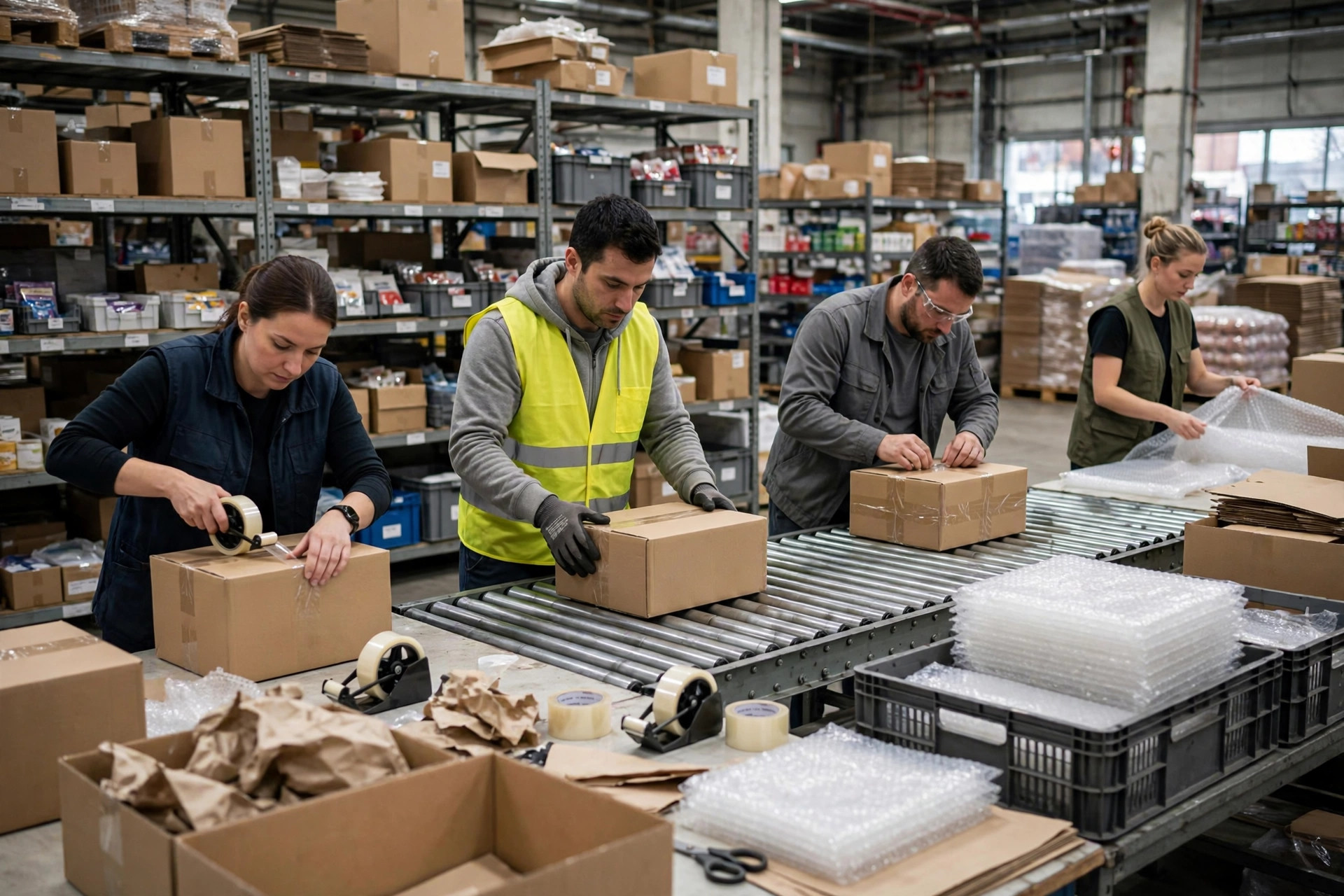
Grade C (roughly 20%): straight to local liquidation. Platforms like Liquidation.com auction return pallets at 5% to 15% of market value. Sounds painful, but do the math: a $29.99 lamp liquidates at around $3, minus $1.50 QC, nets $1.50. Compare that to destruction — which also charges you a fee. Liquidation at least recovers something, and it clears shelf space fast.
Grade D (roughly 30%): destroy it. Destruction costs money too, but far less than shipping it back to China. Sending a return back home? Fifteen to twenty dollars in international freight plus duties and weeks of transit — anything under $50 in product value loses money on the trip back. My threshold: under-$50 returns get handled locally, never shipped back.
The decision rule is one sentence: for each grade, processing cost plus opportunity cost must be less than recovery value. If the math doesn't work, cut it. No emotions.
Here's a real mess. Thanksgiving 2024, one of my desk lamps blew up — 6,000+ orders in November. But one listing photo made the light look warmer than it was; the actual product was cooler white. Bad reviews and returns came together. By end of December the return rate hit 18%, and 400+ units piled up at the overseas warehouse.
I made the classic mistake: told the warehouse "hold off on QC, save the fee." Two months of storage fees — over $900 — and the pile was still there. Finally I bit the bullet and graded everything: 120 units Grade A, relisted immediately, fastest recovery. 90 units Grade B, refurbished and sold at 70% through a renewed listing. 80 units Grade C, liquidated in bulk. 110 units Grade D, destroyed.
Final tally: those 400 returns recovered about $4,800. Processing cost (QC plus refurb plus destruction plus storage) ran about $2,100. Net recovery: $2,700. Not a fortune — but compared to "sitting there eating rent," it's night and day. The lesson: return processing is a speed game. Every day you delay costs you.
The Counterintuitive Take: High-Return Listings Often Convert Best
Here's something that sounds wrong. Most sellers panic when return rates spike — tweak the photos, cut the price, even delist. But over the years I've noticed a pattern: my highest-return listings are often my highest-converting ones.
Why? Because more people dare to buy. A high return rate usually doesn't mean the product is bad — it means the listing overpromised. Photos too flattering, copy too generous, features oversold. Buyers order expecting "perfect" and return "pretty good."
So I don't chase a low return rate. I calculate profit after returns:
True margin = (revenue − refunds − return processing cost) / revenue
One listing with a 15% return rate but high conversion and low ad spend: 25% true margin. Another with a 5% return rate but weak conversion and 40% ACoS: 10% true margin. Which one do you pick? I take the first one, every time.
Returns aren't the enemy — they're part of customer acquisition cost. Bake return costs into your pricing instead of fighting the return rate. This one I've personally tested: two of my listings ran 12%+ return rates in 2025 and were still the most profitable in the store.
Pitfalls to Avoid
First, don't ship returns back to China. Did the math above — under $50 in product value, the freight plus duties plus time basically equals buying new stock. Only exception: high-value items worth repairing.
Second, don't assume Amazon sorts your FBA returns for you. FBA Grade and Resell and FBA Liquidations exist, but with default settings, plenty of returns go straight to disposal or donation. Check your return preferences in Seller Central — otherwise your inventory disappears and you never know how.
Third, write the QC standard in stone. Third-party warehouses rotate staff constantly; today's grader is lenient, tomorrow's is strict, and your grades go sideways. One-page standard plus random audits — I re-check 20 units a month, and if the misgrade rate tops 10%, the service fee gets docked. Put it in the contract.
Fourth, rehearse the returns flow before peak season. One quiet afternoon in October, push 50 dummy returns through the full process and watch the warehouse's response time. Don't discover in January — mid return tsunami — that QC has a two-week backlog.
Returns are unavoidable. In cross-border e-commerce, the winner isn't the seller with the fewest returns — it's the seller who turns returns back into money. Grade, do the math, move fast. Get those three right and returns flip from a cost center into a profit source.
Tested it myself. It works.
By Ah K, E-commerce Seller (5 yrs)