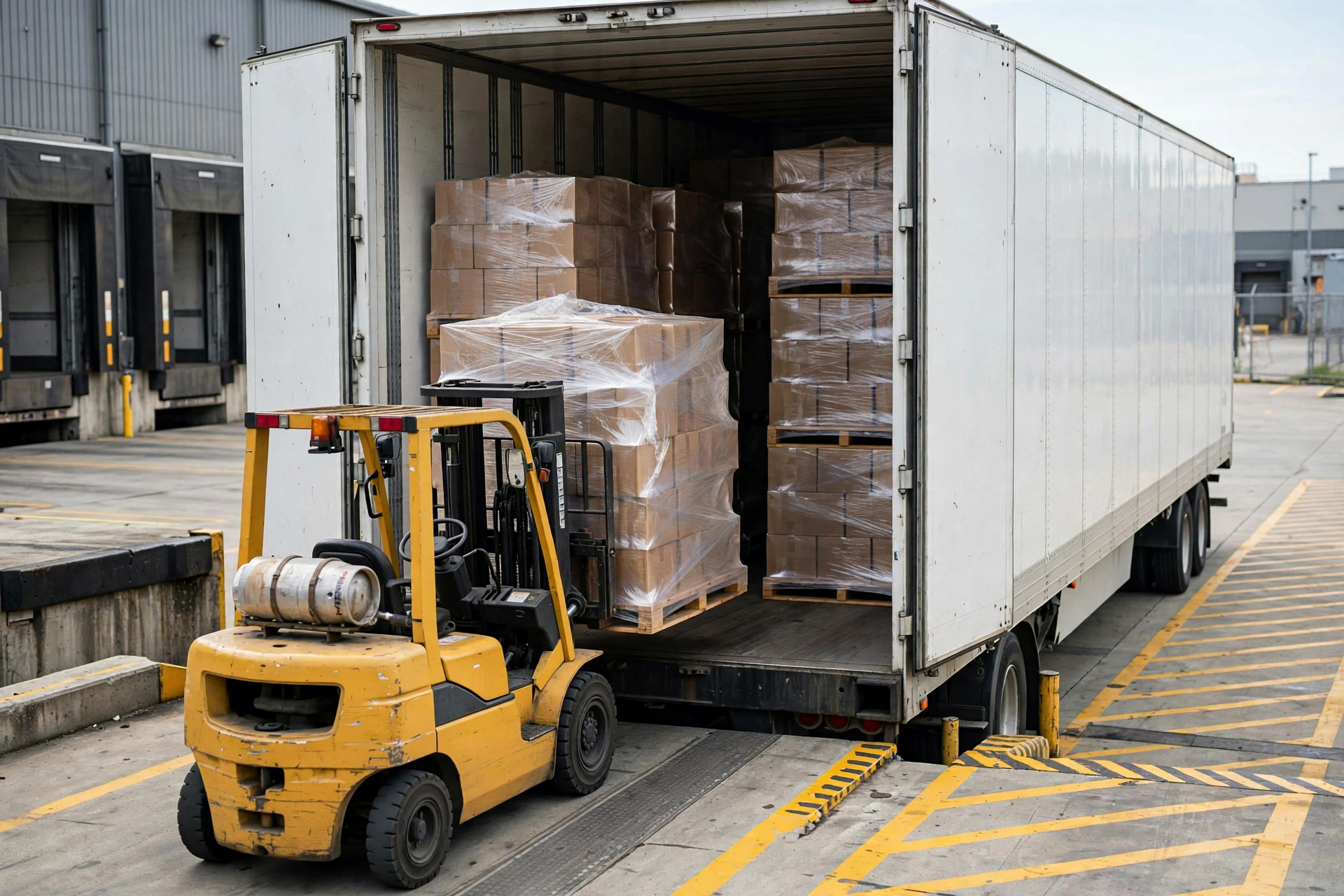
Here's my rule of thumb: under 500 miles, book the truck and stop overthinking it. Over 700 miles, intermodal deserves a serious quote. Between 500 and 700, the answer comes down to how close you sit to a rail ramp. That's not my invention — it's the line the industry drew after years of tuition paid in real freight bills. Published market data backs it up: on long-haul lanes, intermodal typically runs 10% to 40% below truckload, and one measured Chicago–New Jersey lane showed intermodal contracts 21% under van rates, saving nearly $600 a load.
But don't get starry-eyed yet. The number on the quote and the number on your P&L are two different animals, with several layers of pain in between — the kind of pain a small warehouse owner feels in his bones. What follows is my honest accounting, paid for in real money.
One disclosure first: every specific rate I mention below comes from our own invoices. Lanes and seasons vary wildly, so treat them as stories, not benchmarks — always get a fresh quote from your carrier.
The $1,200 Difference: Why I Hesitated on Intermodal
Last October, a customer asked me to move 12 pallets from our little warehouse in Ontario, California to Elizabeth, New Jersey. The forwarder sent two quotes: about $3,900 for a straight truckload, about $2,700 for intermodal. A $1,200 gap. My first thought: free money. My second thought: hold on — we little guys can't afford "cheap" tuition.
It was routine replenishment stock, nobody's hair on fire. We took the plunge: the truck would've done it in 3 days, the intermodal box took over 5, and we banked a little more than $1,100. I felt like a genius. Linehaul, it turned out, had discount codes too.
Then came the plot twist. Peak season hit, the same customer had an urgent restock, and I — drunk on savings — put it on intermodal again. The box sat an extra day at the ramp. Delivery slipped by a day. No penalty, technically, but the customer's buyer called with a politeness that made my spine tingle. After that we made it a house rule: if the deadline can kill you, intermodal's discount is an illusion. The industry data is honest about this: intermodal typically adds 1 to 3 days over truckload (Chicago to LA: 2–3 days by truck, 5–7 by intermodal). Slowness isn't the sin. Slowness you didn't plan for is.
So here's our real predicament — and I bet plenty of small operators share it. It's not that we don't know intermodal is cheaper. It's that our freight is messy and lumpy, rush orders appear out of nowhere, and we're never quite sure we dare board the slow train.
The 500- and 700-Mile Lines: Where Intermodal vs. Truckload Flips
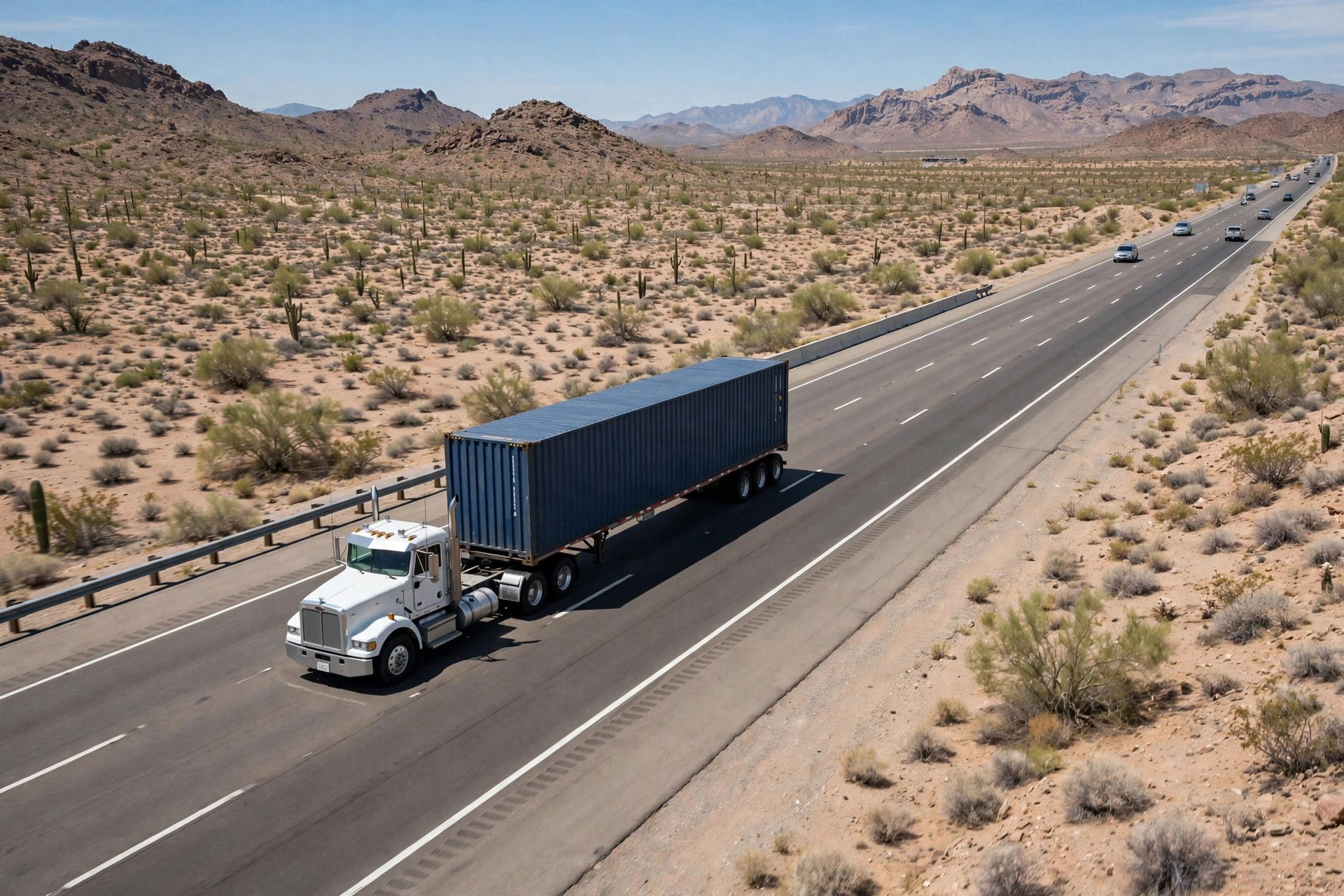
You can't decide on vibes, so here's the mechanics. Intermodal is three legs: truck drayage to the rail ramp, the long rail haul, truck drayage to the receiver. Rail's per-ton-mile cost is roughly a third of trucking's — but the drayage and terminal handling on both ends are fixed costs. They don't care how far the train goes.
The longer the haul, the thinner those fixed costs spread, and the more rail's efficiency dominates. That's where the lines come from:
- Under 500 miles: don't even think about intermodal. Two drayage legs plus terminal handling eat the rail savings whole. The truck is faster and cheaper. Iron law.
- 500–700 miles: the gray zone. If both ends sit close to a ramp (say, within 50 miles) and your volume is steady, intermodal can win. If either end is far, or your volume wobbles, the truck is the calmer choice.
- Over 700 miles: rail's scale starts to crush it, and intermodal probably wins — as long as your timeline allows.
Our own mental map: Ontario to Chicago, a bit over 2,000 miles — intermodal without blinking. Ontario to Phoenix, 300-odd miles — truck without blinking. The gray zone is the only place that costs you brain cells.
Cheap Isn't Always Cheap: Intermodal's Hidden Costs Live in the Drayage
This is the contrarian take I most want you to take home: a quote that says "30% cheaper" can land on your books as 10% — or even cost you money.
Earlier this year we had a load from Ontario to Dallas, 1,400-plus miles. By the distance rule, intermodal should've won walking away. The quotes: $2,450 door-to-door intermodal, $2,380 truckload. Intermodal was $70 more expensive. I stared at my screen for a while. The autopsy: our origin sits 60-plus miles from the ramp (pricey drayage), the destination ramp to the customer's warehouse was another drayage leg, plus chassis fees and terminal handling. Everything rail saved, the two ends gave back.
The hidden-cost checklist, each line paid for with our own tuition:
- Drayage, both ends: origin warehouse to ramp, ramp to receiver. A few hundred dollars a leg is normal, and the farther from the ramp, the uglier it gets.
- Chassis and terminal handling fees: buried in the quote's fine print, invisible until you ask line by line.
- Detention and storage: trains don't wait for anyone. If your receiver unloads slowly, the meter runs harder than anything a truck would charge you.
- The apples-to-oranges quote: truckload quotes are usually door-to-door, all-in. Intermodal quotes often cover just the rail leg. Comparing a rail-leg price to a door-to-door truck price is how people fool themselves.
So there's exactly one iron rule for comparing: compare door-to-door, all-in, nothing else. Get the drayage, chassis, handling, and detention itemized. If a forwarder won't break it down, find another one. Every dollar in a small warehouse has to be spent with its eyes open.
Volume Is the Ticket: How a Small Warehouse Rides the Intermodal Train
Second contrarian take, and it stings a little: if you're small, don't force intermodal. Volume is the ticket.
Intermodal carriers fall in love with one thing: the same number of boxes, every week, rain or shine. They need steady volume to fill trains. An operation like ours — a few hundred loads a year, lumpy as oatmeal — gets the "walk-in customer" price, which sometimes genuinely loses to truckload. The big boys' quarterly negotiations and annual contracts? We don't get a seat at that table, and we don't have the volume to earn one.
So what do we little guys do — just watch the discount from the sidewalk? We developed four workarounds, each one invented under pressure:
First, consolidate. We talked a customer into changing the rhythm from "a load Tuesday, a load Thursday" to "one fixed batch a week on intermodal." Volume went from two wobbly loads to three or four steady ones, and the intermodal quote immediately improved by more than 10%. The customer was happy too — cheaper freight means cheaper landed cost for them.
Second, ride-share. We split an intermodal box with two other small warehouses in town. Sounds scrappy, works beautifully: the combined volume finally earned us a "real" price. One tip — put responsibilities, timelines, and cost splits in writing first. Clear accounts make long partnerships.
Third, pilot before you commit. Never sign long-term on day one. Run one or two non-urgent loads on intermodal, log the actual transit time and the actual total cost, and build your own lane report card. Our house rule now: two pilot loads on any new lane before we switch it in bulk.
Fourth, peak-season survival. When trucks are scarce and spot rates go to the moon, intermodal is often the mode that still has capacity. During a tight market stretch this year, two of our lanes survived purely on intermodal — two days slower, but the freight kept moving. For a small warehouse, "kept moving" is survival itself.
Here's the table we've used internally for the better part of a year — distance, volume, and urgency, three dimensions, look it up directly:
| Distance | Urgency | Volume / frequency | My call |
|---|---|---|---|
| Under 500 miles | Any | Any | Truckload. Don't even knock on intermodal's door. |
| 500–700 miles | Urgent, must arrive in 3 days | Any | Truckload |
| 500–700 miles | Flexible | 2+ loads/week, steady | Get an all-in intermodal quote; switch if both ends are near a ramp |
| 500–700 miles | Flexible | Sporadic | Truckload, don't bother |
| Over 700 miles | Urgent, stockout risk | Any | Truckload — the deadline is the deadline |
| Over 700 miles | Flexible | 3+ loads/week, steady | Intermodal — pilot 1–2 loads, then switch in bulk |
| Over 700 miles | Flexible | Sporadic | Truckload; or find a forwarder to consolidate, don't force intermodal solo |
Intermodal isn't a big-company privilege — but its discounts aren't free for the taking either. Three things to remember: don't talk until you're past 700 miles, only compare door-to-door, and if your volume is thin, consolidate or ride-share. We small warehouses can't afford the big companies' posturing — but when it comes to counting pennies, nobody does it better than us.
Small warehouses have their own way of surviving.
By Xiao Ma, Small Warehouse Owner