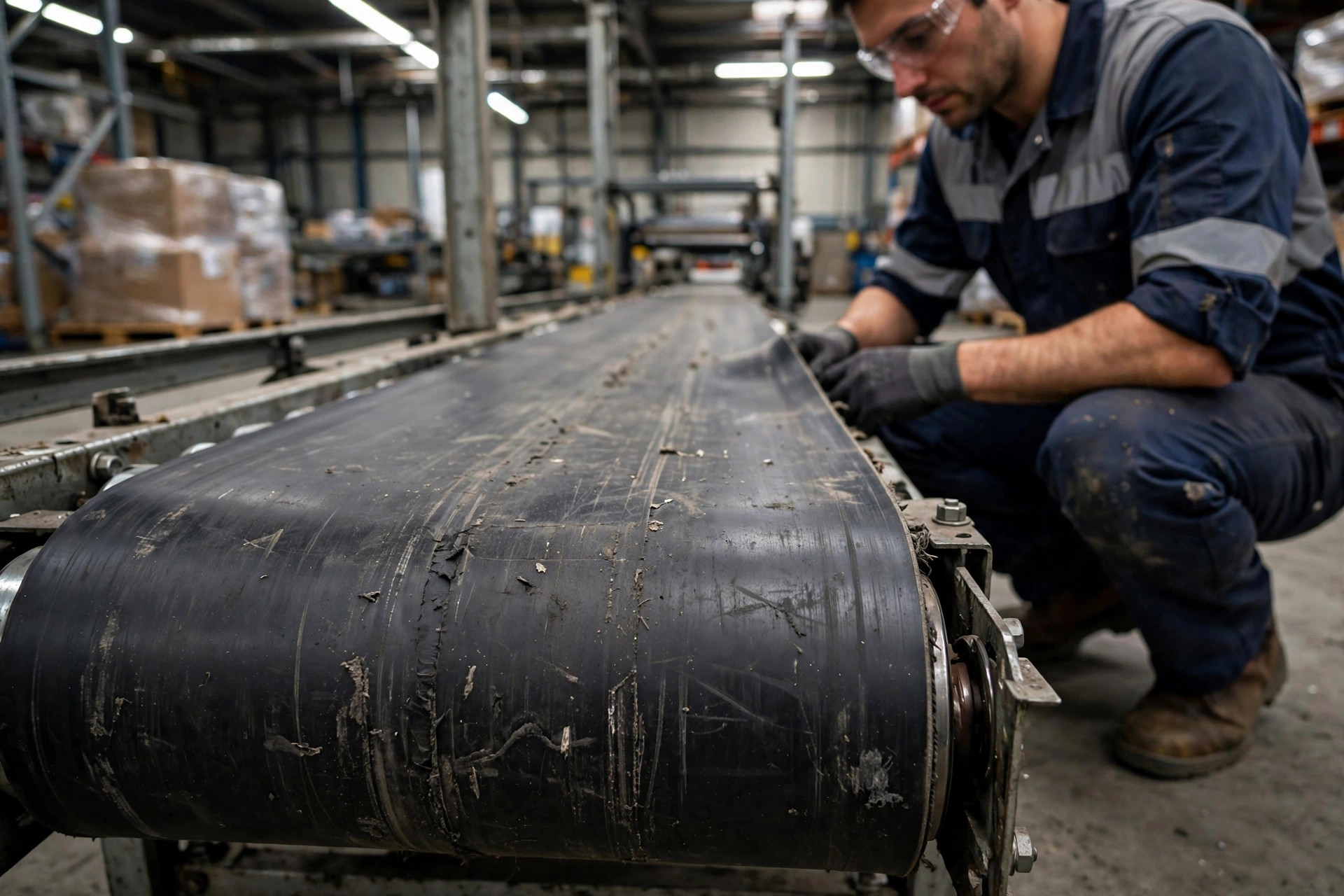
How long does a conveyor belt last? In a typical warehouse running two shifts, expect 3 to 5 years. With disciplined maintenance, the same belt can run 8 to 10. That gap — between a belt that dies at year three and one that retires at year eight — more than doubles your annualized cost. Nobody hands you that math. You pay for the lesson either way.
The conveyor belt lifespan formula: what one year of belt really costs
Finance people look at equipment through one lens: annualized holding cost.
Annualized holding cost = (belt price + installation + lifetime maintenance) ÷ actual years of service
Take a typical 100-meter EP fabric-core belt on a main sortation line (all figures are industry-range magnitudes for illustration; confirm exact numbers with current supplier quotes): belt plus installation lands in the low tens of thousands of dollars; splices, re-tensioning, and idler replacements over its life add several thousand more. Run it 3 years, and every year costs you a full share of that total. Stretch it to 8, and the annual cost drops by more than 60 percent. And that is before downtime — half a day of a dead main line, with overtime to clear the backlog and late-shipment penalties, routinely costs more than the belt itself.
Five things that shorten conveyor belt life (and what each one costs you)
I have reviewed maintenance logs from more than a dozen warehouses. Belts die young for the same five reasons, every time:
1. Mistracking. A belt that runs off-center grinds its edge against the frame. Life cut in half. This is the most wasteful way to kill a belt — half an hour to realign the tracking, versus a new belt three months later.
2. Overloading and impact loads. Rated for 50 kg, loaded with 80 kg cartons all day. The splice goes first — it is the weakest point on the whole belt. Splice it once, splice it twice, replace the belt the third time.
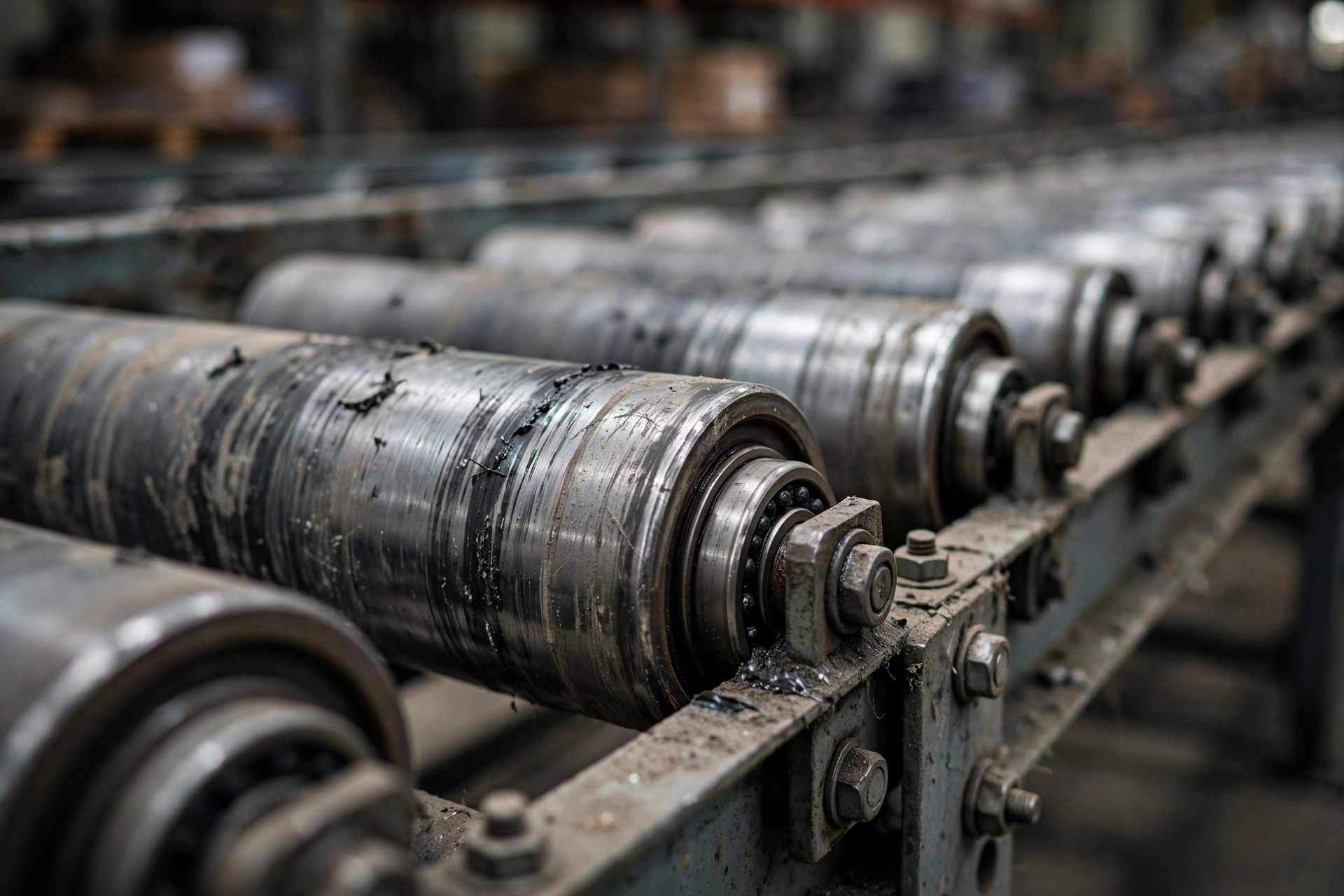
3. Seized idlers. An idler that stops turning turns into a friction heater. The belt drags across it, and the cover compound burns into pockmarks. A line has dozens of idlers; two or three seized ones go unnoticed for months, and the belt is scrap within half a year.
4. Environment. Dust, moisture, chemicals. Cleaning agents in food warehouses, solvents in chemical storage — all of them age the rubber cover faster. Belts at open or semi-open dock doors get a year of UV and turn hard and cracked.
5. Cleaners installed backwards or scrapers set too tight. A device meant to protect the belt becomes a planer shaving it 16 hours a day. That is paying money to shorten belt life.
Belt lifespan by material: which belt is actually cheapest?
People who buy on purchase price alone keep buying cheap and paying dear. The table below compares annualized cost on a 100-meter main line, 16 hours a day (price tiers are industry-range magnitudes for illustration only):
| Belt type | Purchase + install (tier) | Typical lifespan | Annualized cost (tier) |
|---|---|---|---|
| EP fabric-core (standard) | Low | 3–5 years | Medium |
| PVC solid-woven (light duty) | Lower | 2–4 years | Looks cheap, replaced often |
| Steel-cord (heavy duty) | High, ~2–3x standard | 6–10 years | Lowest for heavy-duty use |
The cheapest belt to buy is usually the most expensive to own. Steel-cord costs two to three times more up front but lasts roughly twice as long — in heavy-duty service its annualized cost is the lowest of the three. Buying a belt without computing annualized cost is like buying a car without asking about fuel economy.
Two warehouses, two very different bills
In 2023, a 3PL warehouse in Ontario, California scrapped the belt on its 60-meter main sortation line after two and a half years — the edge had worn clean through. The maintenance log told the story: mistracking had been visible for three months, never corrected; tension was set by a veteran technician's "feel," drifting loose and tight. One replacement — belt, labor, and half a day of downtime — wiped out nearly half a year of that line's sortation margin. A half-hour tracking check per week would have prevented it.
Contrast that with an e-commerce fulfillment center in the Midwest. Its EP belt went live in 2021 and was still running in 2026 — five full years, no major splice work. The secret costs almost nothing: a monthly checklist covering tension, idler rotation, cleaner angle, and splice condition, each check signed off by name; a batch of worn idlers replaced every quarter. Five-year maintenance spend stayed under 30 percent of the belt's original price.
Extending conveyor belt life: four levers worth paying for
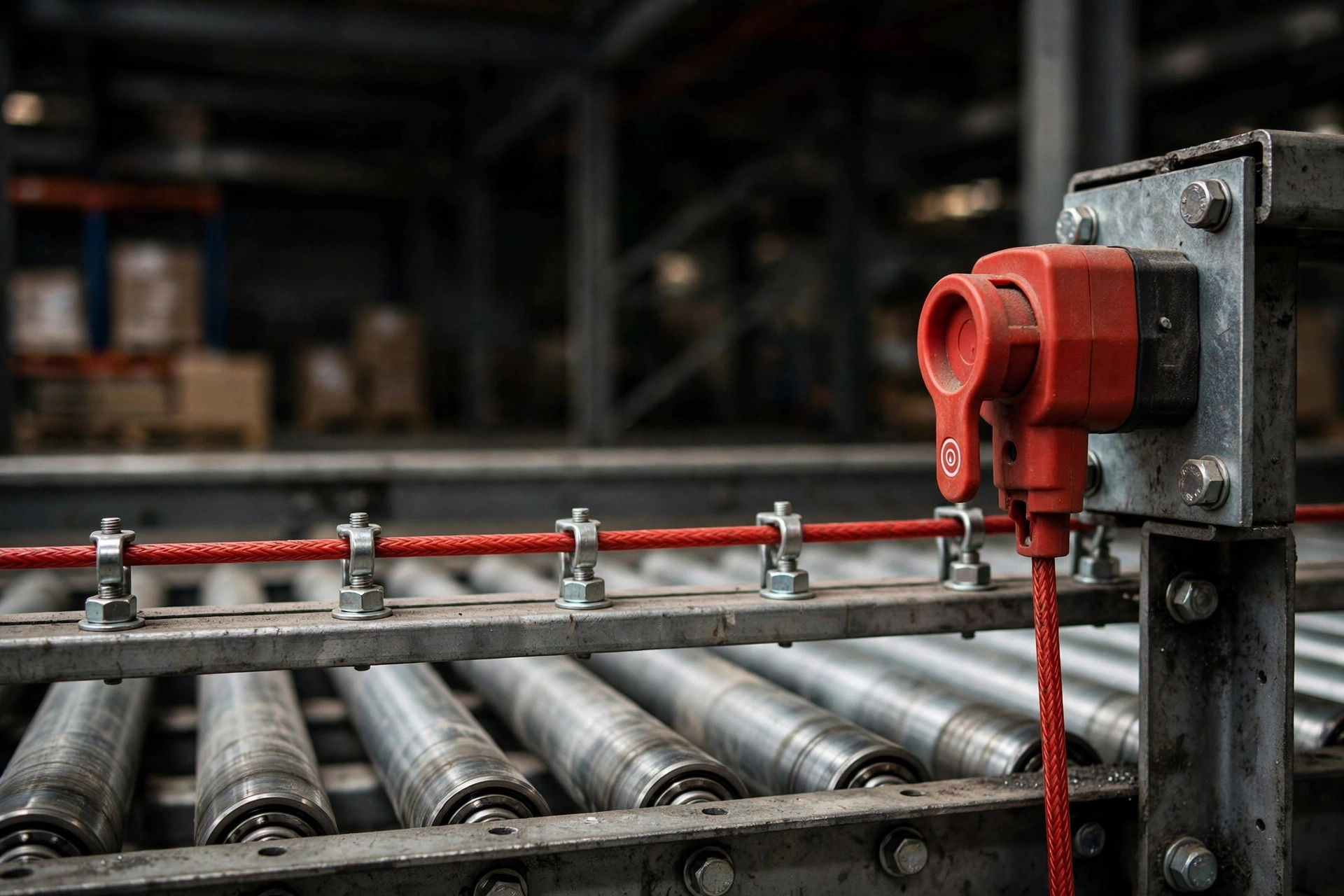
Mistracking alarms. A basic belt-misalignment switch costs a few hundred dollars and stops the line before the edge grinds away. Do not wait until the belt is worn through to notice.
A checklist, enforced. Tension, idlers, cleaners, splices — four items on a monthly SOP, with a name attached to each check. The system costs nothing; the discipline costs a little attention.
Preventive idler replacement. Idlers are cheap. One seized idler drags the whole belt down with it. Walk the line every quarter; replace the stuck ones outright instead of nursing them along.
Splice quality. A vulcanized splice outlasts a mechanical fastener splice by a wide margin. The extra cost, amortized over the belt's life, rounds to zero. Saving money on splices is the dumbest saving there is.
Here is the counterintuitive part: the most expensive belt is usually the cheapest. The belt itself is only about a third of the line's total cost of ownership — downtime and labor are the rest. A cheap belt replaced twice in five years, with two shutdowns; a good belt replaced once. Once you price in the downtime, the good belt typically comes out around 30 percent cheaper on total spend. The rule I give every client: expensive equipment has exactly one flaw — the price. Cheap equipment has every flaw except the price.
Repair or replace has a hard line too: if a single repair costs more than 40 percent of a new belt, or the same spot has been repaired three times in a year, replace it. The money you keep spending on patches adds up to a new belt anyway.
So here is a conclusion you can actually compute: take your conveyor's total spend — purchase, installation, every maintenance dollar — and divide by years of service. That is your annualized belt cost. If it runs well above your peers, do not blame belt quality first. Pull the tension logs and the inspection sheets. Nine out of ten belts that die young have their cause of death written in records nobody reads.
By Lao Zhou, Logistics Cost Analyst