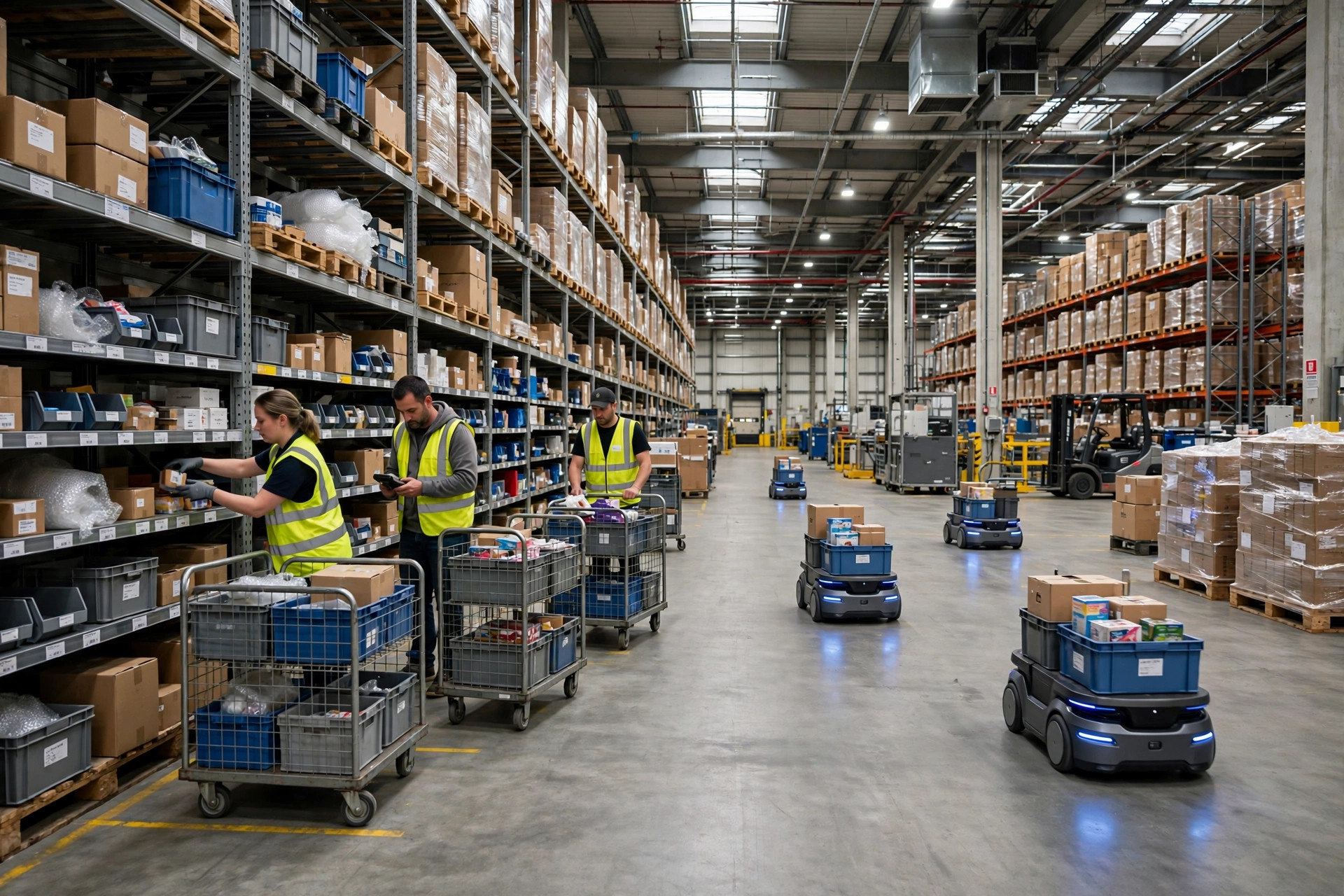
Nine-tenths of a cent. That's the per-carton gap between hot-melt glue and packing tape that I measured over two weeks at a 120,000-square-foot 3PL in Ontario, California, back in 2025 — 8,000 cartons a day, peaking at 14,000, nearly all of them the same 16×12×12-inch e-commerce box. The owner wanted to rip out his tape sealers and go hot-melt. I told him not to decide until we'd run both and counted everything: consumables, equipment, downtime, the works. All figures below are measured approximations from that pilot.
Here's the part nobody argues about: on consumables alone, hot melt wins. A 2-inch BOPP tape roll runs about $1.60–$2.20 per 110-yard roll at case-lot pricing (2025 U.S. market, approximate), and a standard carton eats roughly 1.1–1.3 meters of tape. That lands tape at about 2–3 cents a carton. Hot-melt pellets ran $3–$4 per kilo, and a two-bead seal used 3–5 grams per carton — about 1.2–2 cents each. Split the middle: 2.5 cents for tape, 1.6 for hot melt. A 0.9-cent saving sounds like a rounding error until you multiply it by 8,000 cartons a day. That's $72 a day, $21,600 over a 300-day year. On a 14,000-carton peak day, it's $126. This is why hot-melt vendors get to claim "30% cheaper consumables" with a straight face. The number is real.
Hot Melt Wins the Consumable Math; Tape Wins the Capital Math
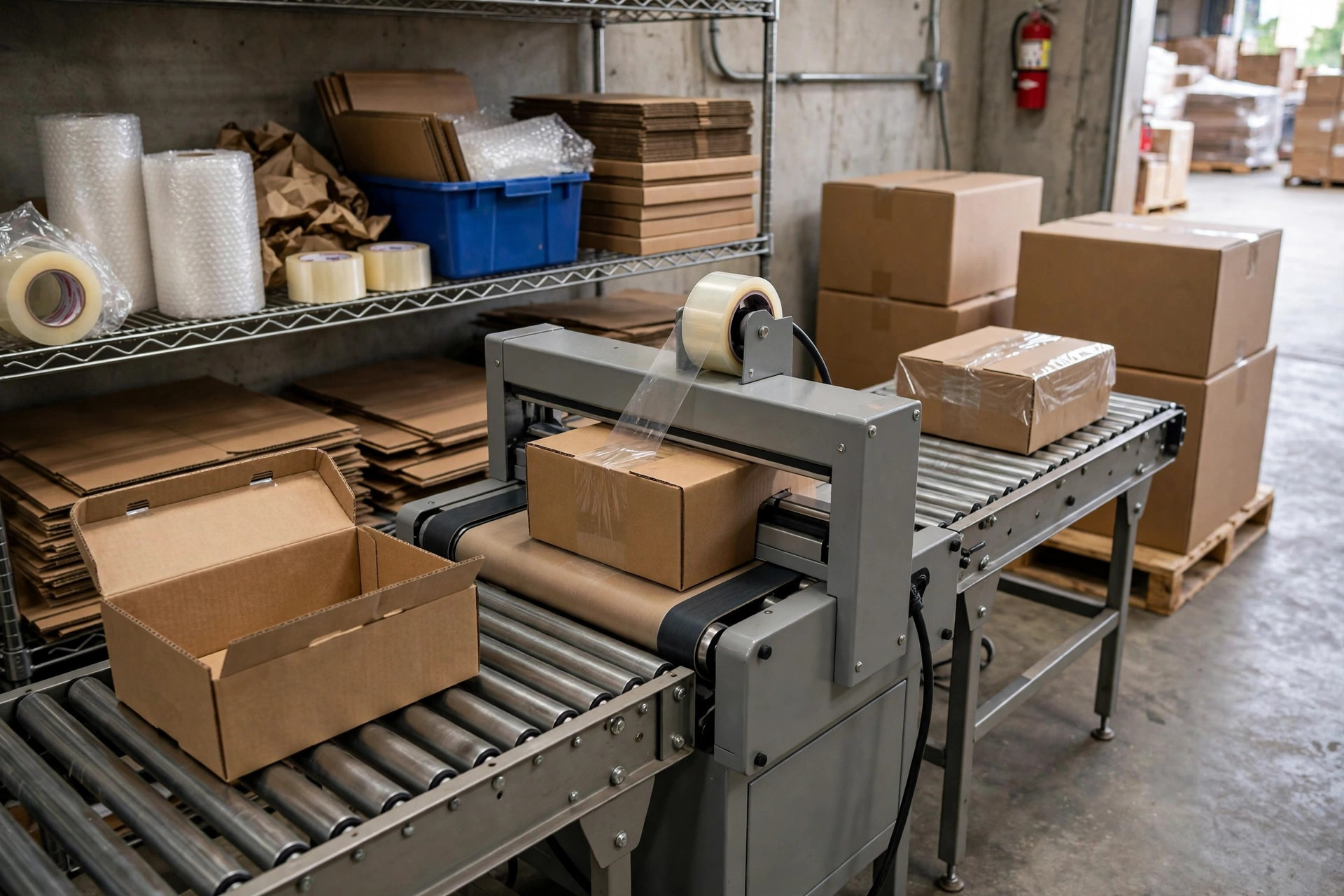
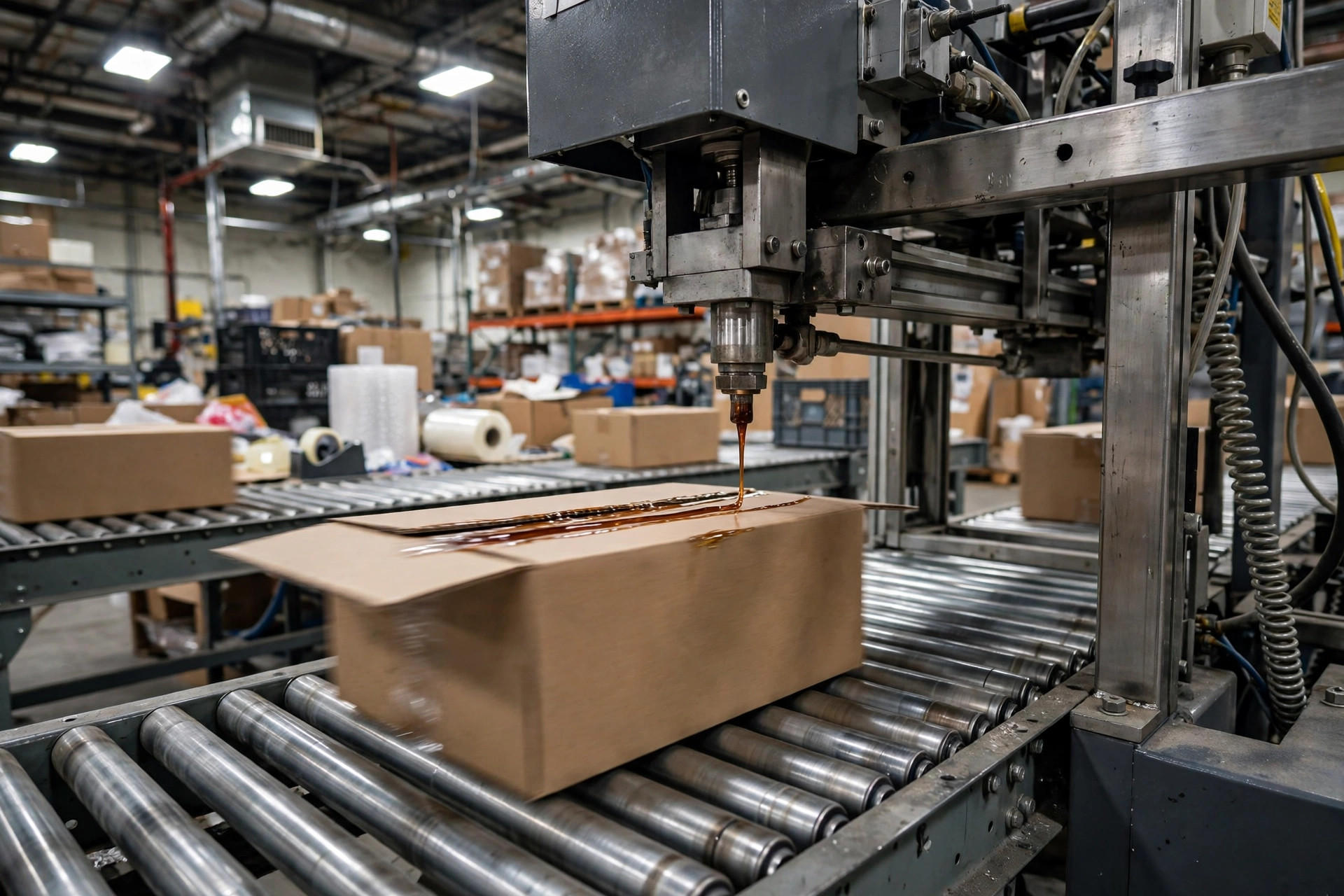
Now flip to equipment, where the story reverses hard. A semi-automatic tape case sealer costs $3,000–$6,000, and you plug it in and go. A hot-melt line — melter unit, dispensing heads, conveyor rework, temperature controls, guarding — runs $18,000–$35,000 installed (get a real vendor quote; this is a range, not a price). Call the gap $20,000. At 0.9 cents saved per carton, payback takes 11–12 months at 8,000 cartons a day, maybe 7 months if your peaks are heavy. At low volume, you might never get there.
Two hidden costs never appear on the quote, starting with maintenance. A hot-melt system is a temperamental machine: nozzles run at 160–180°C year-round, adhesive chars at those temperatures, and somebody has to clean the nozzles every shift and swap filters on schedule. One clogged nozzle stops the whole line for 20 minutes minimum. A tape machine? Thirty seconds to change a roll, essentially zero maintenance. I watched an e-commerce warehouse in Fontana install hot-melt and spend more on maintenance labor in three months than they saved on adhesive — not because the equipment was bad, but because nobody owned it.
Then there's energy and safety. The melter stays hot all day, roughly 3–5 kW per unit (check the nameplate), which is a few thousand dollars of electricity a year. And there's a 170°C nozzle hanging over the conveyor, which means burn-hazard procedures and an extra half day of training for every new hire. Small money, but money the tape option never asks for.
Tape has its own slow bleed, though: waste. The leader gets torn off at every roll change, a crooked seal gets ripped off and redone, and roll changes, jams, and breaks eat tape all day — 5–8% waste is normal in my experience (measured approximation). And tape quality rides on the operator's hands that day; bring in temp labor for peak season and crooked, wrinkled seals spike with the complaints. Hot melt is machine-dispensed, so seal quality doesn't care who's on shift. That's the advantage the vendors undersell.
Want your own numbers instead of a vendor's brochure? Weigh it. Take 100 cartons, weigh a fresh tape roll (or a bag of pellets) before and after, divide the difference by 100 — that's your true per-carton consumable cost. With tape, watch the rework rate on crooked seals; with hot melt, watch for nozzle drool. Every drop on the conveyor is money burned for nothing.
Speed Favors Hot Melt — Until You Watch the Unboxing
On raw speed, hot melt is genuinely faster: vendors rate their sealers at 20–30 cartons per minute versus 15–20 for tape machines. It also has a quiet advantage with light cartons. Tape sealers can let a light box skate on the belt and seal crooked; a hot-melt head dispenses from above, so box weight doesn't matter and the bead lands exactly where it should.
Cold water time: on most 3PL pack lines, the sealer isn't the bottleneck — the human packing the box is. One packer does 6–8 cartons a minute. A sealer running 30 a minute buys you nothing. The speed card only matters when packing itself is automated and the whole line is running at full cadence. Below that, paying $20,000 extra for speed is theater.
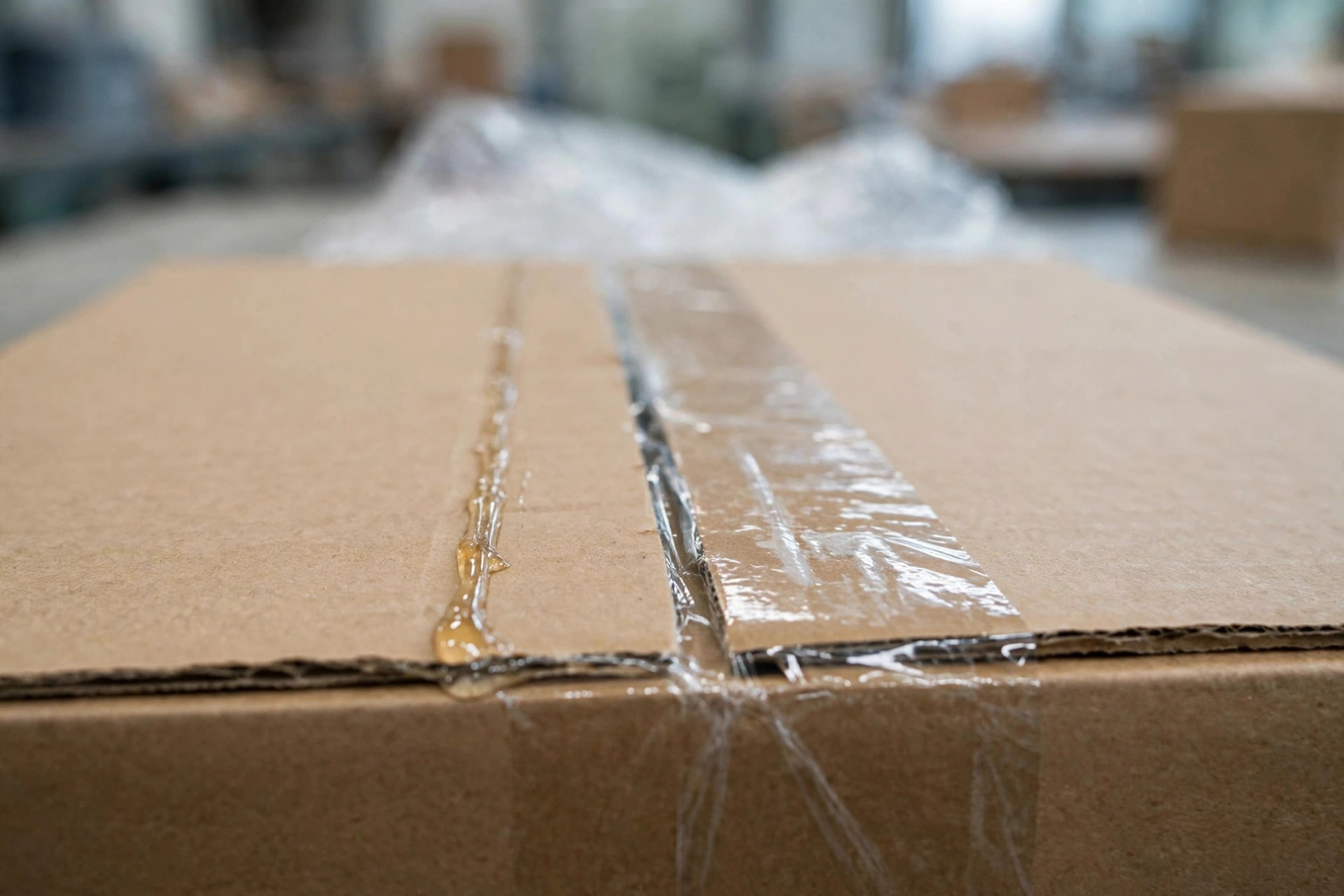
Then there's the unboxing experience, and this bill gets paid by your customer, not you. Tape tears the carton face, leaves adhesive residue, and a returned box is basically single-use. Hot melt is one or two beads along the center seam — pull and it opens clean, the box survives, and a returned carton can go right back out. Sounds like a hot-melt sweep? Not so fast. If the bead is laid too heavy, a customer can't tear it open by hand, and the experience is worse than tape. In my pilot, cartons with more than 6 grams of adhesive drew noticeably more unboxing complaints. Hot melt's unboxing advantage is tuned, not inherent.
One environmental footnote: plastic tape contaminates cardboard recycling streams; hot melt is comparatively easier to handle in repulping (check your local recycler's policy). If your brand leans on sustainability, that's a point for hot melt — but it won't pay back the equipment on its own.
So here's my verdict, in three tiers:
Under 5,000 cartons a day, mixed box sizes, heavy returns — stay with tape. Cheap equipment, zero changeover cost, anyone can fix it, and returned cartons reseal easily.
Over 8,000 cartons a day, uniform box sizes, steady volume — hot melt earns its keep. Twenty-plus thousand a year in consumable savings, cleaner unboxing, no skating light boxes — provided you assign someone to maintain the machine.
In between? It comes down to two things: your return rate and whether anyone will babysit a 170°C melter. Returns above 15% favor tape. No dedicated maintenance owner, don't touch hot melt.
Three numbers decide this for your building: cartons per day, how fixed your box sizes are, and how many of those boxes come back. Get those three straight — then tell me, which one would you buy?