Start with the math. A painting appraised at $500,000 sits in professional art storage for one year. Insurance at 0.5% per year costs $2,500. Storage runs $5–$15 per square foot per month; a standard 4×8 ft art crate occupies 32 square feet, so $160–$480 a month, or $1,920–$5,760 a year. Total annual carrying cost: $4,000–$8,000 and up — roughly 1–2% of the painting's value.
A pallet of consumer electronics worth the same $500,000 in an ordinary 3PL warehouse costs its owner a fraction of that in storage and insurance. That gap is the whole business. Fine art storage isn't warehousing with nicer shelves. It's the business of pricing uncertainty.
I analyze high-value cargo for a living, and fine art is the least reasonable cargo there is: one painting takes up half a pallet position and can be worth more than the building it sits in. Before a 3PL takes on an art client, three accounts have to be settled — climate, security, and insurance. Take the job without doing the math, and you've dug yourself a hole priced by the artwork's value, not by your rate card.
Climate Control: You're Not Paying for Electricity, You're Paying for the Right to File a Claim
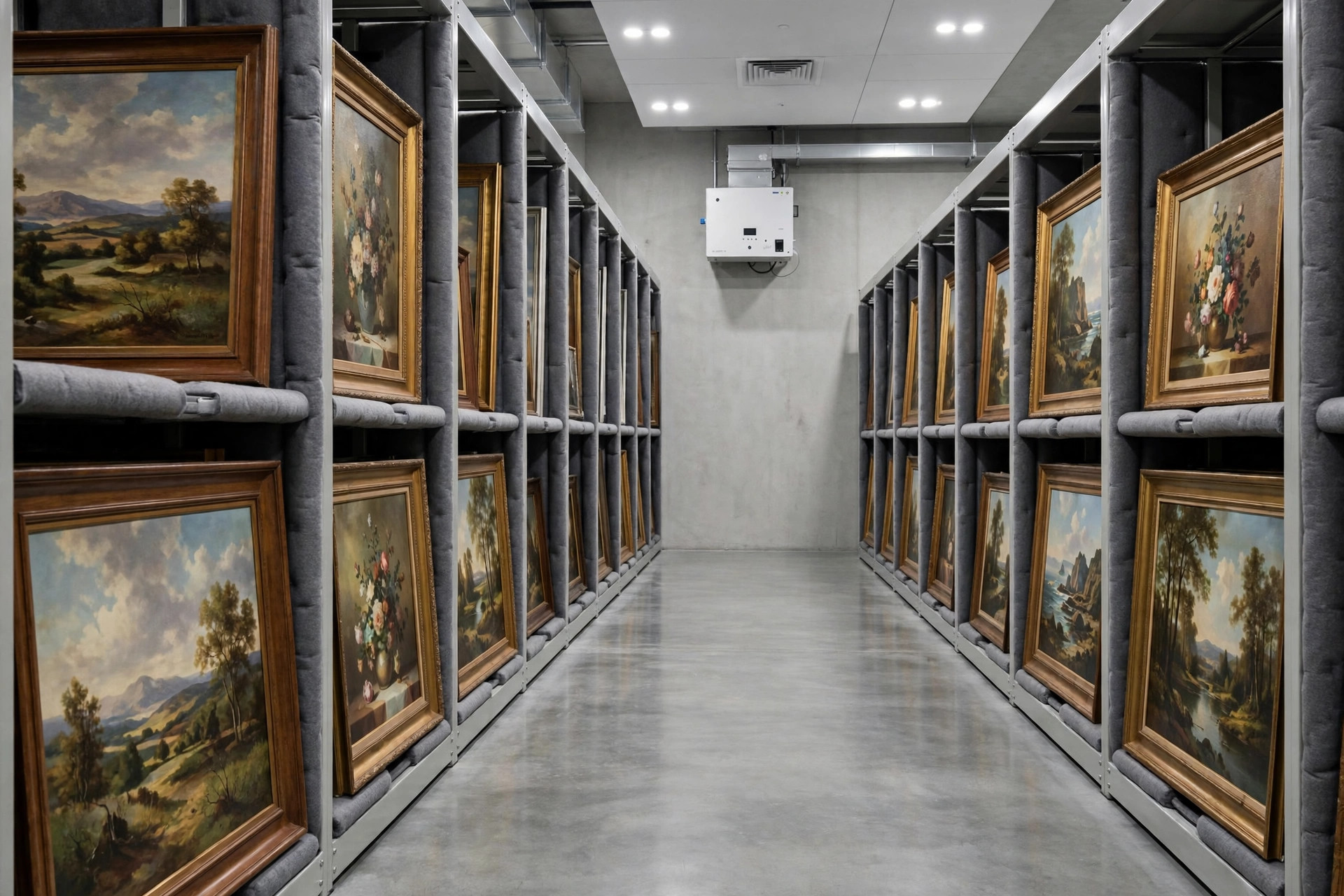
The industry standard is not a suggestion. The American Institute for Conservation's interim guidelines call for 45–55% relative humidity with ±5% allowable fluctuation, and 15–25°C. The museum loan-grade ASHRAE Class AA spec tightens that to 15–25°C ±2°C and 50% RH ±5%. In practice, professional art warehouses hold a setpoint of about 20°C ±2°C and 50% ±5% RH, all year.
Here is the part 3PLs miss: insurers write climate clauses into the policy. When a humidity-damaged canvas triggers a claim, "storage environment did not meet the agreed standard" is one of the easiest denial arguments an underwriter has. A 24-hour data logger isn't a gadget — it's your evidence chain. Traveling-exhibition facility standards (Exhibits USA) require 68–72°F, 45–55% RH, with no more than 10% fluctuation in any 24-hour period.
From the cost side, climate control is fixed cost: equipment plus year-round energy. The higher the stored value, the thinner that fixed cost spreads. That's why professional art warehouses love taking an entire collection from one collector, and quote absurd numbers for "just one painting" — the fixed cost can't be amortized over a single piece.
Security: Two People, 24 Hours, Zoned Access
A professional art warehouse's security setup mirrors a museum vault:
- 24/7 alarm plus full CCTV coverage
- Zoned, authorized access: only pre-cleared staff enter specific zones, and the system logs who entered which zone on which day
- The two-person rule: high-value pieces are never handled by one person alone
- Non-water fire suppression: sprinkler water is as destructive to a painting as fire, so gas-based systems are standard
- Courier handoff discipline: condition reports with photos before and after every move
The case that proves the point: in a 2012 New York lawsuit (public court record), a work of art worth over $10 million was damaged during packing and moving, with losses exceeding $1 million. The handler placed two valuable works too close together, violating its own operating policy. The court found that sufficient to allege gross negligence and refused to dismiss the case. The math from that case: a written handling policy isn't decoration. One violation, seven figures.

One Table: General Warehouse vs. Fine Art Warehouse
| Cost item | General warehouse | Fine art warehouse |
|---|---|---|
| Climate | Ambient + ventilation | 20°C ±2 / 50% ±5% RH, year-round (AIC / ASHRAE AA) |
| Security | Roller door + basic CCTV | 24/7 alarm + CCTV + zoned authorized access + two-person rule |
| Fire suppression | Sprinklers | Non-water (gas) suppression |
| Labor | General operators | Trained art handlers |
| Insurance | Owner's problem, or by weight | Nail-to-nail or storage-only, 0.1%–2% of value per year |
| Storage pricing | Per pallet / per sq ft | Professional art storage ≈ $5–$15/sq ft/month |
| Liability cap | Contractual limits (per shipment / by weight) | Agreed / appraised value, full amount |
Insurance: Nail-to-Nail or Storage-Only — the Premium Differs by an Order of Magnitude
Two concepts a 3PL must get right:
- Nail-to-nail (wall-to-wall) coverage: from the moment the work leaves the wall at origin (the first nail) to the moment it's reinstalled at destination (the last nail) — packing, transit, and storage in between, all covered.
- Storage-only coverage: covers just the time the work sits in your warehouse. Cheaper, with a hard edge at the loading dock door.
Premium rates: scheduled fine art policies typically run 0.1%–2% of insured value per year. Well-documented collections in low-risk, well-secured facilities land below 0.5%; works that travel and go on exhibition loan push toward the top of the band. At 0.5%–1%, a $1 million collection costs $5,000–$10,000 a year to insure.
Three claim lessons, all real:
- AXA v. Fortress Fine Art Storage (New York courts): artwork suffered water damage while in storage; the insurer sued the warehouse operator in subrogation, fighting over whether a roof leak was the operator's fault. The storage contract's liability cap and the insurance wording were the first battlefield — as they always are.
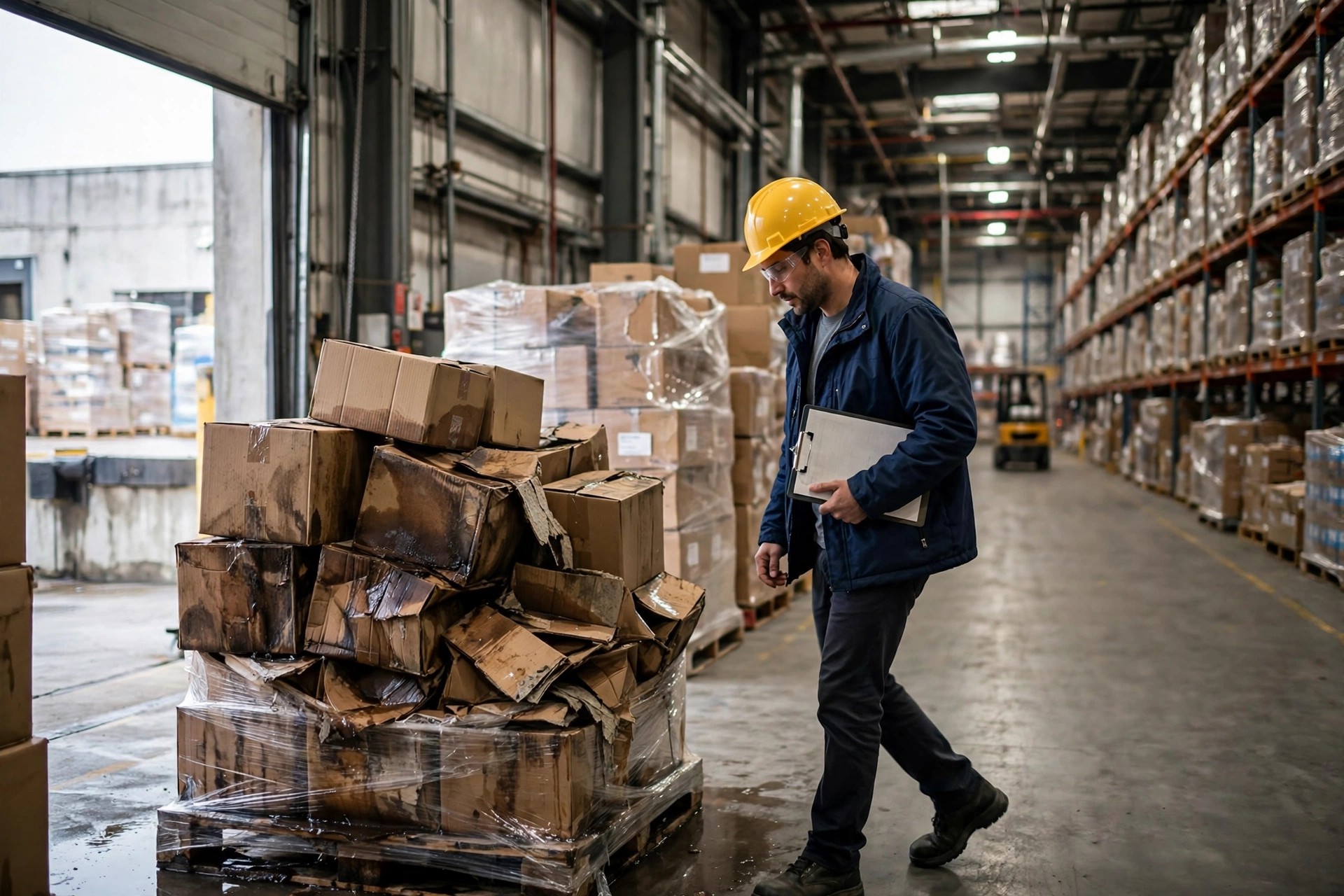
- The UPS denial: a customer shipped antique ceramics from Helsinki to New York; everything arrived damaged and the claim was denied — UPS is "not liable for the shipment of artwork products without a contract," and inadequate packing is the number-one reason art claims get denied.
- The packing exclusion: virtually no policy covers "improper packing." If your 3PL packs for the client, it must be museum-spec crates with acid-free, archival materials — otherwise the insurer examines the packing before it examines the damage.
And a counterintuitive one for the spreadsheet: the most expensive line item in fine art storage isn't the rent — it's the price of uncertainty. Higher value means a lower premium rate (bigger risk pool, security cost spread thinner), but a single incident's absolute dollar figure is terrifying. So the break-even point of this business isn't "how much storage revenue," it's whether loss frequency × value stays covered by premium plus pricing.
The Computable Conclusion
Before quoting an art storage client, finish this arithmetic:
Annual carrying cost ≈ storage ($5–$15/sq ft/month × footprint × 12) + insurance (value × 0.1%–2%) + amortized fixed cost of climate and security infrastructure
Decision rule: for orders where individual pieces are under $500,000 and total volume can't amortize the fixed security and climate costs, the quote must cover insurance + amortized fixed cost + at least 15% risk reserve — or you lose money on every order you take. Fine art storage is not a warehousing business. It's a risk-pricing business, and a 3PL that can't do this math should stay out.
By Lao Zhou, Logistics Cost Analyst