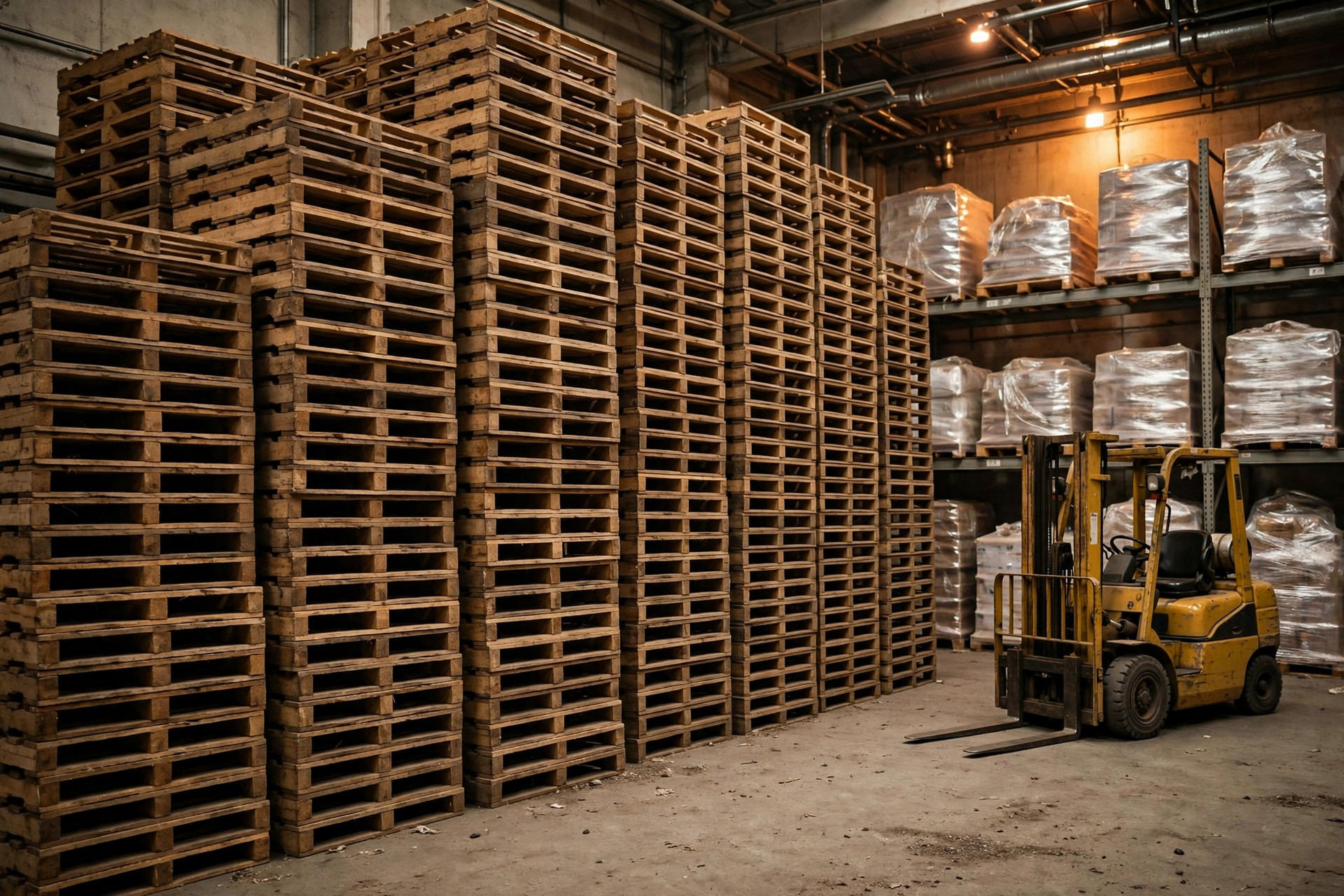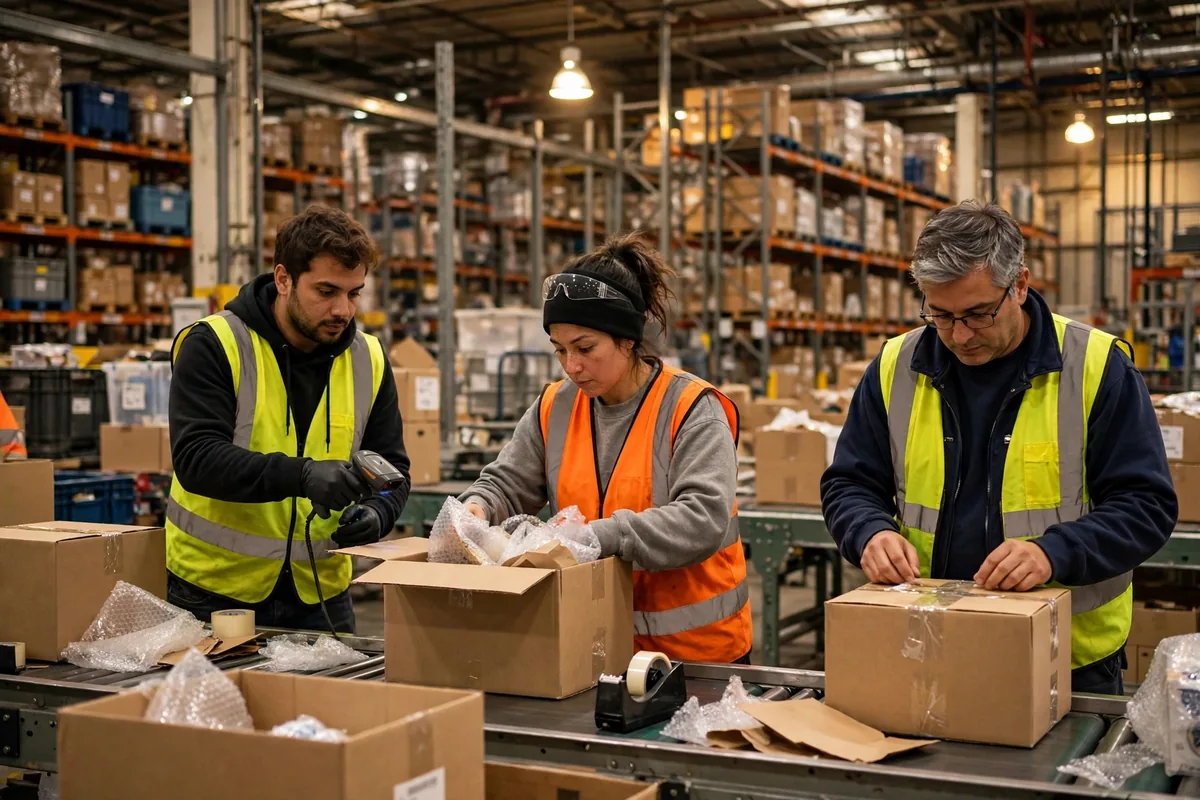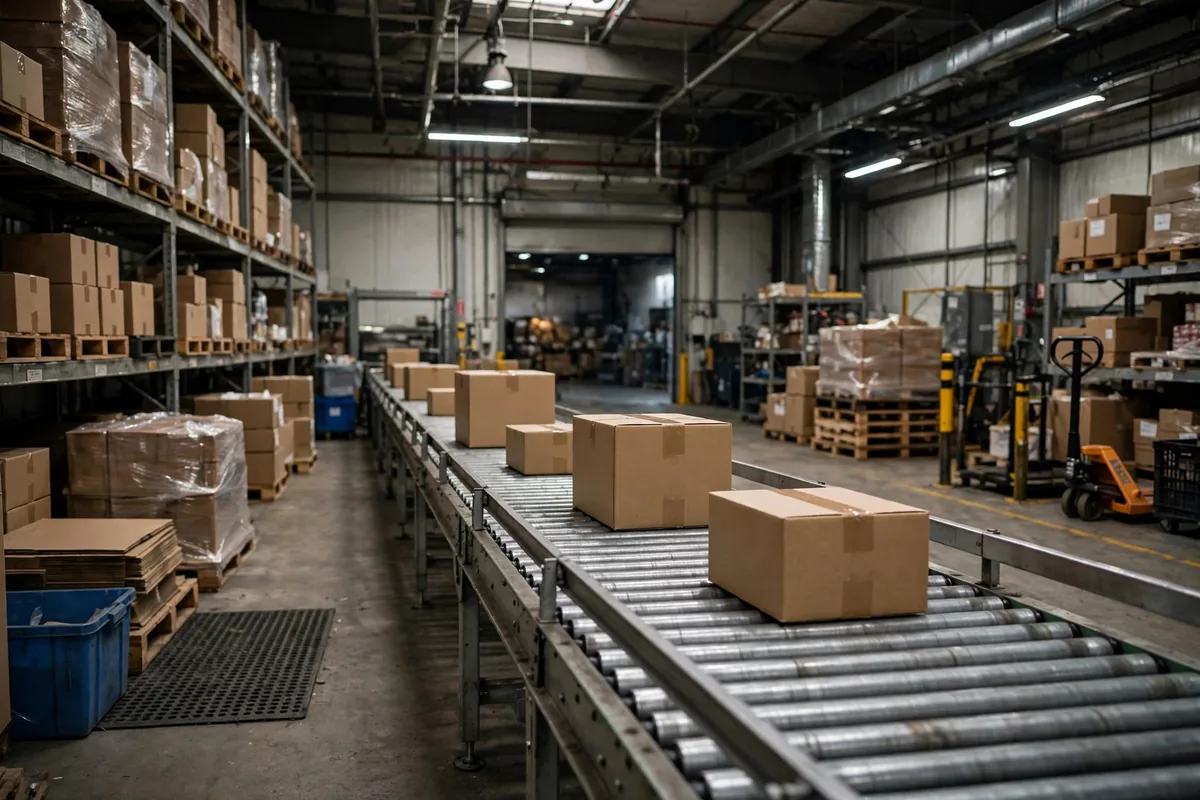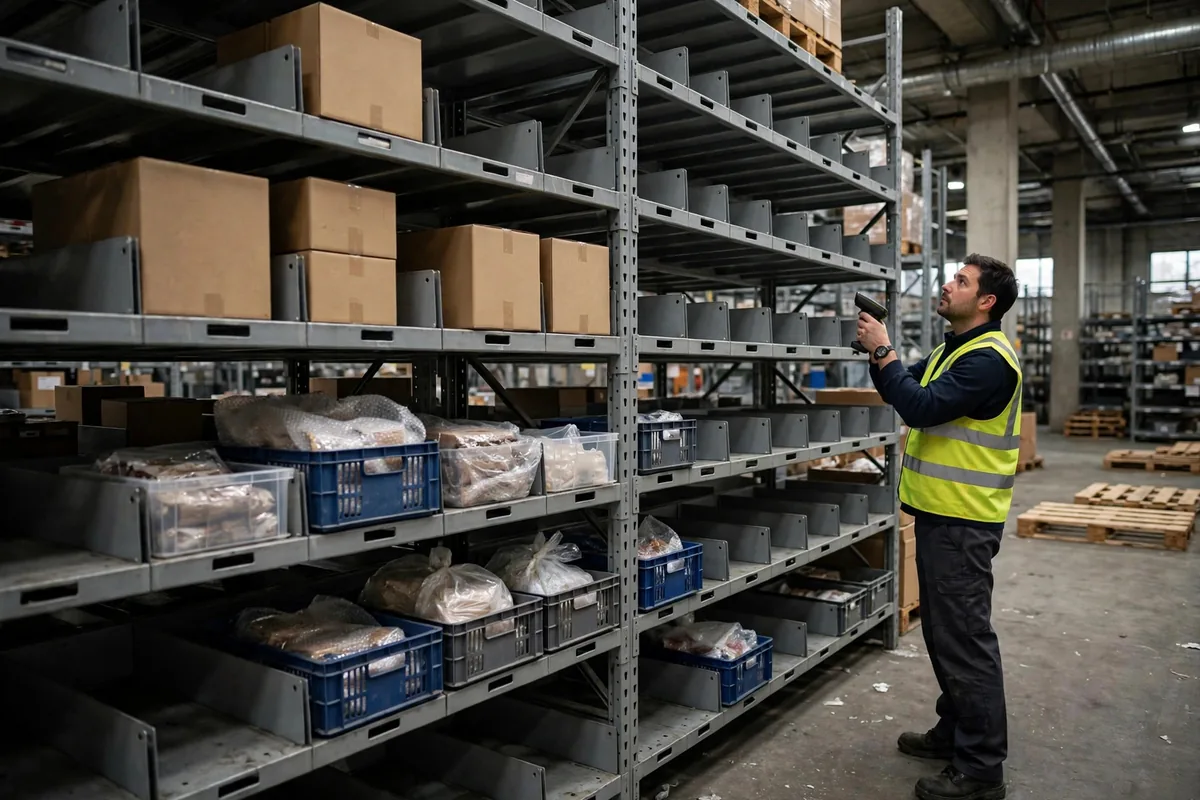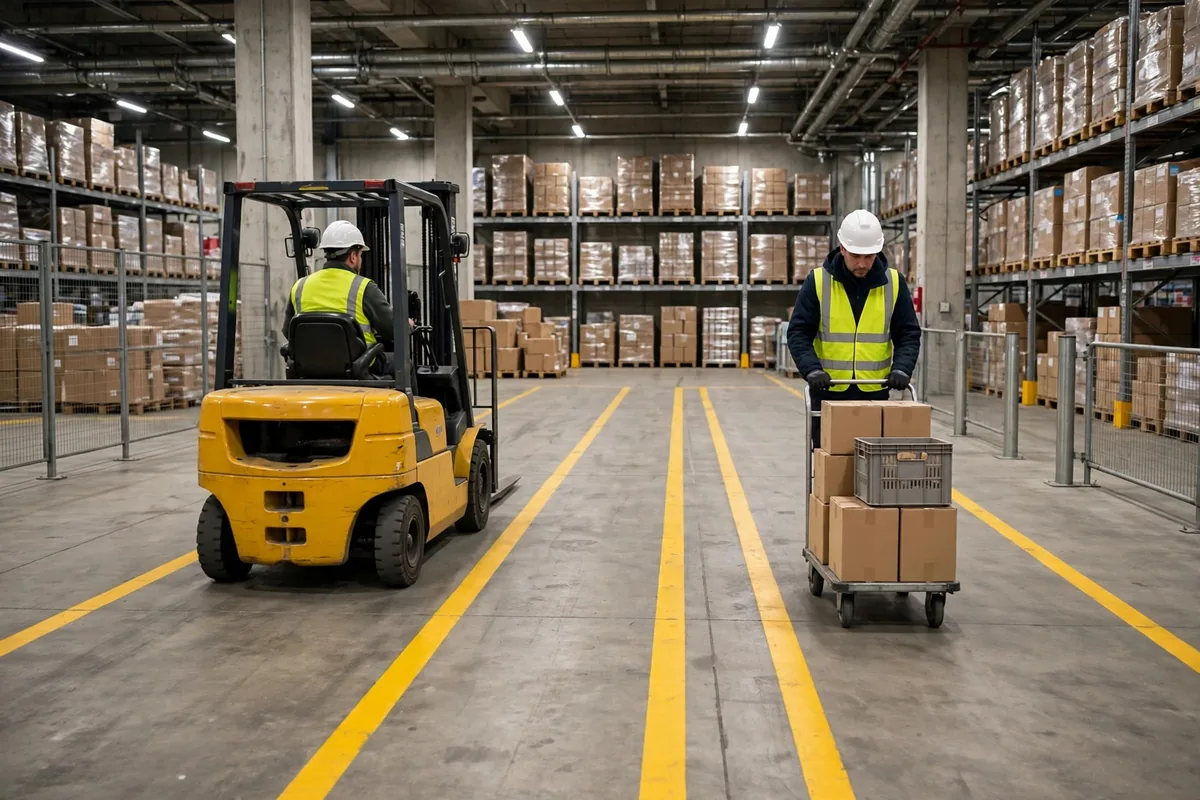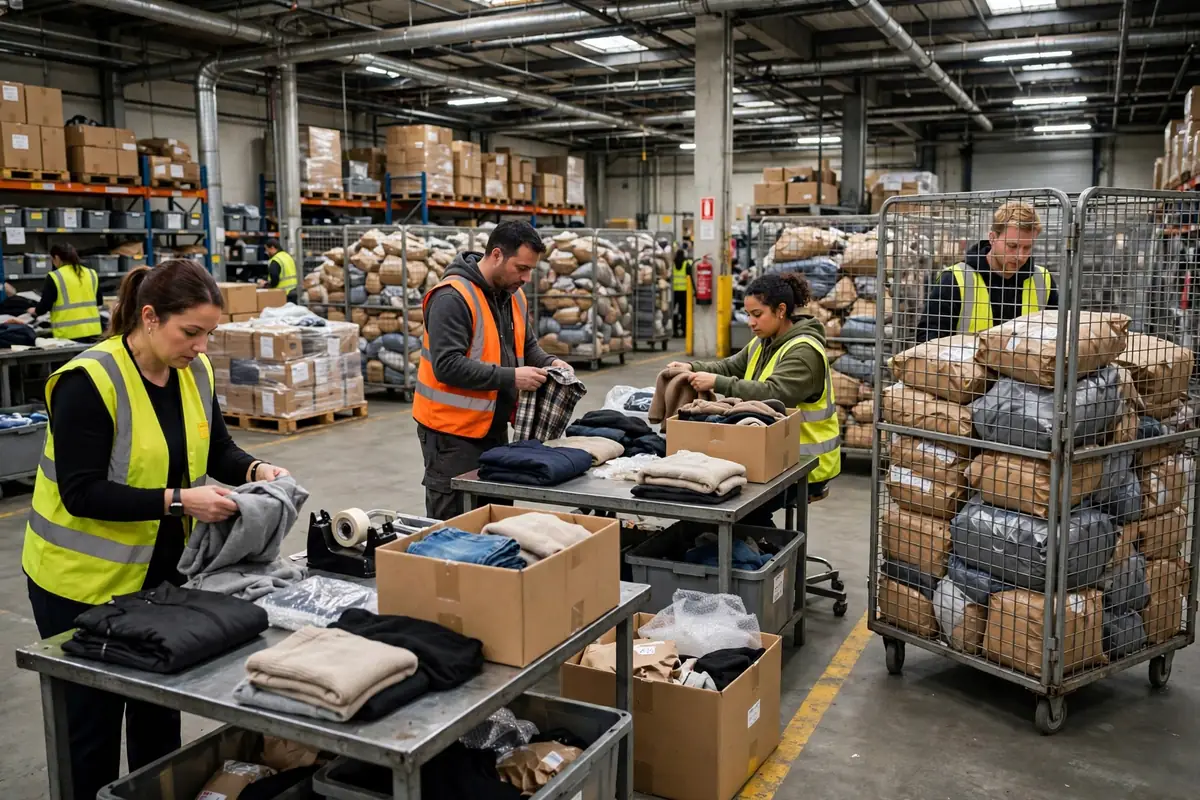
On the morning of January 2, the holiday returns surge was already waiting for me at the receiving door: my night crew stood between three pallets of returns at 6:30. No warning, no warm-up. Opened boxes everywhere: clothes, shoes, small appliances, tape torn and re-taped, labels wrinkled like rags. Let me be straight with you: if you keep receiving, inspecting, and putaway at your normal pace, by day three there will be no aisle left to walk in the receiving area.
Our building is in the Inland Empire. On a normal day we handle a few hundred return units. In the first week after the holidays, that number can quadruple. The warehouses that survive it and the ones that do not differ in one thing, and it is not headcount. It is whether the playbook is set in the first three days. What follows is the playbook we run every January now.
Week One: Triage the Returns Surge at the Door
In week one, the receiving dock does exactly one job: triage. Not inspection. Triage.
Every load gets split three ways on sight. Lane one: sealed, unopened cartons go straight to the ready-to-restocks area without touching an inspection bench. Lane two: opened but clean-looking units queue for inspection. Lane three: damaged, leaking, or suspected wrong-item units go straight to quarantine. Three lanes, different colored pallets, floor tape nobody is allowed to cross.
We learned this the hard way in January 2023. A home-goods client of ours saw first-week returns run more than four times their normal volume. For two days we inspected piece by piece, the old way. By the second night the dock was jammed solid, trucks were queued at the gate unable to unload, drivers were yelling on the radio, and the night crew worked until 3 a.m. and still did not clear it. On the morning of day three I made the call: the dock triages only, sealed cartons go straight through. Half a day later, the line of trucks was gone.
Here is the thing people get backwards. The slowest step in a holiday returns surge is almost never the inspection bench. It is the receiving door being afraid to make a call. Delay triage by one hour and the whole line backs up half a day. And one rule is absolute: whatever arrives today leaves the receiving area today. To restock, to quarantine, anywhere — just not overnight on the dock. Freight that sleeps on the dock mixes with tomorrow's arrivals, and by then nobody can tell which batch is which.
Week Two: Grading the Returns Surge Fast or Paying for the Space
Week two is fought at the inspection benches. We grade on four levels only. A fifth level is just wasted time:
| Grade | What it means | Where it goes | | A | Unused, packaging complete, tags on | Straight back to stock | | B | Light wear or damaged outer packaging | Quick rework, then clearance | | C | Function in doubt or parts missing | Repair or supplier hold | | D | Broken, contaminated, unsellable | Disposal process |
Every grader carries a card with the four grades and photo examples. No system lookups, no asking a supervisor. A and B get decided on the spot. Only C and D need a lead's sign-off. To be honest, the real cost at the inspection bench is not labor. It is hesitation. A unit that sits on the bench for three days has already burned its remaining value in space and handling by the time someone finally grades it.
Take an apparel client of ours. Roughly a third of their returns are grade A — tags still on, the customer just bought two and kept one. Our first year we ran all of it through full inspection like fools. Then we switched to releasing sealed cartons with spot checks only, and restock speed more than doubled. Here is the counterintuitive part: the fastest returns operation is usually not the one with the most inspectors. It is the one most willing to release good freight without a second look. Spend your effort on the units that are actually suspect, not on re-checking the good ones.
One more word about grade C. Repair, waiting on parts, waiting on the supplier — this is the freight that retires in your building. Our rule: C units go into a dated cage, and anything sitting there more than two weeks has to be answered for in the weekly meeting. Fix it, send it back to the supplier, or scrap it. Freight with no answer defaults to disposal. The most expensive thing in a warehouse is not the scrap value you write off. It is the space and attention eaten by units everyone keeps saying "wait a little longer" about.
Week Three: Temps, Shifts, and the Tail of the Returns Surge
By week three, volume starts to ease and the people problem surfaces. Temps who have ground through two straight weeks start quitting, and every bit of rhythm you built in weeks one and two walks out with them.
Our scheduling rules are old-fashioned, but they work. First, a temp never works a shift without a veteran beside them. No two-newbie pairings, ever. The veteran gets an extra half hour of paid time for training that shift, and that money is well spent — one misgraded unit costs far more in rework than half an hour of pay. Second, night and weekend shifts get posted a full week ahead on the wall. No grabbing people last minute. Third, the last fifteen minutes of every shift, the lead says a few words face to face: how much we processed today, which team was fastest, what to watch tomorrow. Never underestimate those fifteen minutes. People can handle being tired. What breaks them is not knowing whether they did a decent job.
And one more rule: do not chew people out on the floor during a surge. Freight is heavy, people are tired, mistakes go up, and one shouting match costs you two temps the next morning. We learned that in January 2024, when a lead yelled at the inspection benches two days running and four temps walked on day three, cutting the inspection line in half. New rule since then: correct the mistake on the spot, move on, and if you really need to talk, do it privately after the shift.
When the three weeks are over, the review looks at just three numbers: did any freight sleep overnight in receiving, how fast did grade A units get back to stock, and how many temps stayed. If those three look good, you absorbed the holiday returns surge. If they do not, do not blame the volume. Check whether triage and grading held their ground.
One reminder for fellow managers: a returns surge is not a disaster. It is an exam that shows up on schedule every year. Same paper, every time. Get the triage lanes set in the first three days and weeks two and three are just execution. Fail to set them and weeks two and three are all firefighting.
By Chen Feng, Warehouse Operations Manager