It was 6:40 on an October morning. Night shift hadn't clocked out yet, and I was doing my second walk of the floor. My phone buzzed. The boss: the food plant over in the next industrial park just put in a stacker-crane ASRS, and rumor says they're storing two to three times the pallets we are on the same footprint. He wants my call by Friday — should we do it too?
Here's the honest truth. When people talk about high density storage vs ASRS storage density, the equipment salesmen always lead with "triple the density." Nobody tells you what triple the density costs you. So let me put both options on the same ruler — same 100,000 square feet — and show you the math the way a warehouse guy sees it. Not the way a salesman sees it.
Our Dense Racking: Cheap, Yes. Congested, Also Yes
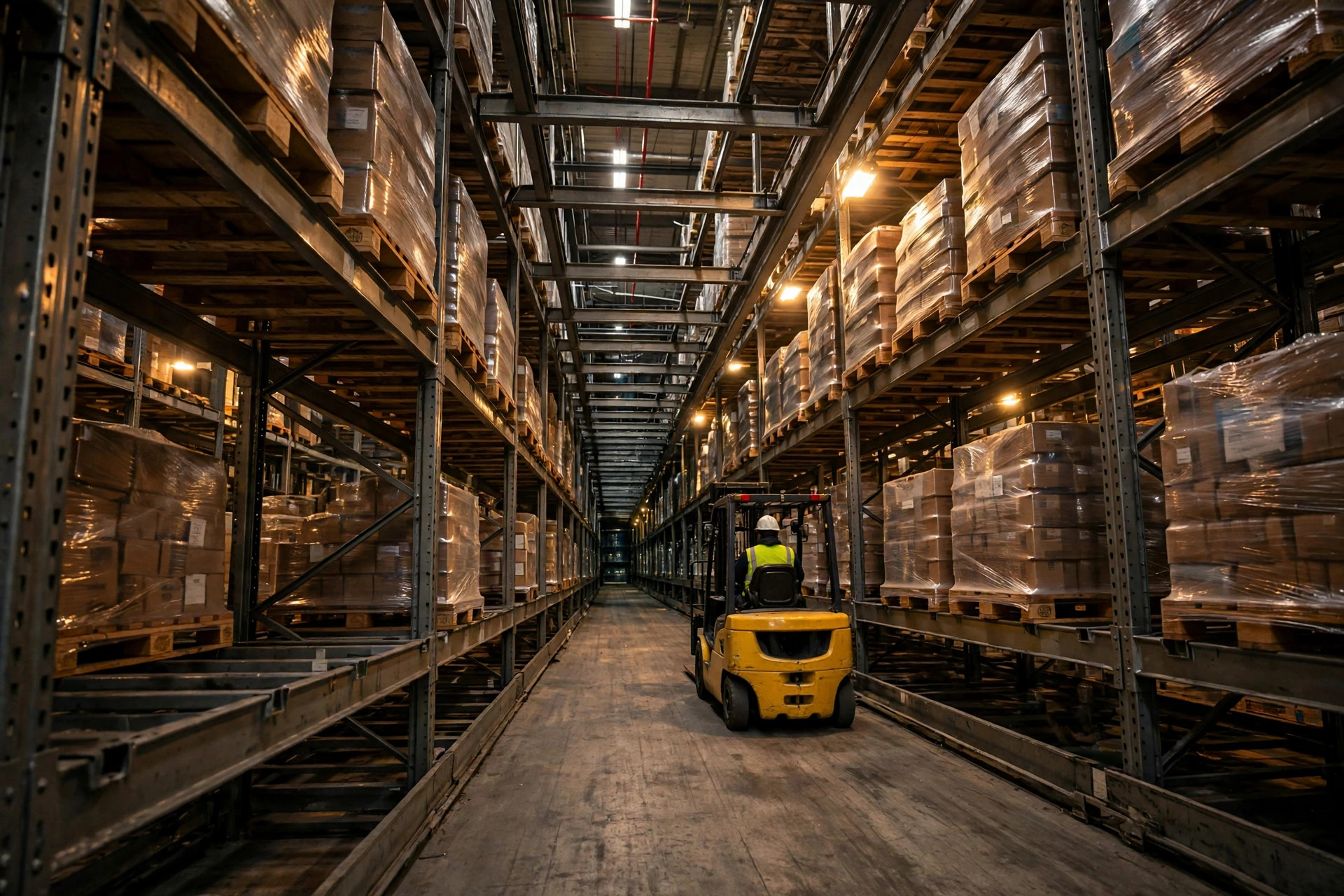
Our building is in Dongguan — 100,000 square feet, 30-foot clear height, leased in 2023. First thing we did was put in drive-in dense racking, eight pallets deep per lane. Why? It was cheap. The whole setup cost a fraction of what an ASRS would run.
On that configuration we hold roughly 14,000 pallet positions. I say "roughly" because stack heights vary by product, and in real life you plan on about 80% utilization.
The price of cheap showed up in peak season. Last November we were pushing 700 to 800 pallets a day out the door, and the lane entrances jammed twice. A forklift drives eight pallets deep to grab the one at the back, and everybody behind it just waits. My night-shift lead Lao Wang put it well: "Boss, this isn't shipping. This is queuing for a tunnel."
One more thing nobody mentions: driving into a deep lane is skilled work. Veterans handle it fine. New hires won't go fast, and the temps you bring in for peak season? You don't dare let them in there at all. Dense racking welds you to your senior operators.
In 2024 we tried a compromise: shuttle carts in the two worst lanes, so forklifts only had to hand off at the lane mouth. Retrieval got faster, sure. But shuttles aren't cheap either, and they only fix the in-and-out leg — the first-in-first-out problem deep in the lane stays. After three months of testing, our verdict was: shuttles fit a specific combo of deep lanes plus fast movers. Not a cure-all. What we do now costs nothing: fast-moving SKUs all moved to the first two rows near the lane mouth, slow movers buried deep. Congestion incidents in peak season dropped by more than half.
The Neighbor's Stacker-Crane ASRS: Stores a Lot, Breaks Your Heart
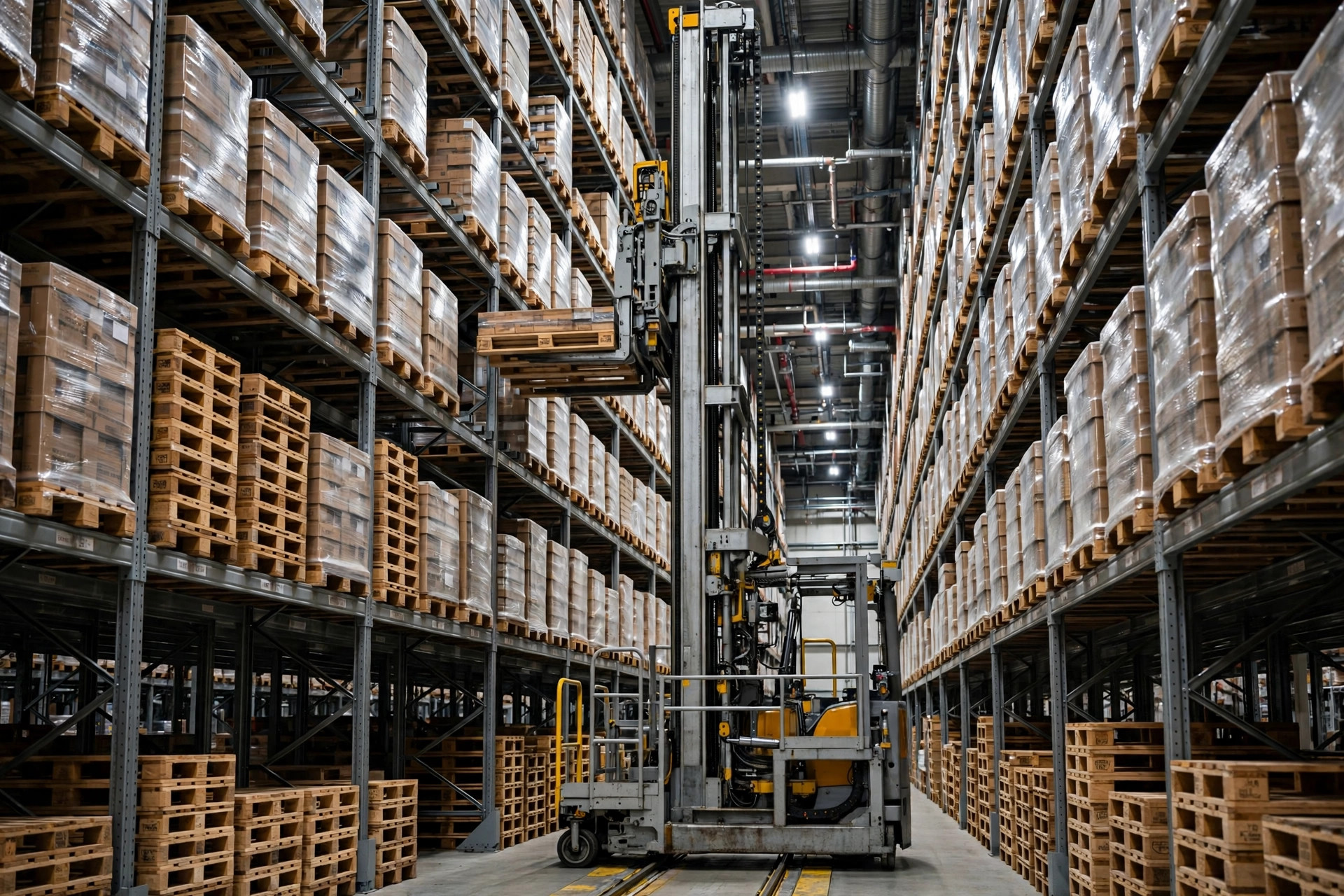
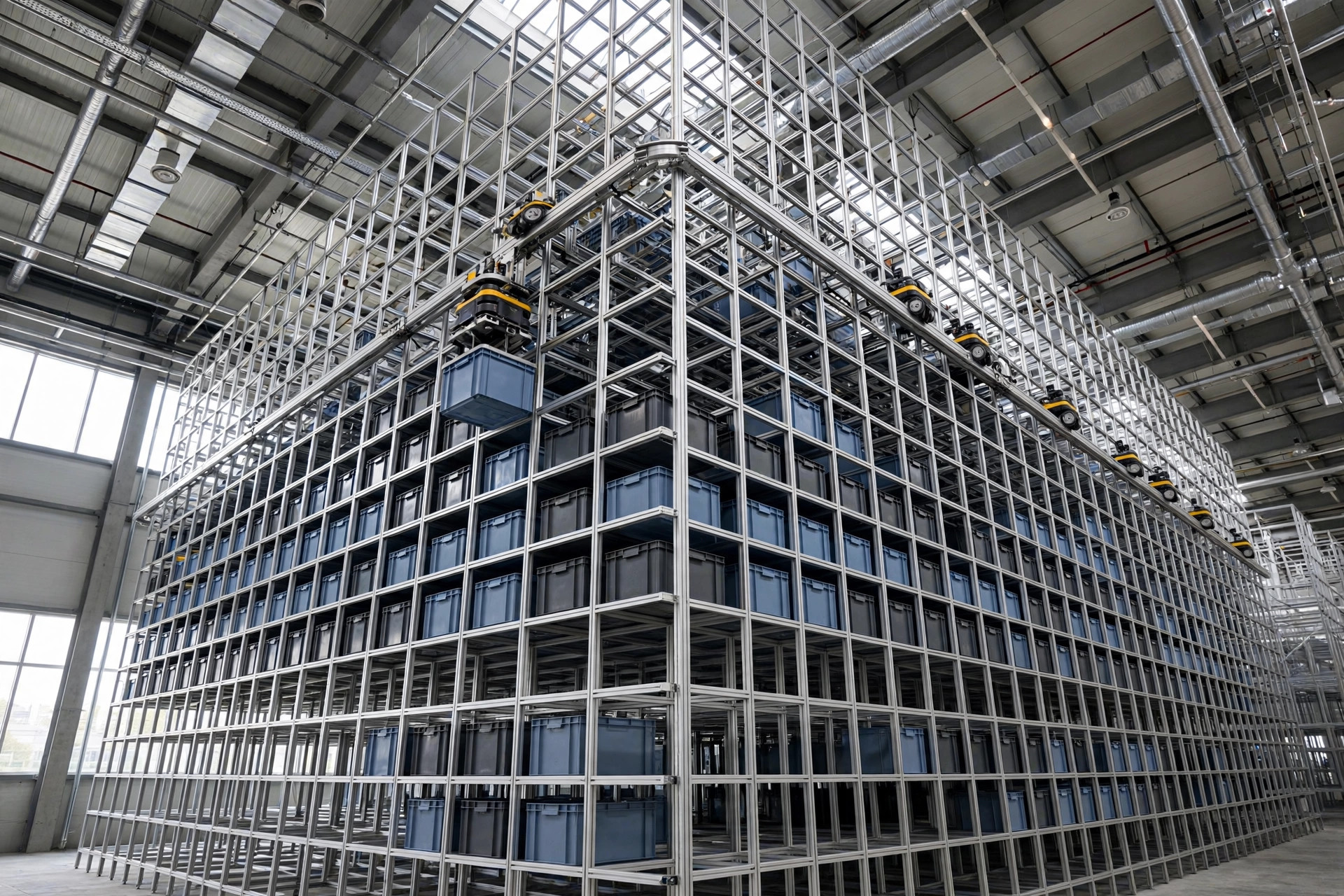
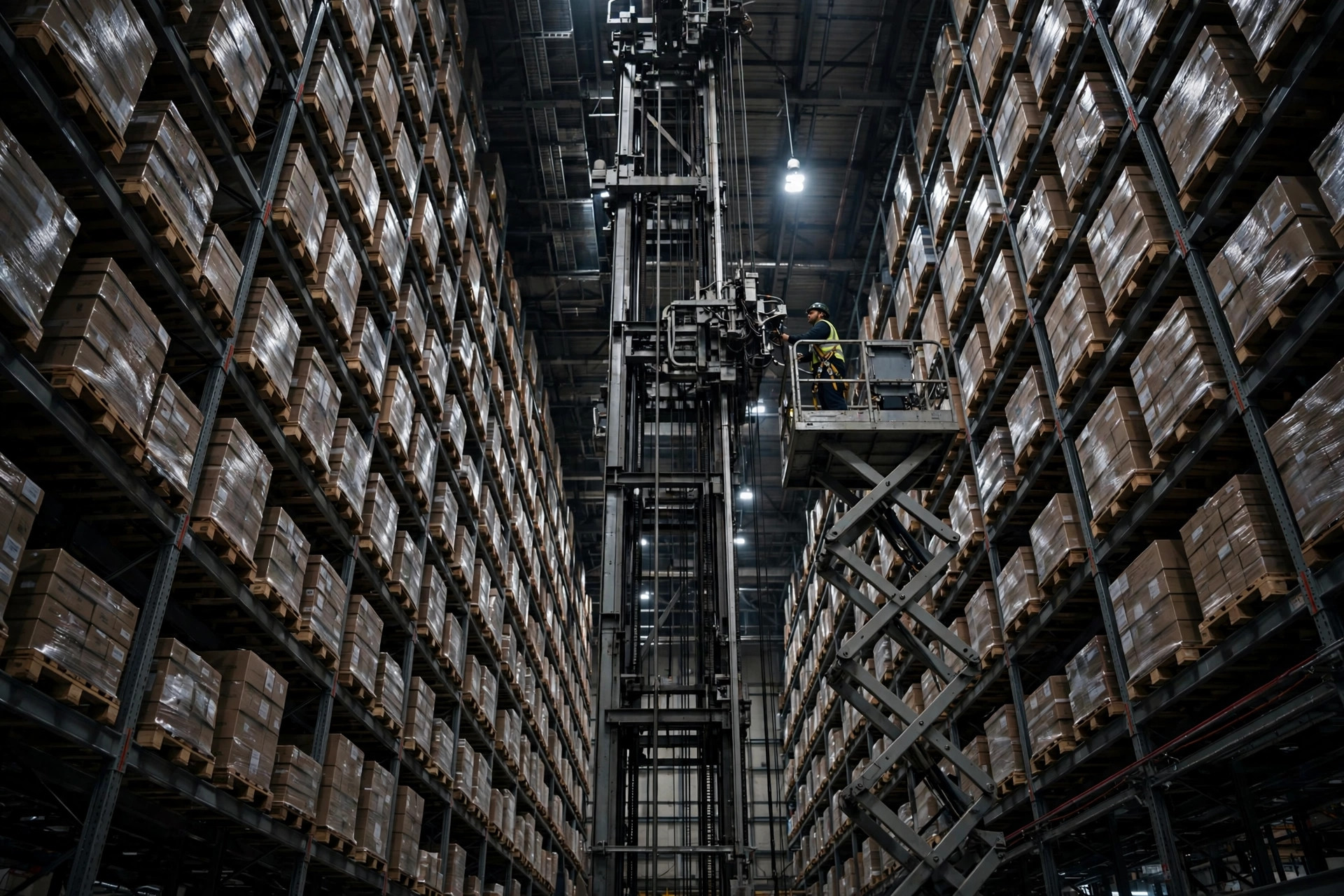
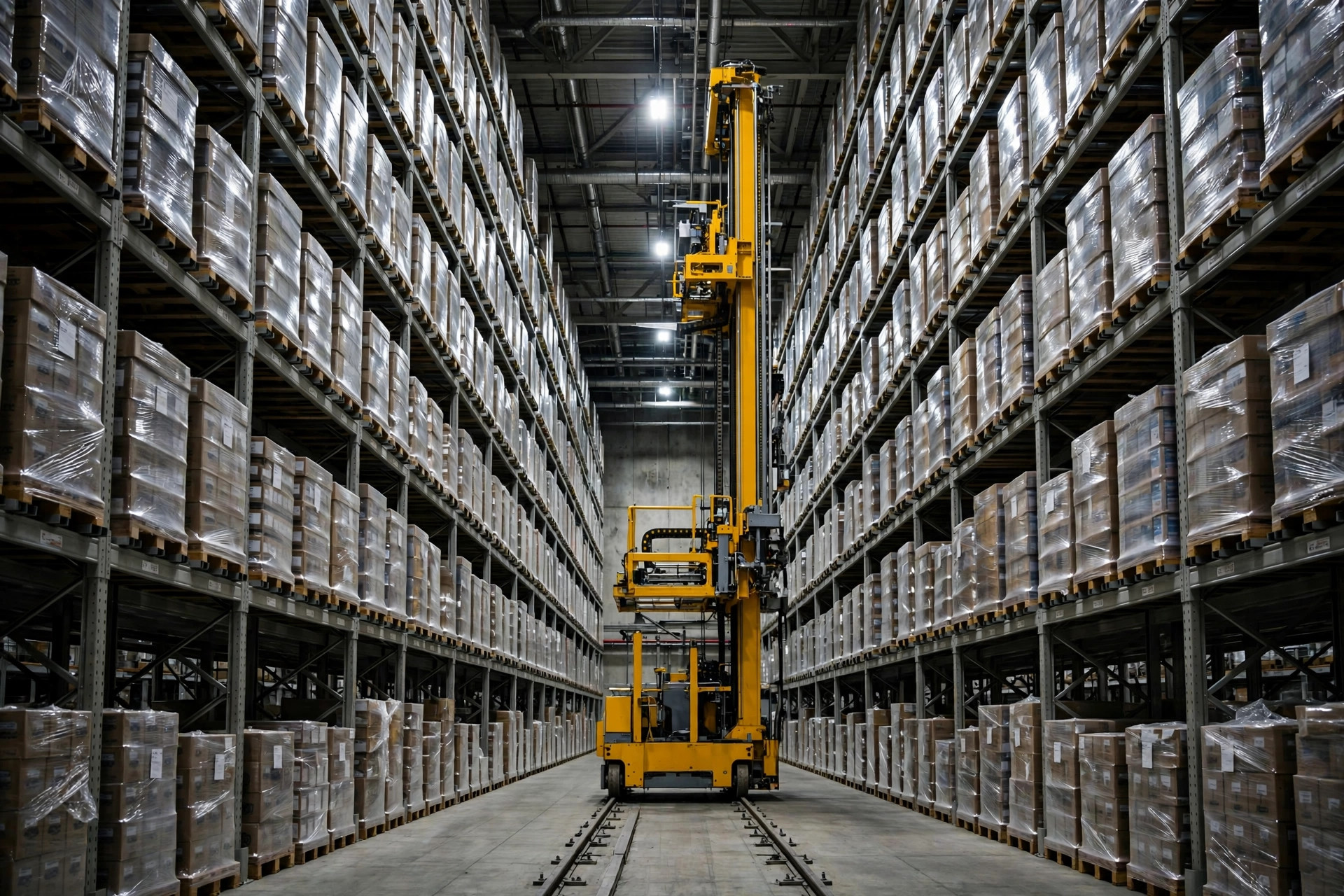
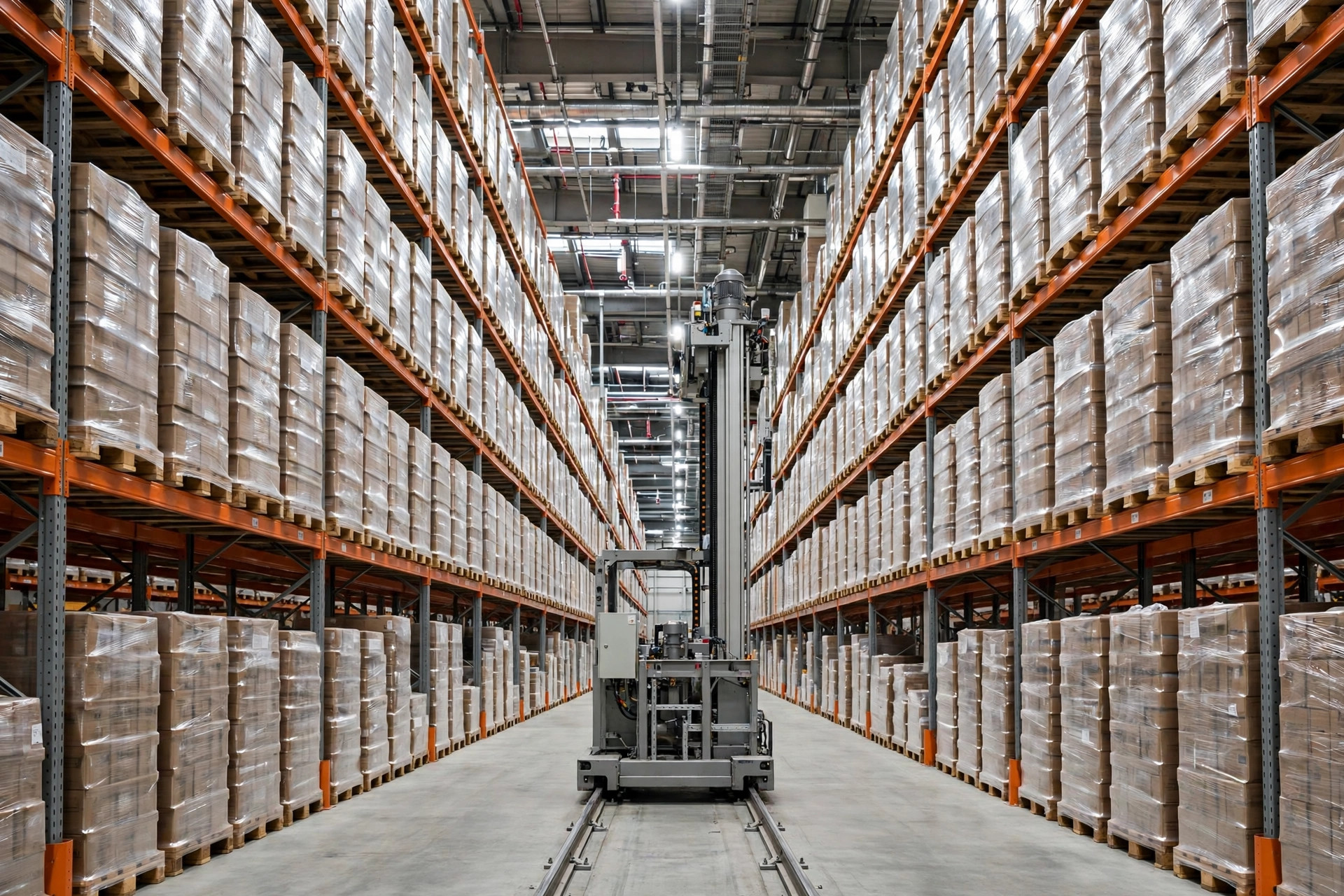
Summer 2024, I toured a food plant in Kunshan. Same 100,000 square feet, but 72-foot clear height — the building was designed around the ASRS. Stacker cranes run the narrow aisles on their own, 24 hours straight. Night shift keeps two people watching the system.
They hold roughly 30,000 pallet positions. More than double ours. On storage density, no argument — they win.
But their plant manager gave me the other side. One: when a crane throws an alarm, the whole aisle stops, and the entire building stares at it until the tech arrives. Two: maintenance is a fixed annual line item. It never goes away. Three: spare parts take forever. A sensor failed on them once and they waited two weeks, running that aisle at reduced speed the whole time.
So there it is. Same footprint, more than double the storage density — but one option is "lots of people, cheap, congested" and the other is "few people, expensive, temperamental." You can't judge this on pallet count alone.
Same Footprint: How Much More Can You Actually Store?
Fair warning: the table below is order-of-magnitude estimating on typical configurations, not engineering math. Clear height, aisle width, and product mix move the numbers. But the relationships hold, and that's what you need for a decision.
| Dense racking (drive-in / shuttle) | Stacker-crane ASRS | |
|---|---|---|
| Pallet positions on 100k sq ft | ~12,000–15,000 | ~25,000–35,000 (needs 65+ ft clear height) |
| Aisle floor-space share | Low, lane-based access | Minimal, narrow aisles + cranes |
| Clear-height use | Typically 20–33 ft | Typically 50–80 ft |
| Throughput | Medium-low, lots of waiting in lanes | High, can run 24/7 |
| SKU profile fit | Few SKUs, large batches | Medium-to-many SKUs, medium-high velocity |
| Upfront investment | Low | High, usually several times over |
| Staffing | Many forklift drivers, depends on veterans | Few operators, needs maintenance techs |
See the real story? The storage density gap doesn't come from "racking packed tighter." It comes from "building taller." Most of the ASRS density advantage is the 65-plus-foot clear height. If your leased building only gives you 30 feet, the ASRS math never pays back — and that's exactly where the sales pitch misleads people.
Let me show you where the numbers come from so you know I'm not guessing. On 100,000 square feet, after offices, docks, and main aisles, you get maybe 70,000–80,000 square feet of actual racking area. In dense racking, the lanes eat some of that, racks go 30 feet up, and one square foot of floor projection buys you roughly 1.5 to 2 pallet positions. In an ASRS, aisles shrink to just over three feet wide, racks reach 65-plus feet, and the same square foot of projection buys 3 to 4 positions. Taller plus narrower — that's the whole gap. When you compare high density storage vs ASRS storage density, watch two numbers: clear height and aisle share. Everything else is details.
The Trade-Off Nobody Carries for You: Density Costs You Speed
Here's the counterintuitive part: the densest option has the worst outbound efficiency. The deeper the dense-racking lane, the higher the density — and the longer it takes a forklift to get in and out. In peak season, when the urgent order needs the pallet at the very back, the driver spends half the morning digging while the queue builds behind him.
A buddy of mine runs e-commerce fulfillment — over a thousand SKUs, small batches. He saw someone else's dense racking numbers and copied the setup. Picking efficiency collapsed. The SKU he needed was always at the back of a lane, and the whole day became "move pallets to find pallets." Remember this: putting small-batch, high-variety inventory into dense racking is digging your own grave. Dense racking is built for few SKUs in big batches. With too many SKUs, its high density is a paper number.
The ASRS side? Throughput is genuinely high. But the cost is rigid investment plus "it cannot break." When the equipment runs, you're the king. When it breaks, you're the beggar. For an operation like ours that lives or dies on peak season, "down at the worst moment" is the nightmare scenario.
Three Questions to Pick Your Side
Skip the fancy decision models. Answer three questions and the answer falls out:
One: few SKUs in big batches, or many SKUs in small batches? If it's the second, rule out dense racking. Don't hesitate.
Two: do you have 50-plus feet of clear height? If not, the ASRS density advantage never materializes, the payback math fails, and you should stick with dense racking or conventional racking.
Three: what's your peak-day inbound/outbound volume in pallets? If it's past what lane-based access can push through, don't cheap out — the rent you save becomes overtime pay, customer complaints, and lost orders.
One more piece of math most people skip: rent. An ASRS is expensive, but it saves floor space. Compare on cost per pallet position per year, not on total project cost. Amortize the equipment over 8 to 10 years, add maintenance, labor, and rent, and divide by pallet position. In a high-rent market, the floor space an ASRS saves can claw back a big chunk of the equipment cost. In a cheap-rent market, don't bother — dense racking is plenty.
Next time someone tells you "triple the density," ask for three numbers: clear height, SKU count, peak throughput. If they can't answer, they're selling equipment, not solutions. Those of us who actually run warehouses do our own math.
By Chen Feng, Warehouse Operations Manager