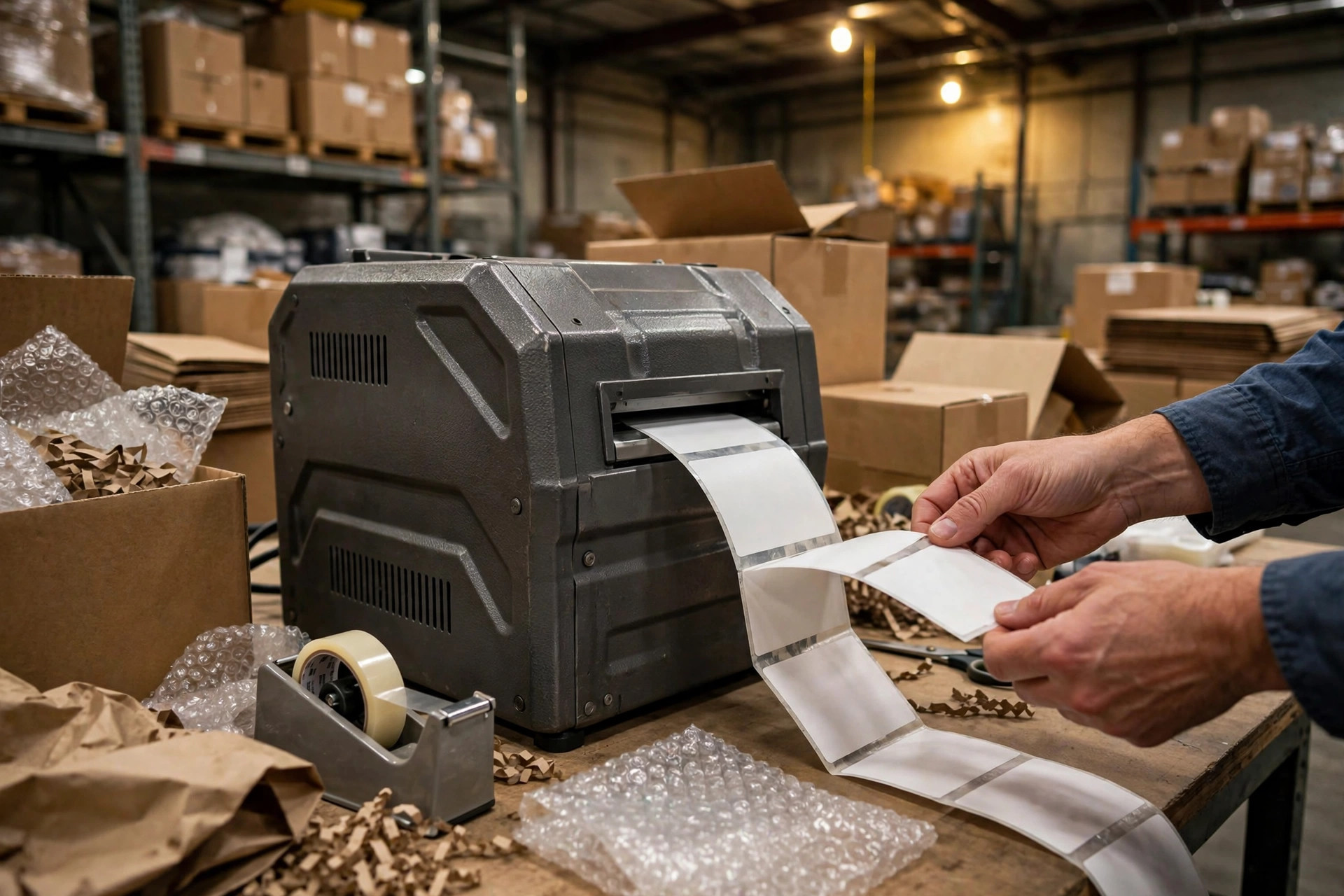
Let me tell you something. After all these years on the road, the thing I dread most is not traffic and not a long line at the dock. It is pulling up to a warehouse for a hazmat pickup and seeing the hazmat shipping DOT labels put on wrong. One wrong label, one missing paper, and that load becomes a roadside problem. The driver will not haul it. The warehouse will not release it. And the shipper is the one who pays for the delay.
One fall afternoon a couple of years back, I was waiting for a pickup outside a warehouse in Houston, Texas. The truck ahead of me was loading cleaning chemicals. The driver was arguing with the warehouse supervisor. The supervisor said the labels were all on. The driver pointed at the pallet and said, you stuck the label on the outside of the stretch wrap — the wrap tears, the label goes with it, then who owns that on the road? They argued for over half an hour. In the end the truck left empty. Nobody ever settled who paid for that deadhead. A hazmat shipping DOT labels problem looks like a small piece of paper. Behind it sits the whole rulebook.
Getting hazmat shipping DOT labels right starts with knowing the freight
Most warehouses do not get into trouble because the crew is careless. They get into trouble because step one goes sideways: they start labeling before they have identified the freight correctly. Hazmat shipping starts with knowing exactly what class the shipment falls into and what the hazard is. Different freight means different labels, different packaging rules, and different paperwork. Copying last week's label onto this week's load is the most common way to get burned.
Once the freight is identified, the label has to go in the right place, stuck on tight, and readable. A label that sits where it gets rubbed off, covered up, or peeled away with the wrap is not a label. A pallet carrying two labels that contradict each other is worse than a pallet with none, because now nobody knows which one to believe. The first thing a driver does on arrival is read the labels. If they do not match, the driver has every right to refuse the load. That is not the driver being difficult. That is the rulebook giving the driver the backbone to say no. The warehouse thinks the driver is picky. The driver thinks the warehouse is sloppy. Both sides are really paying for a labeling mistake.
Paperwork follows the same logic. The shipping papers have to state the proper description of the goods, the hazard, the quantity, and the shipper and consignee details. Leave one item out and the load is not ready. I have seen papers that listed only a trade name, no proper description. An inspector took one look and put the truck out of service. Fixing papers is not a phone call. The truck sits on the shoulder, and every extra hour costs money. Complete paperwork is not for the inspector. It is your own safety net.
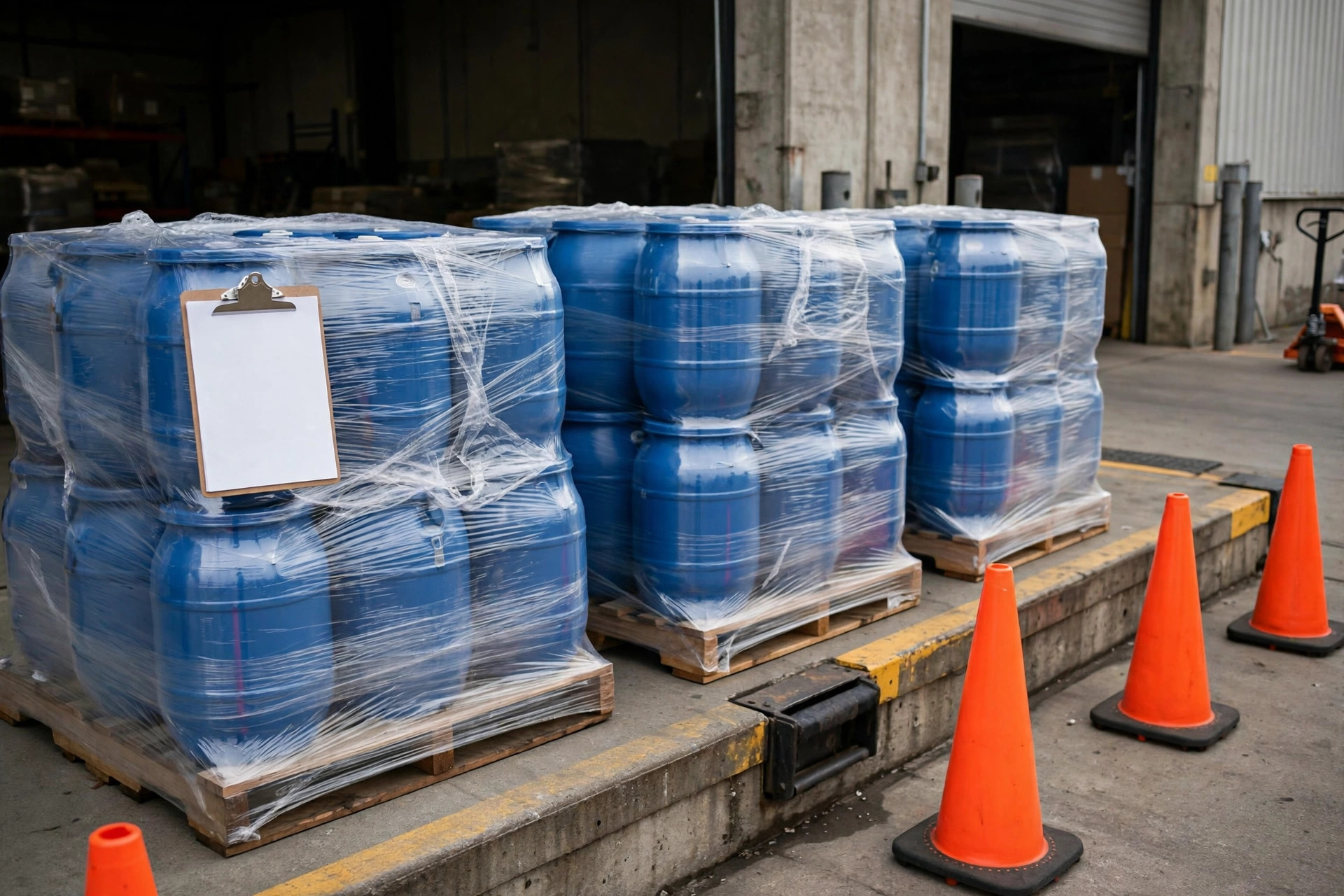
Right hazmat shipping DOT labels mean nothing if the packaging fails
One spring last year, a warehouse in Columbus, Ohio, shipped a batch of industrial liquid. Labels were neat. Papers were complete. The load still went wrong. The problem was the packaging: the outer box closure was not right for that freight, a small leak developed in transit, the driver smelled it and parked at a rest area to call it in. The freight went back. The customer ran short for two days. The warehouse paid the freight bill and lost the customer. Packaging compliance is not warehouse window dressing. It is the floor under hazmat shipping.
Packaging comes down to three checks: the packaging itself must suit this class of freight, the closure must hold, and the markings must stay legible. A cracked box, a loose closure, a label smeared with oil — any one of those means the load does not roll. Before release, the smart warehouses run one final walk-around: circle the pallet, check the label, check the closure, check the papers. All three right, then sign and release. That walk takes under ten minutes. It saves a pile of trouble later.
Another trap catches warehouses that switch suppliers, switch packaging, or switch freight but keep running the old playbook. The freight changed, so the label, paperwork, and packaging requirements may have changed with it. Old habits do not update themselves. Every time a new product comes in, the first job is to re-confirm the label, paperwork, and packaging requirements for that specific shipment. Never work from memory of the last one.
The three pitfalls that catch warehouses on hazmat shipping DOT labels
After all these years, I can boil warehouse hazmat shipping failures down to three pits. Pit one is wrong labels: wrong class, wrong placement, damaged label nobody replaced. Pit two is incomplete paperwork: vague description, quantity that does not match, shipper details left blank. Pit three is non-compliant packaging: wrong packaging for the freight, closure that will not hold, old methods applied to new freight.
Here is the counterintuitive part: the warehouse that labels fastest is usually not the most compliant warehouse. The steady ones look slow, because they add a check and a second confirmation. Drivers would rather wait ten extra minutes for that warehouse's freight. Why? Because that load rides easy. Nobody worries about getting pulled over halfway there. Compliance is not slow. It moves the trouble into the warehouse, where it can be fixed, instead of leaving it on the road, where it cannot.
One more failure I see all the time sits in the handoff. Labels right, papers right, but the count on the papers does not match the pallets on the dock. The supervisor says the system says so. The driver says I only trust what I can see. They end up recounting and reissuing papers, burning three hours. A hazmat handoff has to be freight, label, and papers all matching — three to one — before the driver signs and rolls. If anything does not line up, rework it on the spot. Never let a truck leave with a question mark on it.
A small detail rookies miss: labels and papers have to survive the trip. Sun, rain, dock bumps, handling scuffs — a label that falls off or a description that turns to mush counts as a failure at the checkpoint. Wipe the surface before you stick the label. Press the edges down after. Keep a spare copy of the papers in the cab, so if the outside copy gets wet or torn, there is a backup. These are rough tricks from the road. Rough, but they work.
I am not going to quote penalty amounts or regulation section numbers here. Every situation is different, and a wrong number does more harm than no number. The safe move is to work from the latest rules on the DOT and PHMSA official websites, keep a current reference sheet in the warehouse, and train new hires before they touch a hazmat load. Rules can change year to year. Experience is no substitute for the current standard.
There is an old saying on the road: no small matter on the highway, no small paper on a label. When the warehouse gets the labels right, the papers complete, and the packaging solid, the driver hauls with confidence, the shipper sleeps easy, and the road stays quiet. Get those three right and hazmat shipping is not so scary. Get them wrong and no amount of good business survives one roadside shutdown.
By Shifu Zhao, Trucking Veteran (15 yrs)