Two years ago I walked a 3PL warehouse in Fresno for a compliance check. The warehouse manager proudly pulled a thick binder out of a drawer and told me, "We have an SDS for every SKU." I flipped through it: toy instruction manuals, a carton supplier's product brochure, even a stack of sample shipping labels. The SDSs for the actual paint thinner, lithium batteries, and cleaning solvents on the floor? Not a single one. Here's the bottom line up front: no, you don't need an SDS for every SKU — but miss one you actually need, and an OSHA citation will hurt. When it comes to compliance, I'd rather you skip the carton brochure than miss the SDS for a bottle of industrial cleaner.
Which SKUs actually need an SDS, and which don't
OSHA's Hazard Communication Standard (29 CFR 1910.1200) covers "hazardous chemicals," not everything in your building. The hazard determination sits with the chemical manufacturer and importer: they classify the product under GHS, and if it comes out as hazardous, they must provide an SDS. Your job as a warehouse or distributor is to collect those SDSs, manage them, and make them available to every employee.
In practice, I teach clients a three-question screen:
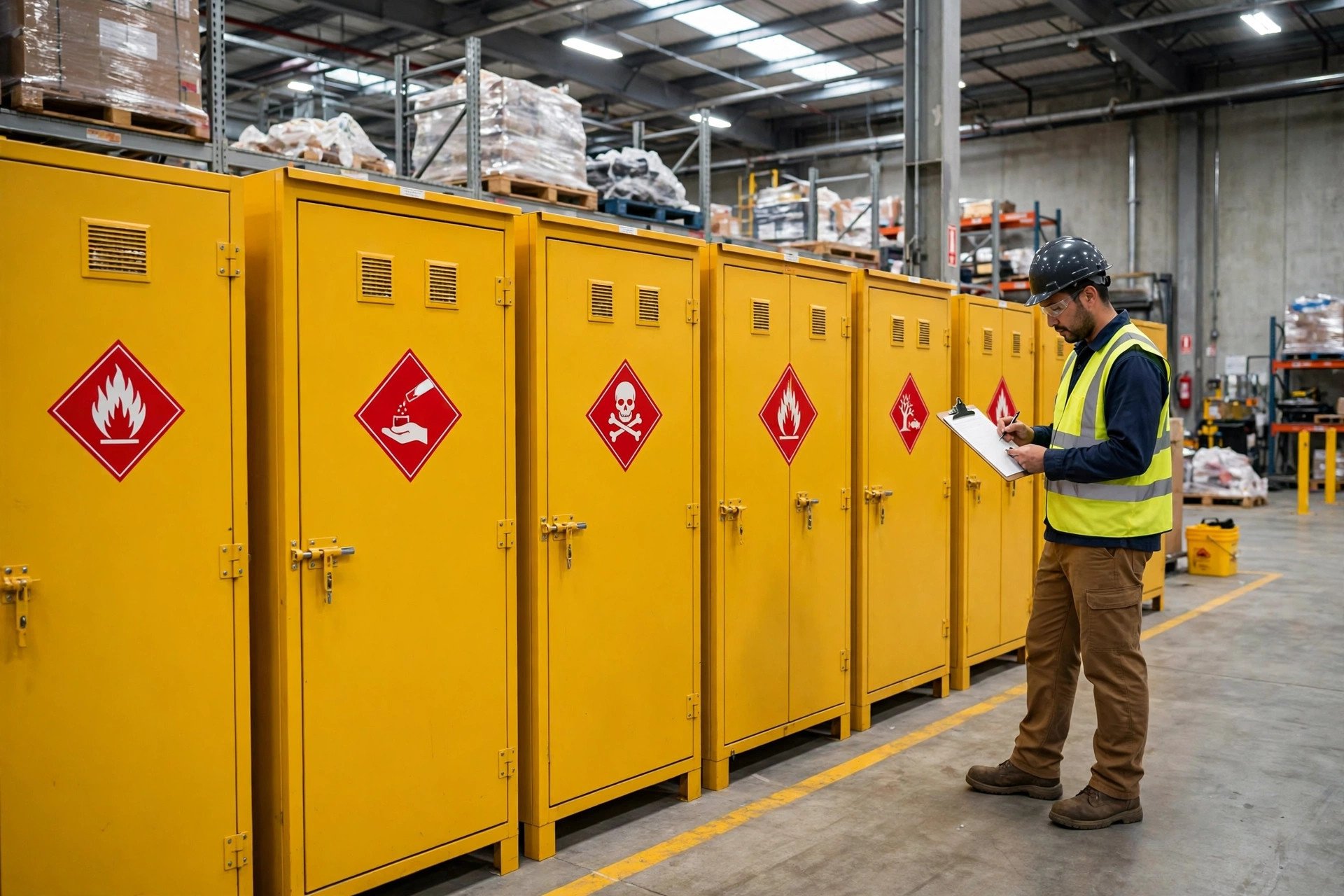
Question one: does this SKU contain chemicals at all? Plain cartons, plastic pallets, finished toys (no batteries), textiles — no chemical content, no SDS needed. Question two: if it's a mixture or a chemical product, did the manufacturer classify it as hazardous? Check the product label for GHS pictograms, signal words (Danger/Warning), and hazard statements. If they're there, that's an SDS item. Question three: does an exemption apply? HazCom explicitly exempts several categories: consumer products used the way a consumer would use them (the hand soap in your break room, sunscreen you hand out to the crew), food, drugs, and cosmetics (FDA territory), and wood products (dust is a separate conversation). The catch is "normal use" — using industrial-grade cleaner as hand soap, or breaking bulk consumer products down for repackaging, kills the exemption.
A few gray areas that trip up warehouses constantly. Lithium batteries: standalone cells and battery-containing devices almost always come with an SDS from the manufacturer (even though "articles" can technically be exempt under GHS, transportation and emergency responders expect an SDS). Take it, file it, don't argue with your supplier about it. Aerosols (spray paint, lubricants): hazardous chemicals, SDS required. Diluted cleaners: if the concentrate was hazardous but the diluted version falls below classification thresholds (generally below 1% for a component, 0.1% for carcinogens), the manufacturer may classify it as non-hazardous and skip the SDS — get that confirmation from the supplier in writing rather than guessing yourself. Trade secrets: suppliers may withhold the exact chemical identity, but not the hazard information, first aid, or firefighting measures; the SDS must state that information is withheld as a trade secret and provide an emergency contact.

Of the sixteen SDS sections, your warehouse only needs six
A standard SDS has sixteen sections, and most warehouse managers take one look, file the whole thing in a cabinet, and never open it again. My advice: train your people on six sections. The other ten are for EHS staff and emergency responders.
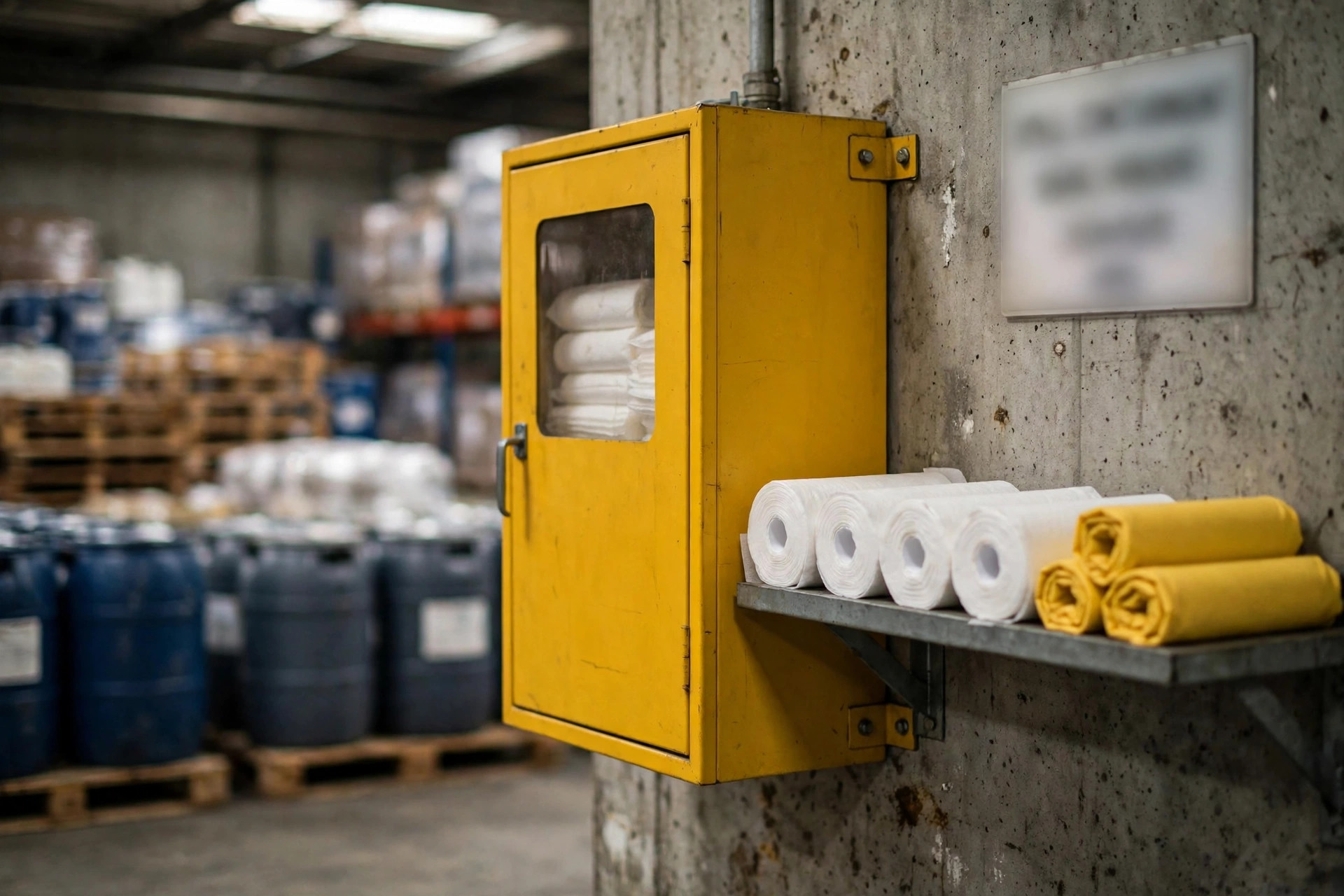
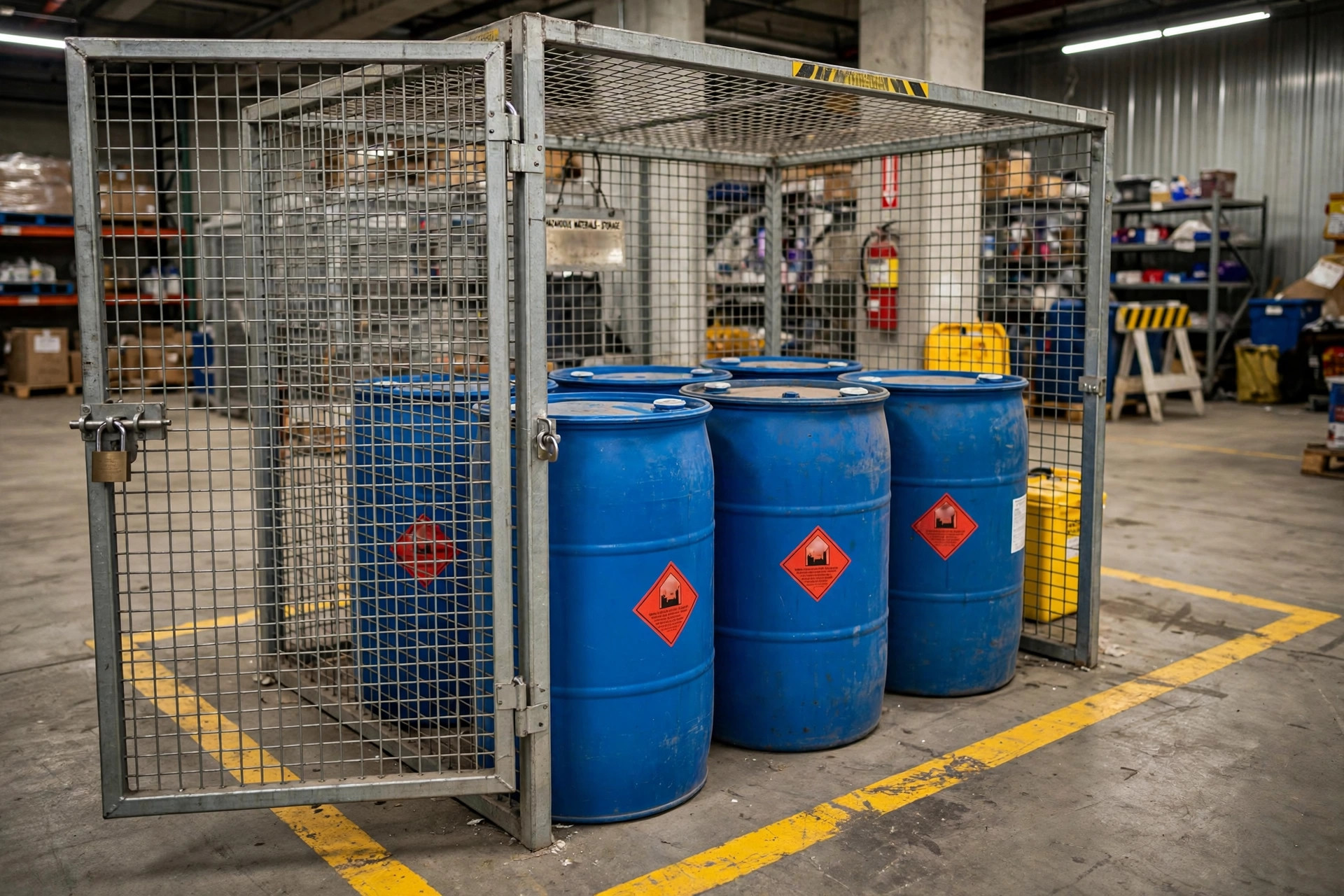
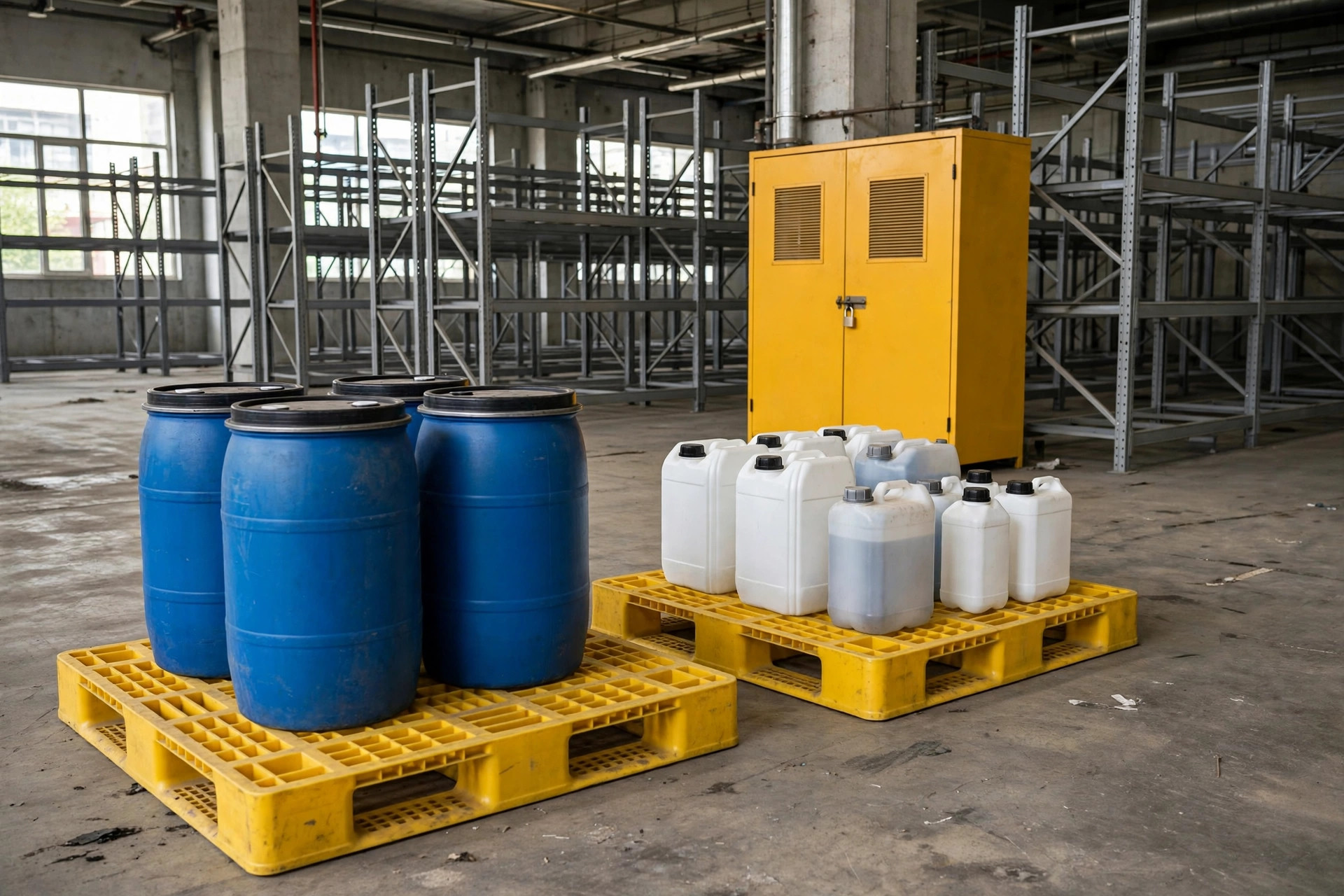
Section 2, Hazard Identification: the pictograms and signal words — is this stuff flammable, toxic, or corrosive? Section 4, First-Aid Measures: what to do for eye contact, inhalation, or ingestion — the most useful page to post at the work station. Section 5, Fire-Fighting Measures: which extinguishing agents to use and which to avoid — a lithium battery fire reacts badly to the wrong extinguisher, and this section tells you why. Section 6, Accidental Release Measures: how to contain a spill and what absorbent to use — build your spill kit from this section. Section 7, Handling and Storage: what it can't sit next to, temperature and ventilation requirements — copy this section straight into your slotting plan. Section 8, Exposure Controls and Personal Protection: goggles, gloves, respirators or not — your PPE purchase list comes from here.
Version control is the second trap. An SDS is not a one-and-done document: reformulations and GHS updates trigger new versions. When new stock arrives, check the preparation date and version number against what you have on file. I've seen warehouses holding a 2015 SDS while the supplier reformulated in 2022 — the auditor flips to the date page and writes up a deficiency on the spot. The fix is simple: keep an SDS log (a spreadsheet works fine) with SKU, chemical name, supplier, SDS version date, and next review date. Review annually, replace with new versions, and archive the old ones instead of tossing them — OSHA expects you to retain records of chemicals employees were exposed to; check the latest official guidance for retention specifics.
Getting SDSs from suppliers, and making them truly accessible
Plenty of warehouses have SDSs that might as well not exist: locked in the manager's office, or buried in a folder on one computer that nobody else knows about. OSHA's requirement is "readily accessible" — available to employees in their work area, during their shift, with no barriers. Electronic access is allowed, but there are red lines: no password that only supervisors know, no VPN-only intranet that dies when the network goes down, and there must be a backup plan (paper copies covering for power or network outages). My practical recommendation is a two-track system: a physical binder (red cover, mounted conspicuously next to the chemical storage area) plus electronic copies on a shared drive. Paper wins with auditors and firefighters, and it works when the power doesn't.
Don't be shy about requesting SDSs — it's the supplier's legal obligation. Here's request language you can copy and paste: "Per OSHA Hazard Communication Standard 1910.1200(g), as a downstream user we require your latest SDS (English) for product [SKU], for our warehouse hazard communication training and emergency preparedness. Please confirm the preparation date and whether the GHS classification has changed." Make "provide current SDS" part of your new-supplier onboarding checklist, right next to the business license. If a supplier drags their feet or the contact changes, escalate: purchasing applies pressure, then you switch suppliers, then you consult OSHA — downstream users have an explicit right to receive SDSs.
The most common HazCom citation triggers, ranked by how often I see them written up: first, no written hazard communication program at all — that's the first document OSHA asks for. Second, missing or outdated SDSs, with newly introduced chemicals the worst offender. Third, perfunctory training — ask a forklift driver where the SDSs are and get a blank stare. Fourth, unlabeled secondary containers — the original drum has a label, the small bottle someone decanted into doesn't; this one is a warehouse specialty. Fifth, a hazardous chemical list that doesn't match actual inventory. HazCom has sat near the top of OSHA's most-cited standards for years; penalty amounts change, so check the latest official schedule, but violations stack per item and it's easy for one warehouse to rack up five or six.
What you can do tomorrow: spend one afternoon on three things. First, list every chemical SKU in the building and run it through the three questions above to flag which ones need SDSs. Second, email each supplier for the current SDS on every flagged SKU and start your log. Third, hang a red binder next to the chemical storage area with Sections 2 and 4 through 8 printed and filed, and archive the full documents. Do those three things and your HazCom program is already ahead of more than half the small and mid-size warehouses in the country.