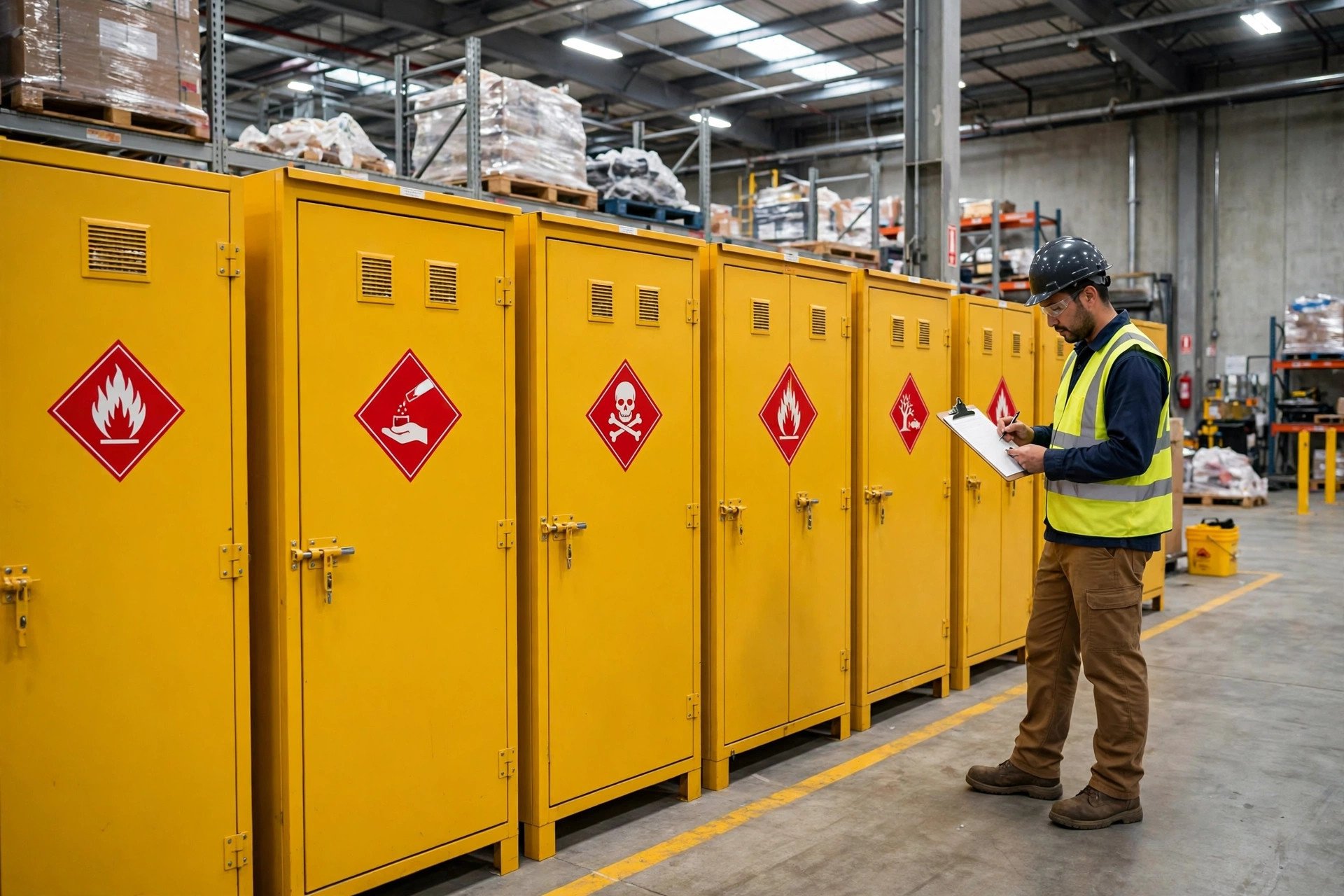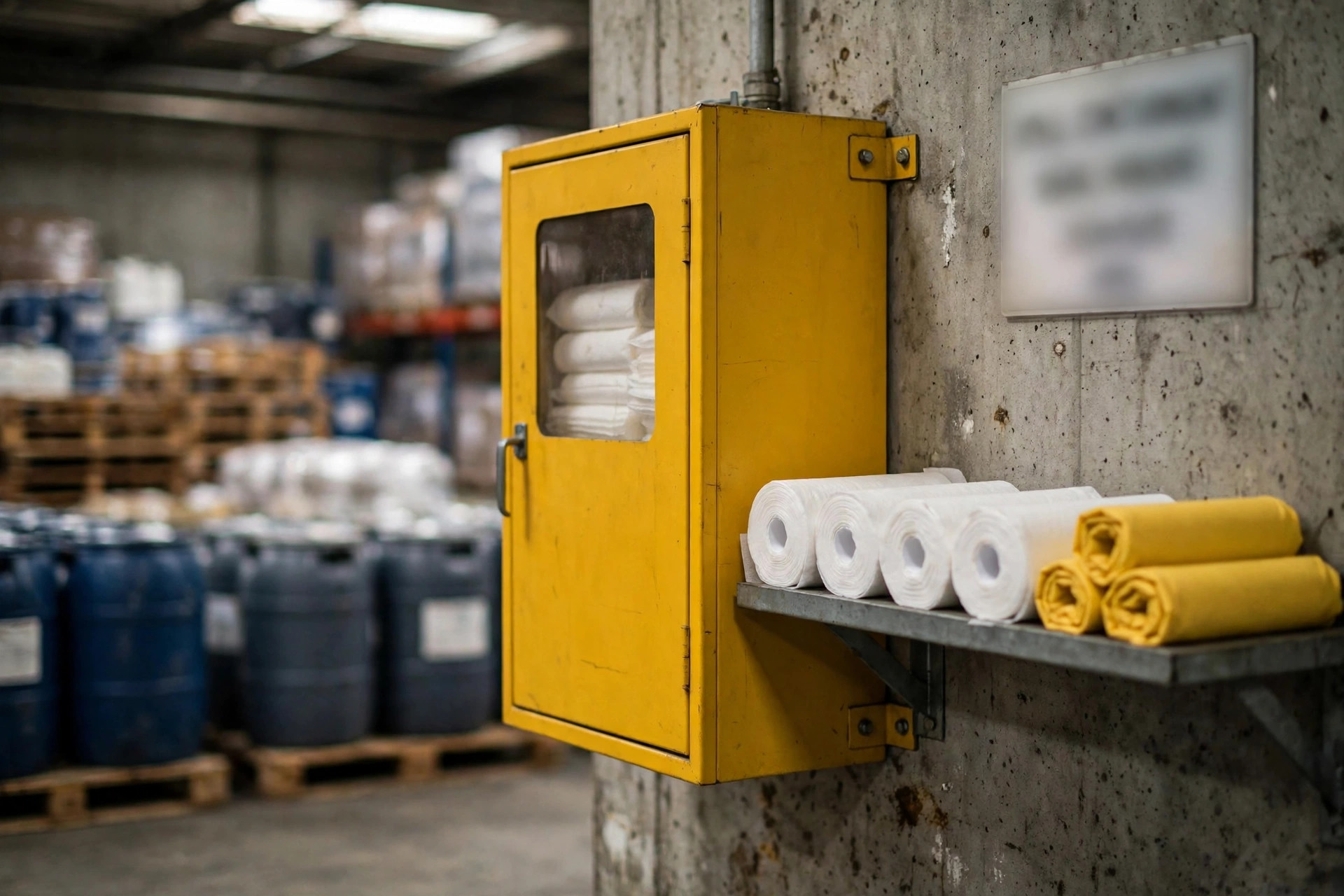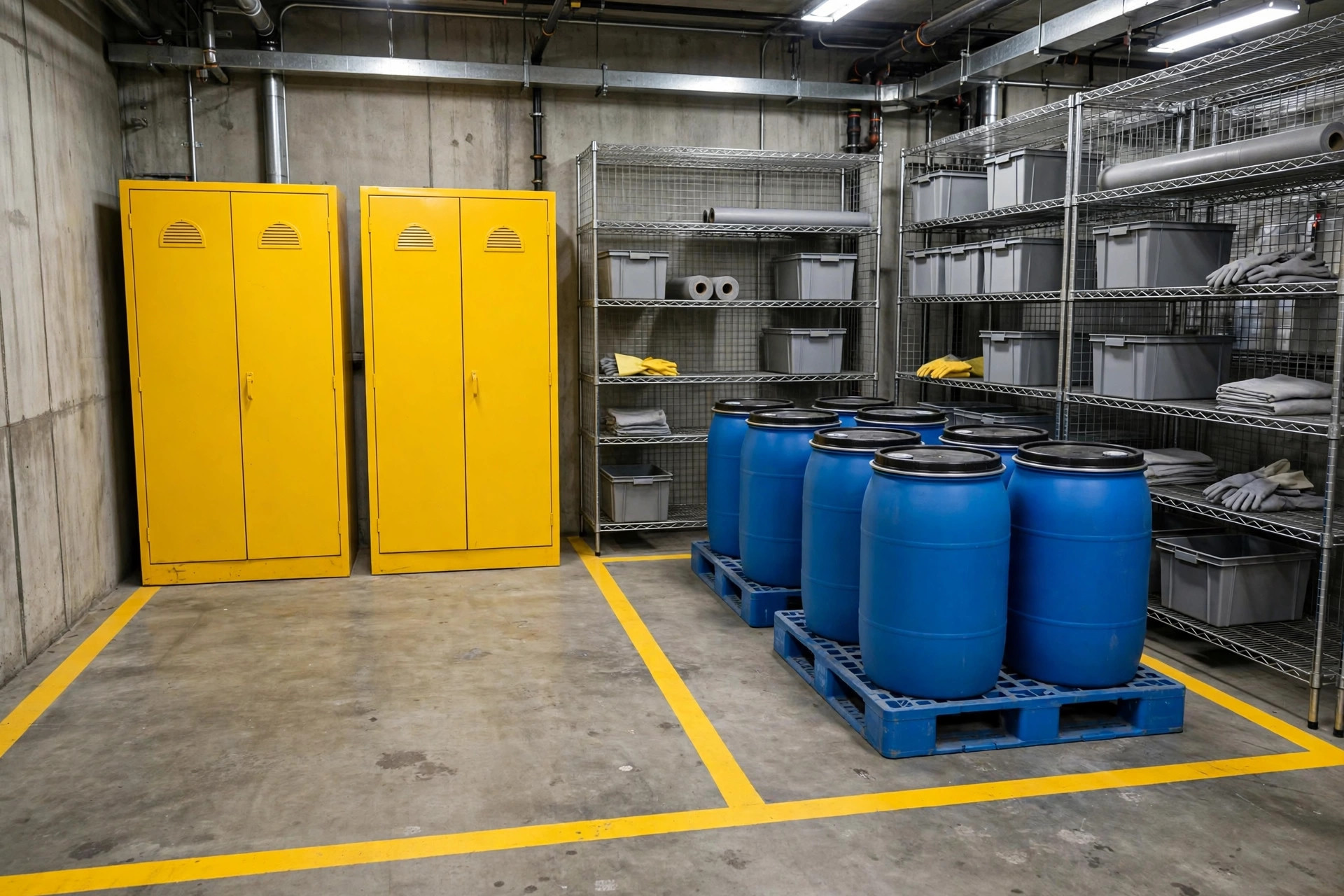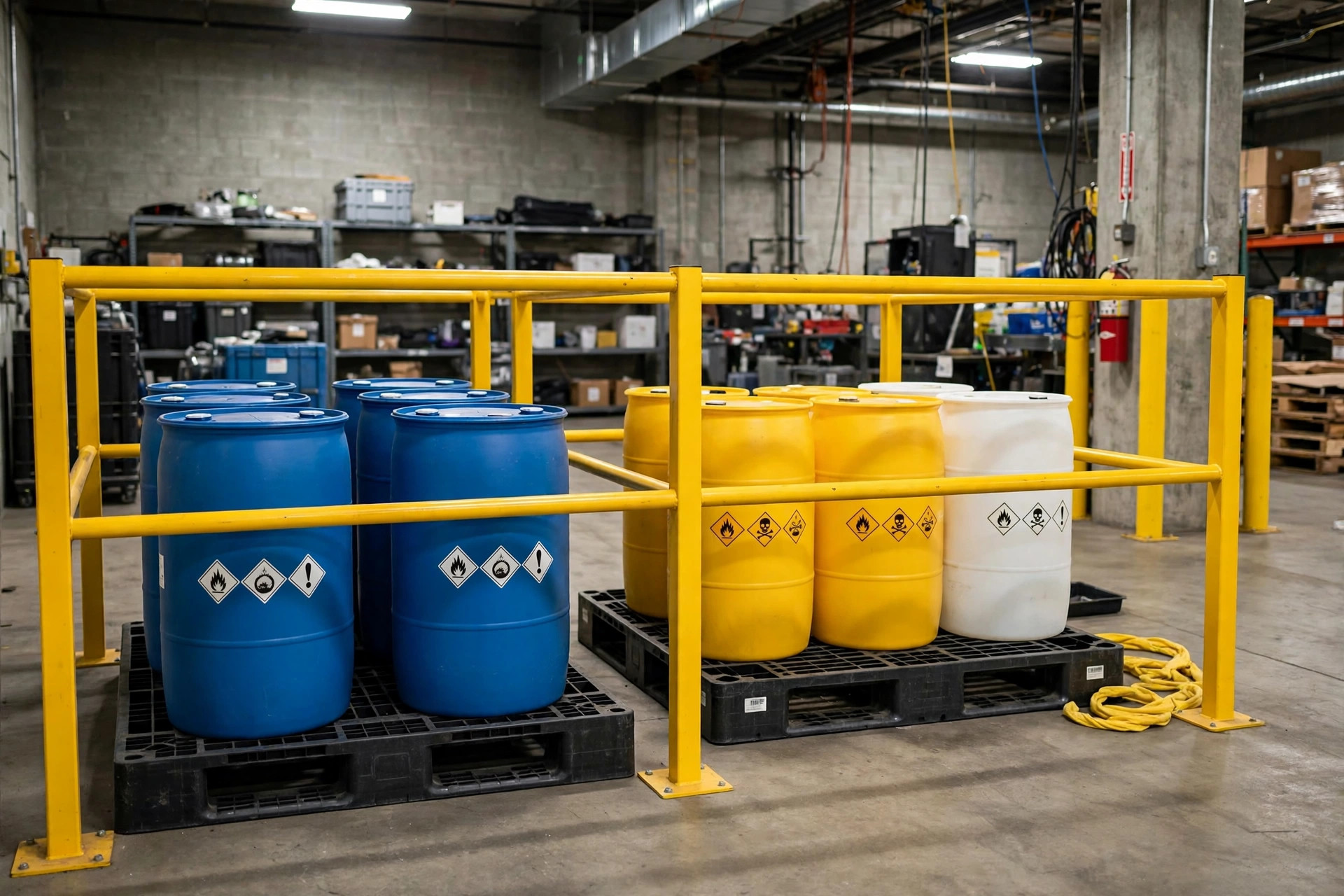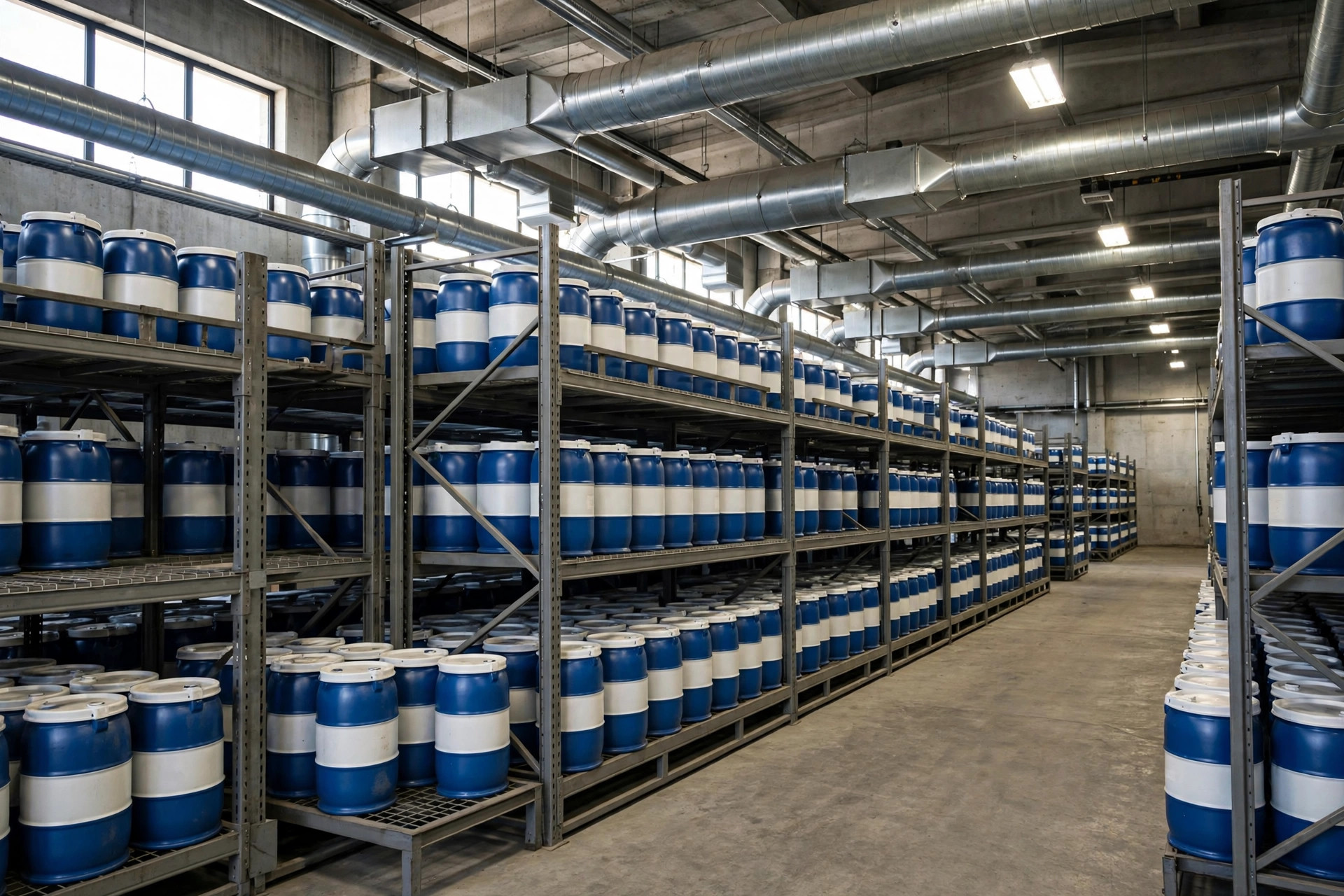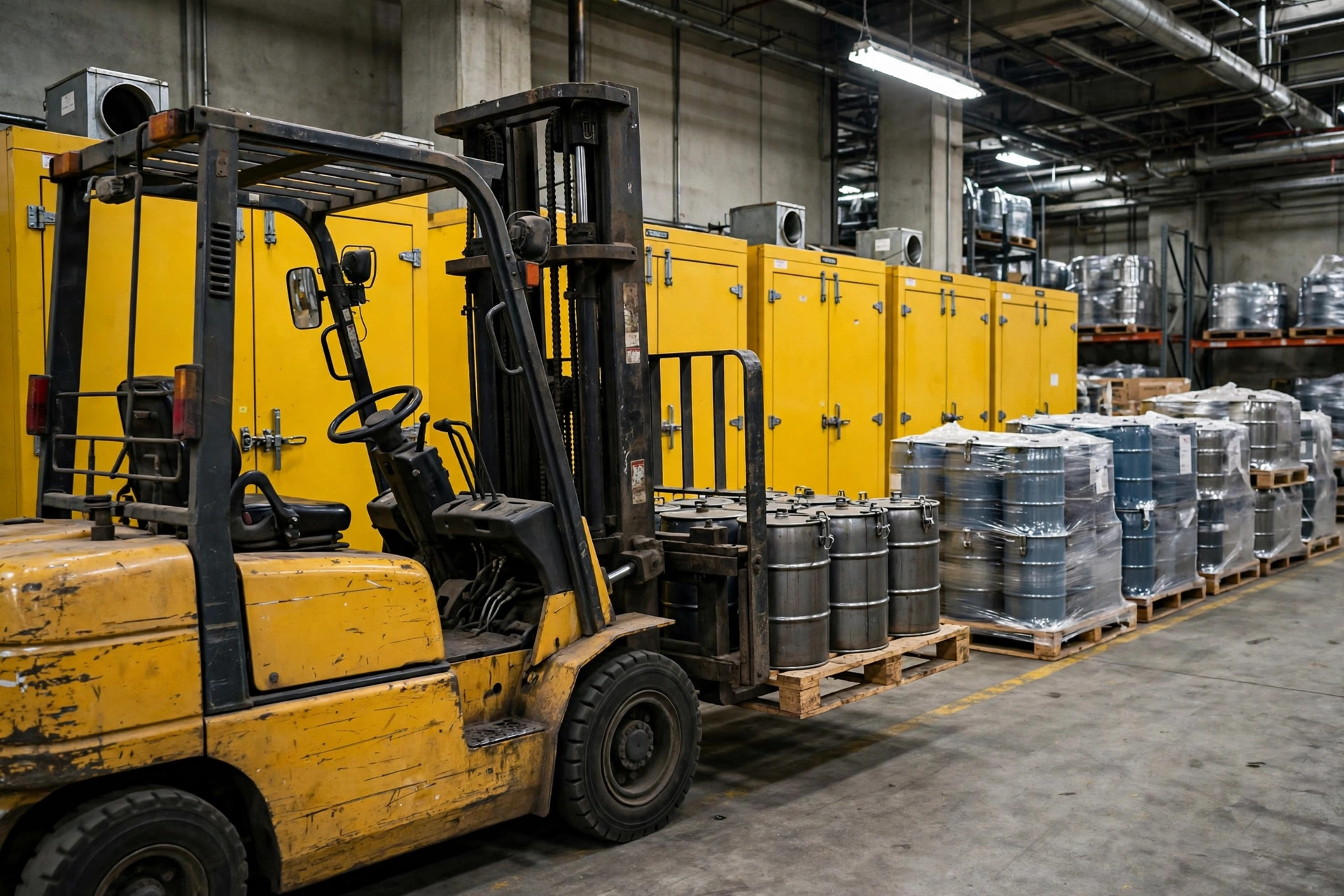
Two years ago I walked a client's hazmat warehouse during a compliance self-audit. At the entrance to the segregated hazmat area, the safety manager pointed at the ceiling and asked: "Those LEDs were just installed last year, energy-saving — are we compliant?" I looked up. Fine lights. Wrong location. That one fixture ended up costing them close to twenty grand to remediate — the light itself was cheap; the shutdown, rewiring, and third-party inspection were not.
Explosion-proof electrical in hazmat storage is the thing most warehouse owners first hear about the day they get fined. Day to day it feels like "if the lights work and the forklifts run, we're fine" — until the fire marshal or the insurer shows up, and they always find something. Here's the full breakdown: which equipment must be explosion-rated, how zones get classified, and where the remediation money actually goes.
Start with classification: not the whole building needs it
NEC Articles 500 and 505 divide hazardous areas by how often flammable gases or vapors are present: Class I Division 1 versus Division 2. Plain English: Division 1 means ignitable concentrations can exist during normal operations — filling stations, poorly ventilated solvent storage. Division 2 means they wouldn't normally be present, only under abnormal conditions — which covers most ordinary hazmat storage areas.
This distinction decides your budget. Division 1 equipment needs the highest explosion-proof rating, running 5 to 10 times the cost of standard gear. Division 2 can use simplified explosion-proof or purged/pressurized types at 2 to 3 times standard cost. So step one of compliance isn't buying equipment — it's hiring a qualified firm to do an area classification study. I've seen more than one warehouse skip this and rate the entire hazmat zone Division 1, burning hundreds of thousands a year for nothing.
Can you classify it yourself? My verdict: no. The classification report gets reviewed at fire inspection and by insurance underwriters, and it has to be signed by a licensed electrical engineer. A few thousand dollars for the study beats post-violation remediation by an order of magnitude.
The usual suspects: equipment that fails inspection most
From the inspection records I've seen over the years, violations in hazmat zones cluster around the same few equipment types. Check against this list:
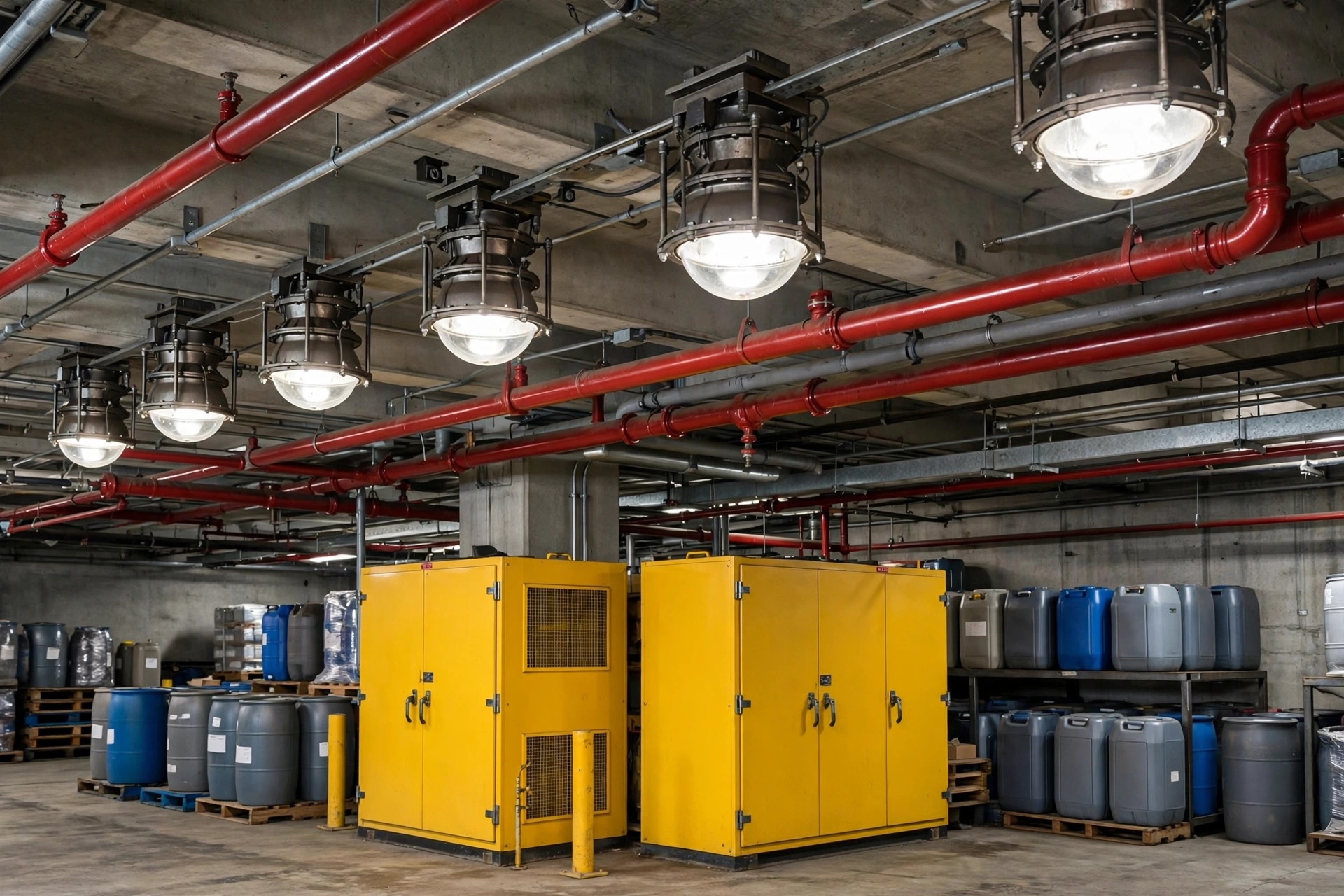
Lighting. Standard LEDs and fluorescents have ballasts and terminals that are ignition sources. The fix is explosion-rated fixtures, or pressurized ventilation for the whole zone to downgrade the classification. An explosion-proof LED high-bay runs a few hundred dollars more than a standard one; for a 20,000-square-foot hazmat area the fixtures themselves land around ten to twenty thousand dollars — labor and rewiring are the bigger line.
Forklifts. The most expensive trap. A standard electric forklift in a hazmat zone brings brush sparks from the motor and hydrogen off-gassing during charging. EX-rated forklifts cost 50% or more above standard electrics — a 5,000-pound explosion-proof truck easily clears sixty thousand dollars. Some warehouses try the workaround of "standard truck, only works at the doorway" — inspectors generally don't accept it, because the few meters where goods cross into the zone are still inside the classified area.
The small stuff gets missed most. Handheld scanners, temperature and humidity sensors, radio charging docks, wall outlets and switches — these bits and pieces routinely make up 30% of a remediation bill. Sensors especially: hazmat warehouses are required to have them, but they're often installed as standard models, which means they're both non-compliant and a live hazard.
Charging areas. Lead-acid charging releases hydrogen; if the charging area sits next to the hazmat zone it needs ventilation and classified separation. Lithium trucks are better, but the chargers themselves still have to meet the zone requirements. I flag this separately because most charging areas are legacy — the location was set years ago, and remediation means relocating.
Where the money goes: don't stare at the equipment quote
Take a 30,000-square-foot hazmat area. In a full explosion-proof electrical remediation, equipment purchase is usually only about 40% of the total. The other 60% is licensed electrician labor (sealed fittings and conduit rules make explosion-proof wiring more than twice as expensive as standard), third-party testing and certification, and production losses during the shutdown.
So I recommend two phases. Phase one: spend a little on classification and a gap assessment to get a precise remediation list, so you know where every dollar goes. Phase two: rank by risk — lights and forklifts are the automatic-fail items, sensors and outlets can wait for round two. Don't try to do it all at once; cash flow won't survive it, and there's no need — inspectors want to see a plan being executed, not overnight perfection.
An uncomfortable but honest closing thought: explosion-proof electrical is like insurance — it feels expensive until the day it feels cheap. Of the hazmat warehouse fires I've been around, two post-incident investigations pointed at electrical sparks. How much are lights and a forklift? After an incident, the premium hikes, the shutdown, and the fines each cost more than the remediation would have. Get the area classification done first. It's the cheapest step, and the most important one.