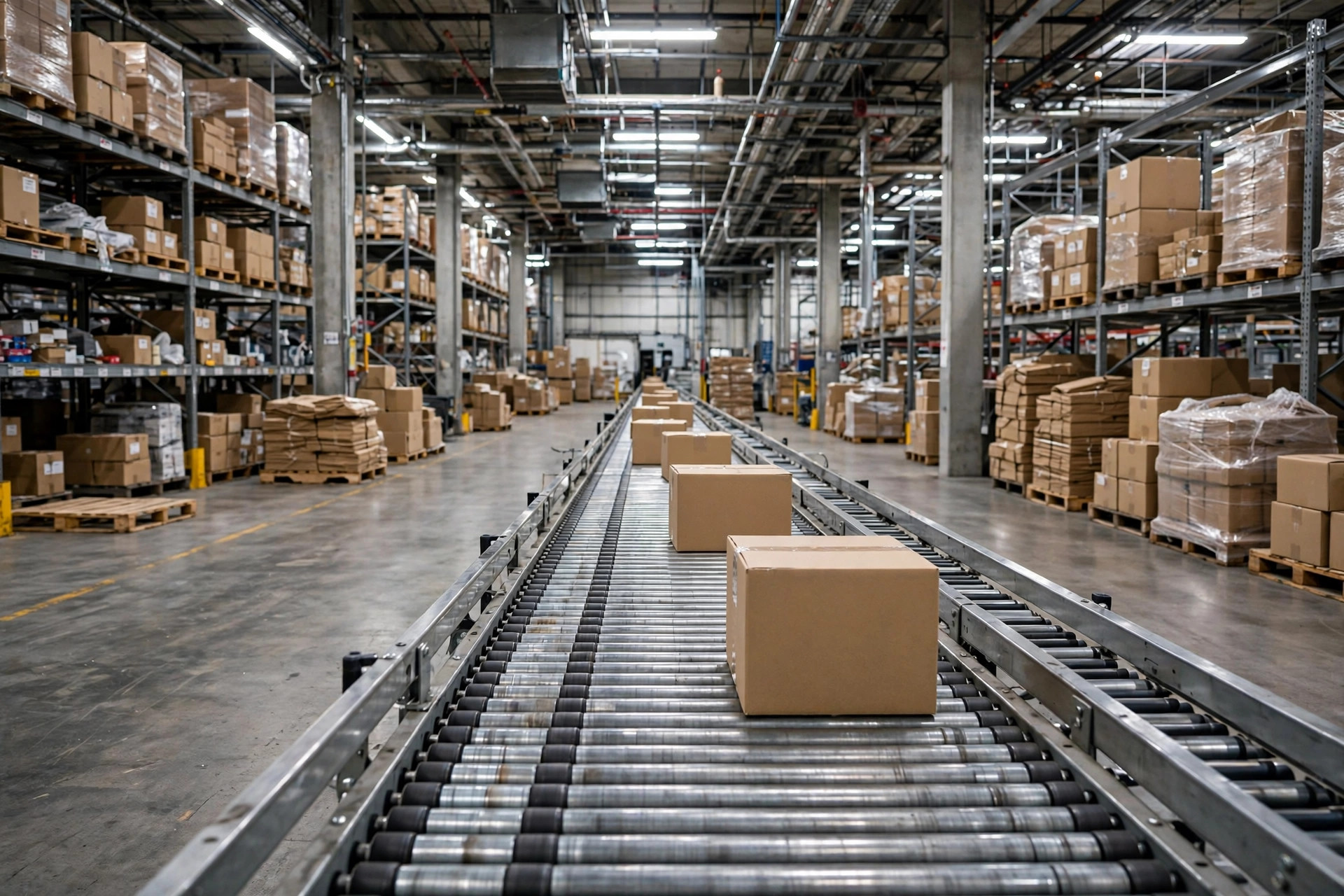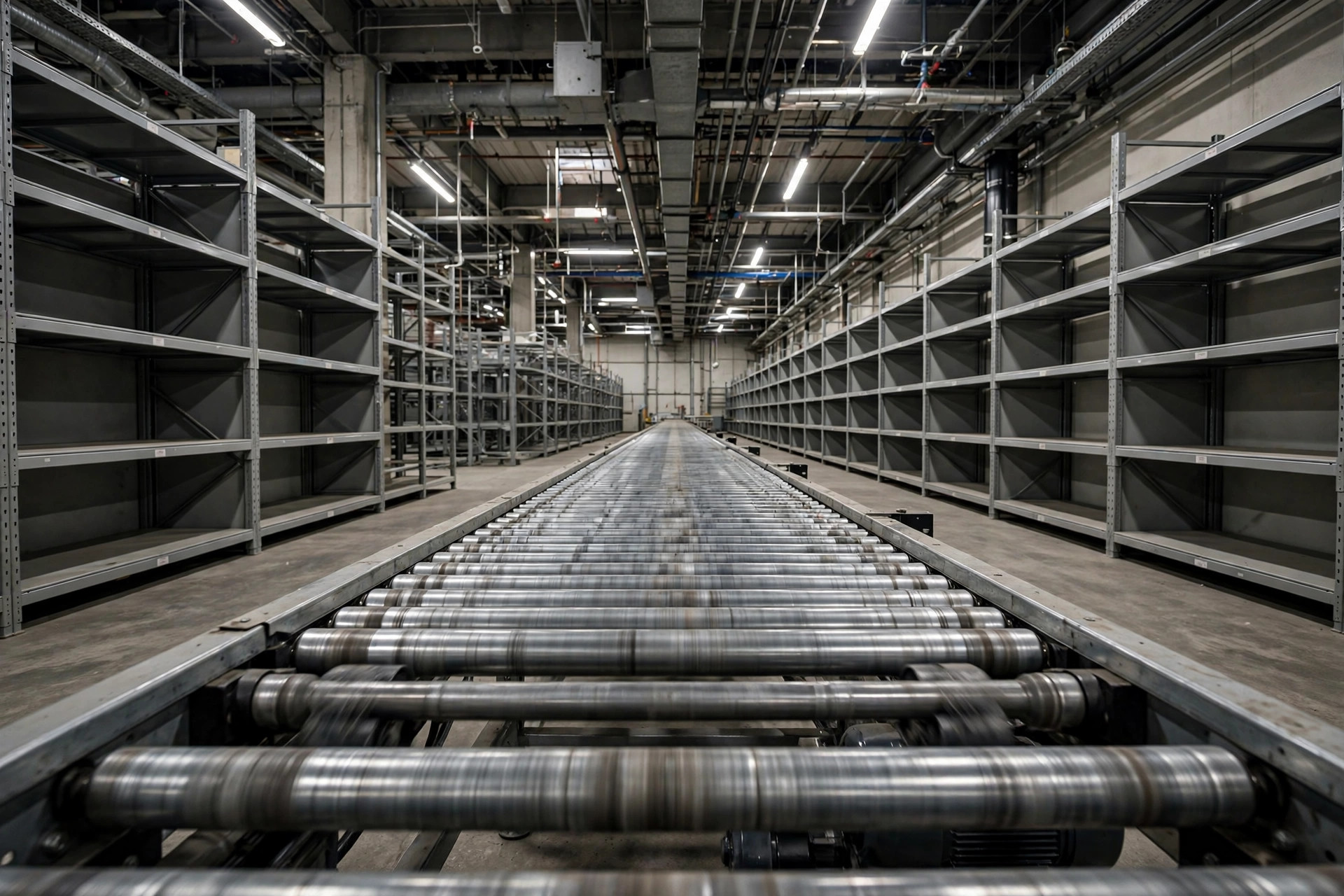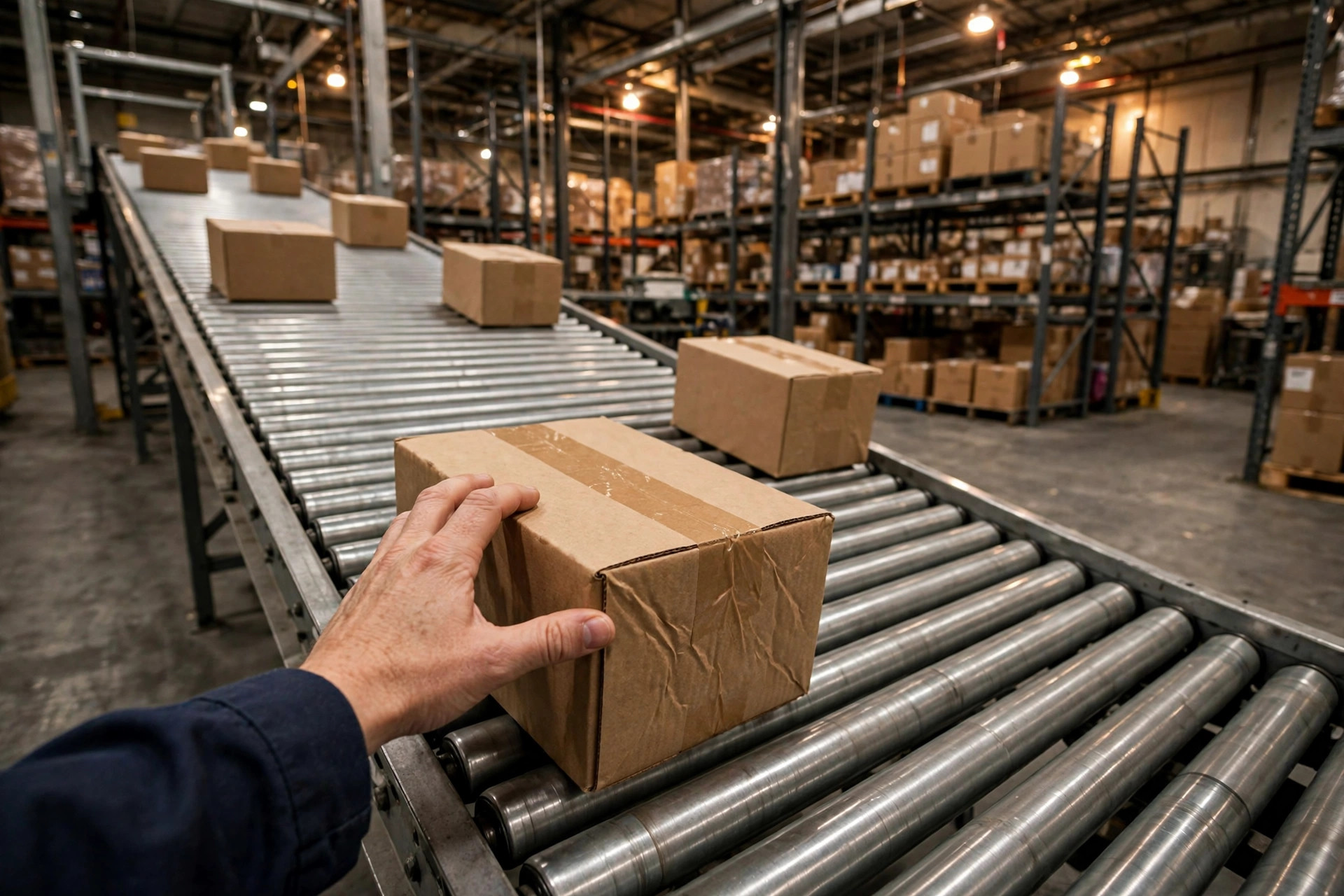
Here's my verdict up front: gravity vs powered roller conveyor isn't a budget question. It's a rhythm question.
If your cartons can just show up and roll away without anyone waiting on them, gravity is plenty. If they need to move in lockstep, on a fixed beat, with upstream equipment waiting on every box — then pay for power. Get this backwards and you burn money either way: cheap out where you needed power, and your people spend peak season shoving boxes by hand; buy power where you didn't need it, and one dead control panel takes your whole line down with it.
I've seen too many people get this backwards. Some treat powered conveyor as the "premium" choice and buy it just to be safe. Others dismiss gravity lines as cheap and low-class. Both groups paid tuition. Let me tell you about two of them.
Gravity's weak spot: the curve where boxes go to die
Fall 2021, a 3PL apparel warehouse in the Inland Empire. Fifty feet of gravity roller from the receiving dock to the QC area, with one 90-degree curve in the middle. The install crew was rushing before peak season and cheaped out on the pitch — under 2% grade, and the curve section was nearly flat.
First week of operation, it fell apart. Apparel cartons vary wildly in weight. Light boxes stalled at the curve; heavy ones rear-ended them and jammed into a pile. During peak, a couple thousand cartons a day, two workers did nothing but stand at that curve shoving boxes through and clearing jams.
I ran the numbers for them: two people, three months of peak season, just standing at that curve pushing boxes — the labor cost alone would have paid for a short powered curve section. Never mind the goods damaged in jams or the missed putaway rhythm. In the end the retrofit cost more than the "do it right the first time" quote — and in the original proposal, that powered curve had been a rounding error on the total.
Gravity's problem isn't gravity. It's that nobody controls the speed. Cartons slide on pitch: light ones stall, heavy ones can't stop, and curves and merges are where it all goes wrong. Gravity isn't unusable — you just have to respect its temperament. Short straight runs, downhill, uniform cartons: cheap and bulletproof. Add curves, merges, or mixed weights, and it starts giving you attitude.
The other trap: a powered line doing nothing
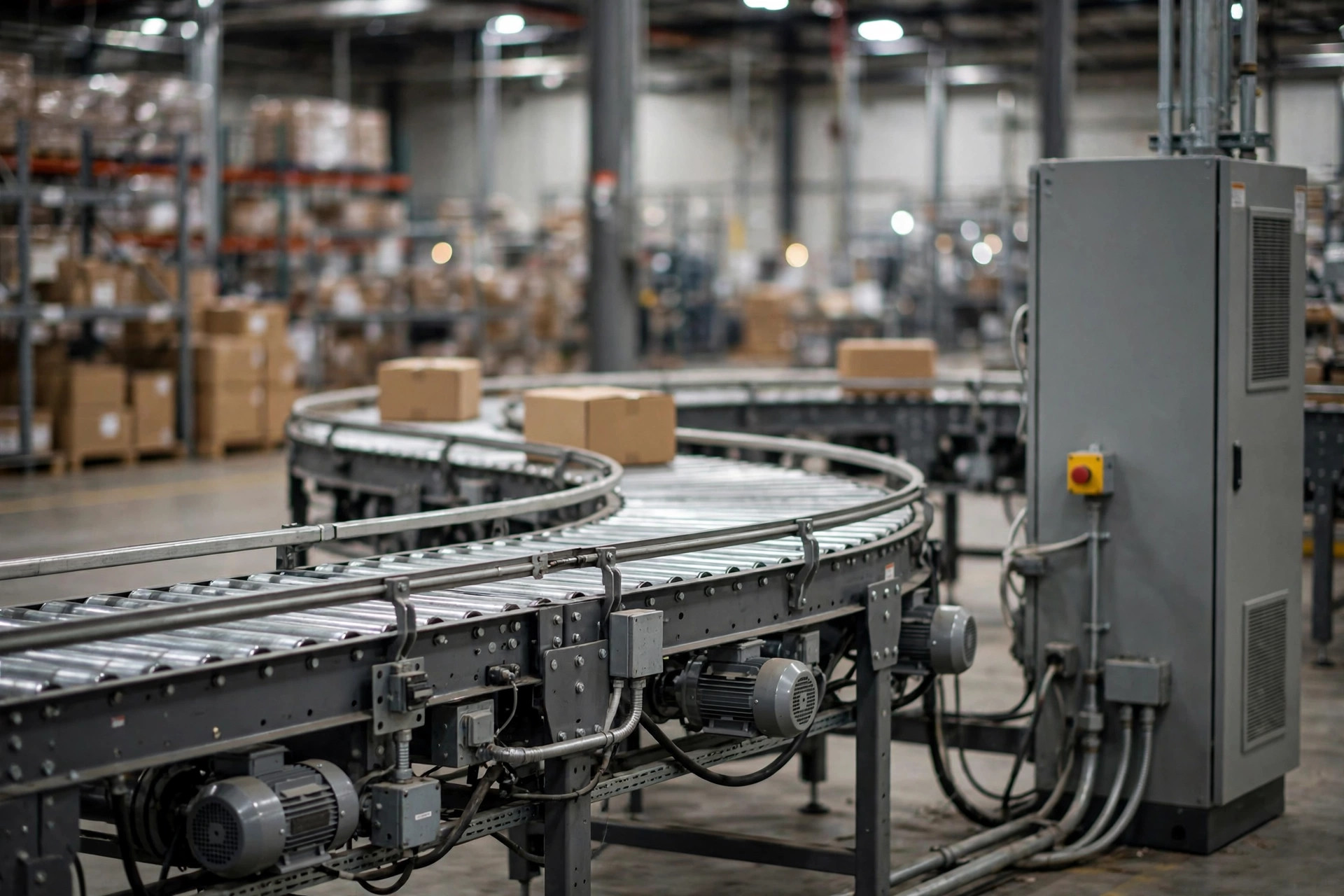
The flip side. 2022, a food distributor outside Los Angeles. Thirty feet of straight run from receiving to a staging area. The vendor said "go powered, do it once, do it right." Their volume? Two or three hundred cartons a day. A guy with a hand truck could have kept up — rhythm was never the problem.
In three years, the control panel died twice. Each time, parts shipped from out of state, the line sat dead for two days, and everything moved by hand. Every benefit of powered conveyor — speed control, auto start-stop — went completely unused. Every weakness — control failures, cascading downtime — hit them in full.
Here's the counterintuitive part most people miss: electricity is the cheapest line item on a powered conveyor's cost sheet. A few hundred watts of motors, a few hundred dollars a year in power — nobody ever went broke on that. What a powered line really costs you is two things. First, the purchase price, typically 3 to 5 times the same length of gravity. Second, the day it stops, your whole line stops — and during peak, that downtime can mean thousands of delayed orders a day.
And the counterintuitive truth about gravity: its biggest advantage isn't the price. It's that there's almost nothing to break. No motors, no controls, no sensors. A dead roller costs tens of dollars and ten minutes to swap. That is the real gravity vs powered roller conveyor trade-off that no vendor brochure spells out: you are not choosing between cheap and advanced, you are choosing between unbreakable and obedient. Powered conveyor's biggest advantage isn't that it's "advanced" — it's that it obeys. Adjustable speed, start-stop, inclines, syncing with upstream equipment. In a highly automated building, obedience is worth a fortune. In a manual building, unbreakable is worth more.
Gravity vs powered: the line in the sand
Quick five-year math on a 50-foot straight run, single shift. Gravity: you pay once, then basically nothing — a replacement roller here and there. Powered: 3 to 5 times the purchase price, a few hundred a year in electricity, a spare control panel on the shelf, plus one unplanned outage where you're paying overtime to hand-carry. In a low-volume, loose-rhythm operation, powered costs you several times gravity over five years and buys you nothing you needed.
Don't go by gut feel. Walk down this table — if even one row lands on the right side, seriously consider power:
| What to look at | Gravity is enough | Pay for power |
|---|---|---|
| Distance | Under 30 ft, single straight run | Long runs, multiple sections chained |
| Rhythm | Cartons flow as they arrive, no fixed beat | Upstream/downstream equipment waits on boxes |
| Carton profile | Uniform boxes, similar weight | Mixed weights, odd shapes |
| Terrain | Downhill or level, 2% pitch | Inclines, multiple curves, merges |
| Supervision | Someone nearby to give a stuck box a shove | Unattended, night shifts, no one watching |
Three more things from the field that don't fit in a table:
First, hybrid is the most common right answer. Gravity on the straight downhill stretches, powered at the curves, inclines, and merges. You save most of the money a full-powered line would cost, with a fraction of the headaches. Seven or eight out of ten projects I've touched ended up hybrid.
Second, pitch is life or death for gravity. Around 2% grade is the rule of thumb — and I mean measured inch by inch with a level at install, not "looks about right." Half of that apparel warehouse's disaster was selection; the other half was installation.
Third, ask the vendor for the cost of downtime, not just the purchase price. No quote ever lists "control panel dies, you hand-carry for two days" — but that's the real price. Get response-time terms in the contract. That beats haggling over the quote every time.
So here's my parting question: the next time you're weighing gravity vs powered roller conveyor for a new line and someone tells you "just go powered, it's the safe choice," ask them one thing — on this stretch of conveyor, who exactly is waiting on whom? If they can't answer, keep your money in your pocket.
By Lao Mi, Supply Chain Veteran (20 yrs)