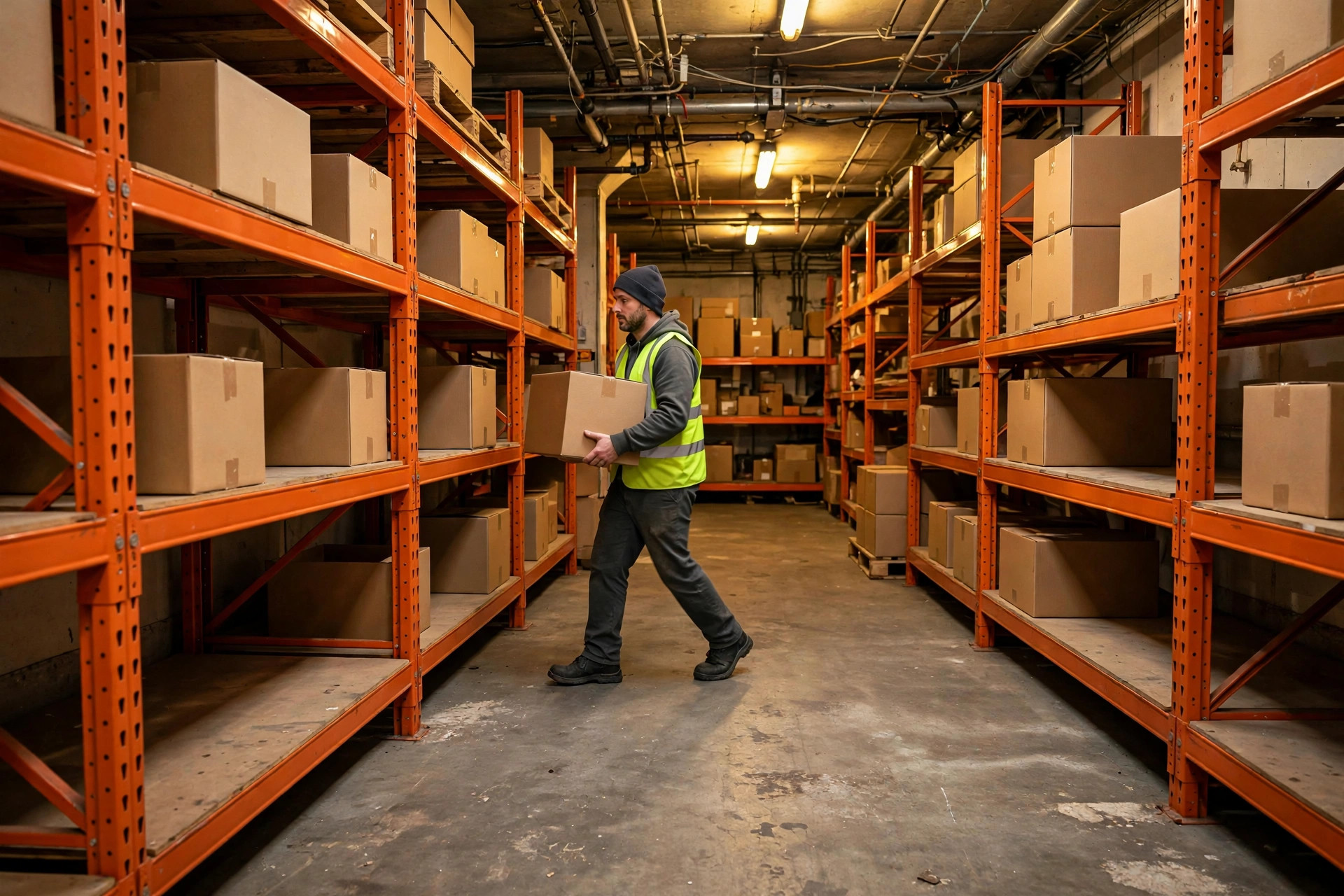
Monday, 6 AM, three weeks before Black Friday. I was walking the pick modules during shift change when I saw Xiao Wang — two months on the job — up on a step ladder, stretching to reach a case of Bluetooth earbuds on the fifth level, a good twelve feet up. That SKU had been doing 300-plus orders a day for two weeks straight. And it was still sleeping four meters off the ground.
How often should you reslot a warehouse? That morning, the question stopped being theoretical for me.
Let me be straight with you: I'm Chen Feng. I've run big-box distribution centers for years. My current building in Ontario, California runs about 200 people, 12,000 pallet positions, 8,000-plus SKUs, mostly e-commerce piece picking. Slotting is my responsibility, and every extra climb my crew makes is on me.
The Year We Reslotted Once a Year
When I took over in 2021, the rule here was simple: reslot once a year, right before peak. Sounds efficient. It wasn't.
SKUs don't wait for your calendar. I pulled three months of data and found that more than 40 of our top 100 velocity SKUs weren't in the golden zone — waist-to-shoulder height, the aisles closest to pack-out. Our best sellers were hiding in the hardest-to-reach spots. Units per hour slid for three straight quarters, and I didn't even want to calculate the wasted footsteps.
Then came the annual "big bang" weekend before Black Friday. Half a day of capacity gone, 200 exhausted people, and Monday's mis-pick rate shot up — every location had changed and nobody had it memorized yet. The slot map in the system and the slot map in everyone's head didn't match. That peak season, we drowned in orders and drowned in errors at the same time. Relying on one heroic weekend a year to fix slotting is like showering once a year and expecting not to stink.
The Six Months We Reslotted Every Month
In 2022 I made the opposite mistake: reslot every month. The logic felt airtight — velocity changes fast, so we slot fast. Reality had three lessons for me, each one painful.
First, reslotting itself costs money. Forklift time, picker support, system updates — monthly moves were eating 3–4% of total labor hours, all stolen from productive picking.
Second, the more we moved, the more we broke. Every move is a human-introduced exception: wrong label, system not updated in time, pallet on the wrong level. Our mis-pick rate climbed from roughly 0.3% to roughly 0.7%, and half the errors traced back to recently moved SKUs.
Third — and this one hurt the most — morale. Lao Zhang, a 15-year veteran, told me flat out: "Chen, I just memorized the slot map and you changed it again. My fifteen years of experience is becoming a liability." New hires had it worse: Xiao Wang's class got three printed slot maps in three months, two of them obsolete before the ink dried. Crews started every shift wondering "did my zone change overnight?" That uncertainty grinds people down worse than extra footsteps.
Six months in, I admitted it: more frequent does not mean better. Reslotting has a built-in tension — stand still and velocity changes punish you; move recklessly and the cost and errors of moving punish you. There is no universal frequency. There's only your building's answer.
How Often Should You Reslot a Warehouse? Our Three-Tier Cadence
Since 2023 we've run a fixed three-tier system, and it's still running today. Quarterly overhauls, trigger events, daily tweaks.
Tier one: quarterly overhaul. Last weekend of every quarter, non-negotiable. Two weeks out, the system pulls ABC velocity rankings — only SKUs whose rank shifted by more than 30% make the move list. We don't tear the building apart; we only move the SKUs that "changed their minds." Typically 800 to 1,200 pallet positions, done over two night shifts plus one weekend day shift. Weekday capacity stays untouched.
Tier two: trigger events. Three triggers, no waiting for the quarter: ① three weeks before a major promo like Black Friday or Prime Day; ② seasonal changeover — fans out, heaters in; ③ a single SKU doubling its pick volume for two straight weeks, or a new SKU beating expectations in its first month. When a trigger fires, we move only the affected SKUs and zones. No building-wide campaigns.
Tier three: daily tweaks. This is the one that matters most, and it barely looks like a project. The last hour of every night shift, zone leads can move 5 to 20 pallet positions — no approval chain, just a reason code in the system. Lao Zhang is our slot lead now. Fifteen years in, he walks the building every day with two trainees and quietly fixes the awkward slots. The day shift walks into better slots every morning with zero capacity lost. Small steps beat heroic weekends — for accuracy and for morale.
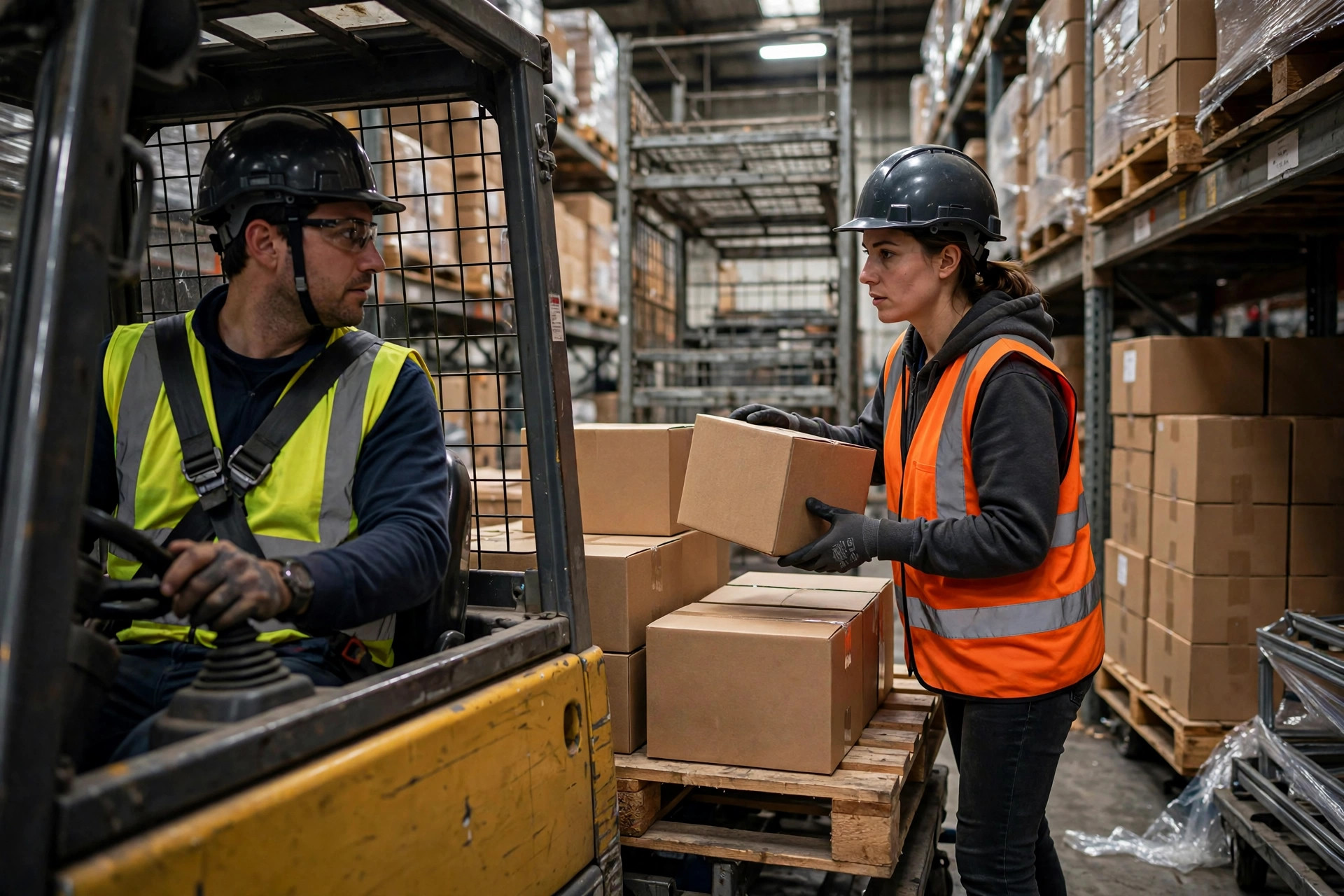
Last October's pre-peak overhaul ran exactly this way: all top 200 velocity SKUs into the waist-high golden zone. That Black Friday week, overtime in the pick modules ran about 20% lower than the year before, and the mis-pick rate stayed flat. Here's the honest truth — the numbers matter, but so does the crew's mindset. Slotting stopped being a stranger that changes its face once a year and became their own territory, getting a little better every day.
The Payback Math: Is This Move Worth It?
Cadence is set. Now the question with a soul: is this particular SKU worth moving?
Here's the counterintuitive call most operators get backwards at first: a SKU has to stay hot long enough to pay back its move. A promo SKU with seven days left, picked ten times a day — you spend 20 minutes moving it to the golden zone, the promo ends, and the minutes you saved never cover the minutes you spent. Moving it is a loss. Reslotting isn't about frequency; it's about payback.
Our math is simple:
Payback (days) = move time (minutes) ÷ (daily picks × seconds saved per pick ÷ 60)
One pallet move runs 10–15 minutes of forklift time plus system updates and verification — call it 0.3 to 0.5 labor-hours all in. Run the numbers at 20 minutes a move:
| Scenario | Daily picks | Seconds saved | Saved per day | Payback | Call |
|---|---|---|---|---|---|
| Hot SKU | 250 | 12 sec | 50 min | Half a day | Move it, no debate |
| Mid-tier SKU | 60 | 12 sec | 12 min | ~2 days | Move it, queue in daily tweaks |
| Long-tail SKU | 10 | 12 sec | 2 min | 10 days | Only if it stays hot 10+ days |
Same move, totally different answer — it all depends on how long the heat lasts. Our leads memorize one line: check how long it stays hot before you spend minutes on it.
And one more contrarian take: the best reslot is the one you never need, because receiving slotted it right the first time. We moved about 30% of our slotting effort upstream — new SKUs get a preliminary ABC grade in week one and go straight to a velocity-appropriate home. Sounds like a platitude, but we paid real money to learn it: ten extra minutes at receiving saves an hour of reslotting later.
One Reminder for Fellow Operators
Don't copy our "quarterly + triggers + daily" cadence. Your SKU count, velocity volatility, and crew size are different — our frequency will probably fit your building like someone else's shoes.
Before you copy anything, pull your own last three months of data and look at two things: ① your pick UPH trend — sliding or stable; ② your velocity churn — how many new faces in the top 200 each month. So, how often should you reslot a warehouse? Honestly — start with your own numbers, not someone else's calendar. Without your own data, any frequency is a guess.
And one more: check when your ABC classifications were last updated. If it's been over six months, don't reslot yet — scrub your ABCs first. Reslotting on top of stale classifications is just rearranging deck chairs faster. That's how we run it in our building. In slotting, precise beats busy, every time.
By Chen Feng, Warehouse Operations Manager