On the platform, buyers look at the brewery, the flavor, and the price. Sellers compete on warehouse details. Light, temperature, expiry dates, and breakage can each turn into a bad review or a return. Do not expect warehouse staff to worry about these things for you. They follow the work order. Your standards only get followed when you write them into the operating instructions.
Germany Beer Export Warehouse Storage, Bill Number One: Light and Heat
Beer fears two things above all: light and heat. Light exposure creates the stale, skunky taste that ruins a bottle, and summer heat speeds up aging, flattening both foam and flavor. This is not theory. Every beer seller pays this tuition sooner or later.
My method is crude, but it works. The first job at inbound is not counting cartons. It is checking the warehouse location. Spots near windows, under the roof, or beside a loading door in direct sunlight are all rejected. Before pallets go into storage, I ask the warehouse to add an opaque outer wrap, and cartons stay clear of the area directly under skylights. In summer I also ask one extra question: what is the highest daytime temperature in the warehouse, and does it cool down at night. A warehouse that cannot answer that question loses my business.
In July 2025, I picked up stock from a brewery near Munich. The brewery warehouse kept a steady cool temperature, but the goods then sat on an open-air dock at a transit warehouse for most of a day. After arrival, I sampled more than a dozen bottles. The smell was off, and that batch had to be cleared at a discount. The lesson is simple: the storage bill runs from the moment goods leave the brewery to the moment they go on sale overseas, not only inside your own warehouse.
On temperature, do not chase extreme cold. Beer does not need freezing. A stable, cool environment beats constant swings between hot and cold. The real killer is temperature fluctuation: baking sun by day, a sharp drop at night. Pressure inside the bottle shifts back and forth, and leakage and breakage risk both climb. My warehouse contract therefore states a temperature range and an escalation rule: if the range is breached, I get notified. I should not be the one discovering it later.
Bottles and Cans Play by Different Storage Rules
Bottles and cans need different storage logic, and using one method for both is asking for trouble.
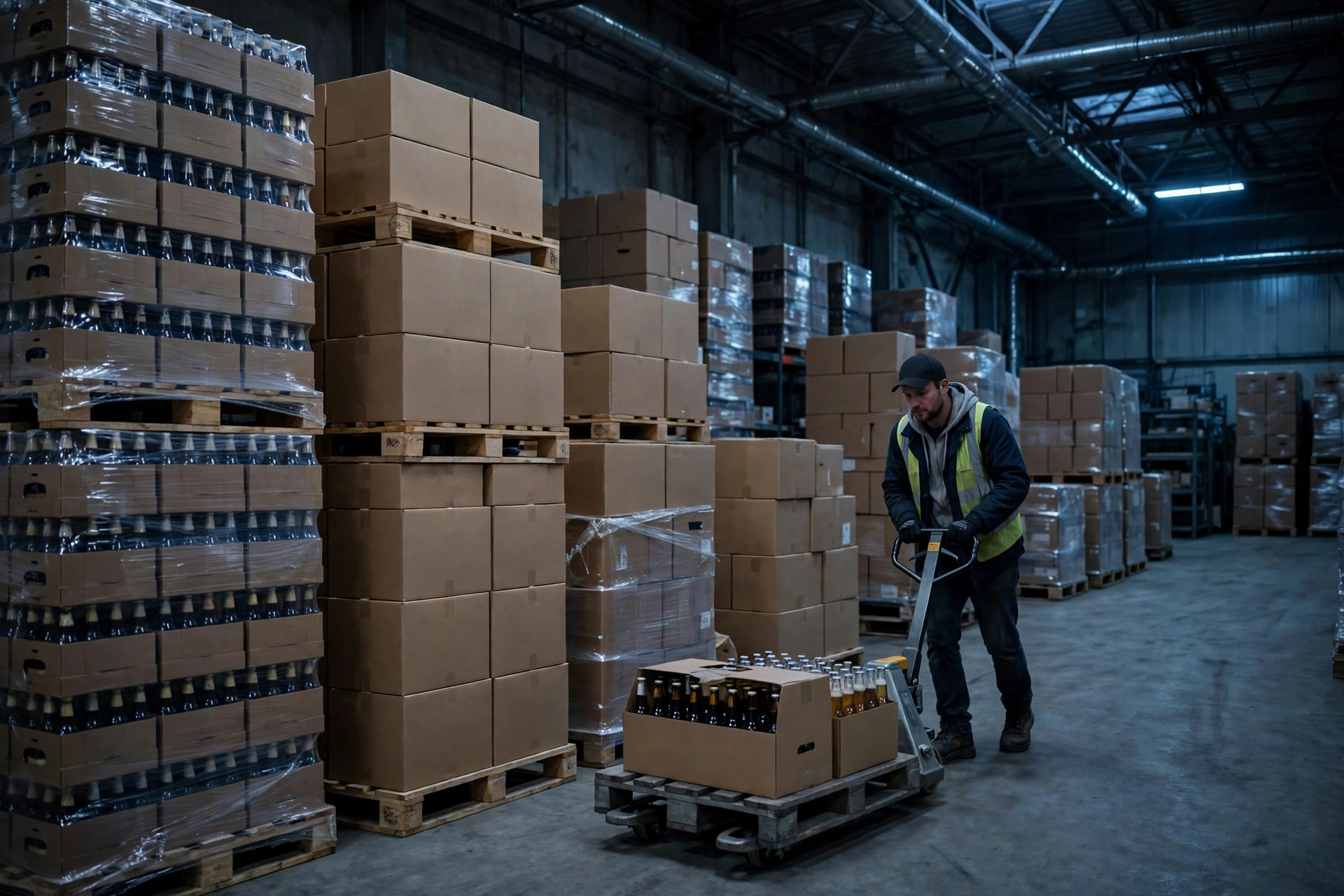
Bottles break, crush, and react to light. Glass is heavy, so tall pallet stacks put pressure on the bottom cartons, and transport vibration adds to the damage. My rule is strict: never stack bottles above the layer count the brewery recommends, add corner protectors on all four sides of the pallet, and wrap tightly without squeezing the bottles. During inbound checks, I look closely at the bottom cartons. Soft corners mean the whole pallet gets extra inspection.
Cans are lighter, stronger under pressure, and immune to light, which makes storage easier. Their weakness is dents. One dented can looks like a second-class product to a buyer, and the return reason writes itself. For cans, inbound inspection focuses on crushed outer cartons and water marks. Dented cans are pulled out, photographed, and kept out of normal sellable stock.
Here is the comparison I actually use when costing a shipment:
| Factor | Bottles | Cans | | Storage risk | Breakage, crushing, light damage | Dents, crushed outer cartons | | Stacking rule | Strict layer limit, corner protection | Avoid heavy top loads, keep dry | | Inspection focus | Bottom cartons, caps, labels | Carton dents, can body dents | | Seller mindset | Better one layer fewer | Better spend a little more on packaging |
That table was paid for with damage claims. With bottles, I would rather stack one layer fewer and ship fewer cartons than watch the breakage rate climb. With cans, I would rather spend a bit more on packaging than send a dented can to a buyer and gamble on their patience.
Germany Beer Export Warehouse Storage: Consolidation and the Claims Evidence Chain
Expiry dates and batch control are the most overlooked trap in beer storage. Beer has a shelf life, and different batches can differ by months. If inbound stock is not stored by batch, first-expiry-first-out discipline breaks down, and the overseas warehouse may ship near-expiry stock first. One buyer complaint about a short-dated bottle can drag down account performance fast.
My routine is fixed: label every batch at inbound, record expiry dates by batch in the system, and pick stock from the nearest expiry outward. Once a month, I review the near-expiry list. Stock within one sales cycle of expiry gets promoted or transferred early. Near-expiry stock is not unsellable, but it must never go out disguised as regular stock.
Consolidation and temperature-controlled transport need to be agreed before loading, not after. In a shared container, beer should not sit next to strongly scented cargo, nor right beside the container door where temperature swings are widest. Before loading, I confirm three things with the forwarder: the stowage position inside the container, summer temperature measures, and whether any transit leg risks open-air sun exposure. I keep the chat logs and emails. A phone call alone is not proof.
Damage and leakage claims come down to an evidence chain. My claim pack always has five items: factory packing photos, container loading photos, warehouse opening photos, close-ups of the damage, and the logistics tracking record. Miss one item, and the claim gets weaker. On that sun-damaged batch in 2024, I had no photos from the transit leg, and I recovered only part of the claim. Since then, I require photos from every leg, by batch, from both warehouse and forwarder. Any leg that cannot provide photos gets replaced next time.
Replenishment timing works backward from peak season. Beer peaks in summer and before holidays, so overseas stock must be planned at least one full sales cycle ahead, plus shipping and customs clearance time. My math is simple: divide expected peak-season sales by weekly sales to get the weeks of cover needed, then add two weeks of safety stock. Running out of stock before peak season costs more than overstocking slightly, because lost ranking and sales weight cannot be bought back by a later restock.
On import rules, I give no specific figures here, because alcohol import requirements change often. Always check the official source for the destination market before shipping, and prepare documents and label requirements before the goods leave, not when they reach the port.
None of this is fancy. Every step can be executed: check the location at inbound, pick by expiry date, agree the stowage position, keep photo evidence, and plan stock backward from peak season. Germany beer export warehouse storage is not a contest over whose beer tastes best. It is a contest over whose warehouse makes fewer mistakes. Push the error rate down, and the margin follows. This trick worked for me in real sales.
By Ah K, E-commerce Seller (5 yrs)