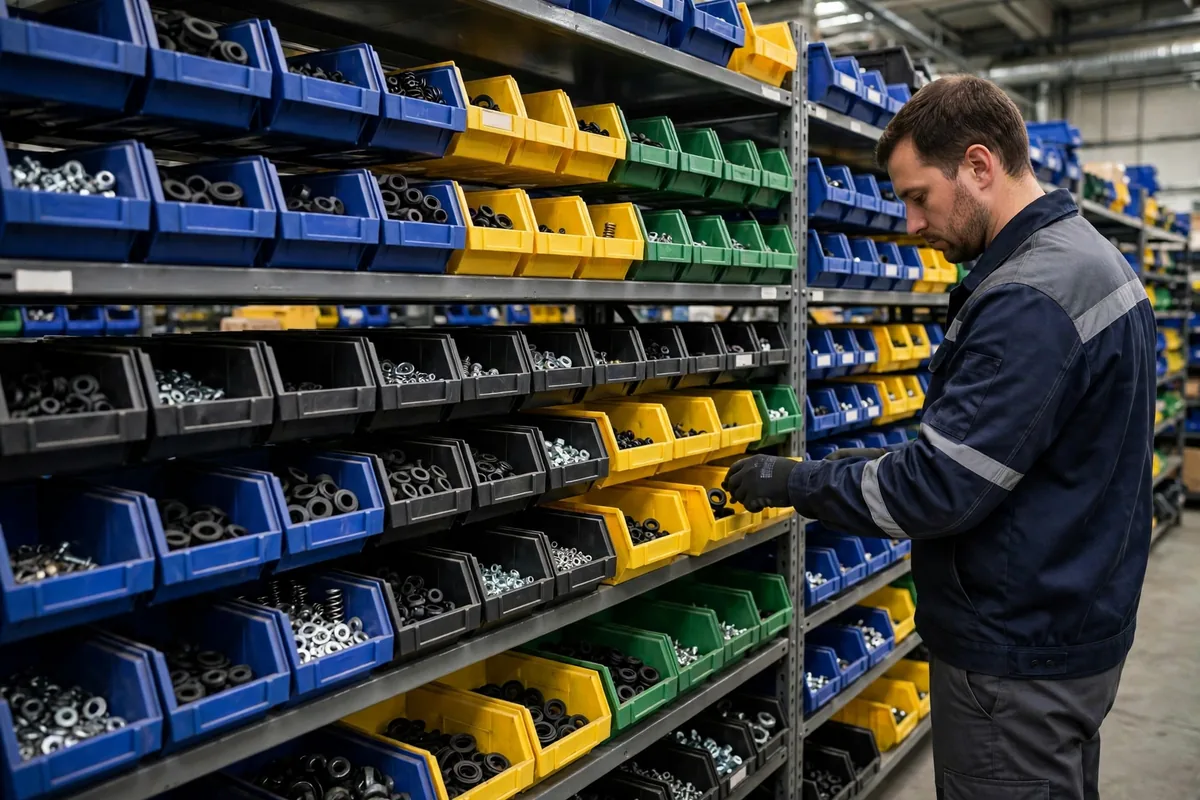
Germany auto parts warehouse logistics is not a game our small warehouse can afford to play the big way. Before we took on German auto parts orders, I thought a parts warehouse was just an e-commerce warehouse with more stock. Three months in, I learned the truth: this business is not about who has the biggest building. It is about who finds the right part fast and who never ships the wrong one. Send the wrong part and a repair shop has a car stuck on a lift, a customer waiting in the lounge, and your phone ringing off the hook.
Here is the background that makes this lane so unforgiving. German carmakers keep supplying service parts long after a model stops production — public sources note a commitment of at least 15 years for some makers. Model after model, the part numbers pile up. Porsche's spare parts warehouse in Sachsenheim holds about 85,000 different parts, ships 3.2 million order lines a year, and reaches most European retailers within 24 hours, according to public project data. Volkswagen's Kassel network holds more than 450,000 part assortments. The big players win on scale. We cannot. We have 3,000 square metres and a team of about a dozen people, so we have to win on cleverness instead.
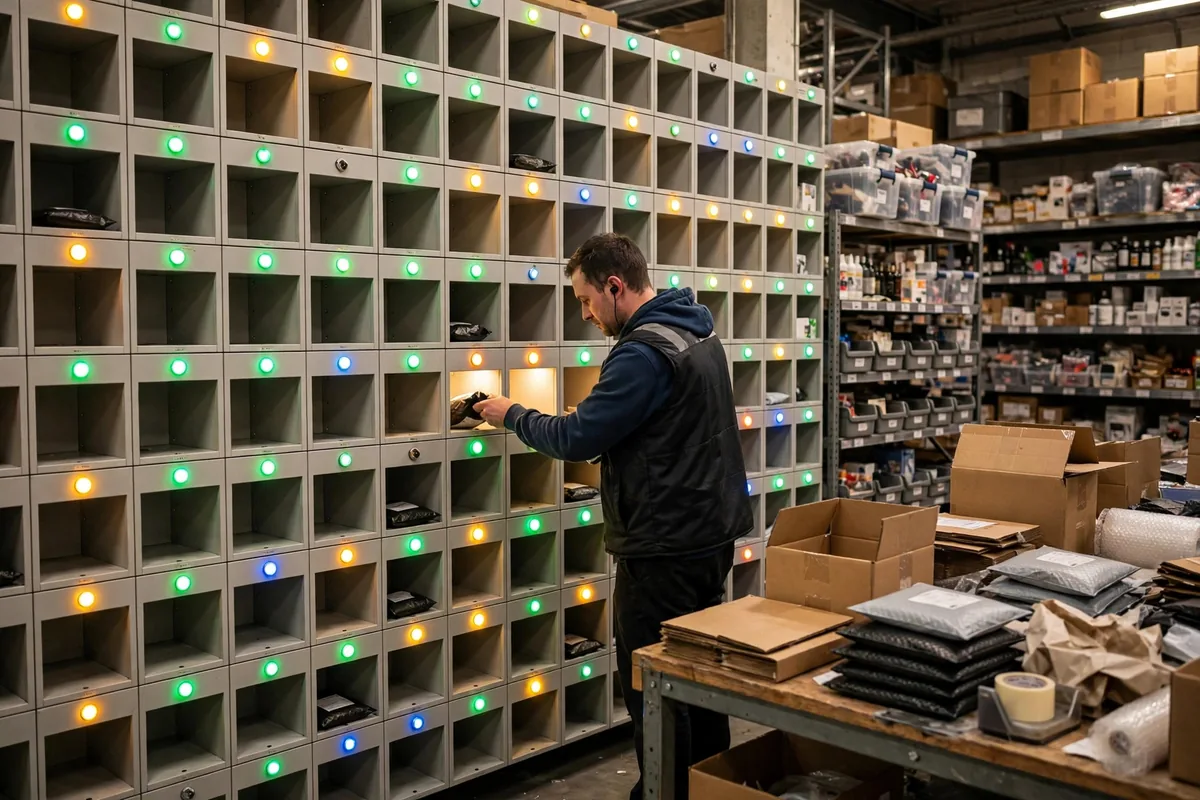
When we started, our locations followed arrival order. Whatever bay was empty and close got the goods. Pickers walked back and forth across the racks, digging through three cartons to find one brake pad. Worse, genuine parts and aftermarket parts look almost identical once the packaging comes off. Two brake discs side by side, no label in sight, and nobody can tell them apart. Once we shipped an aftermarket part to a repair shop that only accepts genuine parts. They spotted it on the car, sent it straight back, and charged us for the trouble. That order lost money, and we nearly lost the customer with it.
After that, we changed our first rule: genuine and aftermarket parts live in physically separate zones, never mixed. This is not a field in a system. It is a real aisle between two sets of racks, with different coloured labels. Genuine parts get white labels, aftermarket parts get yellow ones, and a picker can check the match at a glance. It sounds crude. Crude works. Wrong shipments of genuine versus aftermarket parts have basically disappeared since.
The second trap is slow movers. A parts warehouse is full of them — items that move a few times a year but must be there the moment a customer asks. Put them in a prime spot and they squat on good locations all year. Bury them in a corner and an urgent order turns into a half-hour treasure hunt. Our workaround is three tiers by movement: fast movers sit at waist height in the golden zone, within easy reach; medium movers go up high and down low; slow movers go to a far zone, sorted by vehicle model, one model per section. The slow zone looks far away, but it has an order to it, and finding things there beats digging through a messy warehouse every time.
Germany Auto Parts Warehouse Logistics: The Picking Bill Is About Walking, Not Rent
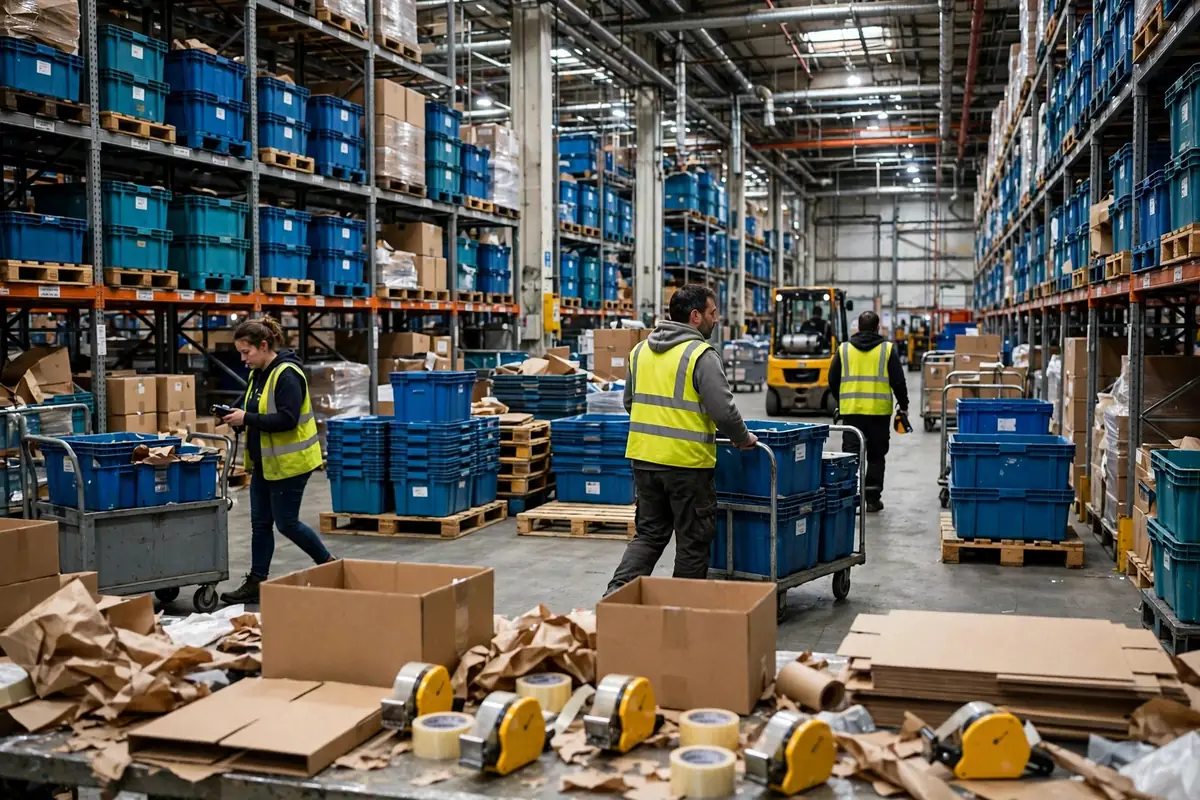
The most expensive thing in this business is not rent. It is the picker's legs. Our warehouse is small, but once the racks multiply, a picker still covers serious ground in a day. Before we changed the layout, we ran a hypothetical worked example: one picker handling about 200 order lines a day, walking an extra 30 metres per line, adds up to 6 kilometres of extra walking a day. The exact metres do not matter. The direction does: the harder goods are to find, the more people walk, and the more mistakes creep in.
Our fix was equally low-tech: rearrange fast movers by what gets ordered together. Brake pads next to brake discs, filters next to oil, bulbs next to fuses. Pick lists follow the walking route, and nobody is allowed to walk the warehouse backwards. Within a month of the change, picking was visibly faster and errors dropped — the same logic as a supermarket putting popular goods where hands can reach them.
Here is how the three approaches we tried compare, using a hypothetical worked example for a 3,000-square-metre warehouse with a team of about a dozen people:
| Approach | Extra monthly labour and materials cost (hypothetical example) | Result |
|---|---|---|
| Store by arrival order, rely on veterans remembering locations | $0 | New staff learn slowly, errors pile up, peak season turns chaotic |
| Separate genuine and aftermarket zones with colour labels | A few hundred euros a month in labels and tidying time | Genuine versus aftermarket mix-ups basically disappear |
| Sort by movement speed and rebuild the walking route | About a week of one-off tidying work | Less walking, much faster finding |
The message is one sentence: a small warehouse cannot buy a big system, so it should do zoning and walking routes to perfection. Anything a system can remember, people can remember with eyes and colours, as long as the rule is simple enough for a new hire to follow on day one.
Germany Auto Parts Warehouse Logistics: Slow Parts Still Need a Fast Answer
The time pressure in this lane sits entirely on service parts. A car waits on a lift, a customer waits for the keys, and a part that arrives half a day late leaves a repair bay standing idle for half a day. Most of our orders have to leave the same day, and once the cut-off passes, unfinished picks need a plan. Ours is a fast lane: for the two hours before the daily cut-off, we pick urgent orders only, and slow orders wait their turn. Fast-lane items get staged the day before near the dispatch door, based on the next day's urgent-order forecast.
The fast lane saved us once. A repair shop urgently needed a water pump for an old model, a part that moves maybe twice a year in our warehouse and lives in the slow zone by movement tier. The order came in close to cut-off. The picker went straight to the model section in the slow zone and had the part out in three minutes, in time for same-day dispatch. Under the old arrival-order chaos, that part would have taken half an hour to find, and the order would have been lost. Slow movers look like a burden most days. On the day that matters, they are the edge you have over the next warehouse.
Behind that sits a counterintuitive call: the most valuable thing in a parts warehouse is not floor space, it is finding speed. Plenty of small warehouses start by renting a bigger building, assuming space solves the problem. I think the opposite: the bigger the space, the harder the finding. Our 3,000 square metres are small enough that a picker knows the aisles by heart, and that is easier to run than a big hall. The money worth spending goes into making goods findable — clear labels, clear zones, clear routes. Get those three right and a small warehouse can take urgent orders too.
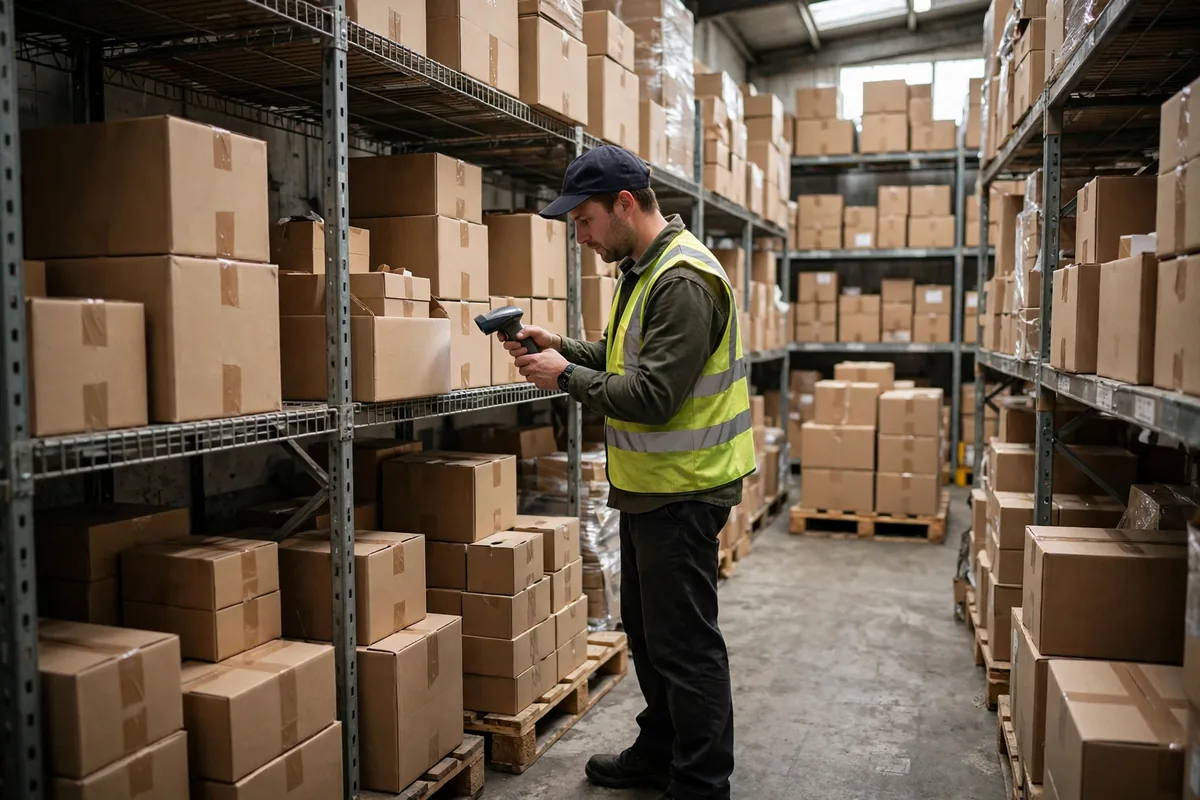
Traceability is the other lesson. German carmakers take part traceability seriously, and the industry uses labels such as VDA 4902 and VDA 4994, with different formats for large and small load carriers, carrying material and batch information. We cannot run the full big-company system, but we hold the line that matters: we record the supplier batch number at receiving and write it on the dispatch note at shipping. If a batch ever has a problem, we can trace which customer received it. On a normal day it looks like extra work. On a bad day, it is the thing that saves you.
So here is my advice for warehouses like ours, in three lines. Separate genuine and aftermarket parts physically, with colour labels you can read at a glance, and do not trust a system field to replace distance on a rack. Sort by movement speed, keep slow movers out of prime spots, but sort the slow zone by vehicle model so things can still be found. Never skip labels and batch numbers — traceability is the floor for a parts warehouse, not a bonus. None of that costs big money. It costs attention.
Big companies have their way of doing this. We have ours. A small warehouse has its own way to survive, and when the way is right, even tens of thousands of SKUs can be kept in clear order.
By Xiao Ma, Small Warehouse Owner