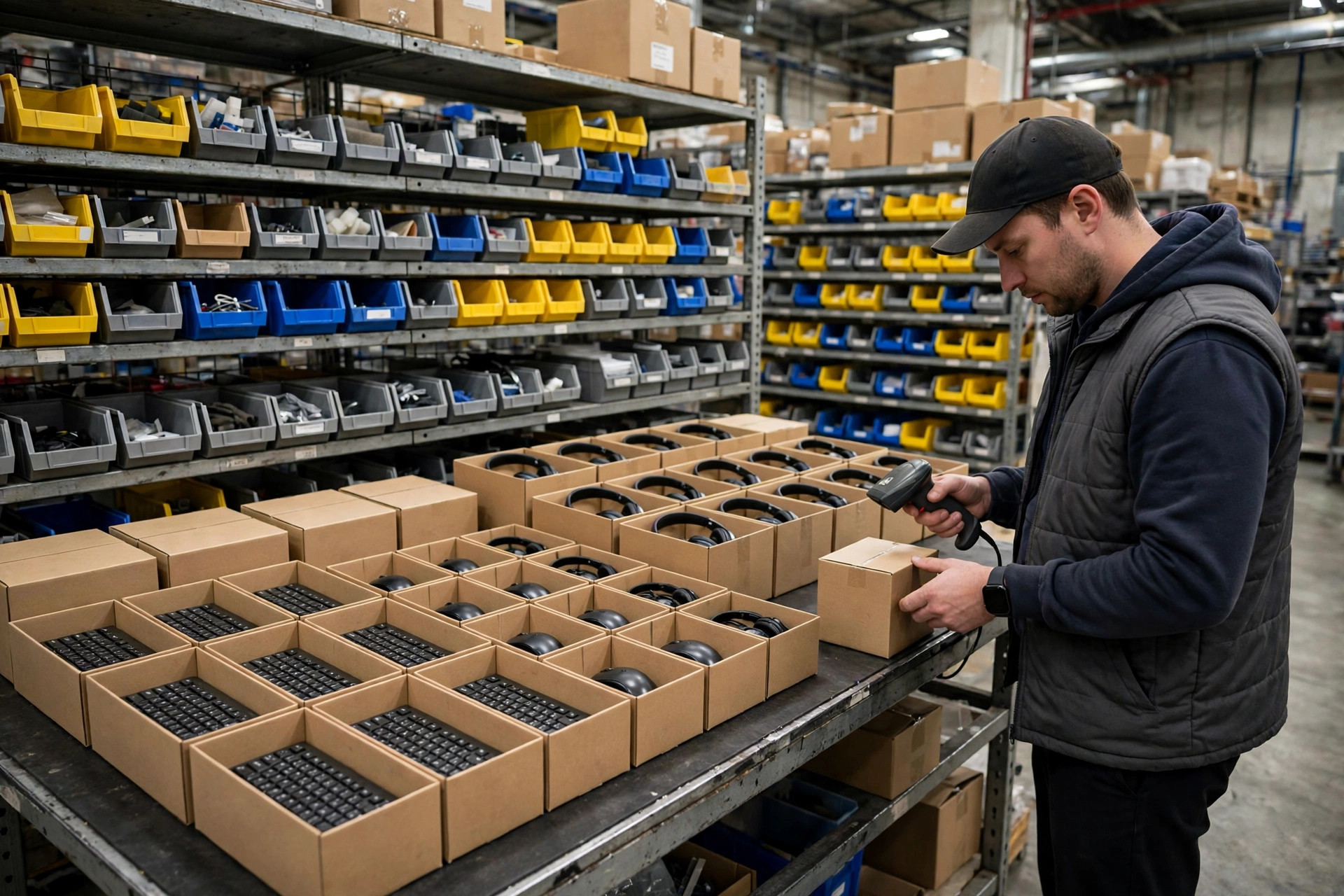
The trouble with a gaming peripherals ecommerce warehouse is rarely size. It is that the goods are small, expensive, and varied: one keyboard, one mouse, one headset, each compact enough to slip into a tote, each costly enough to matter when it goes missing. According to published post-mortems from ecommerce warehouses, losses in this category seldom appear at inbound receiving. They appear at the four handoffs where goods change hands: picking, checking, packing, and returns. The smaller the item, the more handoffs it survives, and the more chances there are for something to go wrong. Theft, electrostatic damage, and batch mix-ups look like three separate problems, but on the profit statement they are one ledger with three columns: a missing unit is a direct loss, a static-damaged unit is a return loss, and a mixed-up batch is an after-sales loss.
Theft control in a gaming peripherals ecommerce warehouse starts at the picking bench
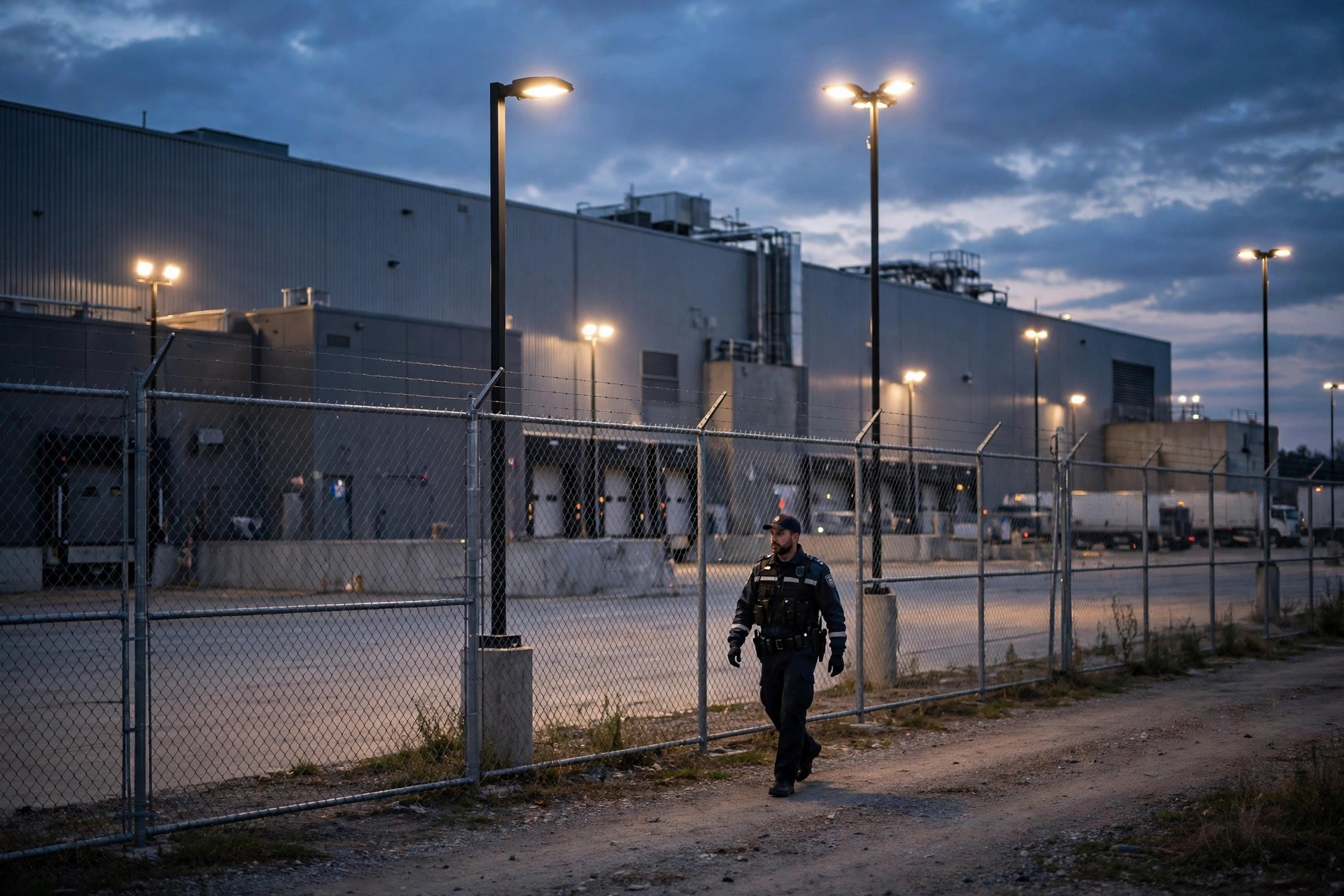
During the November 2024 sales peak, an ecommerce warehouse in Bao'an, Shenzhen, found its counts off for three days running. The picking area had only 12 stations and shipped roughly 4,000 orders a day, and the gap centered on two high-priced wireless mice: the system showed stock available, yet 27 units were physically missing. Reviewing camera footage showed the hole was not at the front door. Picked goods sat in open cubbies waiting for checking, and during a half-hour shift change nobody owned those cubbies. Goods left the cubbies in that window. The warehouse changed two things afterwards: high-value small items no longer waited in open storage but went straight into lidded totes sealed by scan, and a tote could not leave the picking area without a checking scan. At the next sales peak, discrepancies of the same kind fell to single digits.
The pattern here is worth stating plainly, because it runs against the usual assumption that theft means someone forcing an exit. With small, high-value goods, most loss comes from unowned time: goods whose holder, location, and dwell time cannot be answered for. Practical controls follow from that diagnosis. Tier protection by unit price, so the more expensive the category, the more closed its temporary container and the stricter its scan handover. Log picking tasks by person and by time window, so a discrepancy can be traced to a station and a shift rather than to a whole floor. Keep returns physically apart from good stock, and move returned high-value units into an inspection area the same day, on their own ledger. The cost case is straightforward: one extra scan handover per tote costs minutes a day, while losing dozens of mice a month costs far more. Applying the strictest standard to every category, however, would choke picking speed, and that trade-off is the subject of the final section.
Static protection is a returns ledger, not a consumables ledger
In March 2025, a third-party warehouse in Dongguan that fulfilled orders for several gaming brands faced a wave of headset returns. The returned headsets looked fine and powered on, but customers reported microphone hiss and occasional dropouts. Testing ruled out a defective production batch and pointed back to the warehouse: in dry winter air, picking benches had no anti-static mats, workers opened inner boxes by hand and repacked units, and headset boards picked up static damage during repeated handling. Damage of this kind is hard to catch at the bench, since it often surfaces only after a week or two of customer use, and the return reason then reads as a quality defect while the cost lands on the warehouse and the seller together. Roughly 600 headsets were involved, and the combined cost of return shipping, testing, and repacking ran to several times the warehouse's annual anti-static consumables budget.
According to common practice in warehouses handling electronics, the real expense of static control is not mats and wrist straps. It is turning protection into a habit: mats on benches, straps at stations, inner-box opening only in a protected zone, and no prolonged bare-hand contact with exposed boards in keyboards and headsets. Equally important is connecting static damage to returns data. When the return rate of one model climbs suddenly, the first check should be whether anything changed inside the warehouse, before blaming the product batch. Many warehouses treat static protection as a one-time purchase: mats go down and are forgotten, while mats age, grounds loosen, and straps go unworn, which leaves protection at zero in practice. A monthly check of grounds and strap use, recorded on the shift checklist, costs very little and blocks a whole batch of hidden returns.
| Stage | Common gap | Working control | Cost character |
|---|---|---|---|
| Picking holdover | Open cubbies, unowned time | Lidded totes with scan sealing | One-time spend plus minutes daily |
| Checking and packing | Counting from memory | Scan checking, item-by-item for high-value units | Seconds per order |
| Static protection | Aged mats, straps unworn | Protected-zone unpacking, monthly ground checks | Consumables plus inspection time |
| Batches and returns | Mixed batches, unchecked returns | Batch-separated storage, returns on a separate ledger | Space and process cost |
Batches and returns in a gaming peripherals ecommerce warehouse: small goods mix most easily
Keyboard switch versions, mouse firmware versions, and headset cable batches often look identical from the outside of the box, and once mixed they are hard to separate. A Guangzhou ecommerce warehouse learned this in mid-2025: one keyboard model shipped in two switch versions, received and stored under the model name alone, and picked by model alone, so a group of customers received a switch feel that did not match the product page. Returns and exchanges clustered, and customer service spent two weeks aligning its explanations. The fault was not the product. It was that the warehouse had never treated version as its own inventory dimension. The fix was to make model plus version the smallest picking unit, with version shown on both the bin label and the system stock record, so a scan mismatch at picking blocks the pick instead of relying on a worker's memory.
Returns create the same mixing risk in reverse. Gaming peripherals already return at a higher rate than ordinary household goods, and returned stock arrives in three states: sealed and unused, tried and returned in working order, and damaged. Put all three in one returns area and a tried unit will eventually be reshipped as new, which produces a second return and a negative review. A workable rule sorts returns on arrival into three lanes: sealed units go straight back to good stock, tried-but-working units go to a separately priced second-hand or display channel, and damaged or suspected static-damaged units go to an inspection and repair lane, with separate ledgers for each lane and no lane allowed to jump straight back to good stock. Sorting adds roughly half a day to returns handling, but it blocks second returns and bad reviews, both of which cost more than half a day of labor.
The counterintuitive finding is that the most tightly controlled warehouse is not necessarily the slowest, and the loosest warehouse is not necessarily the fastest. Locking every small item away and checking each one repeatedly does slow picking. Leaving everything open and hunting for differences at stocktake, on the other hand, lets theft and returns quietly eat margin. The defensible middle is tiering: ordinary cables and accessories move through a fast lane, high-value main units move through closed handover and item-by-item checking, and full static protection applies only to sensitive categories. Tiering is not a relaxation of standards. It is putting limited control resources where losses concentrate. Looking ahead, unit prices for gaming peripherals keep climbing and the range keeps widening, so a gaming peripherals ecommerce warehouse that still manages these small goods the way it manages household goods should expect discrepancies and returns to climb with prices. The open question for any operator before the next sales peak is the same one the Shenzhen case exposed: how much stock on your picking benches is currently sitting in a half-hour that nobody owns.
By Dr. Chen, Supply Chain Researcher