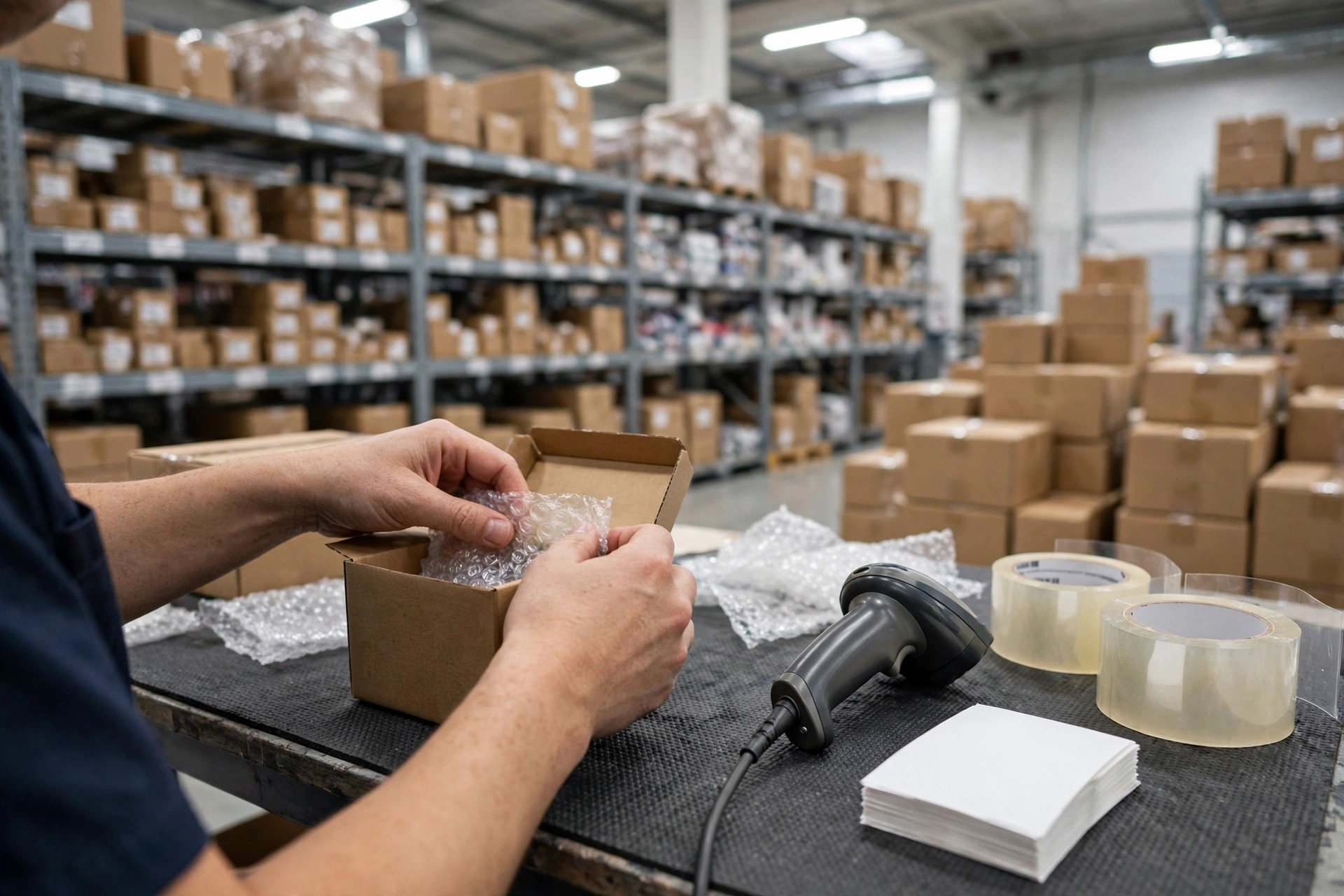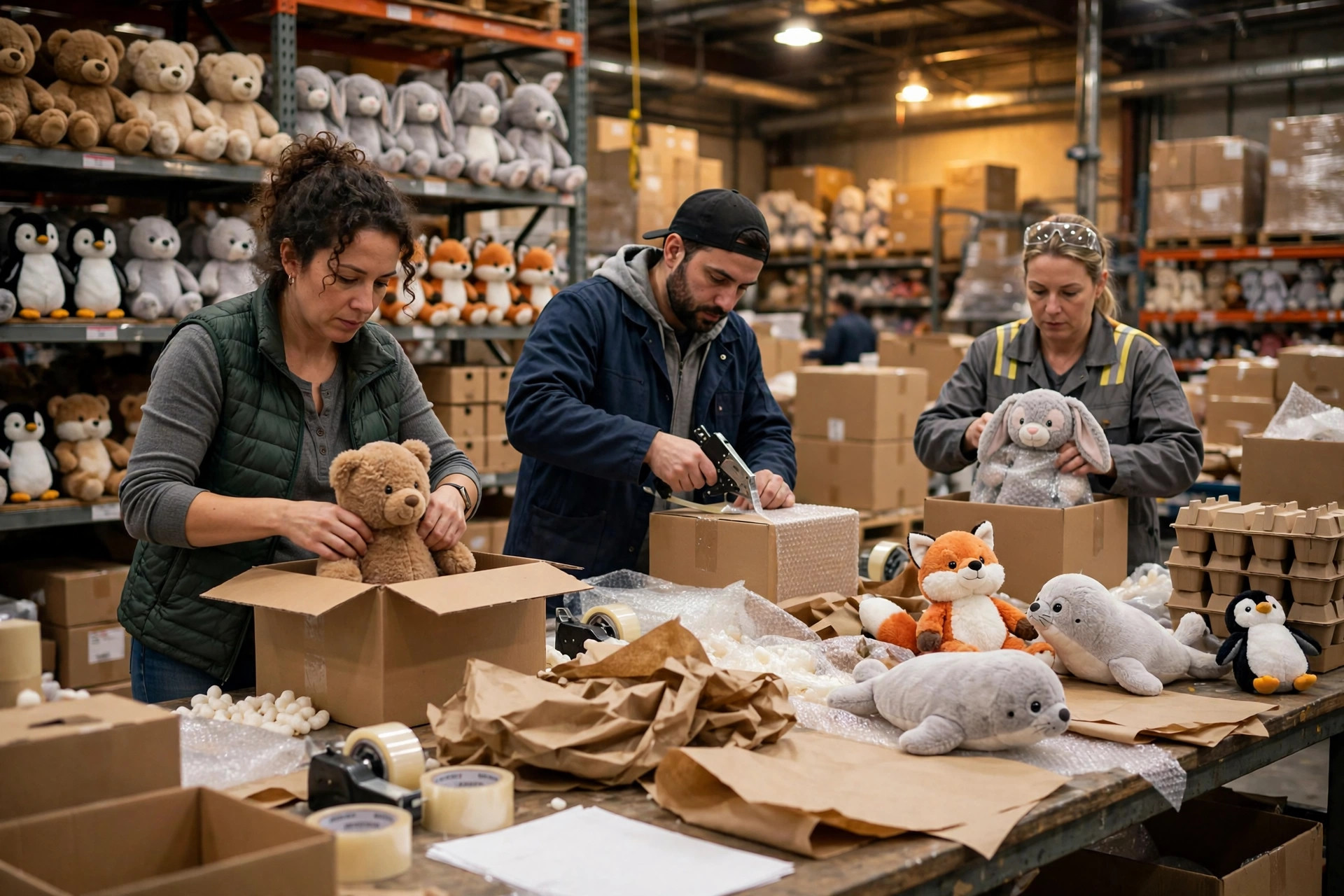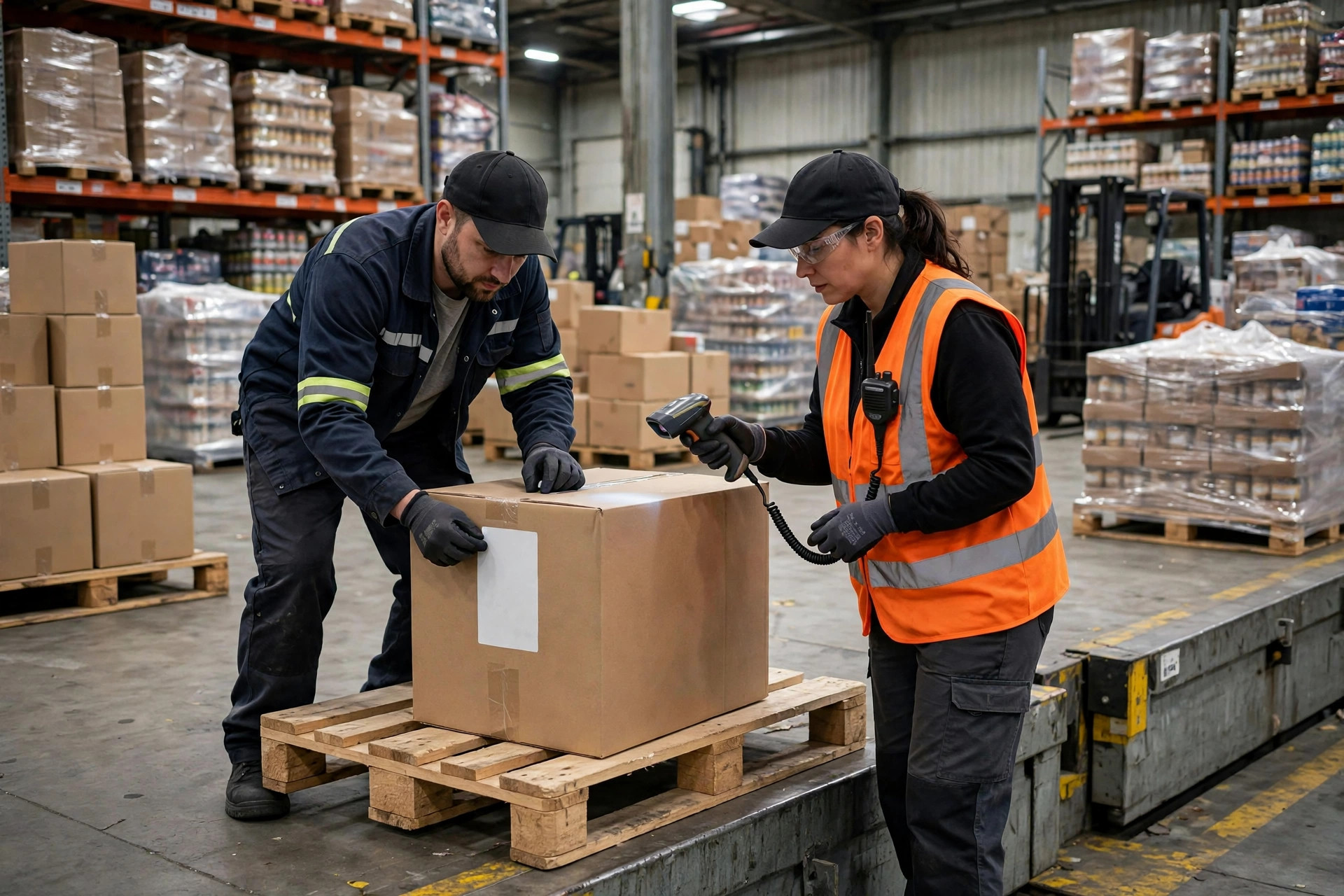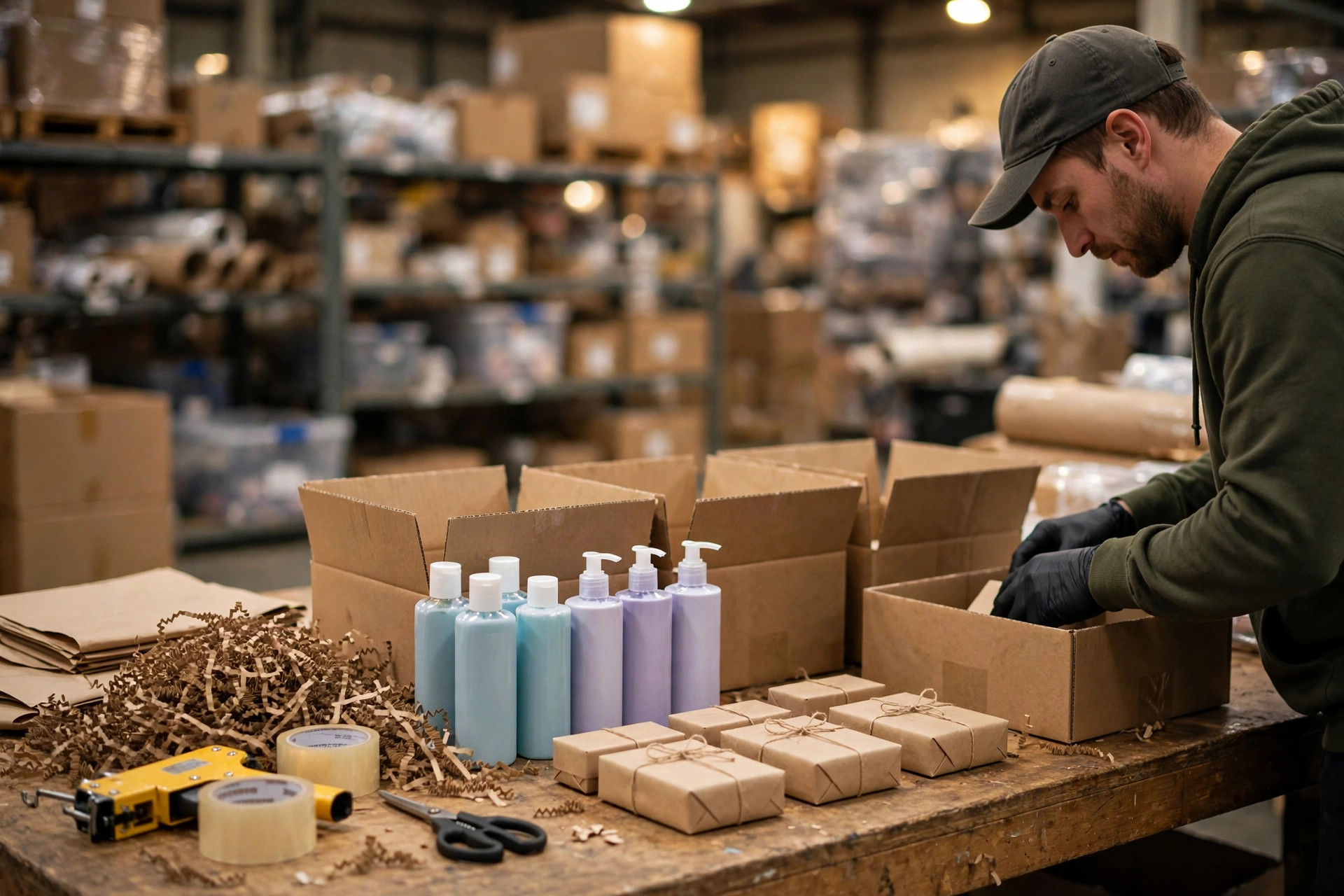
I learned ecommerce product bundling the hard way, from inventory that would not move. Three years ago I thought a three-piece hair care set would sell itself, so I had two thousand sets pre-packed in the warehouse: shampoo, conditioner, and a hair mask in one box. Then the peak passed, the single items kept selling, and the sets sat there with my cash locked inside the cardboard. That is when it clicked for me. A bundle is not a marketing idea. It is a warehouse cost, and if you cannot do the math on it, do not build it yet.
Marketplaces love bundles, and shoppers love a deal. Fair enough. But the platform does not pay your warehouse rent, and it does not unpack your boxes for you. Pre-kitting saves a few minutes at ship time and can cost you a whole batch of stock. I now make the call on one question only: how many of these sets actually ship every day, for how long, and how painful is it to take them apart again?
When ecommerce product bundling earns its pre-kit
At low volume, assemble to order is simply the cheaper answer. Last September I ran a hair care set out of a partner warehouse in California, about a dozen orders a day. We built each set when the order came in. It took three or four extra minutes per order, and the crew complained about it, but the books stayed clean. Single items could still sell on their own, and no stock was trapped inside a set. That month one single item suddenly took off, and I moved that stock straight to single sales with zero loss. If I had pre-packed it, that stock would have been stuck waiting for bundle buyers.
At high volume, the math flips. This past March, a different wash-and-care set was holding steady above eighty orders a day, and assemble to order started dragging us down. The crew spent two extra labor hours a day just finding boxes, matching three items, and labeling, and we missed the carrier cutoff twice in a peak week. I switched to pre-packing five hundred sets a week, and orders went out the door by grabbing a finished box. The dividing line is not a feeling, it is an order count. Under twenty or thirty orders a day, the flexibility of assembling to order is worth more. Above seventy or eighty a day, steady for weeks, pre-kitting finally pays for its own risk. The middle stretch is the worst, with volume bouncing up and down. My rule there is to pre-pack only seven days of cover, never more.
I got burned on this before a big sale, too. Last November I pre-packed twelve hundred holiday gift sets ahead of a promotion, because the presale numbers looked strong and I wanted fast shipping on the day. Then the featured free gift changed, and the gift inside the box no longer matched the listing. We spent a night tearing open more than six hundred sets and rebuilding them, with two temp workers on until past midnight, and we still mis-shipped a dozen orders. Lesson learned: anything that can still change, like a gift item or a box insert, has to be confirmed before you seal the box. A wrong shipment costs more than a slow one.
The cost of ecommerce product bundling is not just labor
Most sellers price a bundle on assembly labor alone, and that misses most of the bill. The real cost of pre-kitting sits in three places: cash tied up in finished sets, shelf space taken by boxes that may not sell, and the cost of taking sets apart when demand shifts. A set that stops selling locks up the singles inside it as well. Partial returns make it worse. Someone returns one bottle from a three-piece set, and the warehouse has to check whether the other two are unopened and resalable, and whether the set can be rebuilt at all. Handling that one return can take longer than shipping a fresh order.
That is the part of ecommerce product bundling most sellers never price. I use a simple decision table before I approve any pre-pack run:
| Situation | Assemble to order wins | Pre-kit wins |
|---|---|---|
| Daily orders | Under 30 | Over 70, steady for two weeks |
| Bundle share | Bundle is under a third of the category | Bundle is over seventy percent of the category |
| Single-item swings | Singles often spike on their own | Singles and bundles move together |
| Taking sets apart | Requires a new box, new label, and re-inspection | Just open the box and pull the items out |
| Cash pressure | Cash is tight and you cannot sit on stock | You can carry two weeks of finished sets |
If three of the five point toward assembling to order, I assemble to order. Do not bet a whole batch of stock just to save a little labor.
Here is the counterintuitive part: a bundle can sell well and still be the wrong call. I have watched bundle conversion climb while profit got thinner, because the set was built to smuggle a slow seller inside it. Shoppers bought the deal, but they did not come back for the slow item, and the slow item was still slow, just wearing a nicer box. Clearing stock through a bundle is often an illusion. You cleared the stock on paper, not the real demand. If you want to move a slow item, cut its single price and take the loss in the open. At least then you know what it cost you.
Partial returns deserve their own warning. A buyer returns one shampoo from a set, and the warehouse has to inspect the other two items and decide whether the set can be rebuilt at all. My rule now is to receive bundle returns as single items, not to force them back into sets. If a bundle's partial return rate runs well above the single-item rate, I stop pre-packing first and find out whether the pairing is wrong or the listing oversells it. Plenty of sellers lose money here without ever seeing it, because nobody prices return handling until month-end.
Packaging cost belongs in the same math. A printed box, dividers, filler, and tape look like small money, and per set they add up fast. Before I price any set, I list packaging as its own line, then check whether the margin survives returns and markdowns. Leave packaging out of the price, and the more you sell, the worse the books look.
Don't let a kit become dead stock
When demand changes, pre-packed sets are the first stock to get stranded. Late last year a hair mask changed its packaging, and the old-pack sets in the warehouse instantly became unsellable. I still had more than four hundred sets on the shelf. It took two full days to unpack them, swap boxes, and re-inspect everything. When I added up labor, materials, and markdowns, the de-kitting bill ate roughly all the margin those sets had ever made.
So I run three rules now. Pre-pack only seven to ten days of cover, and top it up when it sells through. Every item inside a set has to sell on its own. And any set with heavy returns stops getting pre-packed, because unpacking one returned set at a time is work no warehouse crew can keep up with. If platform rules around bundles ever come up, check the official source for the latest policy instead of trusting a group chat rumor.
Once a week I spend twenty minutes reviewing four numbers for every set: daily bundle orders, the bundle's share of category sales, the partial return rate, and how many days of pre-packed sets are left on the shelf. Two numbers going bad means I cut the pre-pack quantity in half. Three going bad means I switch straight back to assemble to order. What matters is doing it every week, not discovering a wall of dead boxes at month-end.
Bundles are not about creativity. They are about how honest you are with yourself on order volume and inventory. Before volume is steady, assembling to order is slower, and slow buys you a way back. Once volume is steady, pre-kitting turns that efficiency into real money. This one I tested myself, and it only works if you do the costing before you start packing.
By Ah K, E-commerce Seller (5 yrs)