I'll tell you straight — the first time I saw the letters FSMA 204 was late 2024. Our QA lead, Xiao Chen, cornered me at the cold storage door with a printout about the FDA's Food Traceability Rule and said, "Chen, by January 20, 2026, this warehouse has to record traceability data on every lot the new way, or we're in trouble."
It was 6:20 in the morning. Night shift had just handed over. I glanced at the stack of paper and my head hurt — leafy greens, tomatoes, cucumbers, melons, sprouts, fresh-cut produce, ready-to-eat salads, soft cheese, shell eggs, nut butters. Half the stuff on FDA's Food Traceability List was sitting in our building.
So here's what I want to talk about today: FSMA 204 says warehouses like ours have to record Key Data Elements — KDEs — for every lot of listed food we receive and ship. What exactly do we have to write down? How did my warehouse go from a total mess to a system that actually works?
What FSMA 204 Asks a Warehouse to Do
FSMA 204 is the FDA's final rule on additional traceability records for certain foods, published November 21, 2022. It covers high-risk foods on the Food Traceability List and defines seven Critical Tracking Events, or CTEs: harvesting, cooling, initial packing, first land-based receiving for seafood, shipping, receiving, and transformation.
We don't farm and we don't process. For a warehouse, that means two events: receiving and shipping. If you repack, relabel, or commingle lots in your building, add a third one — transformation — the painful one.
The whole rule boils down to one sentence: every lot gets a traceability lot code, and every piece of key data hangs off that code. Keep the records for 2 years. When FDA asks, you hand over a sortable electronic spreadsheet within 24 hours. Can't produce it? That's a violation.
Now the timeline, because it matters: the original compliance date was January 20, 2026. Then in November 2025, Congress passed an appropriations act telling FDA not to enforce the rule before July 20, 2028. So the date on paper is now July 2028. FDA is still meeting with industry about lot-level flexibility, so details could shift — check FDA's website for the latest.
How the Problem Found Us: A Recall Scare
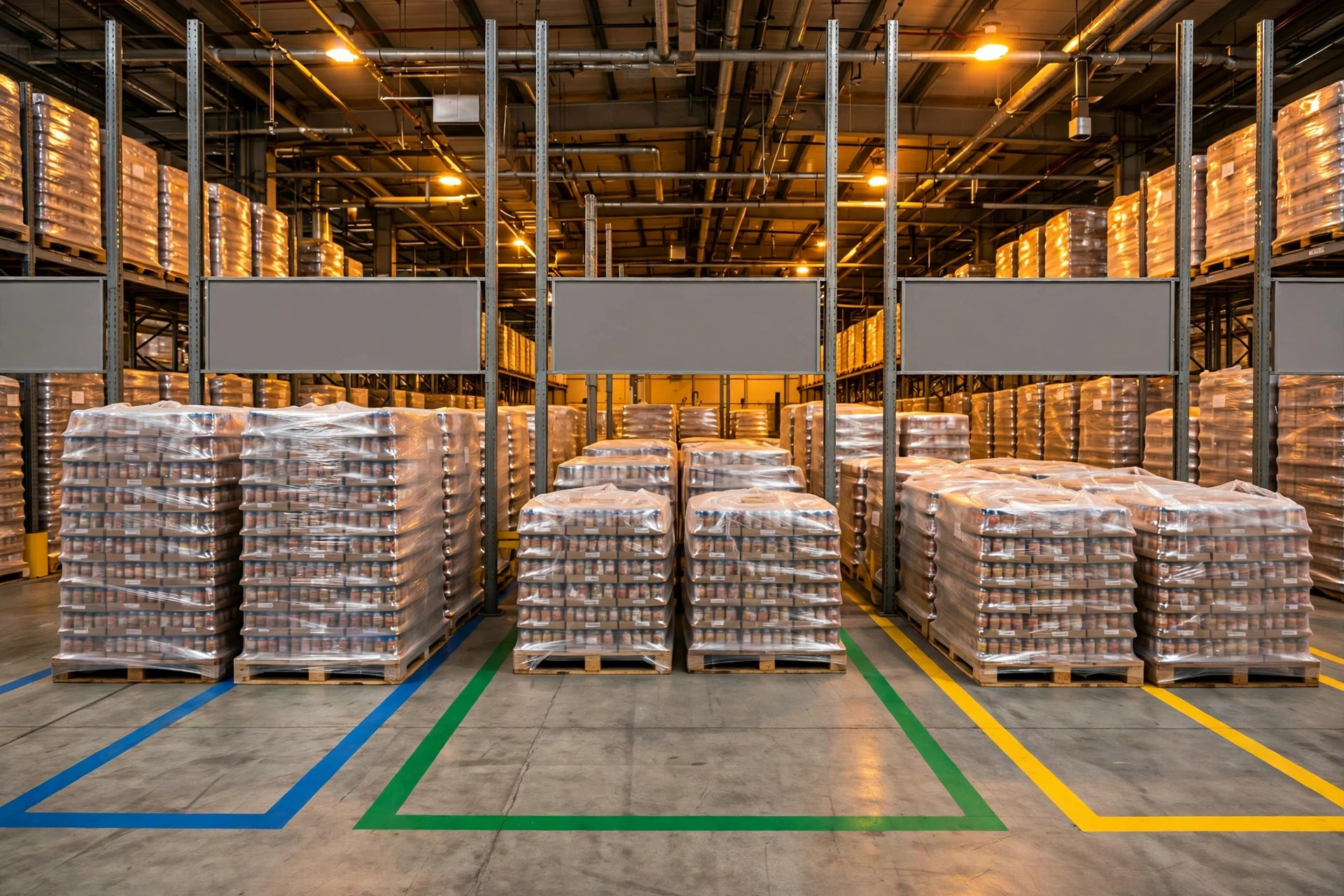
June 2025. Wednesday night. A leafy greens supplier in California sends out a notice: possible contamination in a batch of mixed salad greens, recall initiated. We had 200-plus pallets of mixed greens in the building, from three suppliers, lots all tangled together in our system.
That night, three guys from night shift plus me, flipping through paper receiving documents until 3 AM. Why? Our receiving paperwork said "greens × however many cases" — no lot numbers, no traceability lot codes. Turned out the bad batch never came through our warehouse — false alarm. But my shirt was soaked: if it had come through, FDA's 24-hour clock would have started, and we spent a whole night just flipping paper.
After that, the boss said: start preparing for the new rule now.
How We Tried: The Excel Workaround
I'll be honest — we're not a big operation, our WMS is an old version, and adding fields costs money. So version one was the low-tech route: an extra sheet stapled to the receiving paperwork, six new columns in Excel.
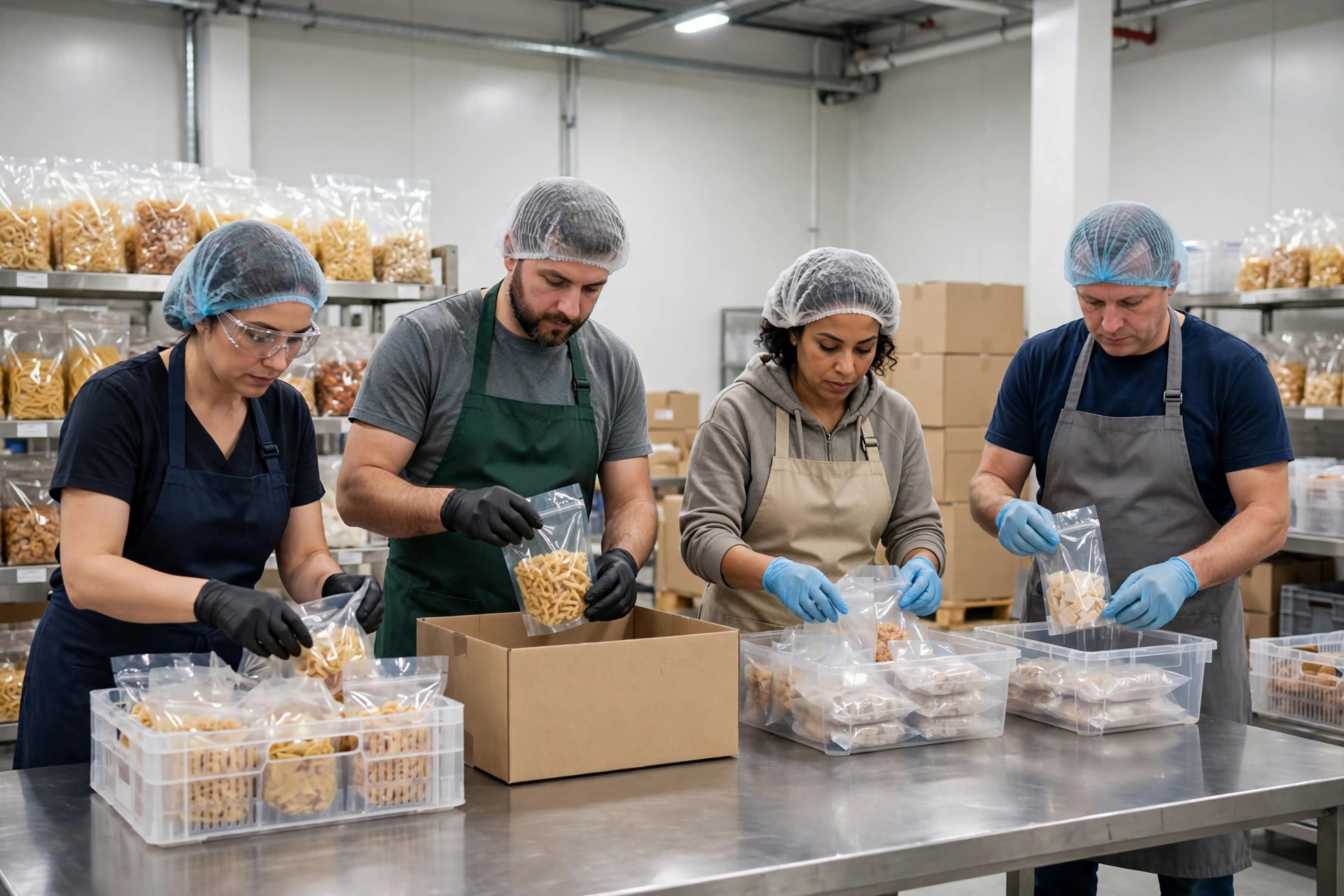
Old Zhao runs our receiving team, twelve years on the dock. I told him, "Zhao, from today, every lot of listed food gets these extra fields at receiving." He had two new hires, and every day on the dock you'd hear his chant: "Check the label, scan it, match the paperwork."
Two months in, the problems all surfaced:
First, we recorded the supplier's lot but not the traceability lot code source. FDA doesn't just want the code — it wants where that code came from: the name, address, and phone number of the packing location that assigned it. We missed all of that.
Second, shipping was worse. Our outbound paperwork said "shipped to such-and-such supermarket DC × however many cases." No link between the lot and the shipment. Once the truck left, we couldn't tell which lot went to which customer.
Third, the fights with drivers. On the shipping dock, drivers are in a hurry, and my guys refused to release a truck until the lots were verified. One driver spent ten minutes yelling at our shipper Xiao Li. So I made a rule: truck doesn't move until the lots check out. The drivers cursed us for a while, then got used to it — because other warehouses started doing the same thing.
What We Do Now: Two Checklists
After the better part of a year, our process is settled. It's really just two checklists — one for receiving, one for shipping.
Receiving: the extra data for every lot
| # | Data to record | Where it comes from |
|---|---|---|
| 1 | Traceability lot code (TLC) | Supplier case label or delivery note |
| 2 | Product description | Case label: item + spec |
| 3 | Quantity and unit of measure | Actual received count, e.g. 120 cases |
| 4 | Date of receiving | System-generated |
| 5 | Lot code source: name, address, phone of packing location | Get it from the supplier once, keep on file |
| 6 | Supplier name and address | Supplier master file |
| 7 | Reference document type and number | PO number, delivery note number |
Shipping: the extra data for every lot
| # | Data to record | Where it comes from |
|---|---|---|
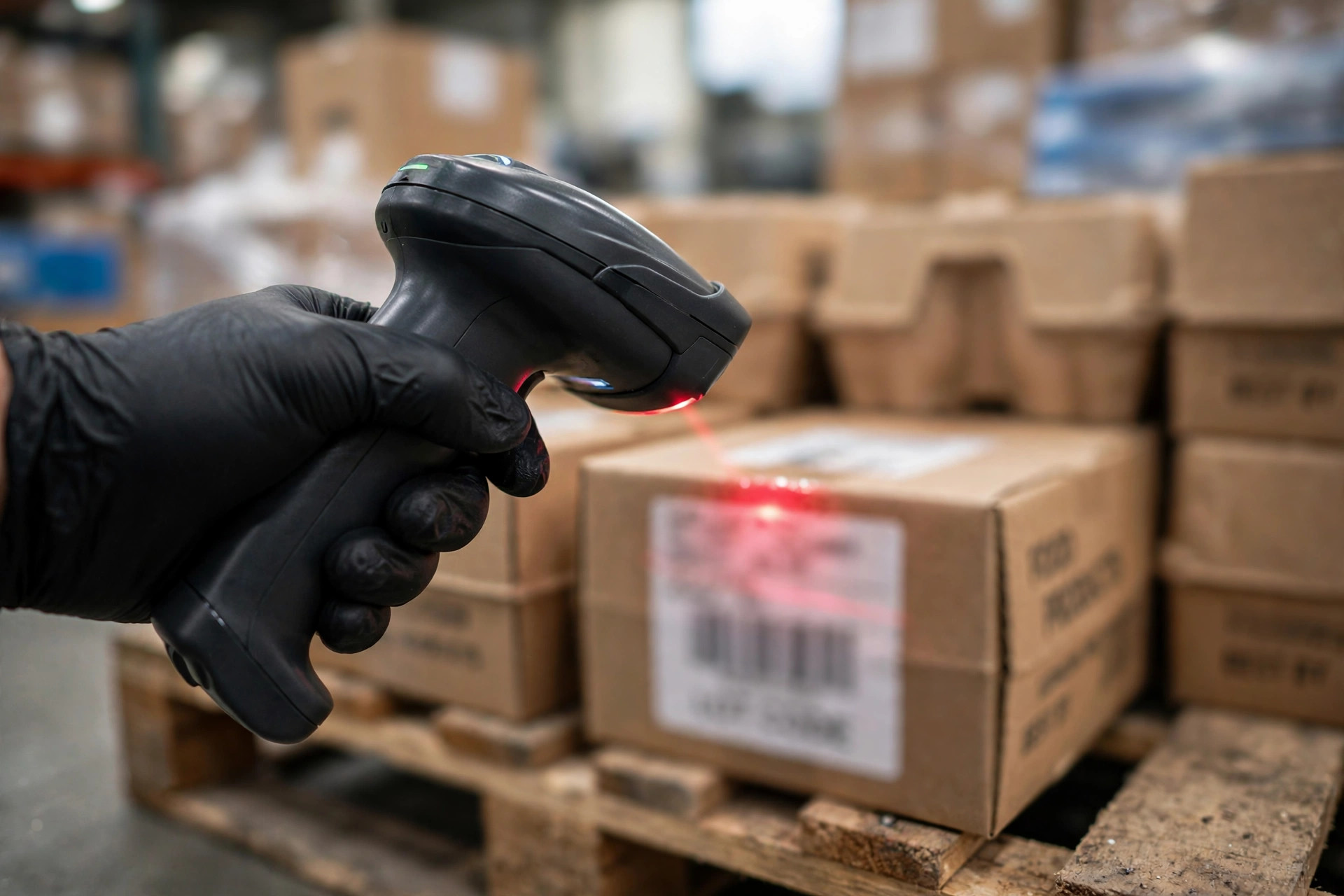
| 1 | Traceability lot code (TLC) | Scanned at outbound pick |
| 2 | Product description | SKU description in the system |
| 3 | Quantity and unit of measure | Actual shipped count |
| 4 | Date of shipping | System-generated |
| 5 | Shipper name, address, phone | That's us |
| 6 | Receiver name, address, phone | Customer master file |
| 7 | Lot code source info | Carried over from the receiving file |
| 8 | Reference document type and number | Shipment number, BOL number |
We also built a 24-hour report template: one click exports all KDEs for a lot into a sortable spreadsheet. Every quarter, Xiao Chen picks a lot at random and we run a drill — timer starts at the simulated "FDA is asking" call, and we see how fast we can hand over the data. Our best run so far: 47 minutes.
A Counterintuitive Take: the Delay to 2028 Is Bad News
You're probably thinking: they pushed enforcement to July 2028, so why rush?
Honestly, that's exactly what worries me. FDA may have paused, but our biggest customer — a supermarket distribution network — audits suppliers on the original schedule. Traceability data completeness is still on their scorecard, not a point removed. They don't care about FDA's delay. If something goes wrong on their shelves, the supplier is the first one they call.
And here's the sharper point: in a real food safety incident, FDA's 24-hour data requirement still applies. "But it got delayed" won't save you. Traceability data is built day by day — when July 2028 arrives and you can't produce two years of records, you're in violation anyway.
Spending a little now to get the process straight — mostly Excel plus scanners, no expensive WMS overhaul — beats a panic project in early 2028. Panic means overtime, errors, angry employees, and data that's still a mess. Slow and steady wins this one.
And if you run a small warehouse, don't panic either. The low-tech approach works fine. It comes down to four words: record it every time. The danger isn't lacking a system — it's recording today and skipping tomorrow. FDA wants completeness, not fancy.
A Reminder for Fellow Operators
Three things, all paid for with our mistakes:
First, figure out which listed foods are actually in your building. Walk the Food Traceability List line by line against FDA's website — if it's there, it's there; if not, don't scare yourself.
Second, receiving is the first gate. Capture the lot code and the source information once, at receiving, and everything downstream is easy. Miss it at receiving and nobody can fix it later.
Third, don't wait for 2028. Start this month, log every lot against those two checklists, and by July 2028 you'll have two years of data and zero stress.
Traceability is a burden on a normal day and a lifeline when things go wrong. In this business, you pack your own lifeline.
By Chen Feng, Warehouse Operations Manager