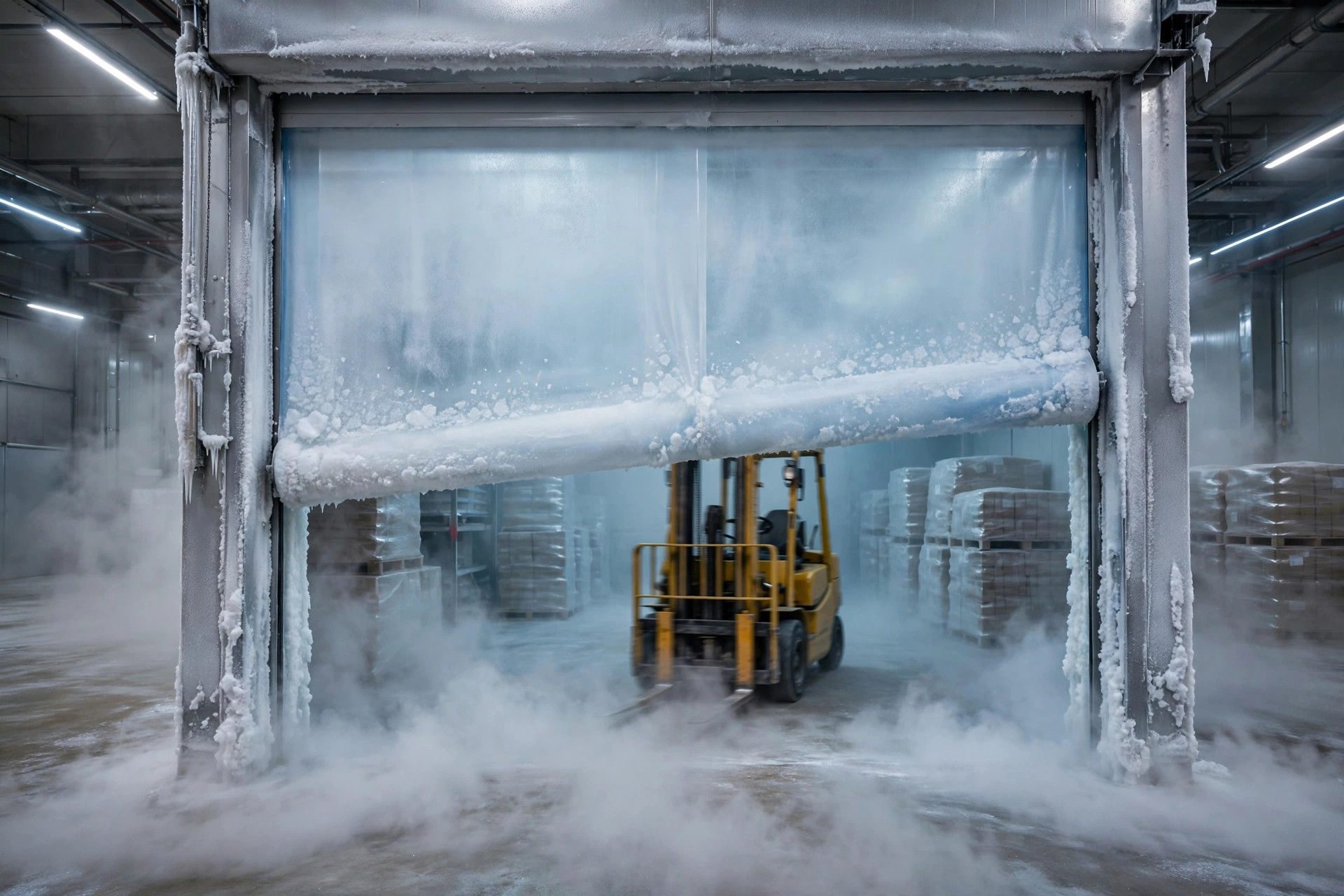
Let me start with the verdict: when a freezer door grows ice, nine times out of ten the weather is innocent and management is not. I have seen the freezer door ice buildup warehouse routine too many times. Someone chips the ice off, takes a photo for the group chat, and the ice is back the next morning. Chipping is the most useless move in the whole story. Ice is the symptom. Where the moisture gets in, where the seal leaks, and whether the defrost cycle makes sense — that is the actual problem. Put plainly, every layer of ice on that door represents cold air that escaped and electricity that was burned for nothing.
Look at it from two sides. On the money side, leaking cold means the refrigeration system works overtime, and product stored near the door rides temperature swings it should never see. On the people side, ice on the floor at the busiest doorway in the building is an accident waiting for a night shift. I visited a warehouse where doorway ice had been ignored for weeks. A young worker came out carrying a carton, his foot went out from under him, the carton dropped, and he caught himself with his hand and sprained his wrist. After that, the shift lead checked that door every single day. That rule was paid for with an injury.
Where freezer door ice buildup warehouse problems actually start
The physics is not complicated. Inside the freezer the air is cold. Outside it is warm, and warm air carries moisture. When that moist air touches a cold door frame, a cold seal, or a cold floor, the moisture condenses and freezes. The more often the door opens, and the longer it stays open, the more moisture gets in. Cold storage doors are usually the busiest doors in the building — forklifts in and out, people walking through, dock doors and freezer doors open at the same time — so moisture pours in all shift long.
Take an illustrative scenario, with timing and figures as a hypothetical example. A regional frozen-food warehouse had a broken high-speed door and, to save money, ran a standard roll-up door in its place for a while. Every forklift pass held that door open far longer than it should have been. Within weeks, ice along the frame was finger-thick and the floor had a sheet of polished ice on it. They repaired the fast door, added a strip curtain, and tightened up how traffic moved through the doorway. The ice dropped visibly. In the hypothetical numbers, just the reduction in compressor run time made a noticeable difference to the peak-season power bill. I will not quote a figure, because your rates and your freezer volume are not theirs. Compare your own meter readings against door-open time and you can run that calculation yourself.
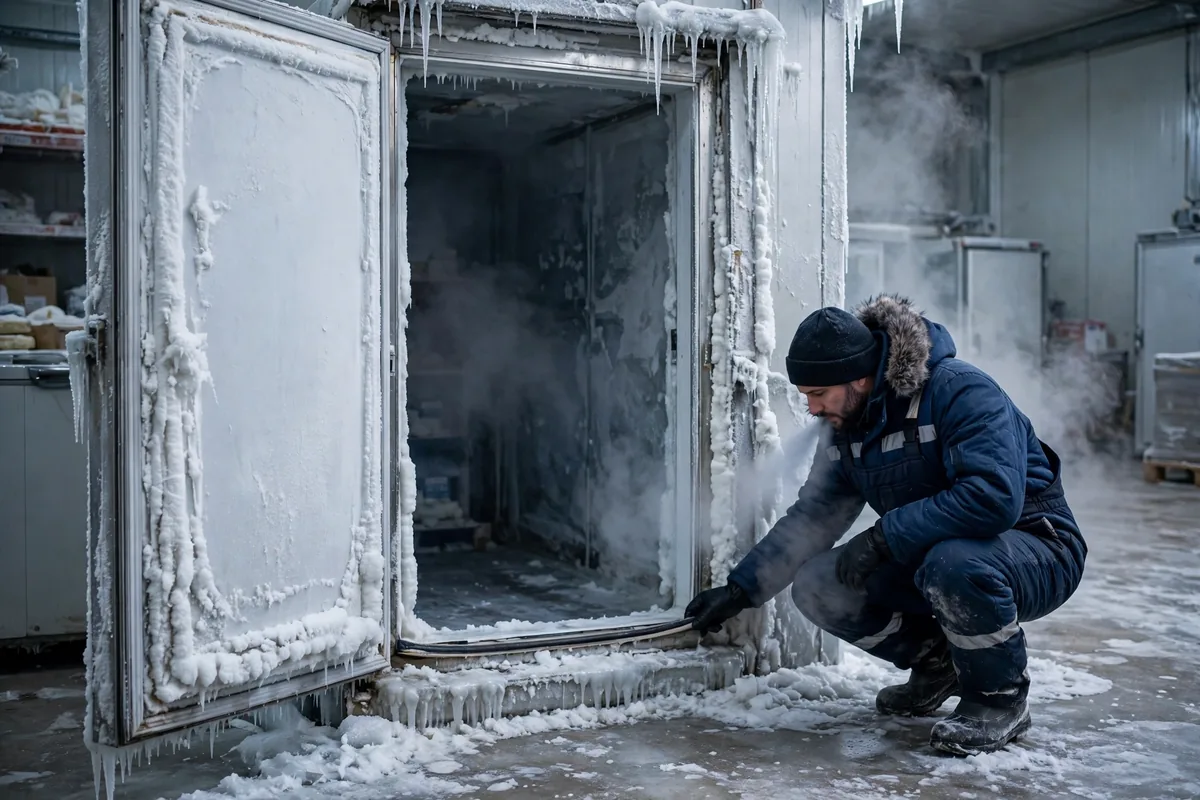
Seals are the second big leak. An aged, cracked, or forklift-dented gasket can look closed while leaking along its whole edge. There is an old field test for this: turn the lights off inside, have someone outside run a flashlight along the closed door seam, and watch where light comes through. Where light leaks in, cold leaks out. Defrost deserves the same suspicion. Defrost too often or too rarely and you create problems either way, and meltwater that does not drain properly will happily refreeze right at the doorway. None of this costs serious money. The hard part is getting someone to look every week.
Here is the counterintuitive judgment most sites get wrong. The thicker the ice, the less sense it makes to respond by cranking the refrigeration colder. People see unstable temperatures and lower the set point. Colder surfaces meet the same moist air and freeze it faster, the system works harder, and the loop feeds itself. The correct order is the opposite: block the moisture, fix the seal, sort out defrost and drainage, and only then question the temperature setting. Reverse that order and you spend money while keeping the ice.
The freezer door ice buildup fix order: safety, sealing, then chipping
Run the rough math and the priorities sort themselves. The figures below are a hypothetical example — read the structure, not the amounts:
| Action | Cost level (hypothetical example) | Cost of doing nothing |
|---|---|---|
| Doorway de-icing and anti-slip watch | Low, mostly scheduled labor | Slips, forklift skids into racking |
| Replace an aged door gasket | Low to moderate, by door size | Continuous cold loss, overtime for the plant |
| Repair fast door / add strip curtain | Moderate | Heavy moisture load on every pass |
| Retune defrost cycle and drainage | Low, mostly adjustment | Recurring doorway ice, weaker coil performance |
Notice what the table says: the first moves are the cheapest ones — safety and sealing. The expensive door replacement project goes last, after the leaks are plugged and measured. I push back hard on sites that want to start by replacing the whole door. In many warehouses the door is fine. The gasket and the habits are what failed.
The sequence we now give cold storage sites runs like this. If the floor at the doorway is iced, mark it and clear it first; once someone falls, nothing else on the list matters. Next, check the seal and the door's closing action — does it rebound, does it sit flush, is the curtain torn. Then check defrost records and drainage to see whether the ice is being fed from inside. Then set door discipline: forklifts move through in groups instead of opening the door for every single pass, people use the pedestrian door instead of the big door, and the freezer door and the outside dock door are not held open at the same time. Only at the end do you chip the accumulated ice, and even then, keep hard tools away from the frame and gasket. Smashing a seal to remove ice makes the leak worse. Warm water, plastic tools, patience, and a dry wipe at the end — skip the wipe and you have just prepared a perfect base for the next layer.
One more thing people miss: where the ice grows tells you something. Ice concentrated on one side of the frame usually points at that side's gasket or hinges. Ice growing upward from the floor usually points at drainage or floor insulation. Frost all over the curtain usually means the door is opening too often and the moisture load is simply too high. Do not just knock the ice off. Look at where it grew, and your next inspection knows where to start.
At bottom, freezer door ice is an inspection job, not an emergency-repair job. Ten minutes a week — gasket, floor, defrost log — saves real money on power and removes an accident from the calendar. If your doorway is wearing ice right now, go and do the flashlight test tonight. Where the light gets in, your money gets out. Do I really need to run that math for you?
By Lao Mi, Supply Chain Veteran (20 yrs)