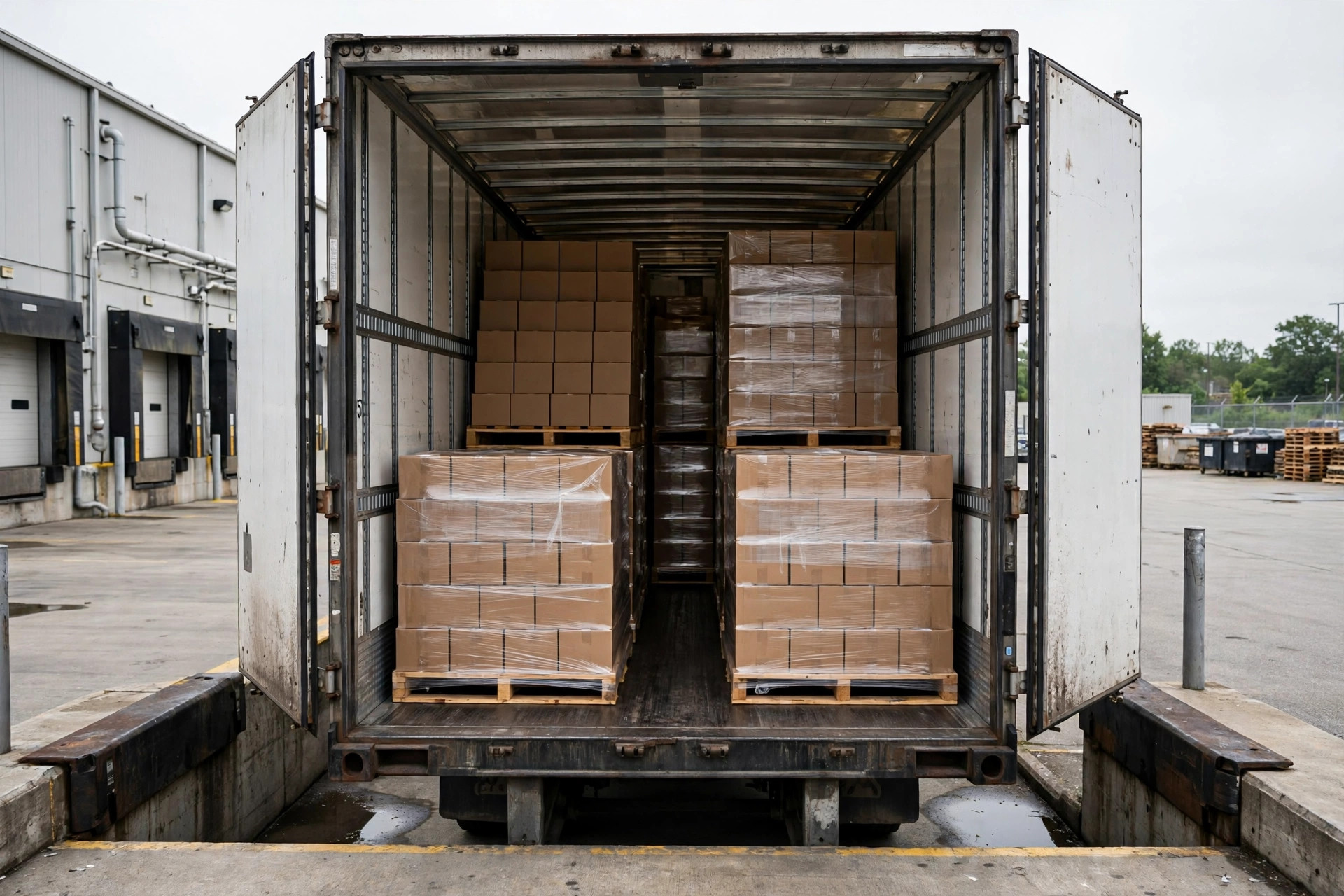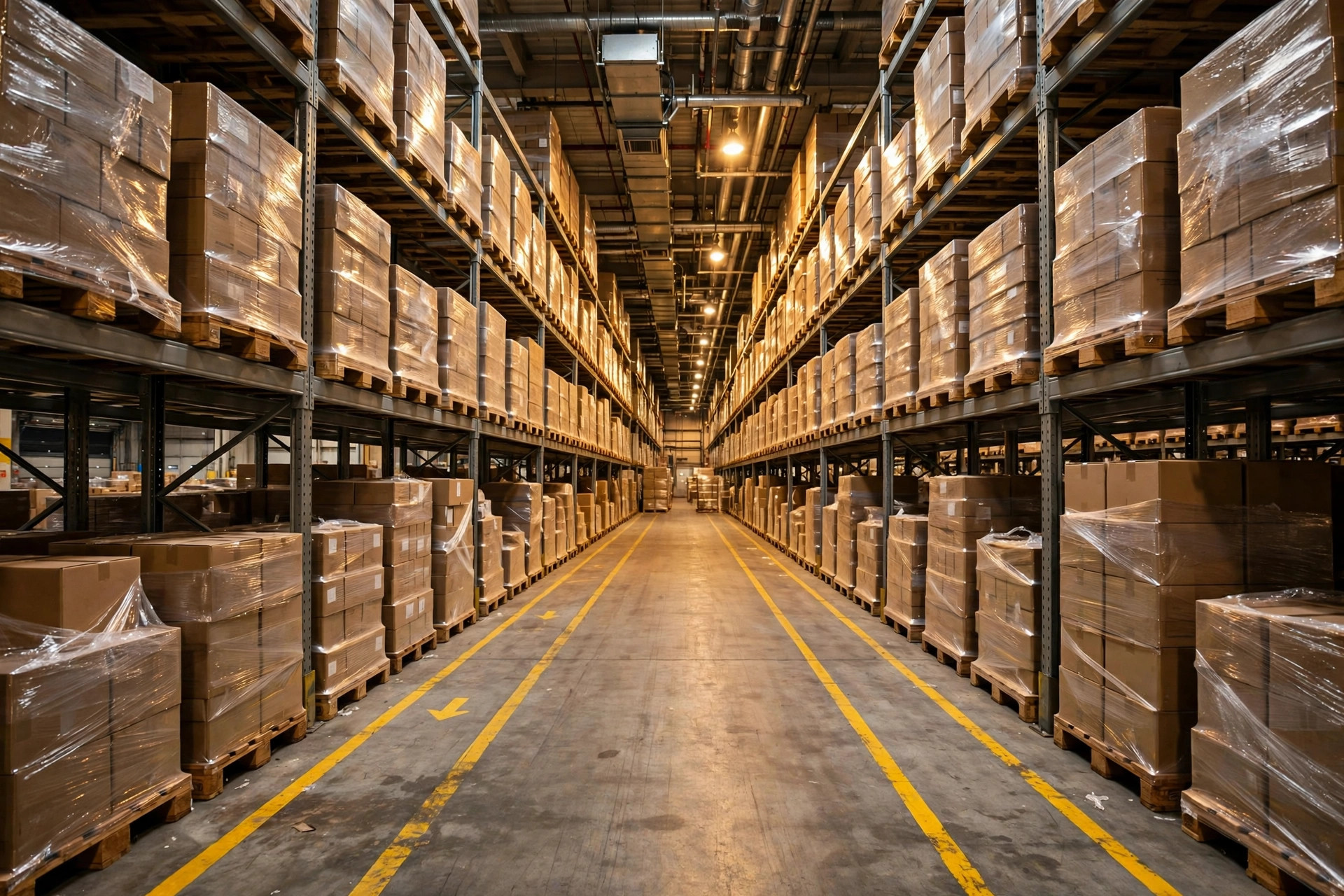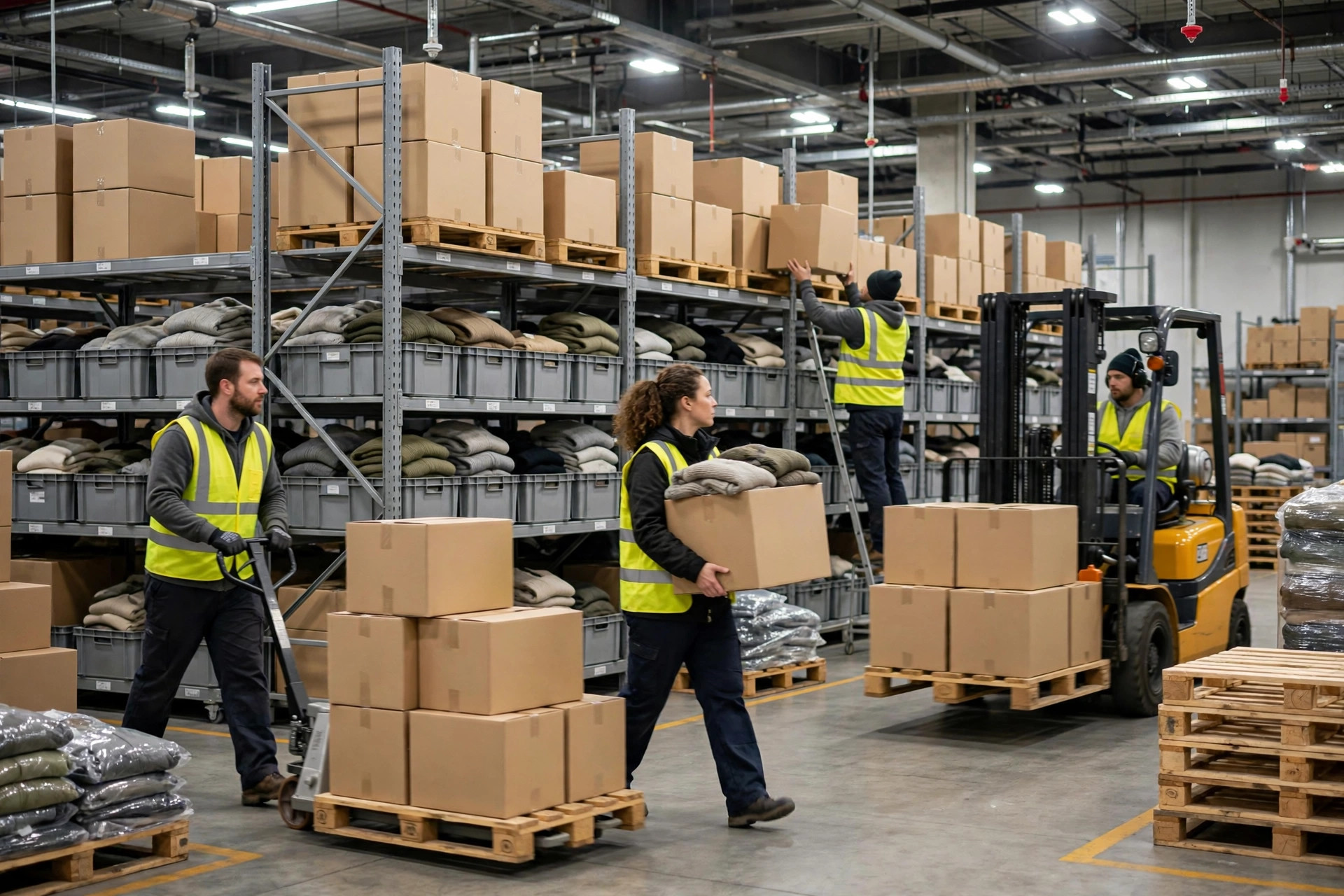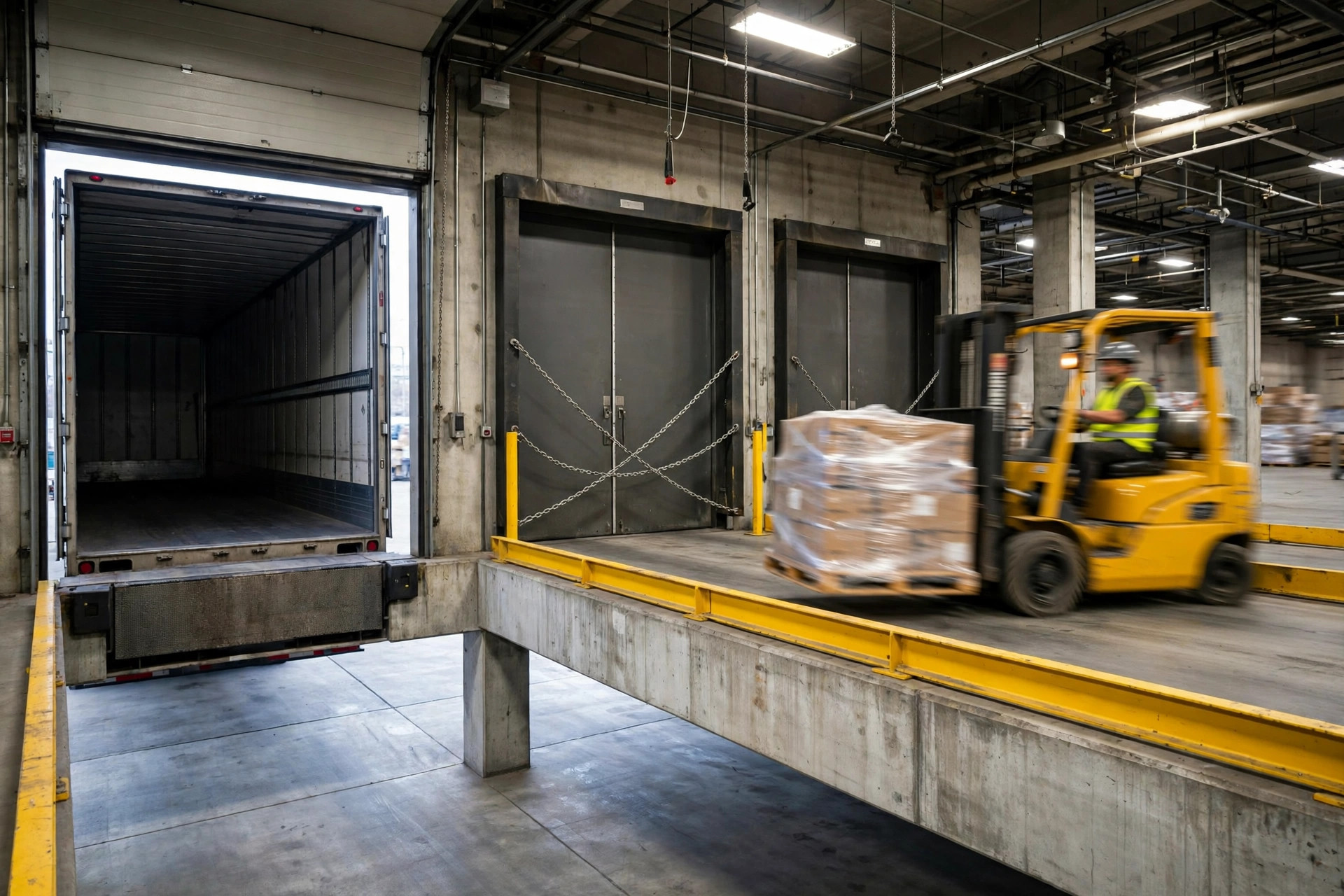
Last week at a warehouse in Fontana, I watched it happen. A reach truck swung out of the main aisle carrying a pallet of cartons, and right around the corner came a picker pushing a cart, earbuds in. The driver slammed the brakes, the pallet wobbled, the picker pulled out an earbud. They looked at each other for a second and walked on. This happens several times a day in that building. The warehouse manager told me they'd held two safety meetings about it last year, posted notices, even handed out fines. None of it worked. Honestly, that's normal. In any warehouse where picking and forklifts share aisles, people and machines will eventually compete for the same space. In twenty years I've walked through hundreds of facilities, and I can count on one hand the ones that truly separate pedestrians from forklifts.
Here's my verdict up front. You don't need fancy systems to fix this. Forklift proximity radar, pedestrian detection gates — all nice-to-haves. What actually works is three unglamorous things: paint the lanes, fix the direction, stagger the timing. I've pushed this playbook through several 3PL warehouses. The cheapest rollout cost under two thousand dollars, mostly floor tape and signage.
Paint the lanes first
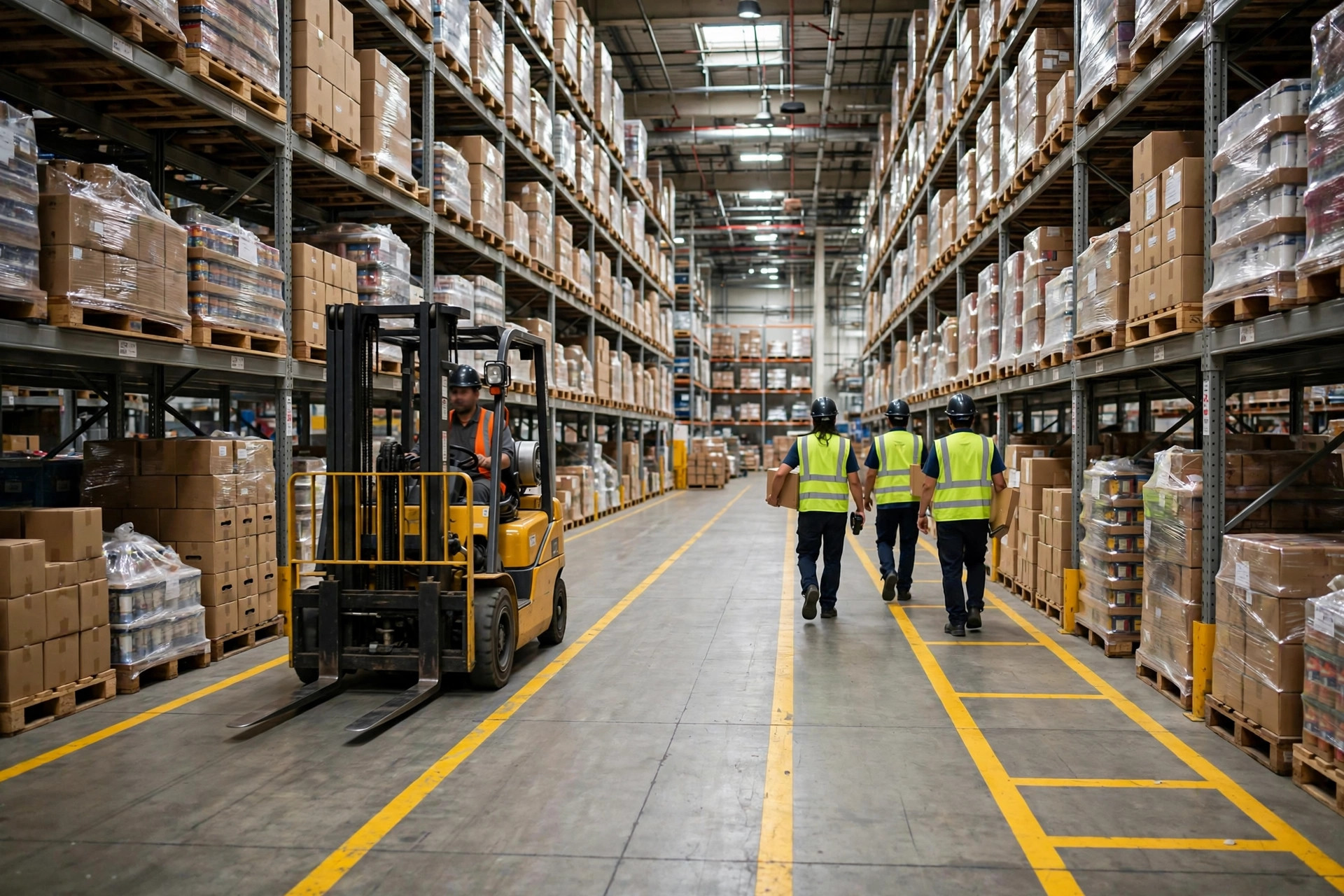
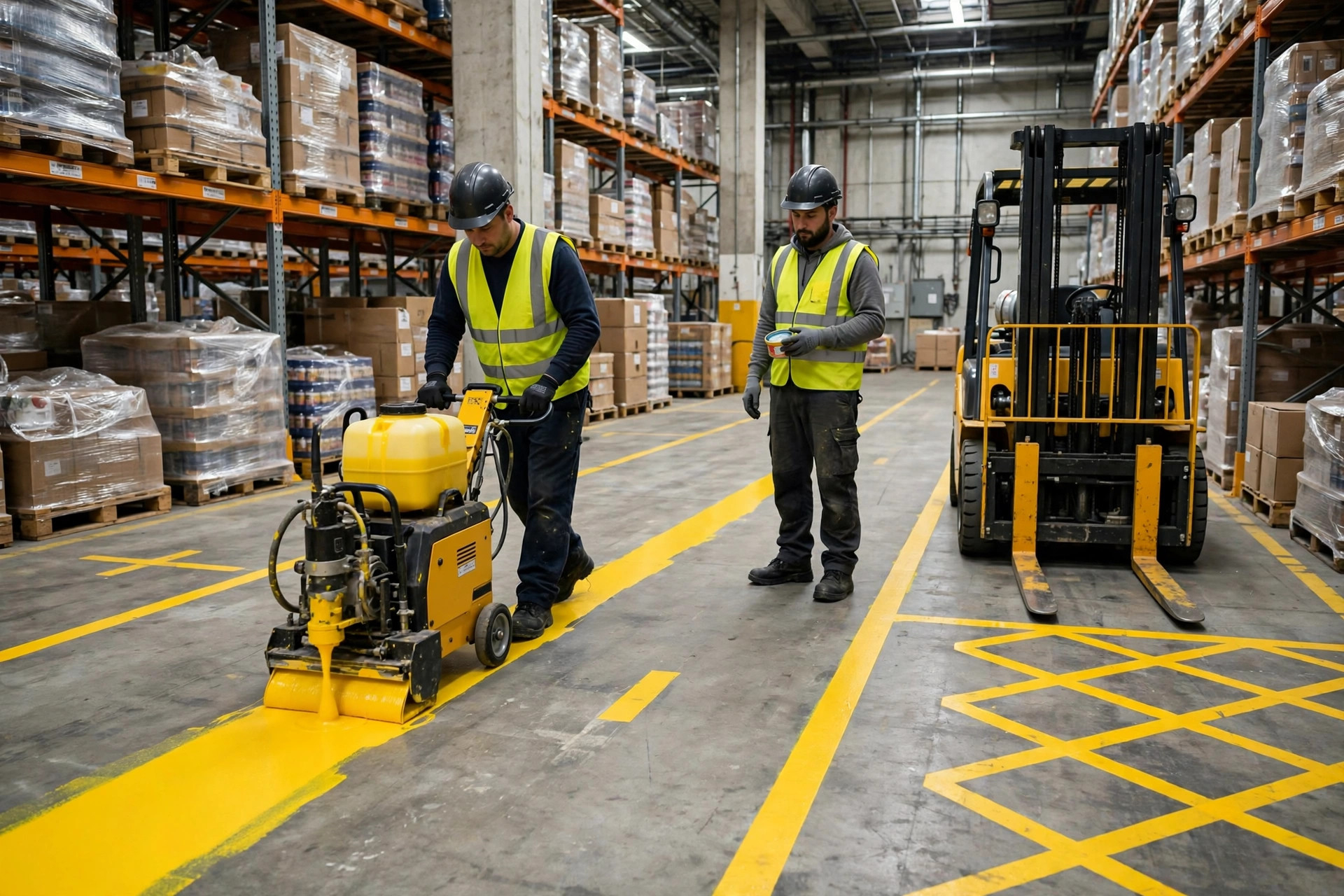
Plenty of warehouses have nothing on the floor. A main aisle fifteen feet wide, forklifts going wherever feels right, pickers cutting corners out of habit, everyone navigating by instinct. Don't talk about anything else until you paint the lanes. Mark pedestrian walkways in yellow tape. Minimum requirement: continuous, visible walkways on the routes people must take — from pick zones to packing, to restrooms, to the break room. Once that line is down, cutting corners carries a psychological cost. The picker has to deliberately step over the line instead of drifting through open space.
Tape quality matters. Cheap yellow tape gets chewed up by forklift wheels in three months — money wasted. Use heavy-duty industrial floor marking tape, or go straight to paint. It costs several times more and lasts ten times longer. The simplest scheme I've seen: yellow for pedestrian lanes, white for forklift lanes, red diagonal hatching at intersections for yield zones. Same logic as a road. Nobody needs training to read it. OSHA's powered industrial truck standard (29 CFR 1910.178) actually requires operator training to cover pedestrian traffic wherever trucks operate. Training gets forgotten; lines on the floor teach every day.
And one more thing: OSHA's materials-handling rule (29 CFR 1910.176(a)) already requires sufficient safe clearances wherever mechanical equipment operates, with aisles kept clear and in good repair. Floor marking isn't just good practice. If anyone ever presses the point, it's part of compliance.
One-way circulation — no head-on traffic
Lanes alone aren't enough. The most dangerous thing in a main aisle isn't parallel travel, it's head-on traffic: a forklift going east, a picker going west, meeting at a blind corner. The fix is one-way circulation. Make the main aisle clockwise-only. Forklifts travel one direction. Nobody meets head-on anymore.
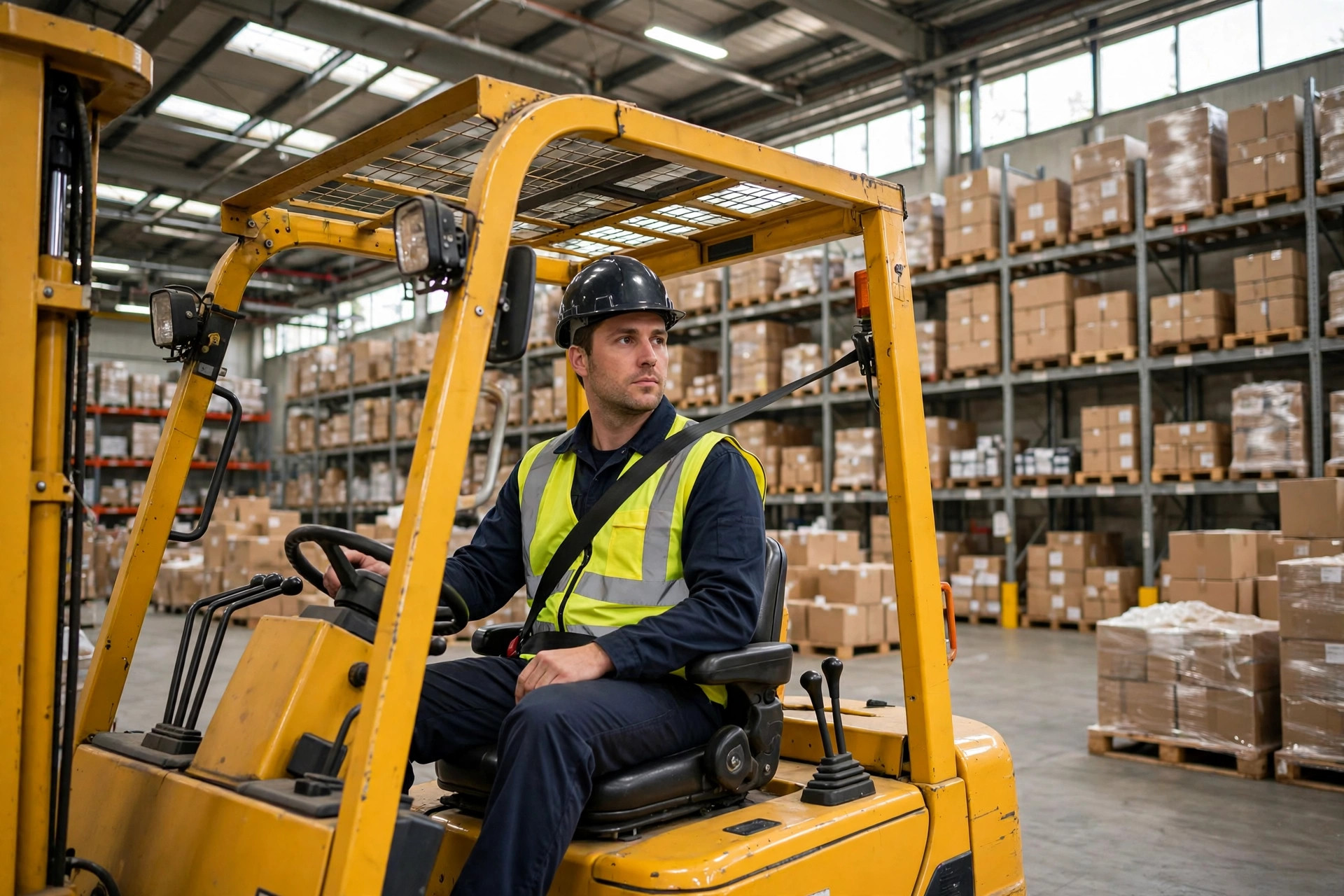
Execution is where it gets hard. Veteran drivers will complain about the longer route. Don't argue — do the math. The detour costs a few minutes a day. One accident means downtime, investigation, insurance, OSHA penalties — tens of thousands of dollars at minimum. Once the numbers are on the table, the complaints stop. Intersections also need stop lines: forklifts stop for a full three seconds at every crossing. Add 5 mph speed limit signs in heavy pedestrian areas. And OSHA has a hard rule people forget: forklifts must be inspected before each shift (29 CFR 1910.178(q)) — brakes, horn, lights, no exceptions. In too many warehouses that checklist is theater; drivers walk in and sign it. I've read enough incident reports to know that bad brakes plus shared aisles is how small problems become big ones.
Building the habit takes two to three weeks. A supervisor has to be on the floor watching. Without that, it's just paper.
Keep forklifts out during peak picking
Staggering the timing is the move most people overlook. The worst conflicts happen at fixed times every day: the morning wave launch, the shift between waves, the half hour around lunch when foot traffic peaks. During those windows, simply keep forklifts out of the pick zone's main aisles. Do replenishment early or late.
One warehouse I worked with did over twenty thousand orders a day in peak season. Forklifts stayed out of the pick zone during peaks; replenishment moved to the gaps between waves. The replenishment crew complained at first — locations going empty with nobody topping them up. So we moved the trigger earlier: replenish at 30% remaining instead of waiting for empty. Two weeks later the complaints stopped, because locations never went empty again. Time separation isn't about who yields to whom. It's about desynchronizing two types of work so they never occupy the same place at the same time.
One more cheap win: convex mirrors at blind corners. A loaded forklift has a blind zone of several feet in front of the forks, and at rack corners the driver simply cannot see a picker hugging the rack. A mirror costs tens of dollars and erases the blind spot. I always tell managers to mount mirrors before buying anything else. Cheap, immediate, nobody objects.
Think twice before installing guardrails
Physical barriers — guardrails, safety fencing, fully separating people from machines — are the most thorough option, the most expensive, and they have traps. Once rails go in, aisles narrow, forklifts lose turning radius, and scrapes go up. In an emergency, people have nowhere to dodge. I watched one warehouse spend serious money on a full guardrail system and tear out half of it six months later because replenishment trucks couldn't make the turns.
My verdict: guardrails belong in exactly two places — docks, where pedestrians should never be anyway, and blind corners with zero visibility. Everywhere else, floor marking plus one-way circulation plus time separation is enough. Safety spending is like all spending: it has to earn its ROI. Spend a little to eliminate 80% of the risk, and manage the rest with discipline and habit. Spend a fortune chasing 100% separation and you usually end up with spent money, resentful staff, and worse results.
Back in Fontana, before I left, I told the manager: don't buy equipment yet. Spend one weekend painting pedestrian lanes, make the main aisle one-way, keep forklifts out of the pick zone during the morning wave. Three things. Check the near-miss count in a month. He said he'd start tomorrow.
So here's my question for you. In your warehouse, are people and forklifts actually on separate paths — or just going by feel? If it's by feel: next time you walk the main aisle, spend three minutes counting how many times a person and a forklift pass each other in the same spot in a single day. Then ask yourself where the next hard braking is going to happen.