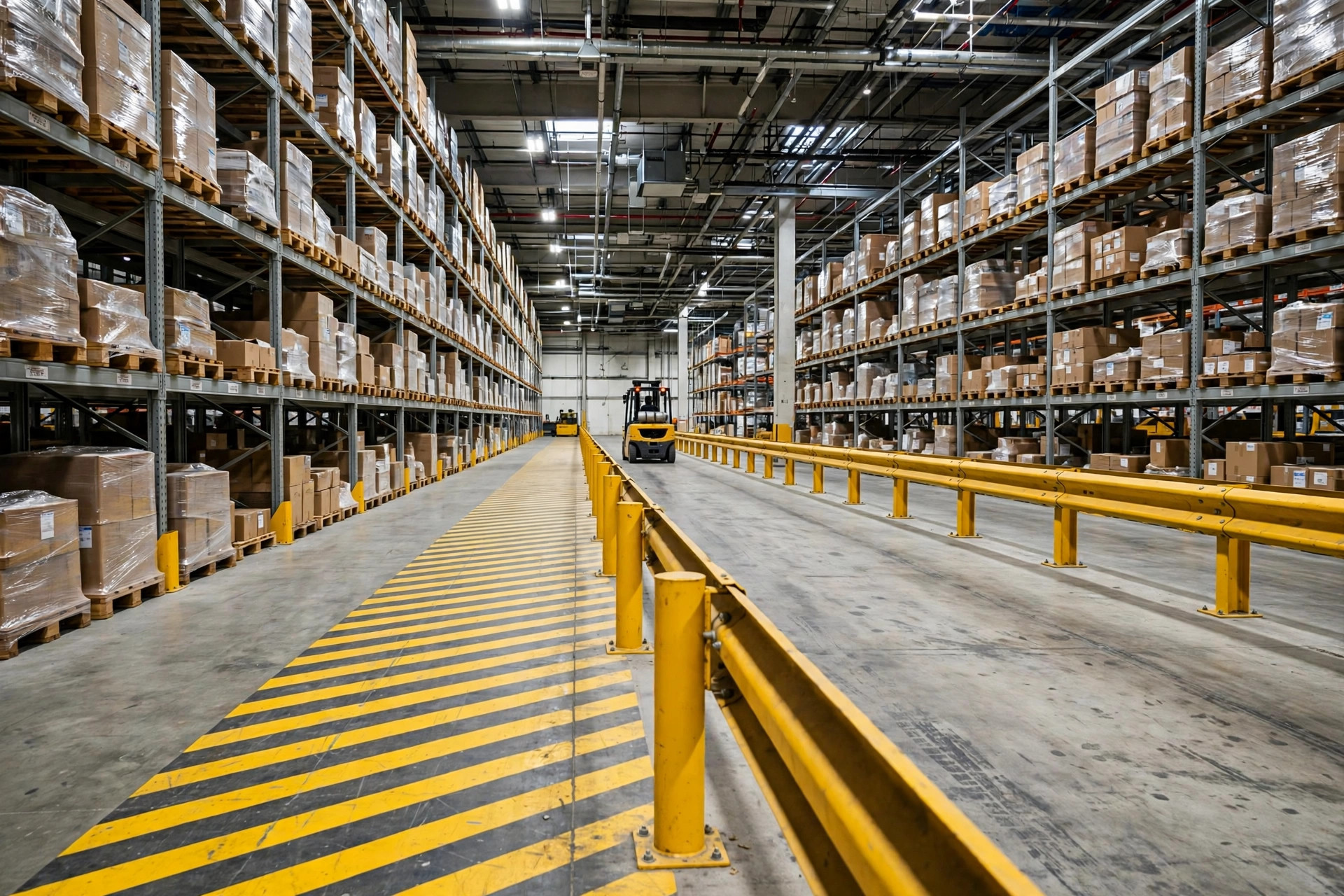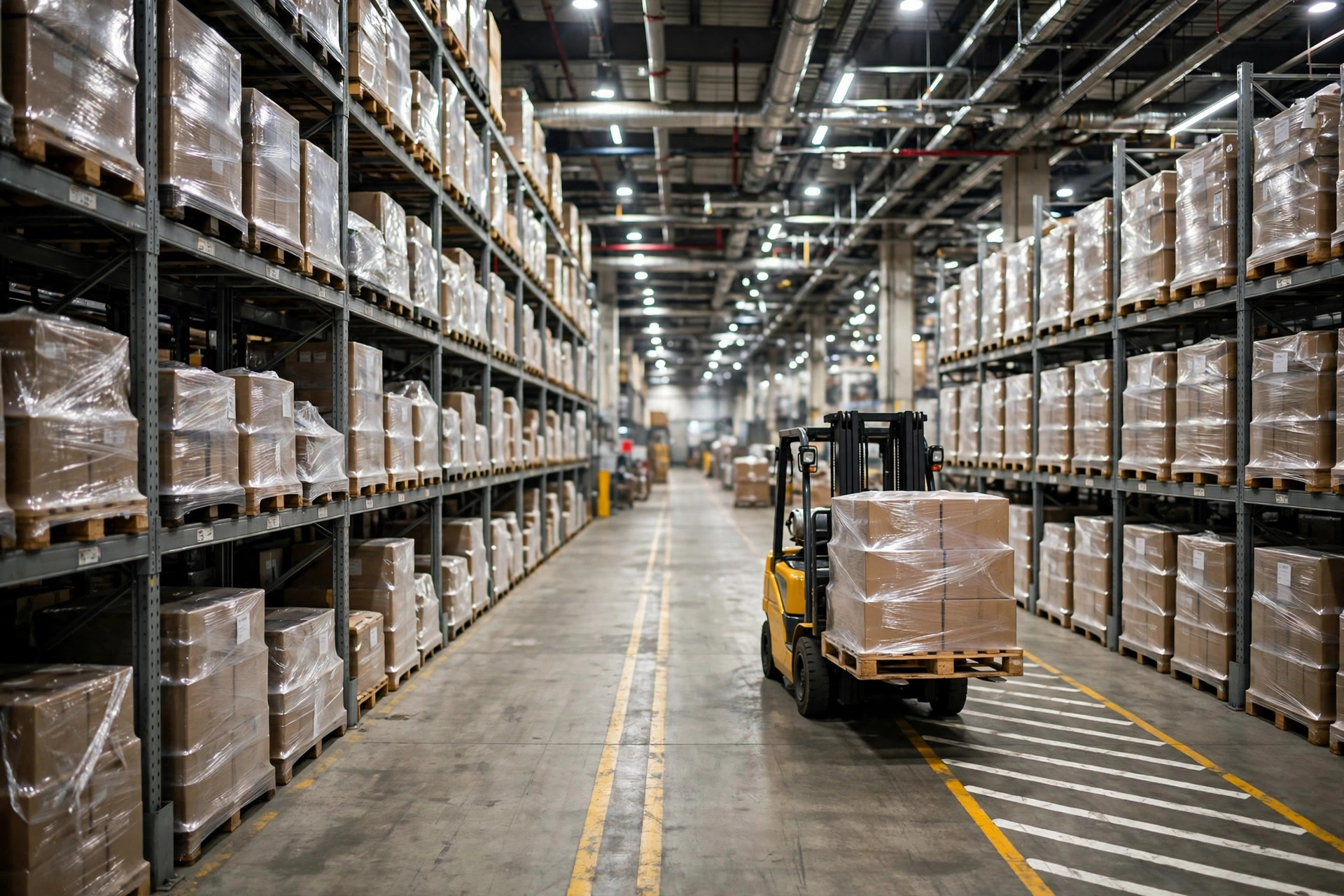
Here's the answer first: a forklift driving off a loading dock is almost never an "accident." In four post-incident reviews over the past two years, every single one had at least one of the five warning signs below visible within 24 hours beforehand. Dock fall prevention isn't won in the second the truck falls — it's won when someone spots the warning sign and acts. Hardware is only half the defense. The other half is two non-negotiable rules: no trailer, no open door — and no entry until the trailer is locked down. Get those right and incidents drop to zero. Miss them and the tallest guardrail won't save you.
Why Forklifts Drive Off Docks
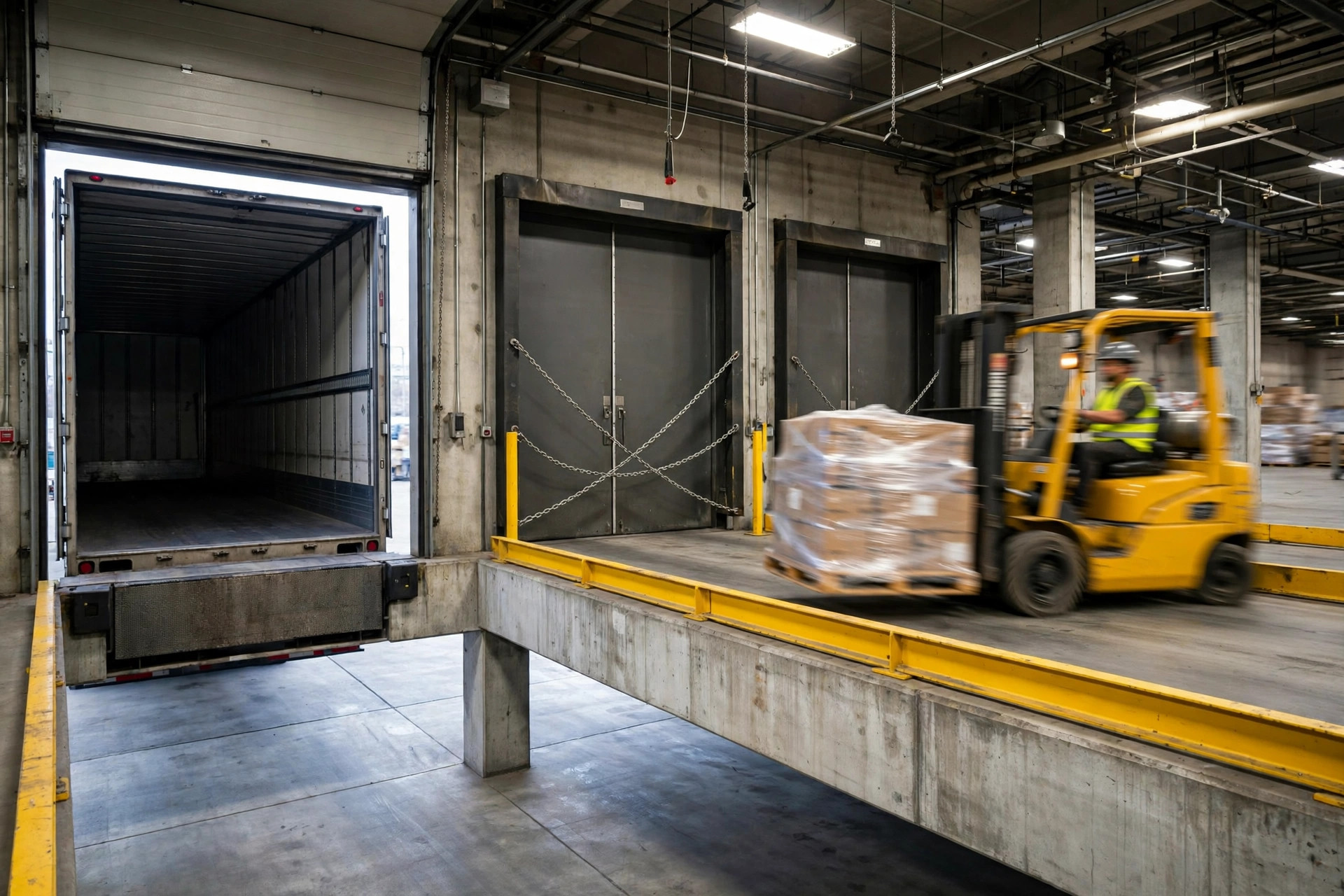
A loading dock is a built-in contradiction: the working side must stay open for forklifts, and right past that open edge is a four-foot drop. OSHA 29 CFR 1910.28(b)(1)(i) is blunt: any unprotected edge four feet or more above a lower level needs fall protection. The only exception, 1910.28(b)(1)(iii), applies while the work operation is actually in process, with access limited to authorized, trained employees. Note the key phrase — in process.
In plain terms: an open door with no trailer and nobody loading has zero exemption — an inspector sees a citation with no defense.
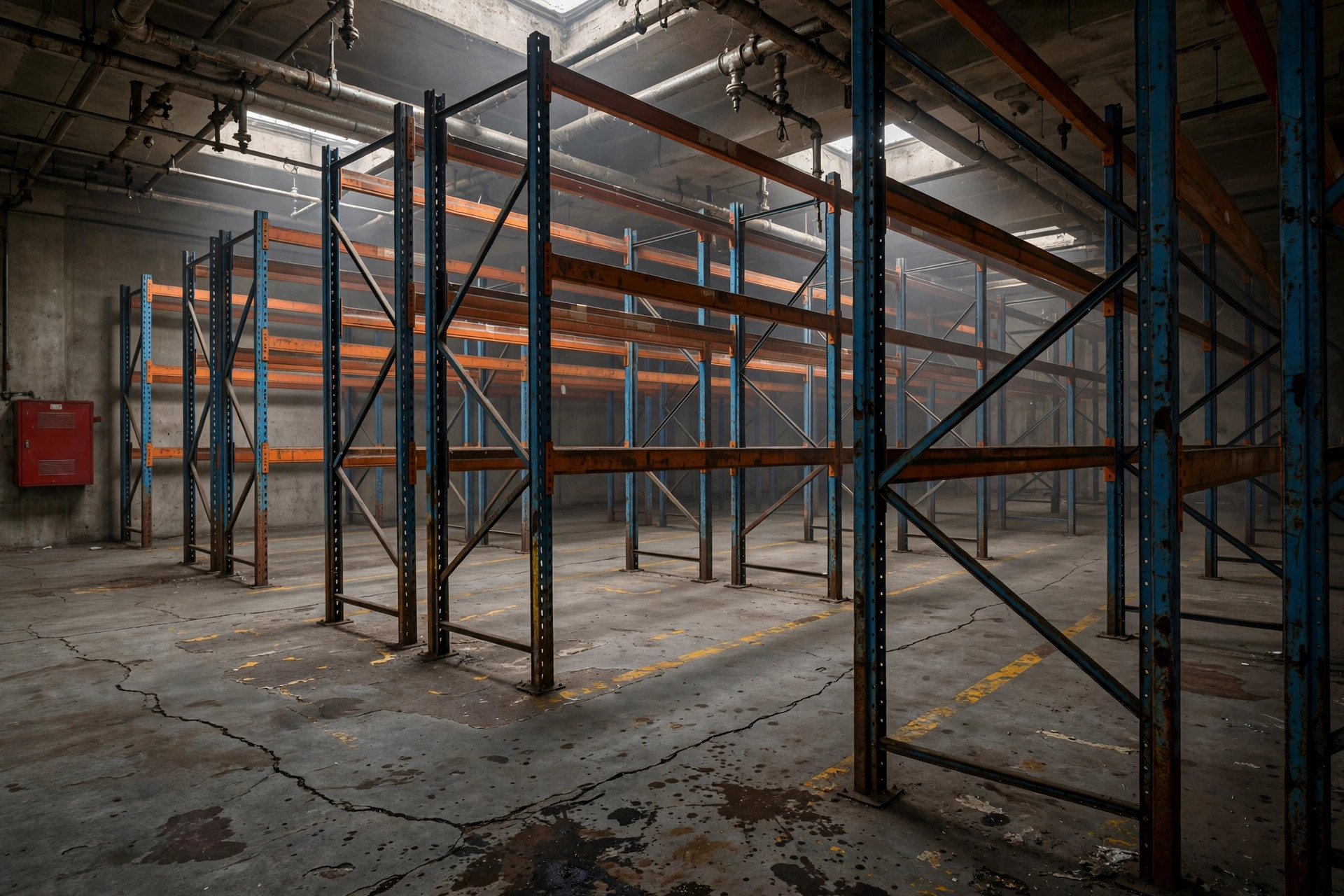
Last fall I was doing a pre-go-live walkthrough at a 3PL client in the Midwest — eight dock doors, three standing open with no trailer and no chains across. The manager said, "Our drivers know the building." Three months later, a night-shift driver drove straight out of an empty door around 4 a.m. No seatbelt, thrown from the cab, landed on the concrete below. I've seen this script three times: empty door, fatigue, nobody watching.
A dock fall isn't like a rack collapse. Rack collapse is structural — it creeps up. A dock fall is instant: normal operation one second, truck on the ground the next. So no theory — just three things: the warning-sign checklist, the retrofit checklist, the post-incident process. Print them, pin them up.
5 Warning Signs — Miss None of Them
If any of these five shows up, the shift supervisor acts within 10 minutes. Make them a verbal pre-shift roll call until the crew can recite them.
Sign 1: A leveler acting up but still "usable." Jerky lifting, hydraulic whining, a lip that won't sit steady on the trailer floor — each one means "this door is closed today." The most dangerous leveler is the "mostly works" one: a loaded forklift crossing a wobbling plate can get kicked sideways. Action: every morning, the dock lead cycles each leveler once; grinding or sticking gets an OUT OF SERVICE tag on the spot.
Sign 2: A slippery dock floor. Water, oil, winter ice by the door, concrete polished glassy by tire wear — once grip is gone, a forklift turning at the doorway can't recover. Action: on wet days and at night handover, sweep a flashlight beam low across the floor and look for reflections. Anti-slip mats within 3 meters of every door. Oil spots get absorbent pads immediately — never "end of shift."
Sign 3: Bad lighting at night. Exiting a bright warehouse into darkness, a driver faces a two-meter blind zone at the doorway while eyes adjust. Plenty of falls happen at 3–4 a.m. — not from fatigue (that's Sign 5), but because he couldn't see the doorway was empty. Action: dedicated lighting above every door, bright enough to read the floor markings. A burned-out bulb gets replaced the same day.
Sign 4: Door open, no trailer, nobody minding it. Deadliest of the five, easiest to fix: an empty open door is a hole with better marketing. Action: the iron rule — no trailer docked, chain goes across or the door comes down. Whoever opened it owns closing it. Verify door by door at shift handover.
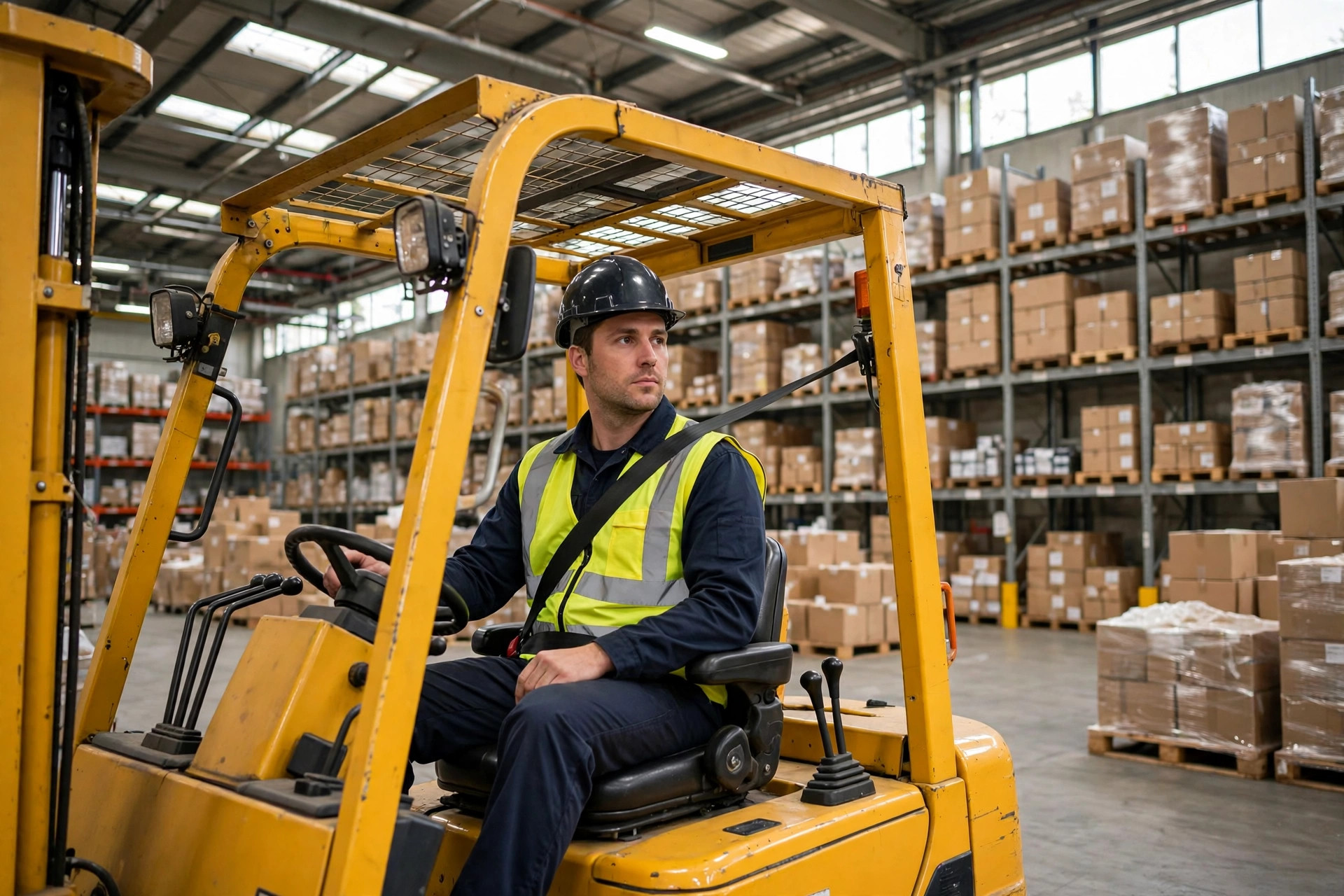
Sign 5: Driver fatigue and rush pressure. Past 10 hours, the back half of a night shift, peak-season push — reaction time drops and that one steering correction at the doorway goes wrong. Action: no one person on a forklift more than 6 hours straight on nights. During crunch periods, cap dock-area speeds. Ten minutes slower beats one shortcut.
Forklift Fall-Prevention Retrofits: From a Chain to a Vehicle Restraint
Three tiers — pick by budget. My rule: zero-cost procedures first, then small hardware money, then the big-ticket items. Reverse the order and you're burning cash.
| Tier | Measure | Cost scale | What it stops |
|---|---|---|---|
| Procedure (zero cost) | Chain or close every empty door; drivers leave keys at the dock office until loading is released; check trailer flooring before a forklift boards | $0 | Open voids, early departures |
| Low-cost hardware | Swing gates or chains; wheel chocks (2/door); anti-slip treatment; door lighting | Hundreds–low thousands/door | People in empty doors, trailer rollaway, slippery floors |
| High-cost hardware | Powered vehicle restraint engaging the trailer's rear guard; full leveler replacement; interlocked red/green signals | Several thousand per door | Trailer creep, leveler failure |
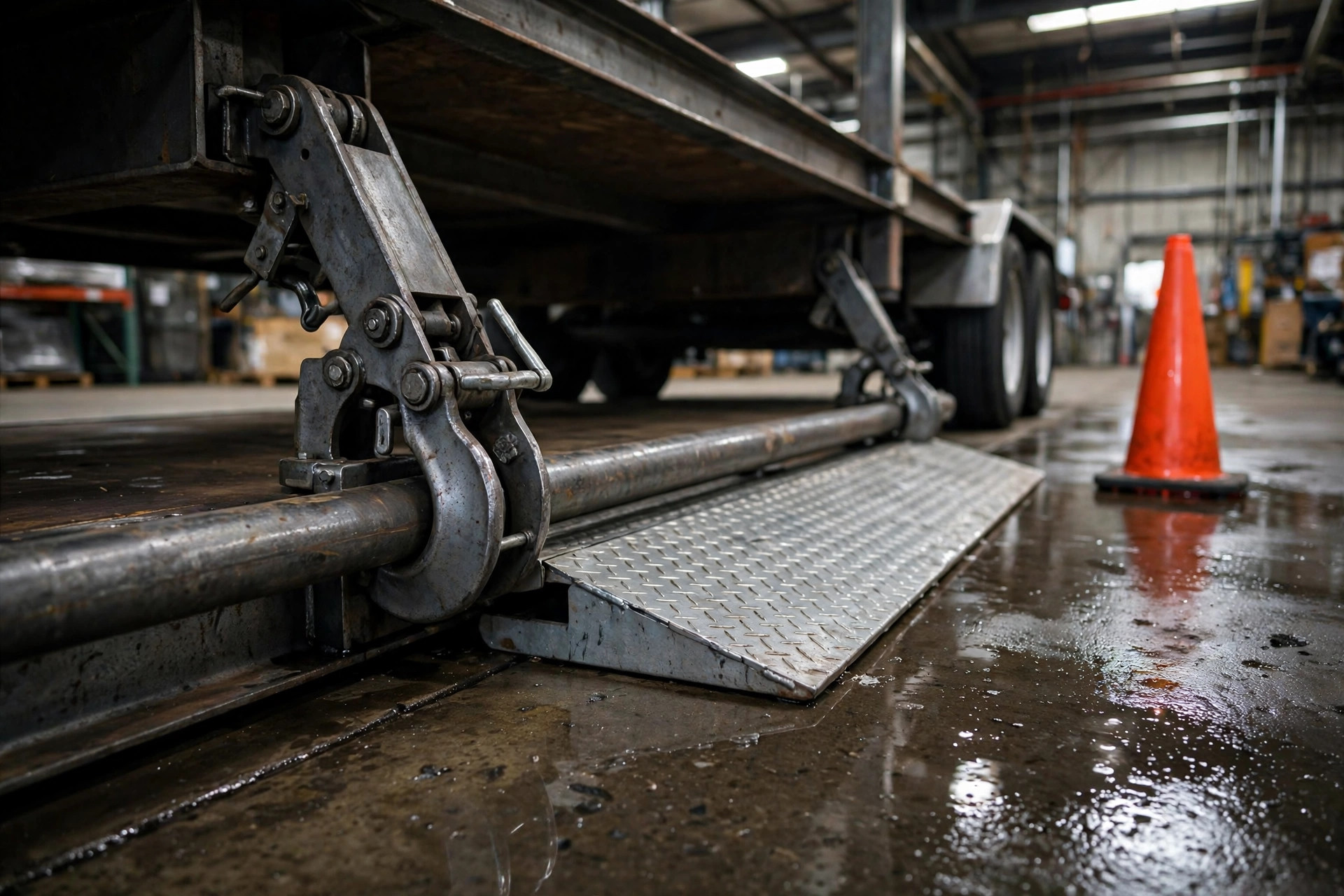
Now the counterintuitive part: the most expensive restraint can't stop a driver who leaves early. A restraint hooks the trailer's rear guard — it stops trailer creep, where repeated forklift entries push the trailer inches off the dock until the plate drops and the forklift follows. But if the driver pulls away, the restraint gets ripped out or alarms while the truck keeps moving. The real insurance is procedural: key control plus an interlocked light (no green until the trailer is locked). Hardware is the second lock, never the first.
OSHA's rules for trailer work read like an inspection sheet — 29 CFR 1910.178: (m)(7) brakes set and wheel blocks in place during loading, fixed jacks where needed to keep an uncoupled semitrailer from upending, trailer flooring checked for breaks before a forklift drives on; (k)(1) brakes set and chocks under the rear wheels of boarded highway trucks; (n)(11) dockboards secured before crossing, crossed slowly, never past rated capacity; (m)(6) safe distance from the edge of elevated docks. Copy those four into your dock SOP.
One detail people miss: under 1910.178(m)(5), a forklift counts as unattended at 25 feet away — or out of view at any distance. Forks lowered, controls neutralized, power off, brakes set. Hopping off at the doorway to hook the chain? Do all three.
After a Fall: The Post-Incident Process
Nobody wants this section. But when it happens, the process decides: one incident or a cascade. In order, skip none.
- Stop the line, help the person, protect the scene. Freeze all forklift work in the zone; rescue first. Don't move the truck or load unless rescue requires it — the scene is the investigation's foundation.
- Medical and reporting run in parallel. Call emergency services and start the internal written report (within 24 hours). OSHA's clock: fatalities within 8 hours; hospitalization, amputation, or eye loss within 24 hours (29 CFR 1904.39 — confirm against current OSHA guidance). Don't self-diagnose severity. Report first; late-reporting fines cost more than the incident.
- Freeze the records. WMS task history, camera footage, forklift inspection sheets, driver training records, the shift roster — one folder, untouched. That's the first thing an inspector asks for.
- Run root cause against the five signs. Five Whys, but don't stop at "operator error": why the wrong door, why open, why no chain? Every fall traces to at least one unmanaged sign.
- Turn it into a near-miss program. Require reporting of every "almost" — wheel over the edge, leveler shudder — with no punishment. Behind every reported fall sit dozens of unreported near-misses.
- Fix and re-verify within 30 days. Corrective actions go into a written record; 30 days later someone outside the shift verifies: chains still going across? Restraint used every shift? Verification gets a signature.
Three traps I've seen three times. Trap 1: "We installed guardrails, we're done." Guardrails stop people, not a loaded forklift — it goes through. The truck's only defenses are a restraint and a no-lock-no-entry procedure. Trap 2: "We have chocks." Chocks handle one failure — the trailer rolling on its own. Not an early departure, not a failing floor, not a failing leveler. I've seen chocks at every door and an incident anyway: the driver pulled out early; the chocks sat on the ground. Trap 3: "We fixed the truck but not the process." New leveler, new driver, same open door three months later. The sign list never made the pre-shift meeting, near-misses went unreported. Replacing hardware is the easiest story. Changing the process is the hardest — and the only thing preventing the second one.
Use this tomorrow: before leaving today, walk the dock and count — doors open, trailers missing, chains not across. That count is your distance from a fall. If the number bothers you, put "empty doors get sealed" on tomorrow's pre-shift agenda. Fall prevention never starts with buying equipment. It starts with seeing the warning sign.
By Lin Xiao, WMS Implementation Consultant