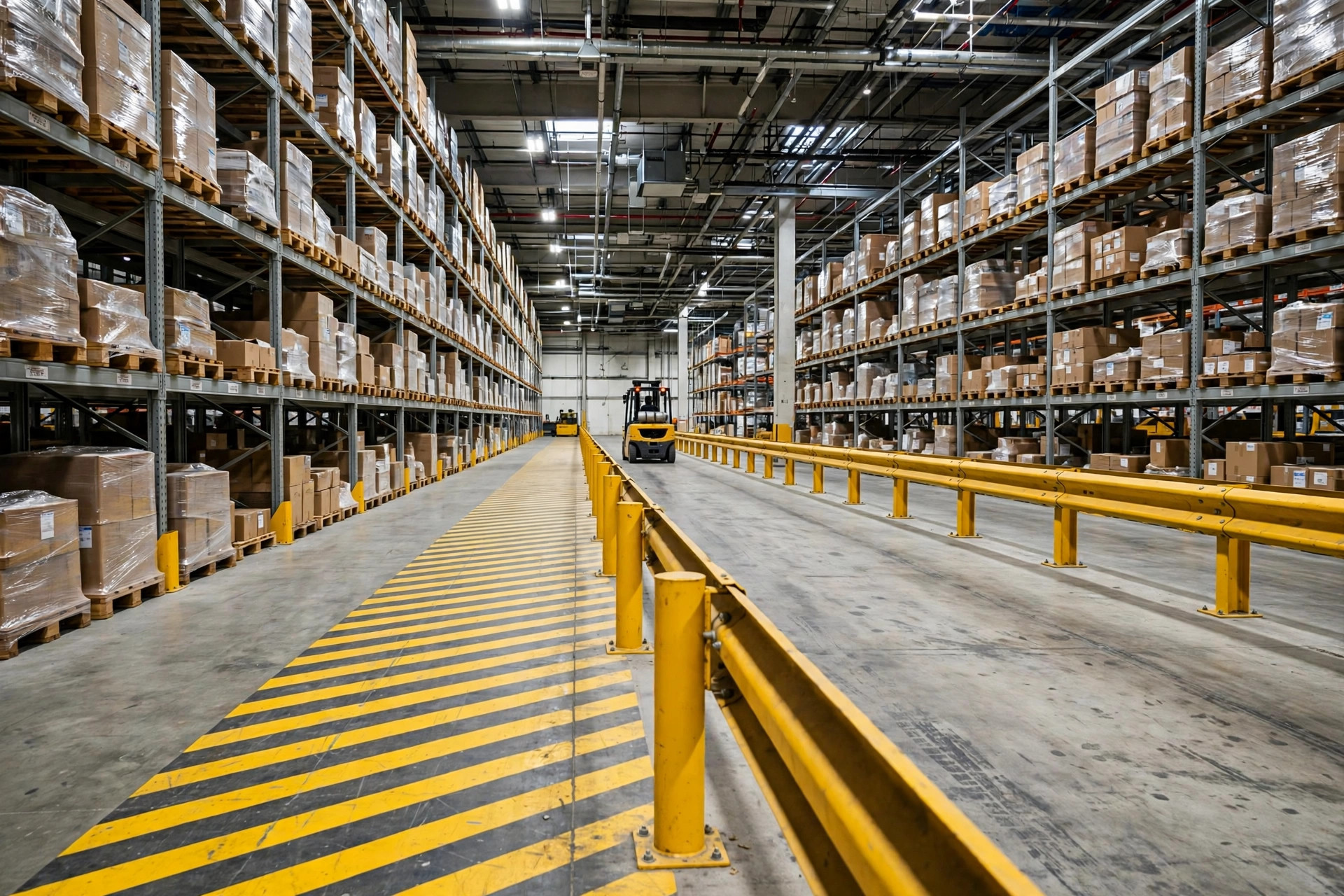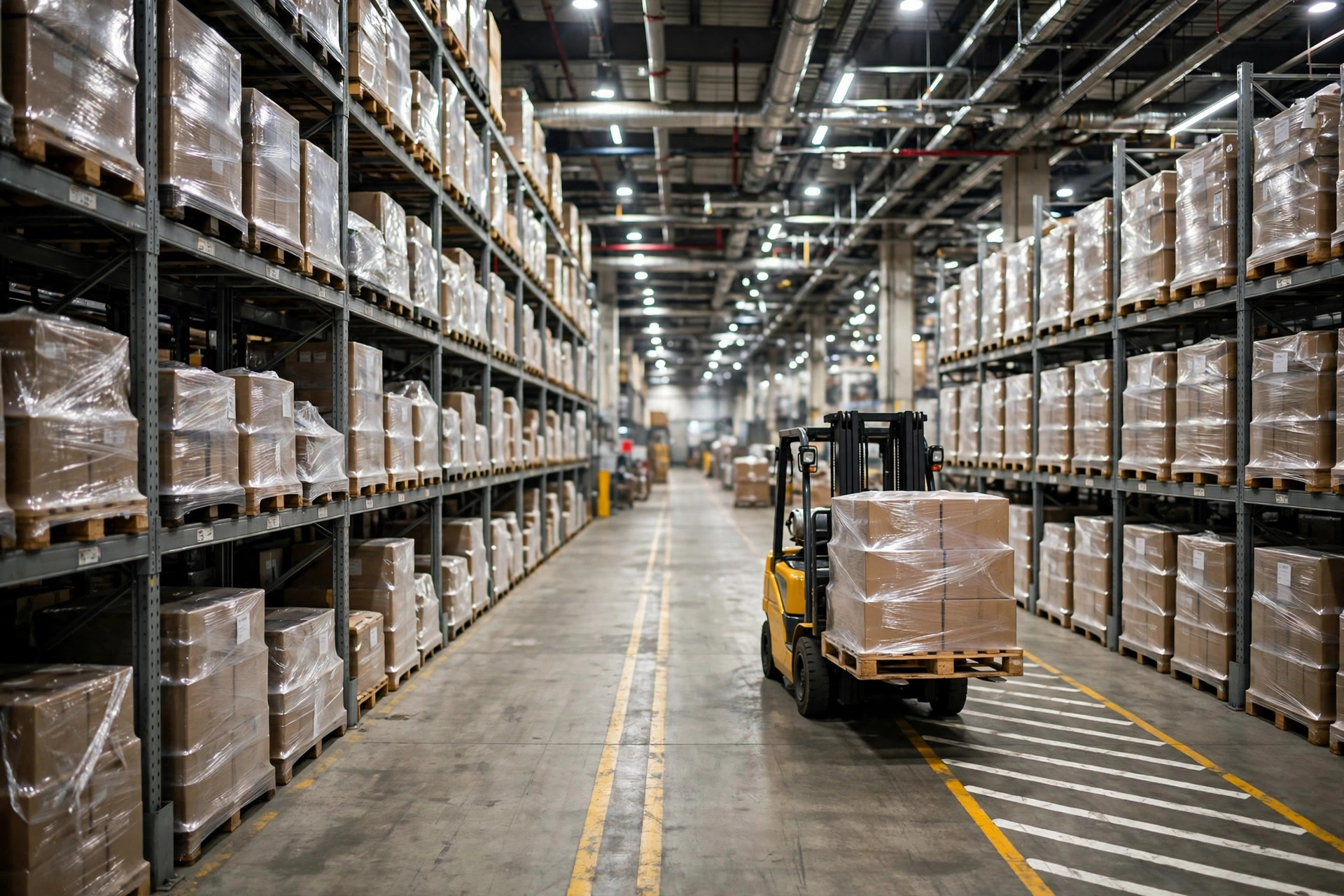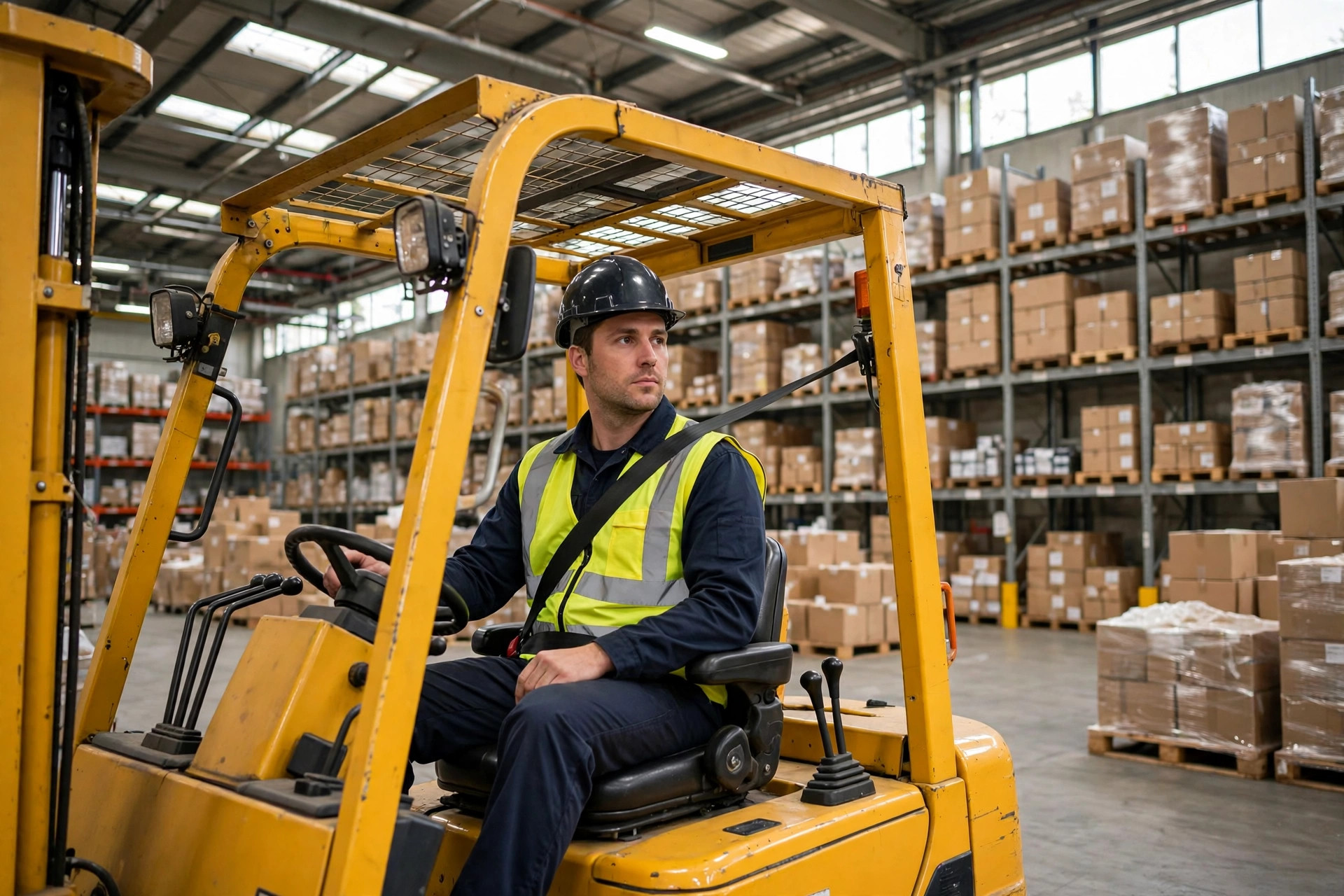
At 11:30 p.m. on June 11, 2024, a 41-year-old forklift operator at an American warehouse fell from his powered industrial truck, struck his head on the concrete floor, and died of brain damage. OSHA's investigation report contained a single sentence about the forklift seatbelt: he had not been wearing it.
That sentence deserves to be read three times by every warehouse manager. According to OSHA's public enforcement records, near-identical fatalities repeat almost every year: on July 10, 2007, a female operator stacking wooden pallets 17 feet high tipped her Toyota forklift onto its left side; she was not using the equipped seatbelt, was thrown from the seat, and the overhead guard struck her head — she was pronounced dead at the scene. On October 16, 2017, at a California job site, a 30-year-old operator simply wanted to move a Caterpillar C5000 out of the way — forks raised to about 30 inches (the manufacturer recommends 6–8 inches), a sharp turn on a sloped drain — the truck tipped, he was unbelted, and he was crushed within minutes.
Three accidents, three common threads: sit-down forklifts, tip-overs or falls, unbelted operators. The third case deserves the most attention: he was just repositioning a truck, "only a few dozen meters." That is precisely the hardest part of field management.
The OSHA Legal Basis for Forklift Seatbelt Enforcement: Not 29 CFR 1910.178, but Section 5(a)(1)
This is the most misunderstood part of the whole issue. Many people flip through 29 CFR 1910.178, the powered industrial truck standard, looking for a "thou shalt wear a seatbelt" clause — and find nothing. The reason: the standard adopted the 1969 edition of ANSI B56.1, from an era when seatbelts were not standard forklift equipment.
In an official enforcement interpretation dated October 9, 1996, OSHA laid out its logic: since the standard is silent, enforcement runs through Section 5(a)(1) of the OSH Act — the General Duty Clause — which obliges employers to keep workplaces free of recognized hazards likely to cause death or serious harm. The tip-over hazard, and the fact that a belt keeps the operator inside the overhead guard's protective envelope, had long been recognized by consensus standards: starting with ASME B56.1-1993, forklifts manufactured after 1992 have been equipped with operator restraint systems. OSHA's enforcement position is unambiguous: if the truck has a belt, the employer must require its use; if the employer ignores even a manufacturer's retrofit program, that too can be cited under 5(a)(1).
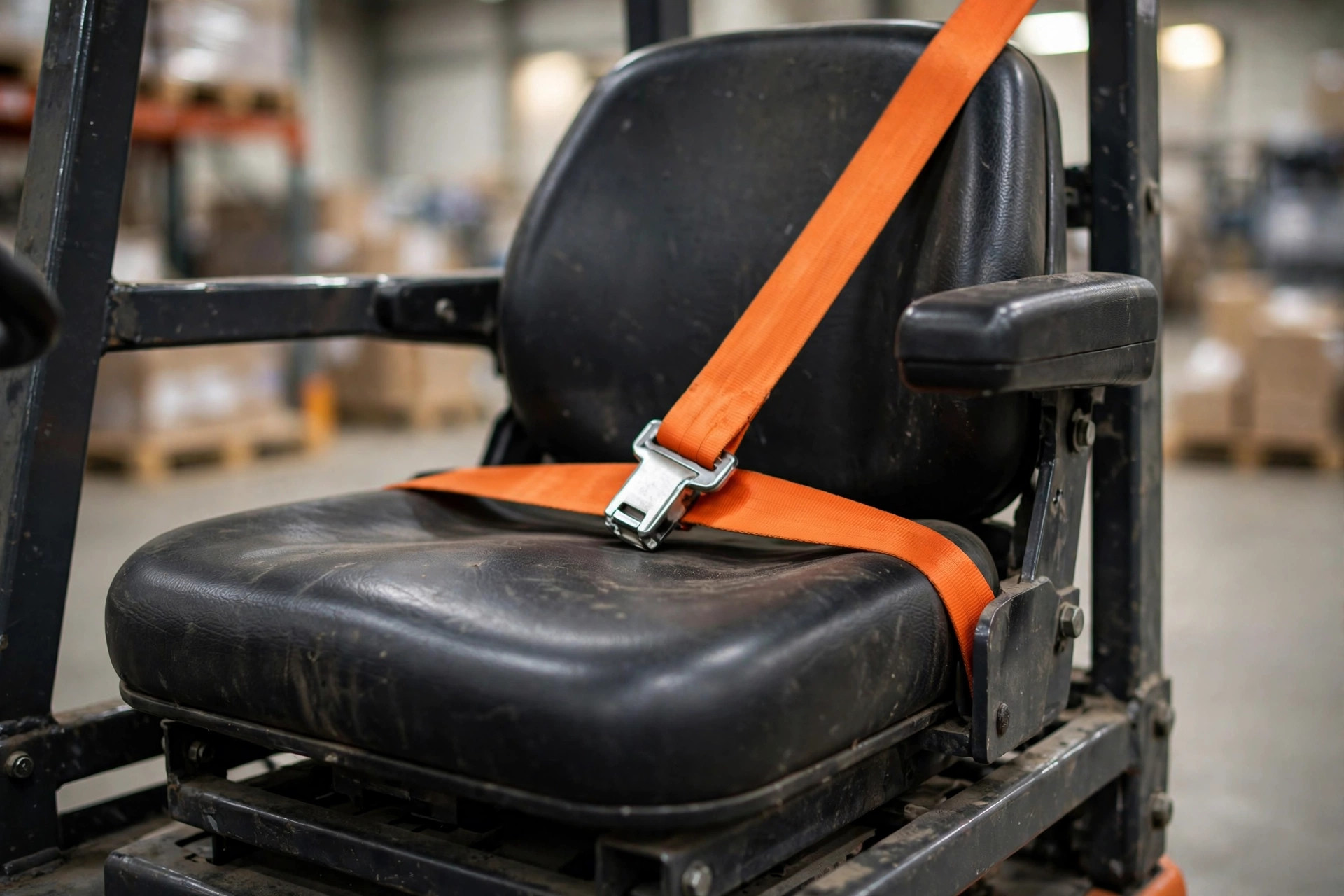
In other words, OSHA never fines you for "no belt installed." It fines you for "installed but unused," "broken but unrepaired," and "retrofit available but ignored." That logic defines where field management should focus: the forklift seatbelt is not an accessory — it is the first thing an inspector looks at.
OSHA Penalty Tiers: Serious vs. Willful Differs by a Factor of Ten
Under the Federal Civil Penalties Inflation Adjustment Act Improvements Act of 2015, the Department of Labor must adjust OSHA penalties for inflation by January 15 each year. The round that took effect January 15, 2025 — still in force today, with no 2026 increase — set the numbers as follows:
| Violation level | Maximum per violation | When it applies |
|---|---|---|
| Serious | $16,550 | Hazard likely to cause death or serious harm; employer should have known |
| Other-than-serious | $16,550 | Unlikely to kill directly, but affects health or safety |
| Willful | $165,514 | Knowing noncompliance, or plain indifference to worker safety |
| Repeated | $165,514 | Same or similar violation cited within three years |
| Failure to abate | $16,550 per day | Still uncorrected past the abatement deadline |
Three data points worth noting. First, according to public commentary by a former senior OSHA official, the actual average paid for a serious violation is only about $4,678 at the federal level — settlements and reductions discount the headline number. Second, willful carries a minimum of $11,823 and a maximum of $165,514 — ten times the serious tier. Third, under OSHA's instance-by-instance citation policy, one inspection that finds several unbelted operators can produce several separate citations — a 20-truck warehouse can accumulate a six-figure penalty from a single walkthrough.
Which leads to a counter-intuitive judgment: the scary part is not the dollar amount, it is the willful designation. A willful citation means OSHA has concluded you knew and did it anyway; the record is public, follows the company, moves workers' compensation rates, shows up in customer audits, and becomes the other side's favorite page in later civil litigation. And within three years, a repeat of the same issue automatically becomes "repeated" — with the $165,514 ceiling hanging overhead. Fines can be negotiated. A designation is much harder to wash off.
"It's Only a Short Drive": Where the Accidents Actually Happen
Back to the floor. Why is the forklift seatbelt so hard to enforce? Field feedback converges on three reasons: order pickers climb in and out dozens of times an hour, and buckling every time feels like friction; the "it's only 20 meters" mindset makes every trip feel like an exception; and worst of all, supervisors don't buckle either — when the boss doesn't, the rule is paper.
But the data points to a counter-intuitive conclusion: the short, casual trip is exactly where accidents cluster. The 2017 California case is textbook: the operator wasn't speeding, wasn't working at height — just moving a truck out of the way. Low speed, short distance, unloaded — every condition that "feels safe," and then one sharp turn plus a small slope was enough. A forklift's center of gravity is inherently high; a tip-over needs no speed, only a lateral moment past the tipping point. The seatbelt's purpose is not the fast drive — it is the half-second of the tip-over, keeping the operator inside the guard's envelope instead of between the machine and the ground.
Three Levers That Actually Work in the Field
Slogans don't buckle seatbelts. Based on the enforcement logic and frontline practice, three levers do:
First, engineering: make "unbelted" impossible. Specify seatbelt interlocks on new trucks — no buckle, no start. Retrofit interlocks on the existing fleet, or at minimum add buckle reminders. This is the most decisive move: turn a behavior problem into an engineering problem, and nobody needs willpower.
Second, behavior: make buckling muscle memory. Put "fasten seatbelt" as item one on the pre-shift checklist, alongside brakes and horn. Supervisors run random spot checks daily, correct on the spot, and log it. The critical detail: keep the records — when an inspector walks in, the first things asked for are training records and inspection logs. "We told them to" counts for nothing without paper.
Third, systems: make violations carry a predictable cost. A three-step escalation works: verbal warning with a record, written warning, then suspension of driving privileges and retraining. Plus one red line: any seatbelt-related near miss gets escalated internally as if it were willful — so everyone understands this is not a minor infraction but a company-level risk event.
The Trend: Enforcement Is Shifting From "Do You Have It" to "Do You Use It"
Connect the enforcement signals of recent years and the direction is clear. OSHA's forklift enforcement has moved past the "is the equipment present" stage into the "is management actually enforcing use" stage: training records, inspection logs, whether supervisors noticed, and whether they acted. Penalties adjust with inflation every year — no increase for 2026, but $16,550 and $165,514 are already on the books, and the long tail of a willful designation costs far more than either number suggests.
The other foreseeable trend: seatbelt interlocks will become standard forklift equipment the way they are in cars. When "no buckle, no start" is the factory default, the "short drive" management problem becomes a behavior problem of the past — but until then, every warehouse has to answer the same question: will your first seatbelt citation come from an inspector's routine visit, or from the aftermath of a loud noise at 5:45 in the morning?
By Dr. Chen, Supply Chain Researcher