After all these years on the road, what scares me most is forklift operator recertification done on paper — not traffic. On the highway I control my own wheel. Inside a warehouse, my safety is in somebody else's forks.
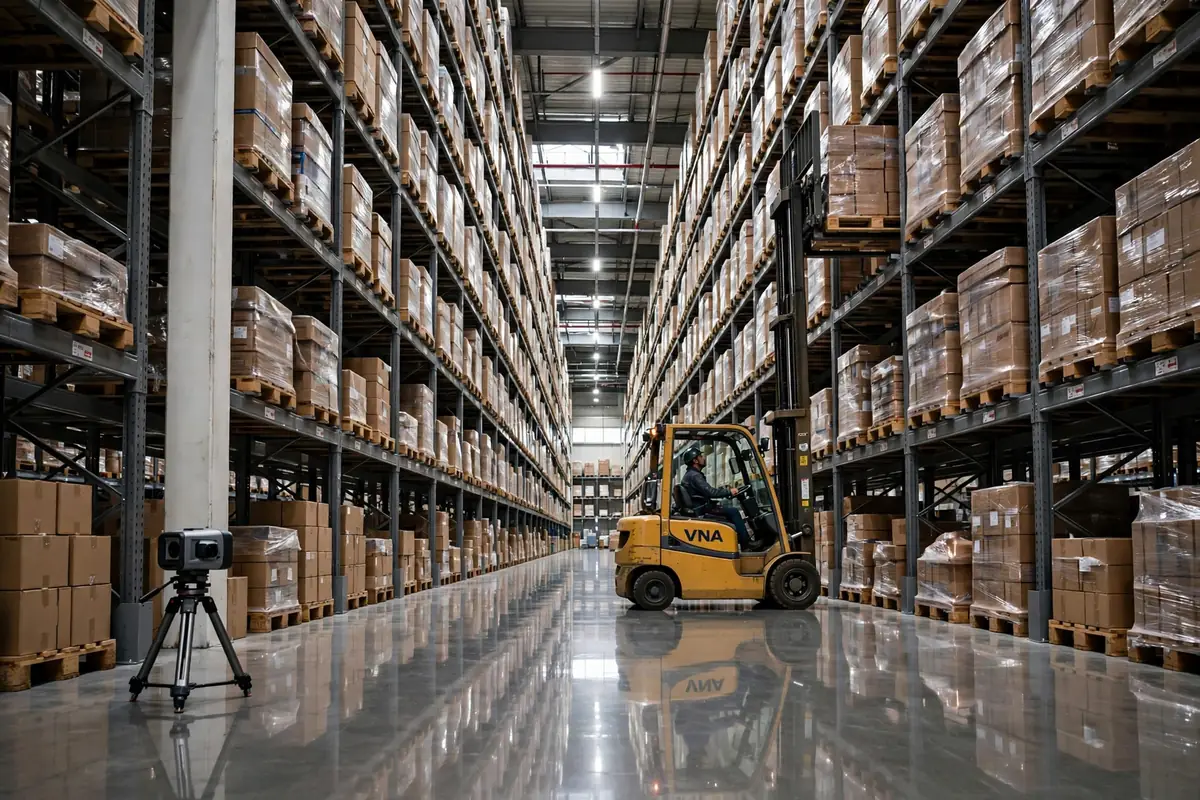
Two falls ago I was waiting for a load at a 3PL warehouse in Ontario, California. Big place, something like 80,000 square feet, five or six trucks lined up at the door. A young operator was pulling a pallet down from high racking, took the turn too fast coming down, and the whole pallet slid off from over a meter up. Boxes everywhere. Nobody got hurt, thank God, and my truck wasn't up yet. The kid climbed down white as a sheet. The shift lead ran over and the first thing he asked wasn't "are you okay" — it was "when did you get your license?" The kid mumbled. The lead's face changed. Later I heard from people in that warehouse that the kid had been certified three years earlier and his three-year performance evaluation was already overdue. They'd even switched to a new forklift model and nobody had walked him through it.
I remember that one because the same month, in Texas, I saw it happen again — this time with a veteran, a guy with close to ten years on the trucks. He reversed without looking back and drove the forks straight into a dock door. Bent the frame, smashed a taillight. He dusted himself off and said it was nothing, and the warehouse manager treated it like nothing. When a rookie has an incident everyone calls it normal; when a veteran has one everyone calls it bad luck. Neither is right — both come down to the evaluation bill nobody bothered to pay.
Forklift Operator Recertification: What OSHA Actually Requires Every Three Years
In the United States this is not optional — it's written in OSHA 29 CFR 1910.178(l). But first, the most common misunderstanding: what comes due every three years is a performance evaluation, not a full retraining course. The rule ((l)(4)(iii)) requires each operator's performance to be evaluated at least once every three years. Pass the evaluation and there's no need to sit through the full course again; fail it, and targeted retraining follows. Refresher training itself is event-triggered — it kicks in when someone is observed driving unsafely, after an accident or a near-miss, when an evaluation shows gaps, when an operator switches to a different truck type, or when workplace conditions change. Those triggers don't wait for the three-year mark.
And here's something a lot of people don't know: OSHA doesn't issue licenses and doesn't certify operators. Training, evaluation, and certification records are the employer's job — the employer issues the certification and keeps the records, and when an inspector walks in, the employer has to produce them. Any outfit selling you an "OSHA-certified forklift license" is selling you a story; OSHA issues no such thing.
OSHA does not prescribe a fixed number of training hours. It asks for an outcome — can this person operate this truck, in this warehouse, safely, right now? Plenty of warehouses take the lazy route: every three years they herd everyone into a meeting room, play a thirty-minute video, collect signatures, and call it done. The paperwork looks beautiful. The driving stays the same. A serious inspector will see through it the moment they start asking about actual operating details.
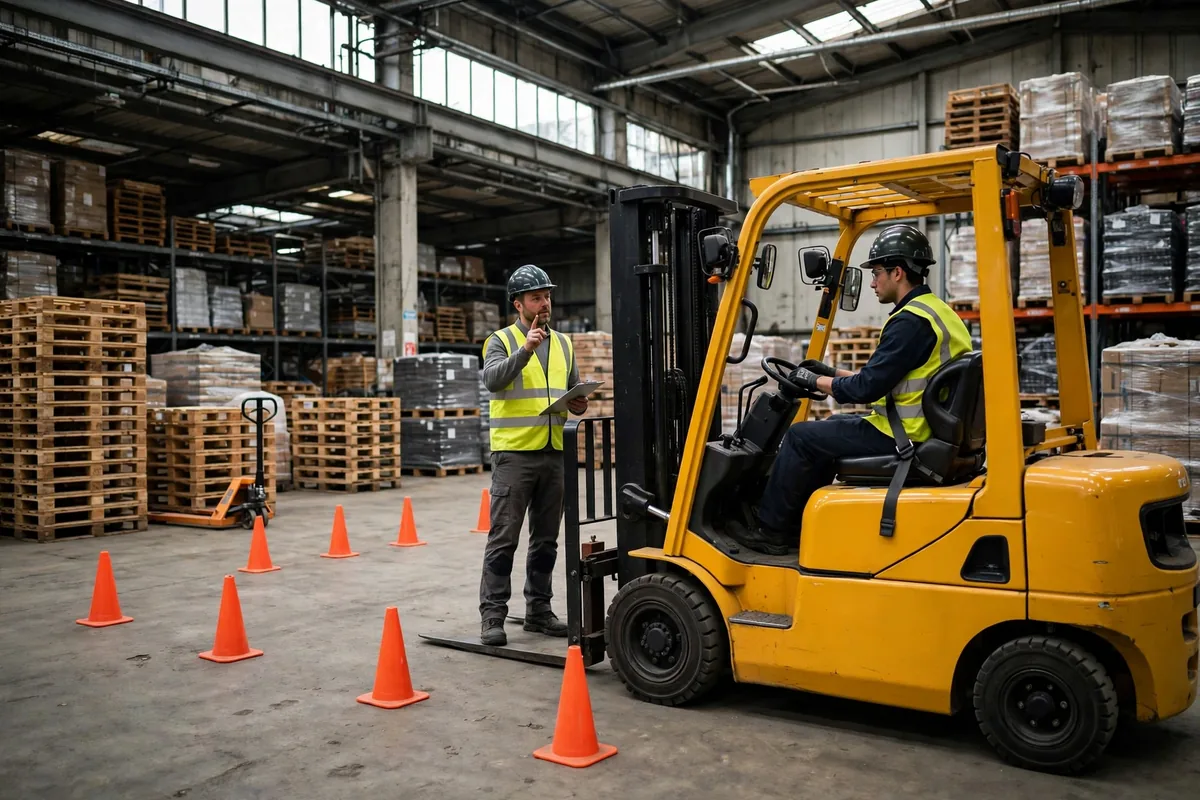
I have seen a warehouse that does it properly. Their evaluation has three steps: a hands-on driving test on the floor — reversing, pulling high pallets, passing in narrow aisles, scored item by item; then a review of every incident in that warehouse over the last three years, real accidents as the teaching material; then a walkthrough for any new truck model since the last round. It takes half a day. It doesn't cost much. And afterwards, the operators themselves know exactly where they stand.
Running the Numbers on Forklift Operator Recertification
A lot of warehouse managers look at refresher training and see only a cost: half a day of labor per person, plus the trainer's fee. But that is only one column of the ledger. You have to put the accident column next to it.
| Warehouse that retrains properly | Warehouse that fakes it on paper | |
|---|---|---|
| Recertification cost | One evaluation per operator every three years, half a day; extra training only when an event triggers it | Near zero, a video and signatures |
| Minor incidents | Occasional scrapes, mostly light | Racking bent, pallets dropped, routine damage |
| Major incident risk | Documented evaluations, traceable when something happens | Training records are the first thing inspected after an incident |
| OSHA inspection | Evaluation records and test sheets ready to show | Records fall apart under questions, fines follow |
| Insurance and shipper trust | Fewer claims, stronger position at renewal | Word gets around, shippers take their freight elsewhere |
The actual fine numbers for 2026: OSHA's maximum civil penalties run $16,550 per serious violation, and up to $165,514 for a willful or repeated violation — check OSHA's own website for the latest. A single serious-violation citation can cost more than several full rounds of evaluations for a mid-sized warehouse. That's before damaged goods, stopped lines, and compensation if someone gets hurt. Training money is spent in the open. Accident money is paid in the dark. The open spending is always cheaper.
There's another cost nobody puts on the spreadsheet: drivers' time. Every hour my truck waits at a dock, that's fuel, hours, and the next load's schedule. One small forklift incident stops a loading line for half an hour, and five or six trucks outside eat that delay. That cost lands on freight rates, on the shipper, and on trust across the whole chain.
The Counterintuitive Part: Every Three Years Means an Evaluation, Not a Full Course
Here's the most counterintuitive point in this whole article: most people hear "every three years" and picture the entire crew being sent back to sit through a full training course. That's not what the rule says. OSHA wants a performance evaluation every three years — if the operator still drives to standard, that's it, no full course required. Retraining is for the ones who fail the evaluation, have an incident, get caught driving unsafely, or switch truck types. In other words, the three-year mark checks whether you still drive properly now — not whether you remember a class from three years ago. Dragging everyone through the full course wastes labor hours and tells you nothing about actual driving.
Here's something else that will ruffle feathers: when a rookie has an incident, it's usually a skills problem. When a veteran has one, it's usually a habit problem. Skills can be drilled. Habits are harder, because the veteran is convinced he doesn't have a problem.
I've seen too many operators with seven or eight years behind them reversing without looking, carrying loads too high, taking corners without slowing — all on feel. Ask them why and they say, "I've done it this way for years and nothing happened." I hear the same line from truckers on the highway — the veteran who crashes usually crashes on "nothing ever happened before." The real value of an evaluation for a veteran isn't teaching something new. It's having someone point out the bad habit to his face. With an assessor standing right there watching, there's nowhere to hide. That beats ten videos.
So my judgment is this: don't schedule the three-year evaluations by seniority. Start with the veterans. Rookies already have people watching them. Veterans with nobody watching are the dangerous ones.
What Shippers and Drivers Can Do Too
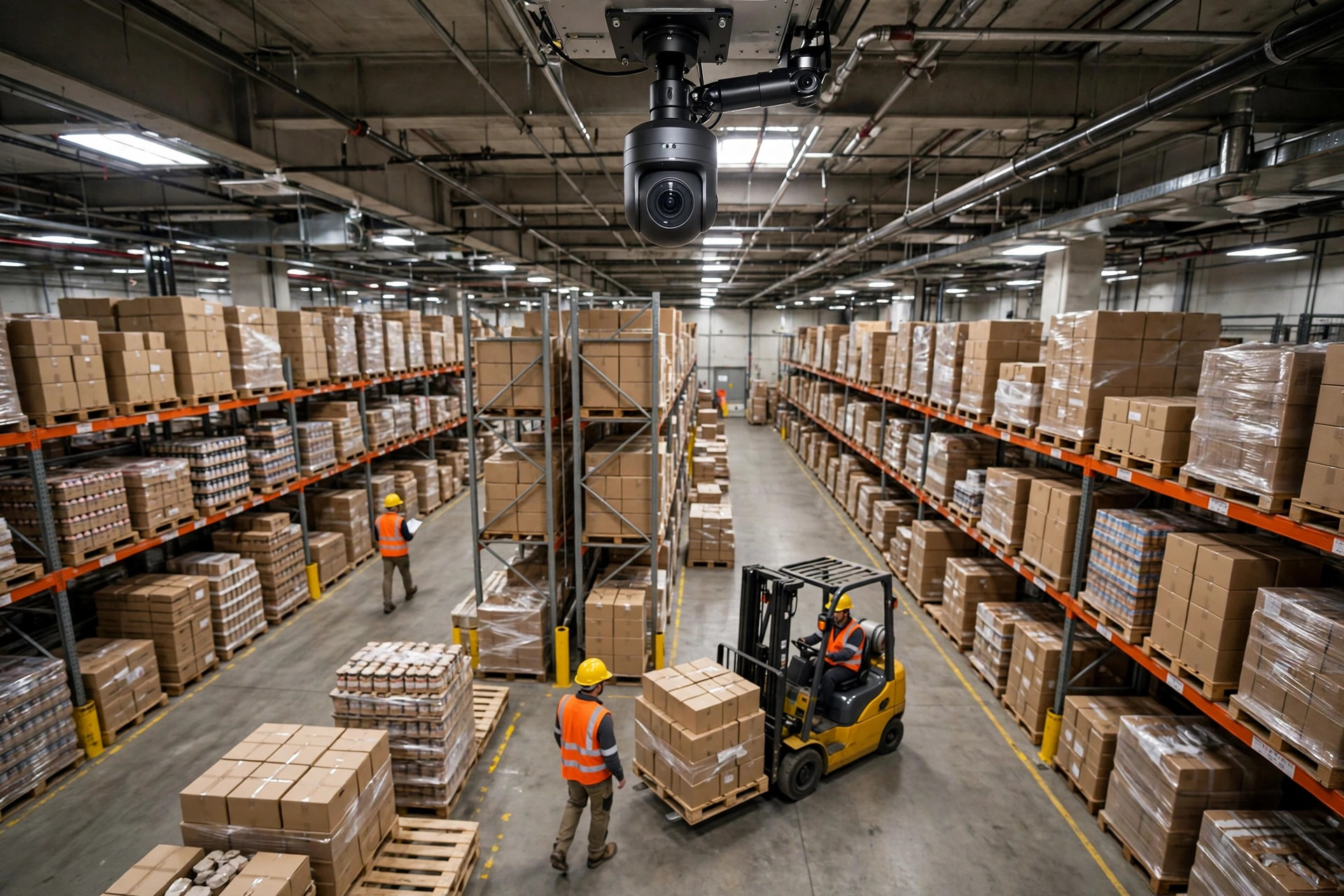
This isn't only the warehouse manager's job. Drivers and shippers can help keep the standard honest. Before you back in, look around: is the operator wearing a badge with a current certification date? Are driving lanes marked on the floor, with pedestrian lanes separated from forklift lanes? During loading, is the operator wearing a hard hat, and is someone spotting when he reverses? Small things, but they tell you how seriously a warehouse takes its own rules.
And if you're a shipper signing a 3PL contract, ask one extra question: how often do you evaluate your forklift operators, and can I see the records? If the answer comes back vague, think twice about that cheap rate. Cheap warehouse rent gets expensive after the accident.
After all these years on the road, I believe one thing: the wheel in your own hands is the safest place. Inside a warehouse, your safety depends on whether their evaluations are real. Three years sounds like a long time — but it's plenty of time for a bad habit to grow into an accident.
By Shifu Zhao, Trucking Veteran (15 yrs)