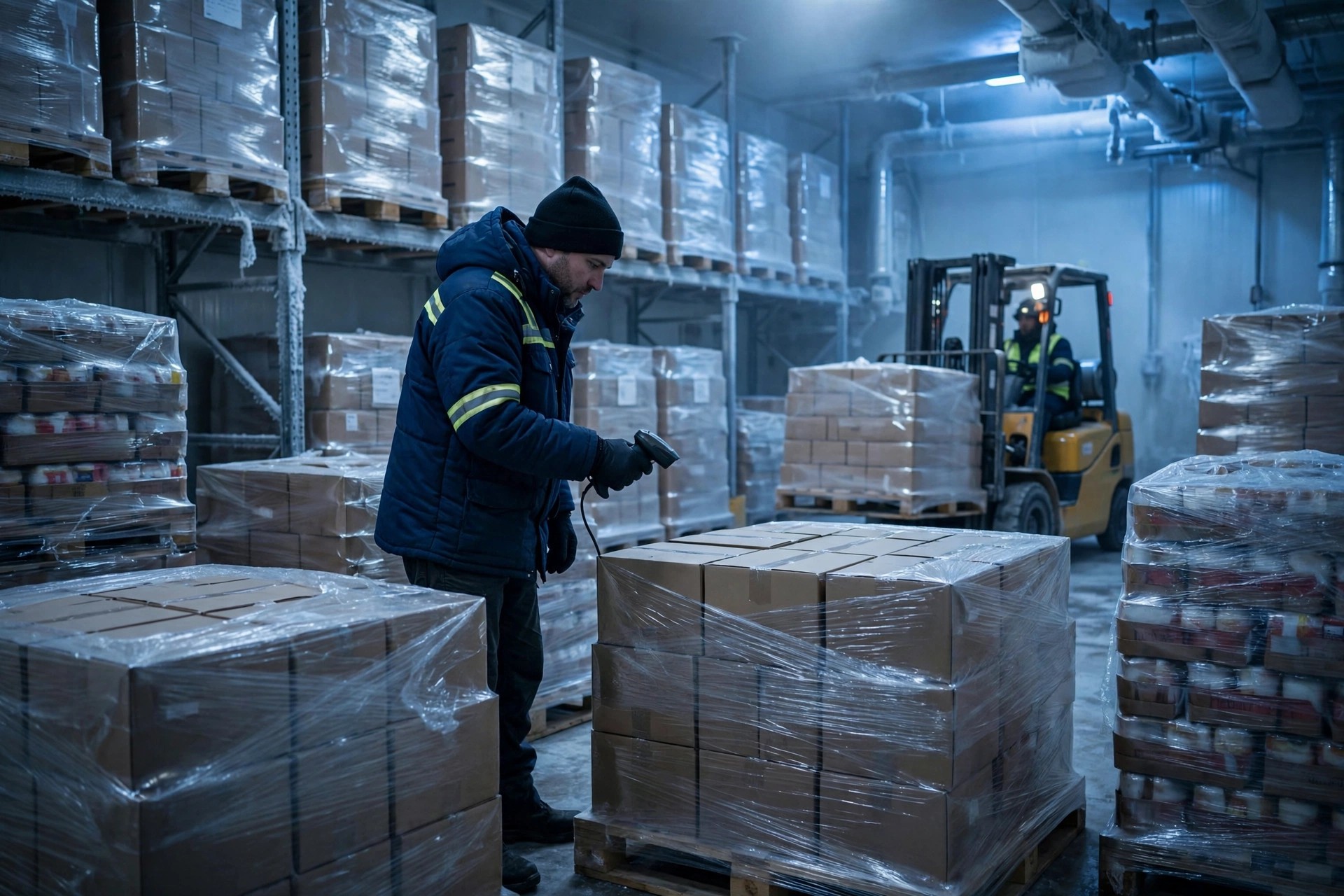
Last November, 4:40 a.m. on a Tuesday. Night shift hadn't clocked out yet. I was standing at the freezer door, eighteen below, my breath fogging white. My phone rang. "Chen, mock recall today. Lot from October 28, the frozen wings. One requirement: every pallet's whereabouts, on my desk, in two hours."
If you're looking for how to conduct a mock recall in a food warehouse that would actually satisfy an FDA inspector, here's the honest truth: I learned it by failing one first.
My knees went a little soft that morning. I've run food warehouses for twelve years and managed crews of two hundred. But a mock recall is different. It doesn't test how smooth your operation is on a good day. It tests whether your system data, your floor labels, and your drivers' paperwork all agree on your worst day. Here's everything our warehouse learned going from a humiliating failure to clearing the two-hour bar.
How to Conduct a Mock Recall: The Drill That Humbled Us
It started with a customer, not the FDA. Late October 2024, a big grocery chain sent an auditor for a surprise visit. He walked the cooler, pointed at a pallet of yogurt: "This lot. Two hours. Tell me where it came from and where every case went."
We had no drill process. The whole warehouse dug through spreadsheets, paper receiving logs, and called drivers. Six-plus hours later, the trace report we handed over was missing four percent — sixty-some cases marked "to be confirmed." But at contract renewal, the chain wrote "traceability remediation" into the addendum.
That was the first time in twelve years I felt paper and Excel couldn't protect my people's jobs. I told our QA manager: don't wait for the FDA to test us. Let's test ourselves. So on November 12, 2024 — right before peak season, full crew — we ran our first formal mock recall.
He picked a nasty one: lot #FW-1028, frozen wings received October 28, three supplier lots commingled, broken down twice, transferred between buildings once. "Drill the hard ones," he said.
We failed outright:
First, the lot labels broke. When workers broke down mixed pallets, they tossed the original labels and hand-wrote a date on the new pallets. No lot info. The system still showed "one full pallet"; the floor had three-and-a-half. System versus reality — no match.
Second, the delivery paperwork didn't match. A driver had hauled forty cases on November 3, and his paper receipt used the customer's nickname while the system had the legal name. Two sides, couldn't reconcile.
Third, the drill sealed three outbound doors, and the drivers waiting at the gate cursed up a storm about delayed loads. Our receiving lead — fourteen years on the job — got into a shouting match with a new hire: "Where are the labels?" "Nobody taught me where to stick them!" Morale hit rock bottom that day.
Final score: seven hours and twenty minutes, ninety-six percent located. The missing four percent was on an outbound last-mile truck — it took five phone calls to track down. The QA manager declared the drill a failure.
How to Conduct a Mock Recall in Under Two Hours: Our Playbook
After the failure we held a debrief and changed three things — all of them learned the hard way:
One, we rewrote the lot-coding rules by risk tier. High-risk products — dairy, ready-to-eat, frozen meat and poultry — went to pallet-level lots: one pallet, one code, new label and mandatory scan every time a pallet is broken down. Low-risk dry goods stayed at date-code level. The crew cursed at first; receiving slowed fifteen percent. Two weeks later it was habit, and speed came back.
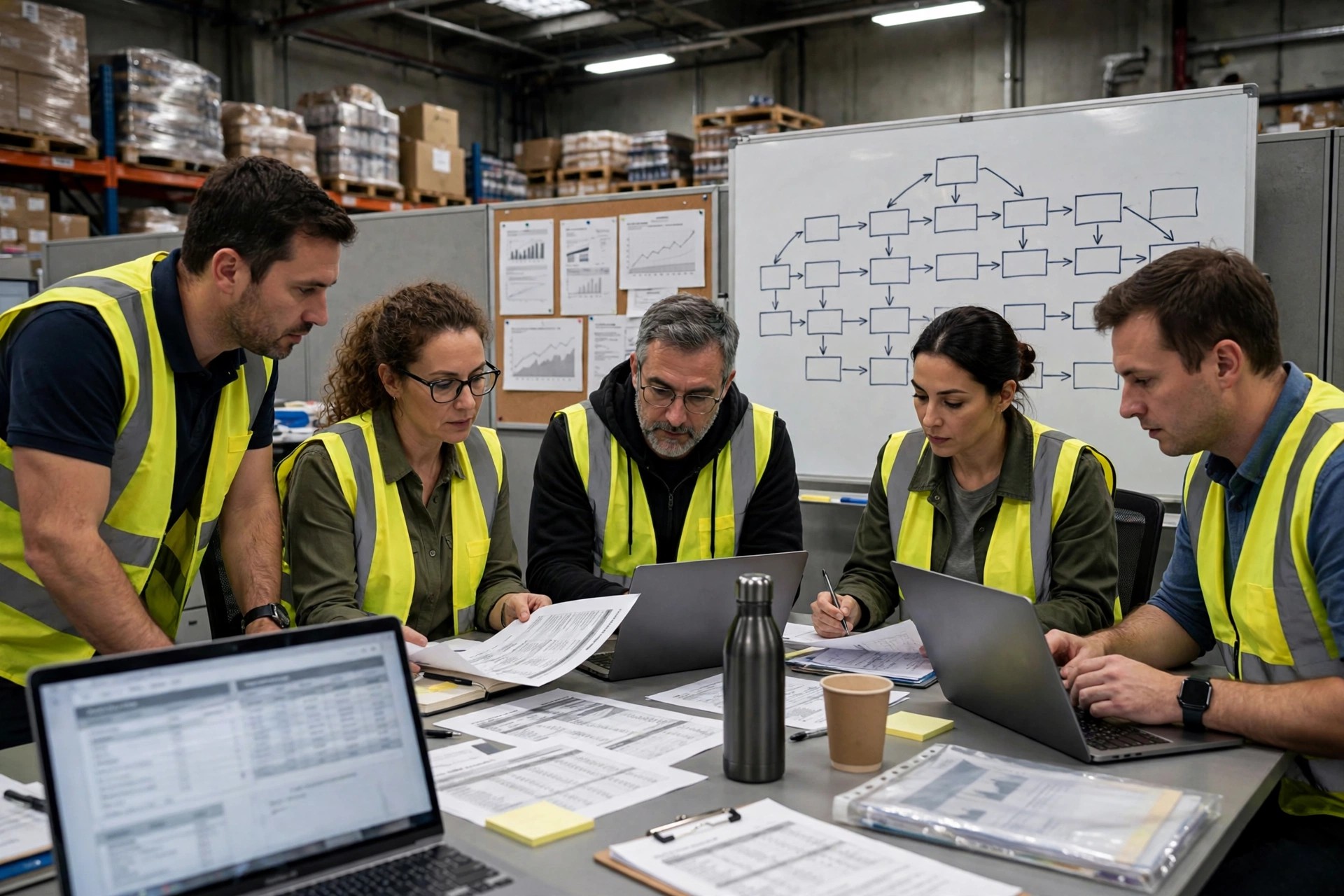
Two, we split the drill into three teams with time cards. Team A pulls WMS inbound/outbound records — forward trace, where did this lot go. Team B pulls receiving records and supplier docs — backward trace, where did it come from. Team C counts pallets on the floor and photographs labels. Every thirty minutes, all three teams report. Miss the window, red flag.
Three, we only drill the nasty lots. A lot that went in and out whole is easy to trace — drilling it proves nothing. From then on, every drill picks a lot that was broken down, transferred, or had returns. The troublemakers.
March 4, 2025, second drill, a sister lot to #FW-1028: one hour, forty-seven minutes, one hundred percent located, system matched the floor exactly. The QA manager said one sentence at the debrief: "Now this looks like a food warehouse." The new hire from the shouting match now leads Team C.
The best part was watching the old receiving lead come around. He'd been the loudest against the new rules; by the second drill he was gathering new hires himself, teaching them label by label how to stick and scan. He told me privately: "Chen, I wasn't against the rules. Nobody ever told me a broken label could cost us a customer." Floor crews don't fear rules — they fear unexplained rules. Once they see the chain — broken label, untraceable lot, lost customer — compliance beats any amount of yelling.
What We Do Every Quarter Now
Drills die when they become campaigns. We nailed ours down to a one-page SOP on the office wall:
- Once a quarter, random timing. Forty-eight hours ahead, only the QA manager and I know which lot was picked. Nobody else.
- At T-0: freeze the lot in the WMS and rope off the physical area. Both.
- Three teams run in parallel, time cards every thirty minutes. Two hours is the red line.
- Debrief within twenty-four hours. Every issue goes on a fix list with an owner, and the next drill starts by verifying last time's fixes.
- Every new hire shadows one full drill in their first week. Walking it once beats any slide deck.
- Driver paperwork standardized: customer names must match the system's legal name exactly. A driver scribbling a nickname gets the form handed back on the spot — forty untraceable cases in our first drill traced back to exactly this.
Latest drill, September 2025: one hour, thirty-two minutes, clean sheet. Nobody treats it as a burden anymore. The old lead's words: "Now I sleep fine. If something real happens, we won't panic."
The Math: $500 a Quarter vs. One Real Recall
| One quarterly drill | One real recall gone wrong | |
|---|---|---|
| Direct cost | ~10 people × 2 hours × $25/hr ≈ $500 | Industry estimates for a food recall's direct costs routinely reach seven figures (varies hugely by scale — check published reports) |
| Hidden cost | Half a day of disrupted outbound rhythm | Losing a customer: one of our big accounts is a $2–4M annual contract; beyond that, FDA warning letters and line shutdowns |
| Frequency | 4× a year, ~$2,000 | One bad one buys you a century of drills |
Even a kid can do this math. So why do so many warehouses never drill? They're afraid of failing in front of everyone. Failing a drill isn't embarrassing. Failing to produce the goods when it counts — that's embarrassing.
Three Things Nobody Tells You
Speed isn't the goal. Completeness is. In our first drill we nearly "estimated" two mixed pallets as found to beat the two-hour mark. The scariest thing about a mock recall is false confidence — thinking you're ready in two hours, then discovering a missing truck in hour three. I'd rather take two hours and ten minutes with everything found than one hour fifty with ninety-six percent.
Finer lots aren't always better. We tried pallet-level lots for everything; receiving worked until 9 p.m. Now it's pallet-level for high-risk, date-code for low-risk: ten times the recall precision for roughly double the scan labor. Do that math per product category, not across the board.
Don't drill the easy lots. Some warehouses always pick lots that went in and out whole, pass with flying colors every time, and call it a program. That's self-comfort, not preparation. Drill the troublemakers. Sweat now, bleed less later.
One last word for fellow warehouse folks: if your building has never run a mock recall, don't wait for an auditor to pick your lot. Find a slow Tuesday, pull a nasty one yourself, and run the clock. You'll probably fail the first time. That's normal.
And a serious note: the FDA's rulebook doesn't say "two hours" — it says records within a reasonable time, and the food traceability rule in effect since January 2026 requires covered firms to produce records within 24 hours (check the latest official policy). Two hours is our own bar. But when an inspector is standing in your office, two hours is the yardstick. Produce it, you're compliant. Can't produce it — no explanation will save you.
By Chen Feng, Warehouse Operations Manager