Last July, in the middle of a heat wave, a frozen dumpling client came to tour our warehouse. Right before leaving, he asked casually: "Have you guys done cold chain qualification on your freezers? Do you have a temperature mapping report?"
My brain went blank. 3Q? Like, a cousin of QQ?
I smiled and said, "Sure, sure, I'll send it over." Then I googled it in the parking lot. That search gave me a cold sweat: "your freezer is fine" is not something the display on your refrigeration unit gets to decide. We'd been running frozen storage for five years on pure vibes.
What Cold Chain Qualification Actually Means (No Jargon)
This whole 3Q thing migrated over from pharma. Three steps, plain English: IQ (installation qualification — is the equipment installed right, sensors and alarms where they belong), OQ (operational qualification — does the empty room hold temperature steadily), PQ (performance qualification — under real conditions, full of product, doors opening all day, are your goods actually at temp).
The one action that matters is temperature mapping: you scatter data loggers around the room, record for a couple of days, and draw a temperature map of the whole space to find the hot spots and cold spots. Big companies have validation teams and SOPs half a meter thick. We don't. But the act of mapping itself? A small warehouse can absolutely do that.
Temperature Mapping on a Shoestring: Our $1,800 Weekend
Here's our situation: 32,000 square feet, two freezer rooms, five people including me. I called a validation firm for a quote: full 3Q, somewhere north of four grand. Yeah, no. We can't burn money like that.
So we built the bootleg version. Ghetto, but it worked:
Rent, don't buy. We rented twelve calibrated temperature loggers online for three days — under two hundred bucks total. Buying them new would've been hundreds each, and they'd collect dust afterward. Renting was the obvious move. One non-negotiable: they must come with calibration certificates. Data without a cert is just numbers your client won't trust.
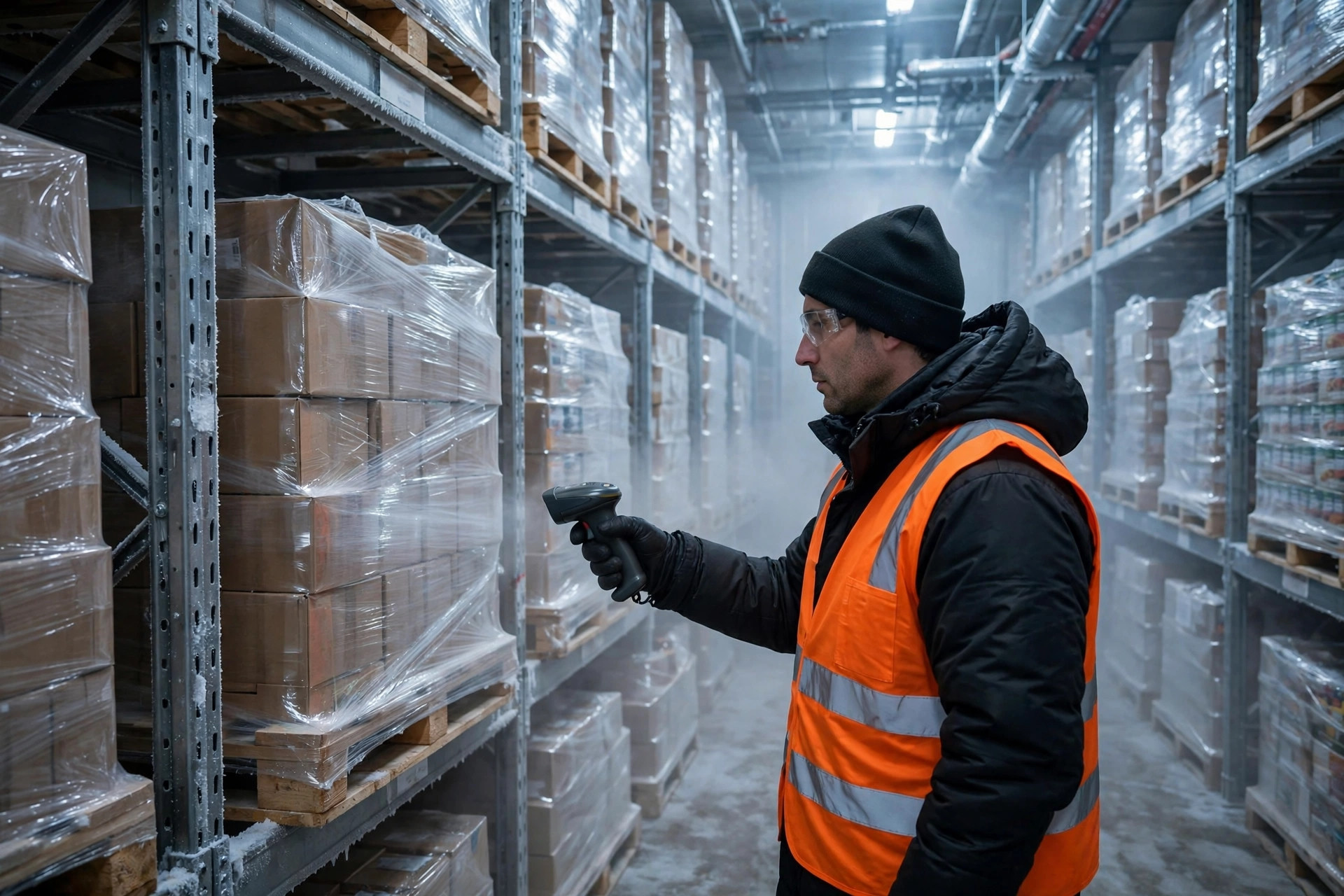
Place them where it hurts. Six per room: right inside above the main door (where hot air rushes in every time it opens), directly under the evaporator fan (coldest blast), the top corners (hot air rises), near the return air vent, and deep inside the racking. Don't be the guy who puts all his loggers next to the return vent — that's the "politically correct" spot. Pretty data, zero value.
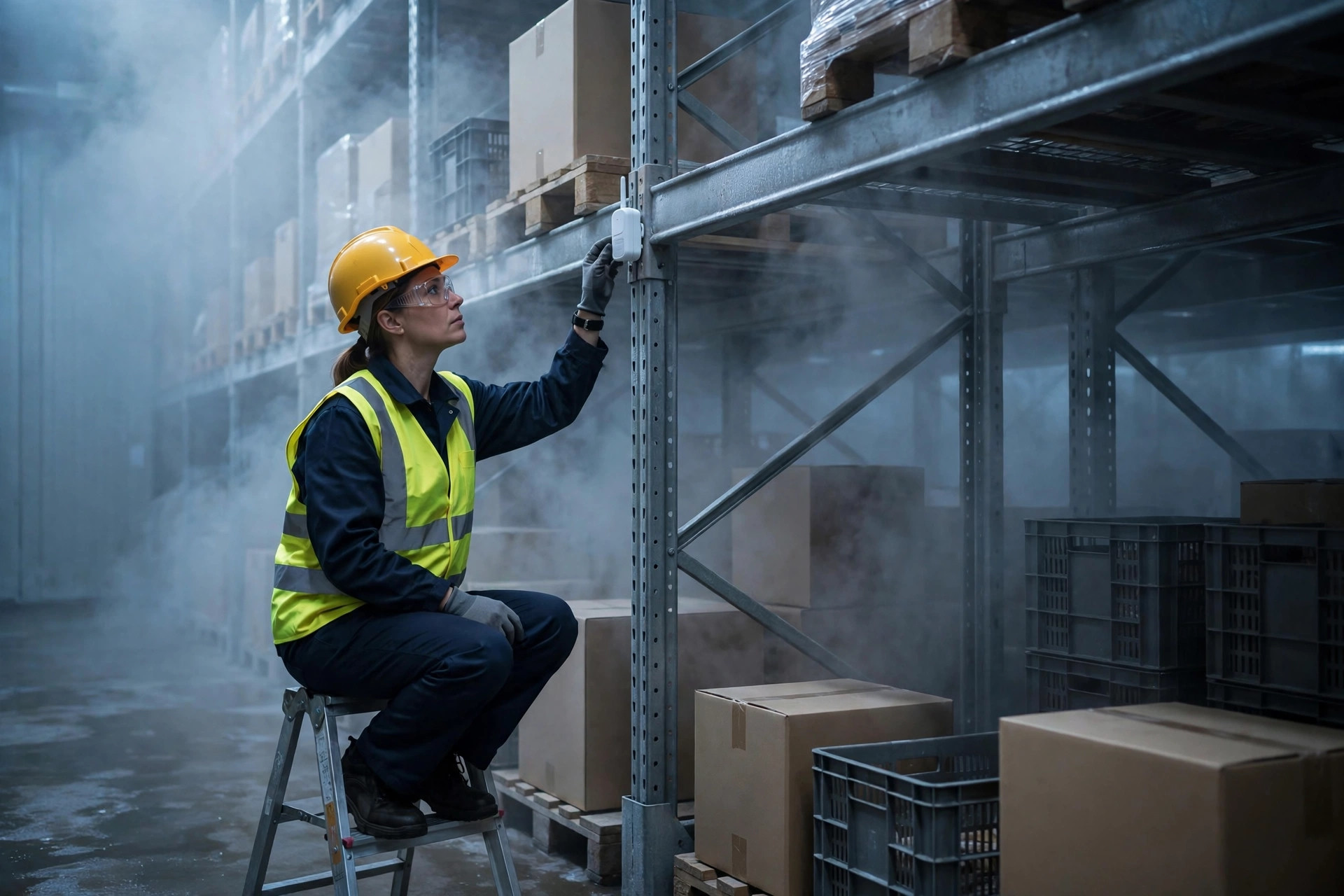
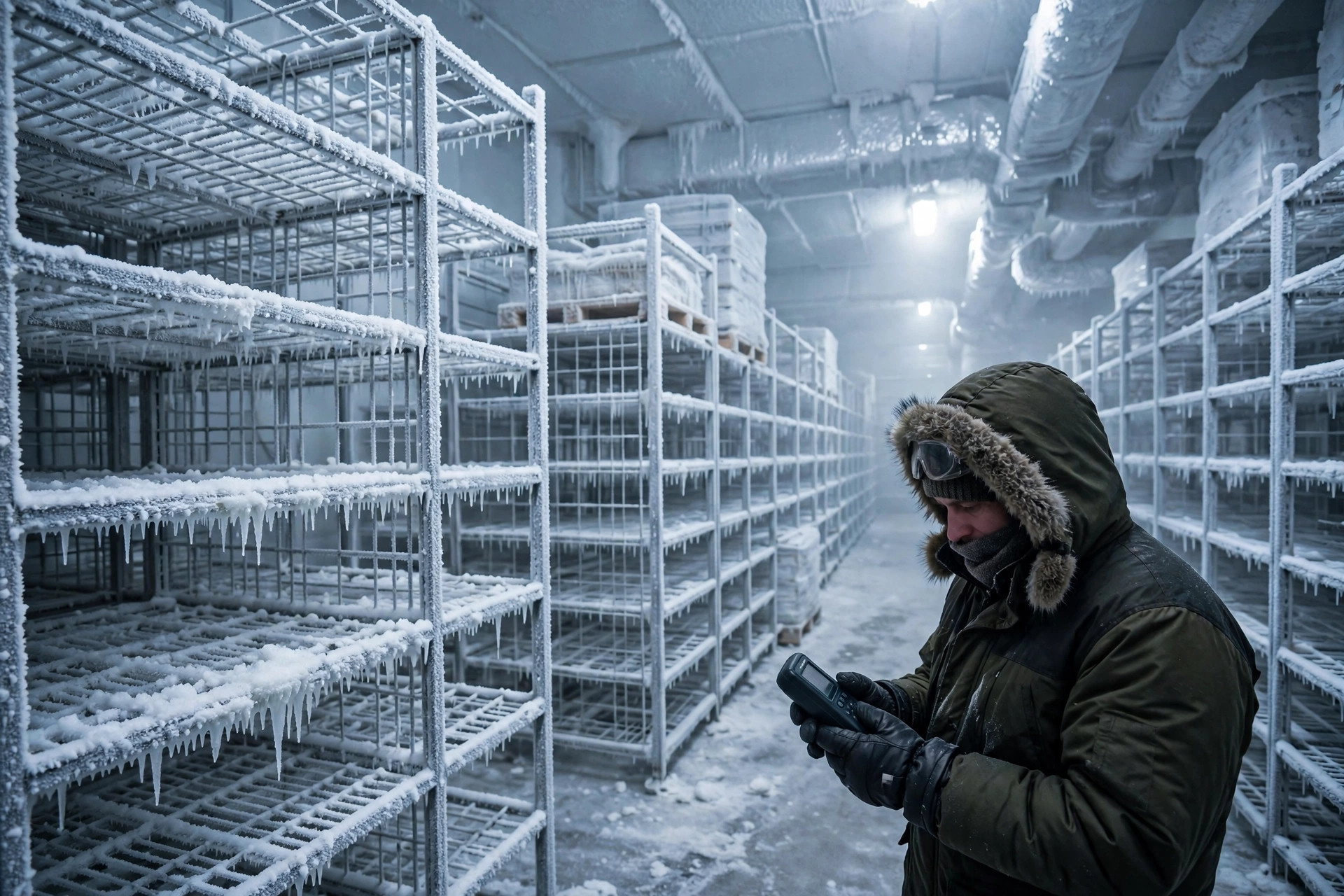
Torture-test the real operation. Run 24 hours empty for a baseline, then 48 hours fully loaded. We deliberately did a "door-open test" during peak shipping — door wide open for 15 minutes, watch the recovery curve. We even killed the power one night for a blackout holdover test (warned the client first — don't pull a surprise like some cowboy).
Two people, one weekend, done.
A few details we learned the hard way: zip-tie the loggers to the racking at product height — you're measuring your product's temperature, not the floor's. Set the sampling interval to 5 minutes; denser and you drown in data, sparser and you miss the door-open spikes. And number every logger to match your placement map. First time around, our map and numbers didn't line up and we nearly mistook a cold spot for a hot spot. Half a day wasted.
What Temperature Mapping Found (It Scared Us Straight)
The data came back and the logger above the main door was running 2°C+ warmer than the room average during working hours, flirting with the edge of our limit several times. And the refrigeration display? A rock-steady -18°C. All was well. Supposedly.
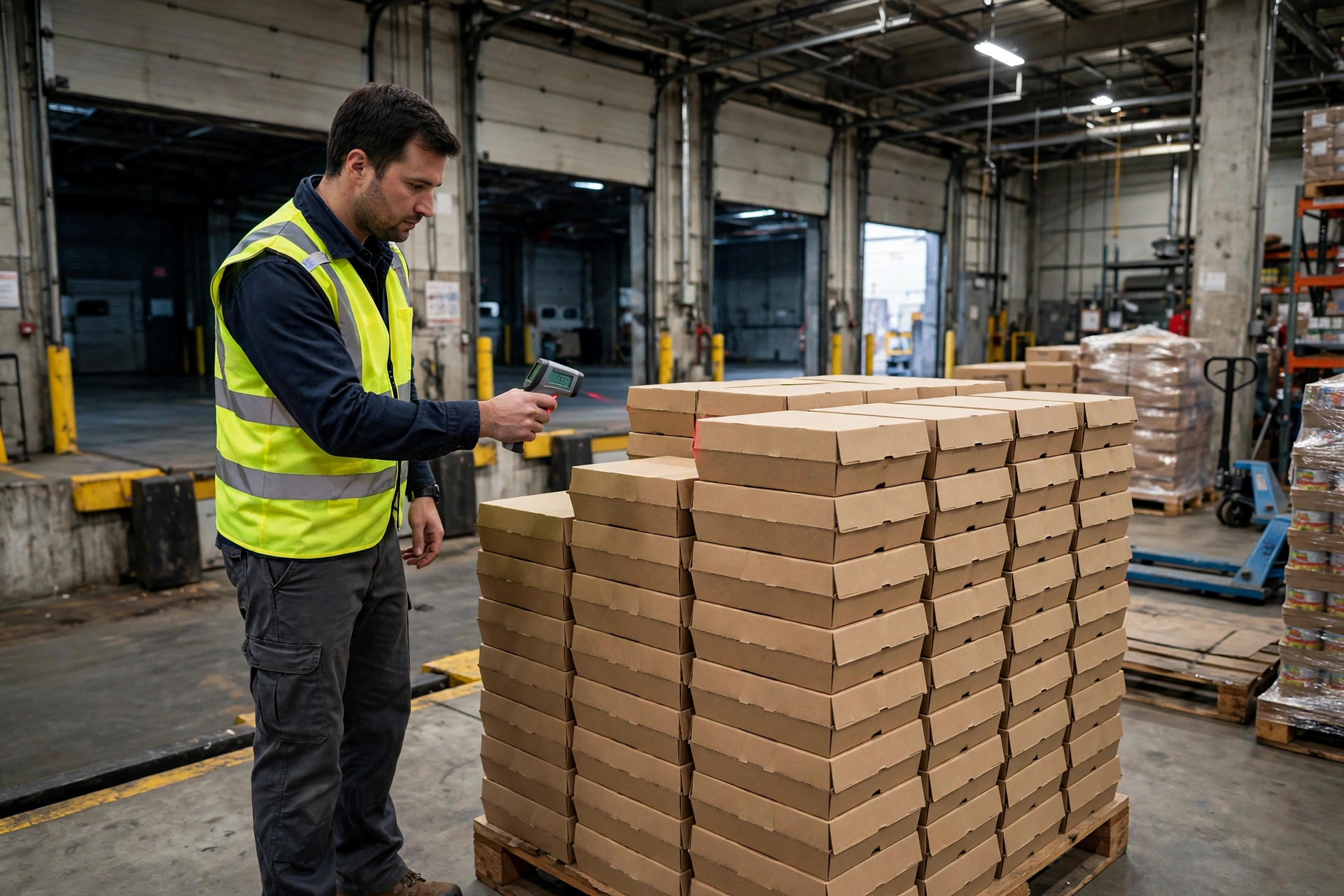
Root cause: the door curtain seal had aged and was leaking, plus forklifts going in and out all day pumping hot air straight in. We replaced the seal, added an air curtain, re-ran the test. Passed. That single finding paid for the entire exercise — if that dumpling client's product had partially thawed and refrozen in that spot, the texture would've been ruined, and one complaint would've cost us way more than a truckload.
Here's the counterintuitive part: most people think qualification is paperwork to survive an audit. Wrong. It's a cheap X-ray. The pretty number on your display is the temperature at the sensor — and sensors get installed at the return vent, the most flattering spot in the room. Your product's real temperature is something else entirely, and you only know it once you map it. The most expensive option isn't doing validation. It's not knowing you have a hot spot.
The Math: Three Options, Honest Numbers
| Option | Cost | What you get | The catch |
|---|---|---|---|
| Full third-party 3Q | Several thousand $ | Stamped report, sails through big-client audits | Hurts when you're small |
| DIY bootleg mapping | A couple hundred $ + two people for two days | You know where your hot spots are, fixed with confidence | Self-written report; picky auditors may not accept it |
| Do nothing, trust the display | $0 | Peace of mind | One temperature excursion: tens of thousands in product + a lost client |
True story from next door. Old Chen's warehouse had his refrigeration unit overhauled last year. Display showed a steady -18°C afterward, so he figured all was good. Then an ice cream client put two of their own loggers inside the product for one shipment — corner pallets came out at -14°C. Client killed the annual contract on the spot. Turned out the fan direction got reversed during maintenance and airflow was short-circuiting. One mapping run would've caught it. The "savings" of skipping validation cost him a key account.
My Playbook for Fellow Small Warehouses
First, ask yourself: do you have temperature-sensitive, high-value clients (frozen food, ice cream, pharma all count)? If yes, this is table stakes.
Second, here's the route I'd take: DIY the bootleg version in year one — find the hot spots, fix them, sleep at night. When you land a big client who demands a stamped report, then pay the professionals — and you'll pay happily, because you already know you'll pass instead of paying for a "fail" plus rework.
Third, it's not one-and-done. New refrigeration unit, major repair, room remodel, or every year before peak season — re-run the key positions. We now keep two loggers permanently in the rooms as sentinels, with phone alerts on excursions. Costs a few bucks a month.
Oh, and the funny part: that bootleg report actually won us business. I turned the data into a neat little report — placement map, temperature curves, before-and-after. The dumpling client's QA team accepted it. Their words: "The data is continuous and the logic holds up. More honest than a lot of stamped reports." Now I slap that report on the table at every tour, and this little 32,000-square-foot operation has stolen two clients from the big 3PLs. Clients aren't dumb. They don't care how big you are. They care whether you give a damn about their product.
Big companies have validation teams and SOPs. We had two people, one weekend, and rented loggers. But here's the thing: no client ever asked how thick our report was. They asked whether their goods would be fine.
Small warehouses have their own way of surviving — spend a little money, and plug the deadliest hole first.
By Xiao Ma, Small Warehouse Owner