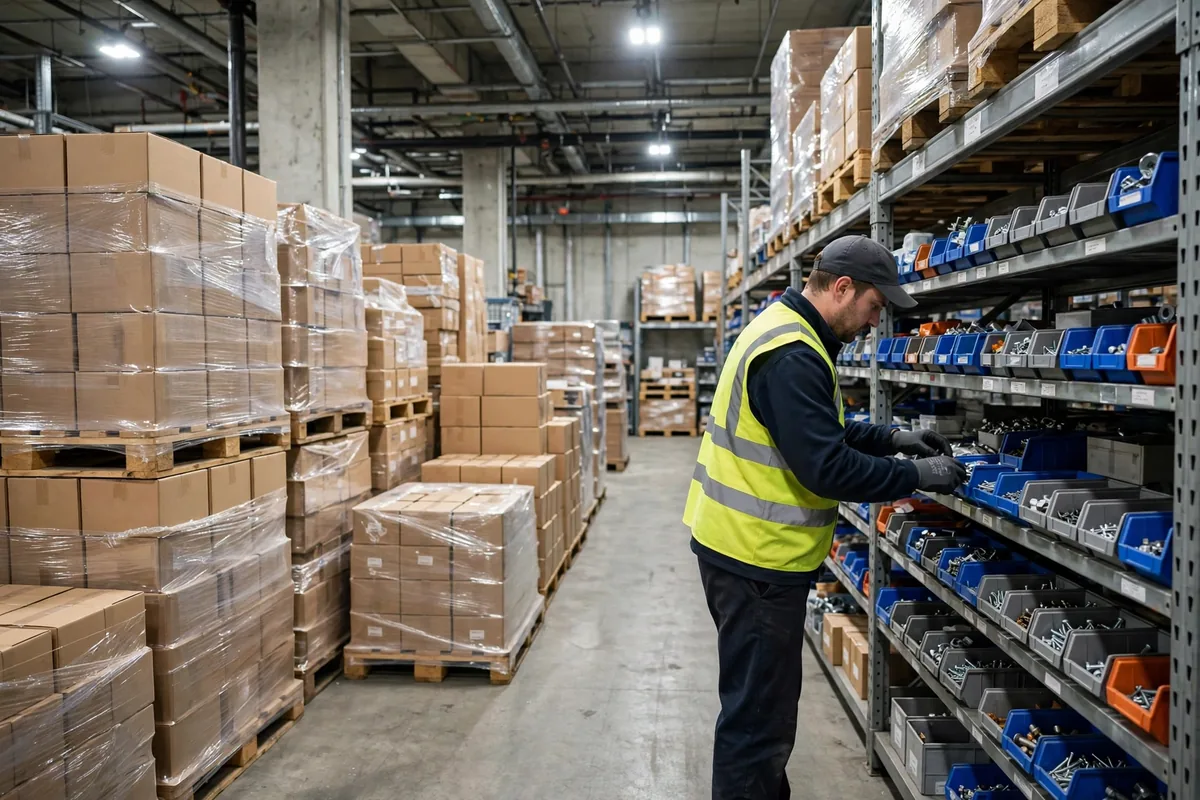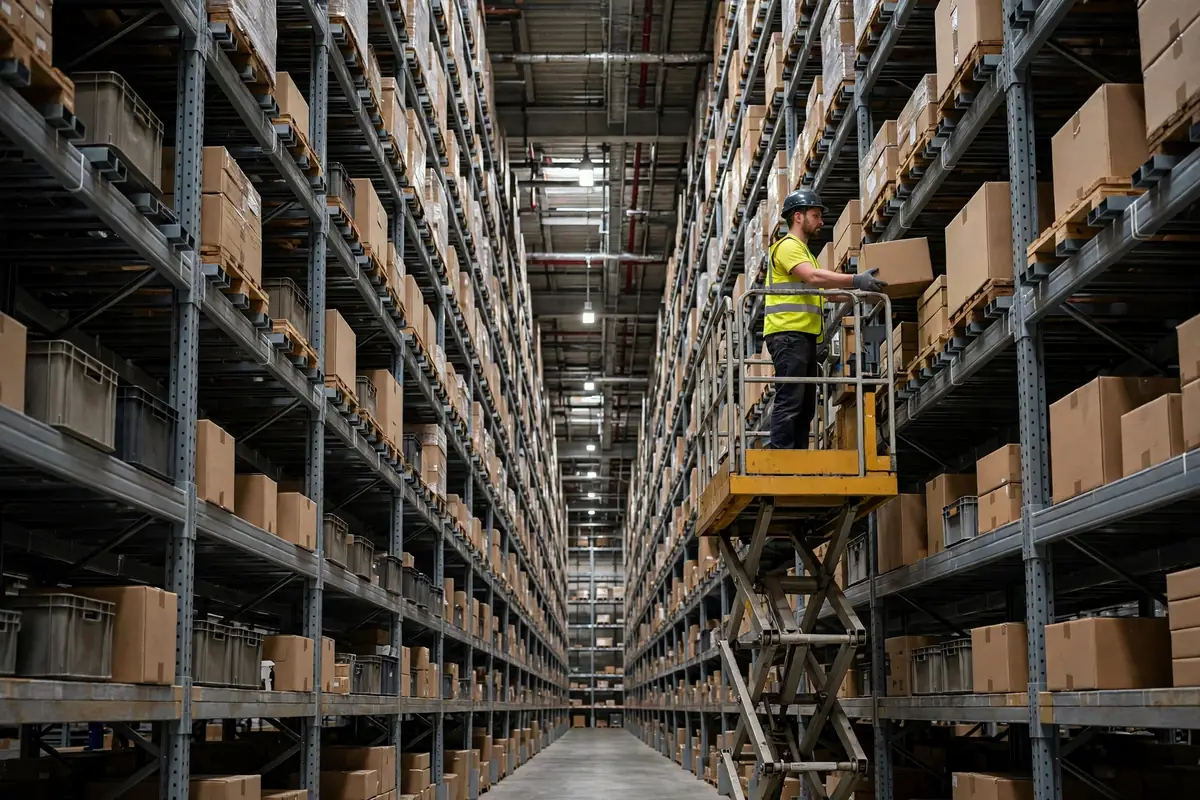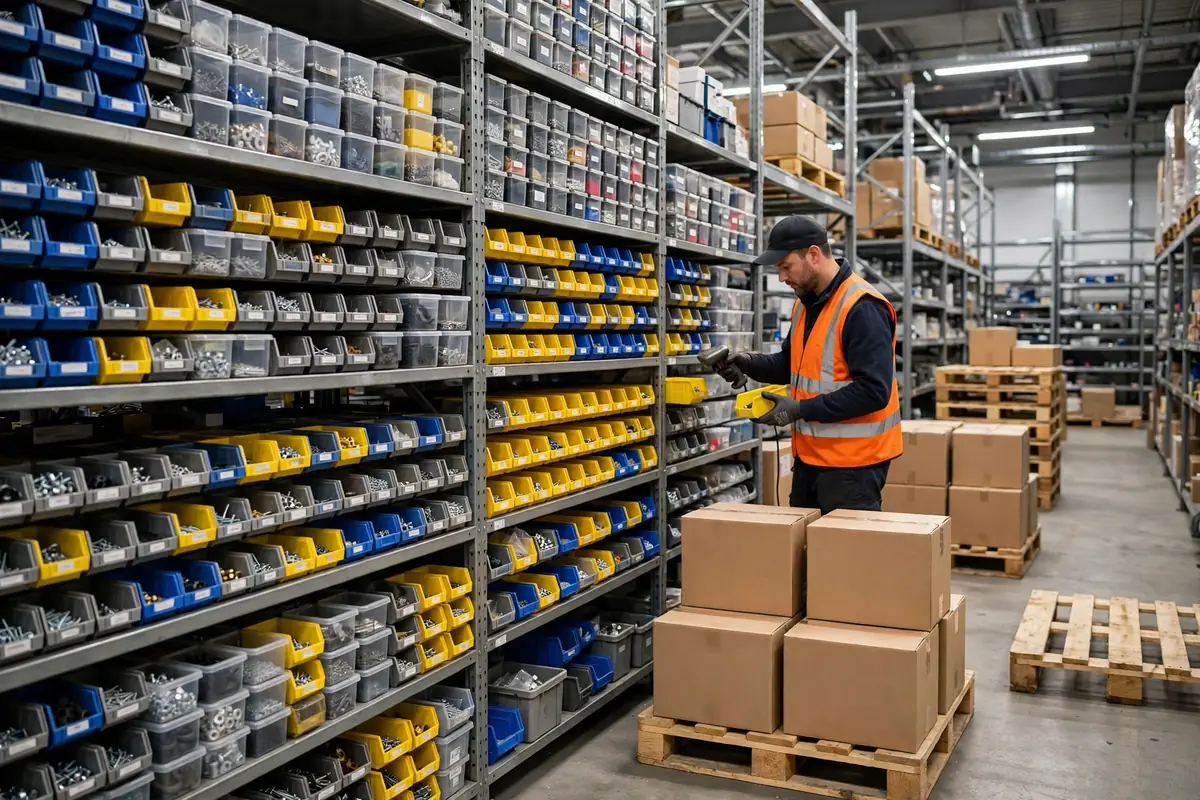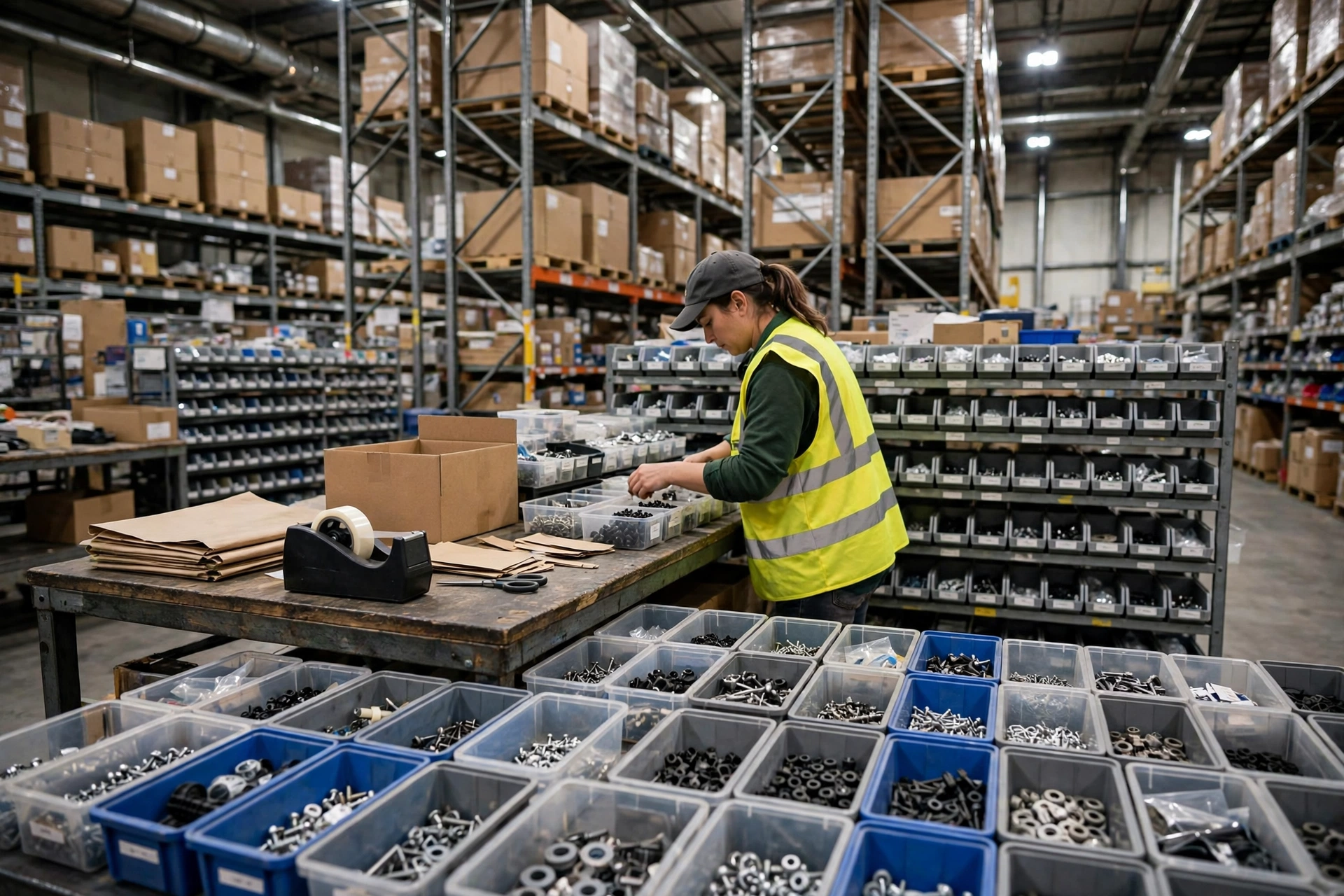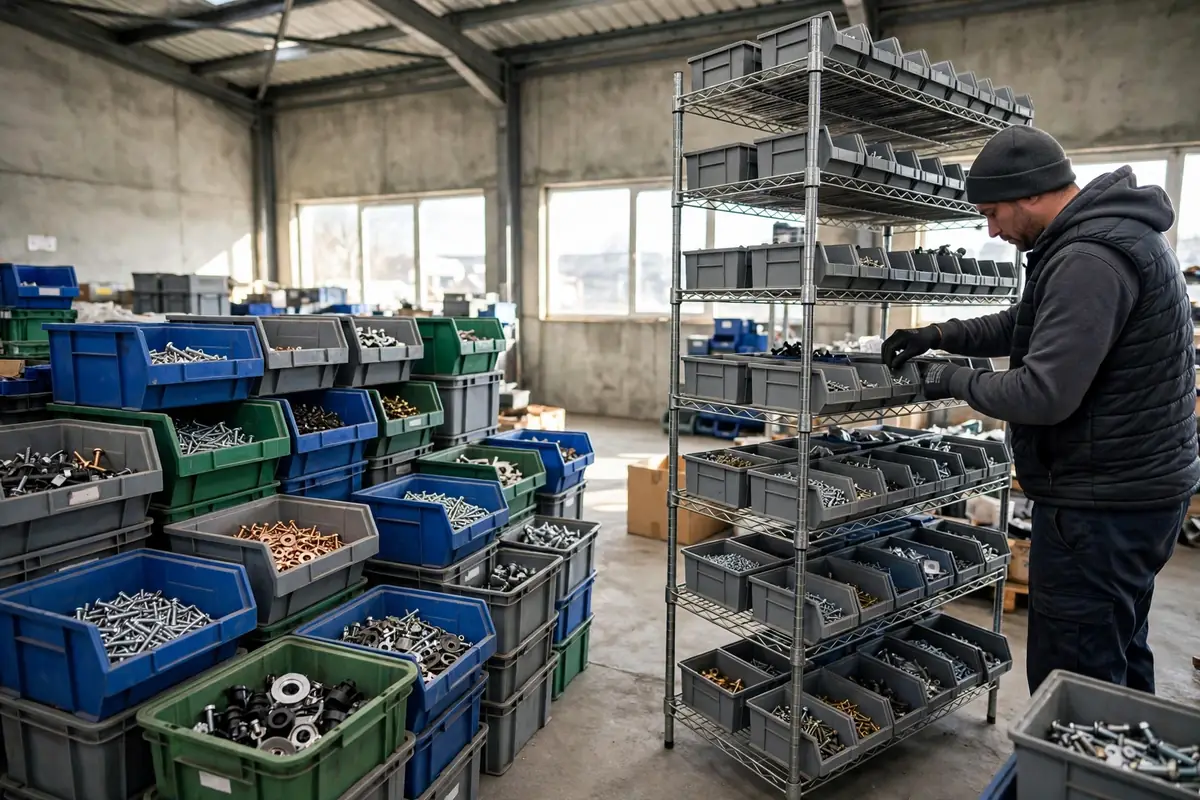
We small warehouses cannot afford to burn money like that. Let me put it plainly: when my little 3,000-square-meter warehouse first opened, everything was floor-stacked. Small parts went straight onto the floor, a forklift pushed them into place, done. It cost nothing. No racking to buy, no installation, no fuss. Three months later I wanted to grab my past self by the collar and have a word. Floor storage was not evil. I just jumped in without doing the math, and the bill came after me every single day.
Here is what happened. In the spring of 2025 we took on a client selling small home-appliance parts, thousands of SKUs, all tiny stuff: screws, clips, remote controls, power cords, box after box rolling in. Floor stacking looked like it held a lot. The floor was packed solid. Then the problems started. To find one old-model remote, you had to move five boxes off the top. The box at the bottom had been squashed for two months, the carton caved in, and the client's face went green during inspection. My picker complained that he moved boxes a hundred times a day and his back was about to give out.
Floor Storage Hides Three Costs
The first hidden cost of floor storage is space. It looks cheap, but it is the hungriest option of all. You can only stack three or four layers high before you worry about crushing things or the whole pile tipping over, so the upper half of the room just sits there doing nothing. Our warehouse is six meters tall. Floor stacking used two meters of it. The other four meters were just watching. Later I measured it myself: along the same wall, floor stacking held about 40 cartons. Racking held more than 70. That was not a guess from a brochure. We counted it ourselves.
The second cost is labor. Floor storage means finding things by digging. Racking means finding things by looking. Digging takes five minutes a box, moving things up and down. Do that twenty times a day and you have lost a hundred minutes. With racking, the location is labeled, you walk up, reach out, and grab it in half a minute. We only have four people. If one person loses a hundred minutes a day, that adds up to several wasted workdays a month. I did not count that at first. Then the payroll came in and it hit me: every dollar I saved on racking, I paid back out as wages.
The third cost is the worst one: crushed goods and lost goods. Small parts hate being squashed. The bottom carton caves in, so you repack it and relabel it, handling the same item twice. Stock counts get even worse. When the floor is a maze of piles, you cannot count properly. Once we came up short by more than 200 units in a count. Three of us spent a whole day digging, and in the end we found two cartons buried at the very bottom. The system said they were there. Our eyes said they were not. That night I sat outside the warehouse eating a bread roll, thinking this was less like running a warehouse and more like opening mystery boxes.
Racking Is Not Magic Either, So Count These Three Costs First
Do not get me wrong. I just spent a long time trashing floor storage, but racking is not something you buy with your eyes closed. The big-company playbook does not work for us. They buy automated high-bay systems and shuttle cars. We cannot afford that, and we do not need it. Racking costs money to buy and install, and the aisles between racks eat floor space too. Wide aisles mean less room for goods. So floor storage vs racking is not a simple either-or question. Count these three costs first:
| The cost | Floor storage (hypothetical scenario) | Racking (hypothetical scenario) |
|---|---|---|
| Space | About 40 cartons in the same area, height wasted | About 70 cartons in the same area, uses vertical space |
| Labor | About 5 minutes to find one item, by digging | About half a minute to find one item, by location label |
| Damage and errors | Crushing, lost items, count errors | Big upfront cost, aisles take floor space |
Every number here is a hypothetical scenario for illustration, estimated from our own small warehouse measurements, not industry statistics. Use the table as a frame and fill in your own numbers.
After counting all three, my conclusion might surprise you: for a small warehouse, the cheapest answer is usually not one or the other. It is a mix. Fast-moving small parts go on racking, because picking is fast and finding is fast. Slow, big, heavy goods stay on the floor, saving racking money. Seasonal bestsellers can sit on the floor temporarily during peak season and move back afterward. That is what we do now: high-frequency small parts on racking, low-frequency big items on the floor, and one wide main aisle so forklifts and people stay out of each other's way.
Here is another scrappy trick that fits small warehouses: do not buy all the racking at once. Start with the two rows you need most urgently. Move the hardest-to-find, most-dug-up small parts onto them, see the difference, then add more later. That is exactly what we did. Our first two rows cost under 20,000 yuan, and picking time dropped by a third right away. That money was well spent, because it was not a one-time cost. It saves labor every single day.
How We Finally Settled the Floor Storage vs Racking Question
Here is the rule in our warehouse now. When goods arrive, we check turnover first. Anything that moves at least once a week goes on racking. Anything that moves less than once a month stays on the floor. Small parts get location labels at eye level, not down by your ankles, because bending over to find things is just punishing yourself. Floor-stacked goods go no higher than three layers. Anything above three layers goes on racking, and if it gets crushed, that is on me. Those three rules are posted by the door, and every new hire learns them on day one.
Looking back, the hard part of floor storage vs racking was never picking a side. It was doing the math before making the call. I picked floor stacking on a gut feeling because it looked cheap, and then labor, crushing, and count errors were all waiting for me down the road. Big companies can afford to make mistakes. We small warehouses cannot afford to burn money like that. One wrong call and half a year of work goes down the drain.
So my advice to other small warehouses is one sentence: take your twenty most painful small parts and run the numbers, all three costs, space, labor, and damage, before you decide. If the math says floor storage wins, use floor storage proudly. If it says racking wins, buy two rows and try them out. Do not copy someone else just because they say one is better. Their warehouse is not your warehouse. Different goods, different people, different math.
Small warehouses have their own way of surviving. And the way is this: spend money where it matters, and where it matters is the pair of hands doing the picking, and the few minutes it takes to find things.
By Xiao Ma, Small Warehouse Owner