Start with the principle. Small-item storage comes down to one question: is your freight waiting for a forklift, or waiting for a human hand? Floor storage fits the first case. Racking fits the second. Most people ask me which one is better, and the question itself is wrong — the standard is not the equipment, it is your order profile.
Here is a bad example first. Last year an auto-parts warehouse came to us: 800 square meters of small-item area, more than 3,000 SKUs, all on medium-duty racking. It looked professional. The problem was that 80 percent of their orders were small-batch, multi-line — 20 lines per order, one or two pieces per line. Pickers pushed carts up and down the rack aisles all day, racked up plenty of steps, and shipped very little. Worse, the upper rack levels were full of slow movers sitting still, while fast movers on the lower levels kept running out of space. The racking was not wrong. Treating every SKU as the same kind of freight was wrong.
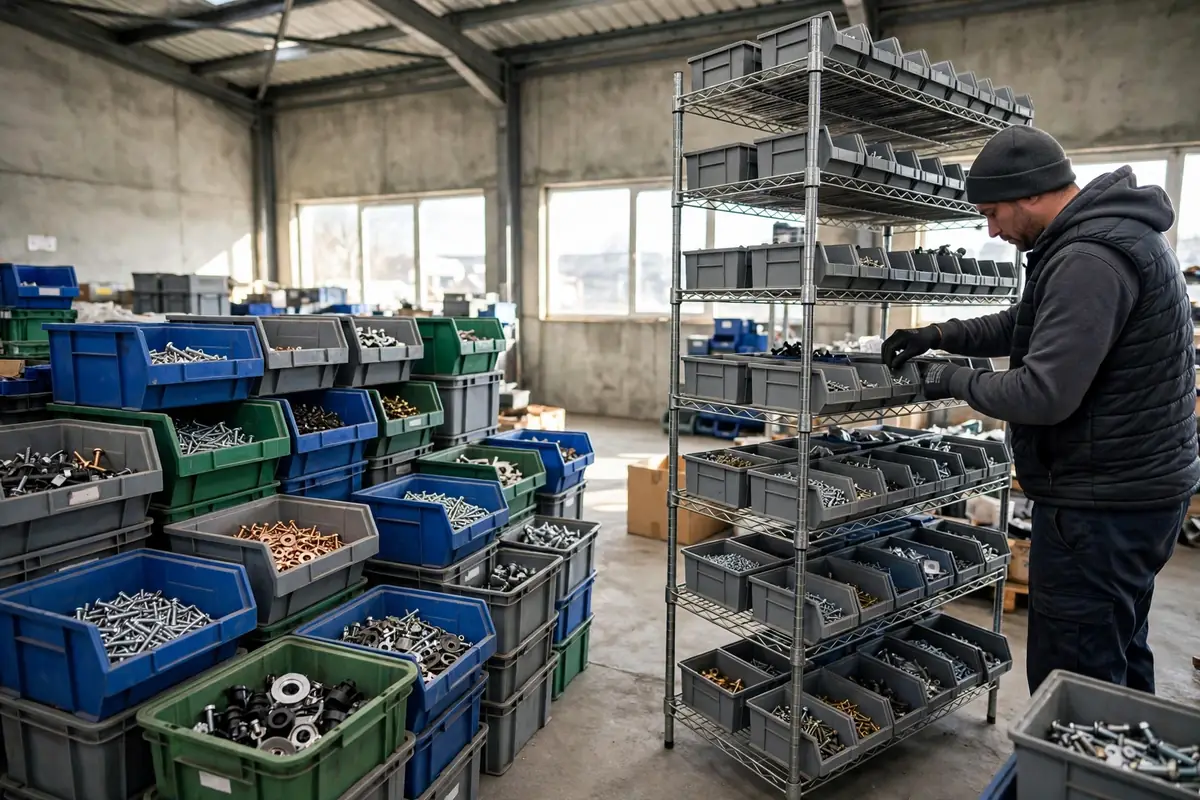
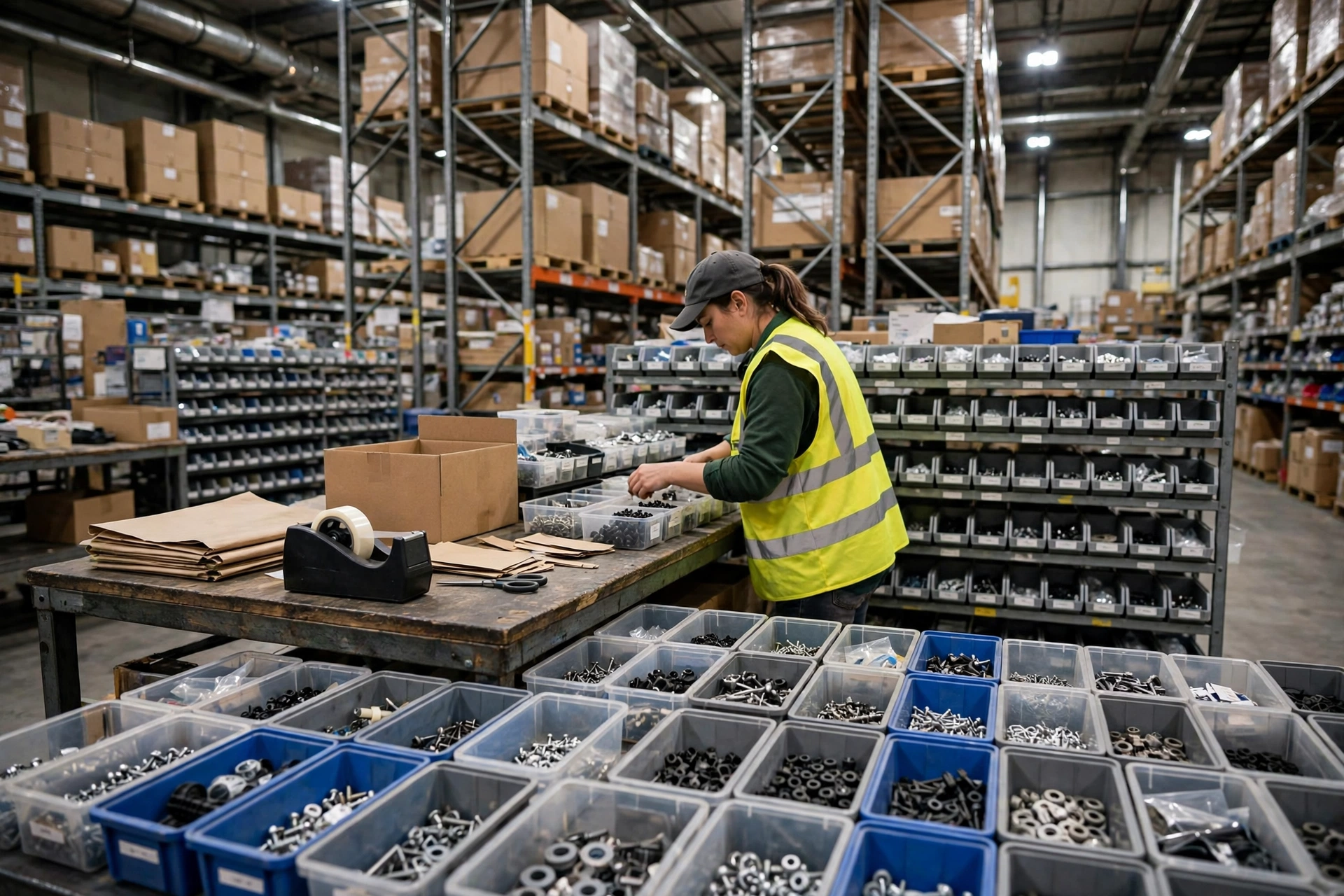
Now the good example. Around the same time, a household-goods warehouse kept just 200 square meters of floor storage for its 200 fastest-moving SKUs. Full pallets arrived and went straight onto the floor. Pickers stood beside the pallet and grabbed what they needed — about 120 order lines per hour. Everything slow-moving went onto racking, where it could sit untouched for three months without anyone caring. After the split, their picking throughput rose by nearly half compared with the all-racking layout.
Both stories say the same thing: floor storage vs racking is not a choice between two options. It is a division of labor.
Floor storage vs racking: what are you actually comparing?
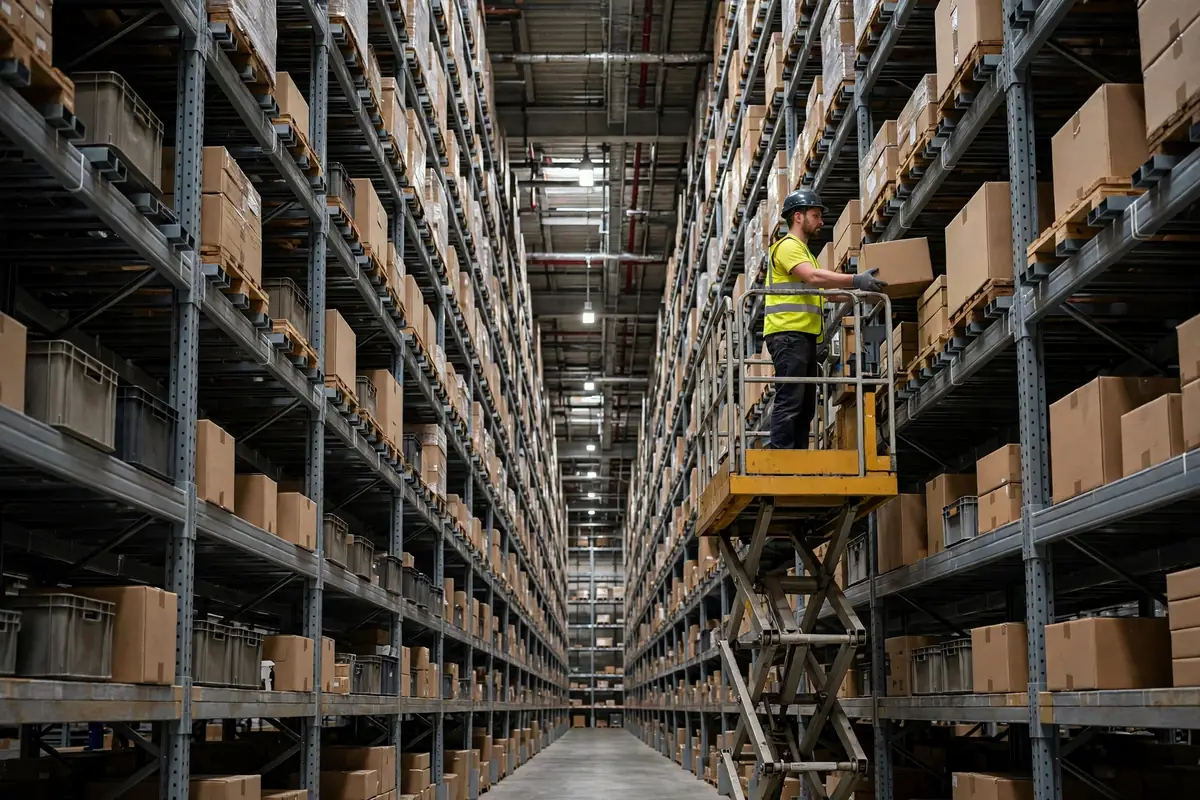
Think of the small-item area as a parking lot. Floor storage is street parking: fast in and out, almost free, but one space holds one vehicle and it turns chaotic when full. Racking is a multi-story car park: far more vehicles per square meter, but entry and exit queue up, need equipment, and need maintenance.
When you compare the numbers, do not compare unit price alone. Compare four things.
First, SKUs per square meter. One floor pallet position generally holds one SKU; one rack pallet position can be split into four to six storage locations. When SKU count is high, racking wins. Second, pick speed. Floor picking needs no bending and no climbing — the picker reaches out and takes it. High rack levels need an order picker truck, one level at a time, and that is inherently slower. Third, turnover. Fast movers turn over several times a day, and floor positions are easy to replenish. Slow movers sit for months, and racking can park them up high, away from the prime spots. Fourth, cost. Floor storage costs almost nothing. Racking means buying the steel, leaving aisles, and paying for regular inspection. Count all of it.
| Factor | Floor storage | Racking |
|---|---|---|
| Storage locations per sqm | Low, about 1 SKU per pallet position | High, 4-6 locations per pallet position |
| Pick speed | Fast, within arm's reach | Slow at height, needs lifting equipment |
| Best for | Fast movers, daily turnover | Slow movers, long-term storage |
| Investment | Almost zero | Racking, aisles, annual inspection |
| Management | Gets messy without marked zones | Needs location management and a system |
One dividing line: split your SKUs into two groups
My method is direct: run an ABC analysis first, then assign storage by class. Class A fast movers are usually about 20 percent of SKUs but generate 80 percent of pick lines — those go on the floor, closest to the packing area. Class B and C slow movers go onto racking, up high and farther away.
The dividing line has a hard threshold: if a SKU is picked more than 10 times a week, it earns a floor position. Below that, it belongs on a rack. That is not a guess; it comes from dividing pick lines by SKU.
Someone always asks: why not use floor storage for everything? Because it breaks down as SKU count grows. Pallets get stacked higher, finding stock depends on memory, and a new hire can spend three days looking for one item. I have seen a warehouse with 500 floor-stacked SKUs and no location codes at all — picking ran entirely on one veteran's memory, and the whole warehouse stopped when he took a day off. That is the ceiling of floor storage.
The reverse is another kind of false need. Slow movers belong on racking, obviously. But putting fast movers on racking too means asking people to climb for the items they pick most often — that is using equipment to make the process worse. A racking vendor will never tell you that. They will only tell you how much the rack can hold.
Flow racks vs shelf racks: choosing by the numbers
Once floor and rack are settled, there is one more layer of detail: what goes inside the rack. The two most common small-item formats are flow racks and shelf racks, and picking the wrong one slows you down just the same.
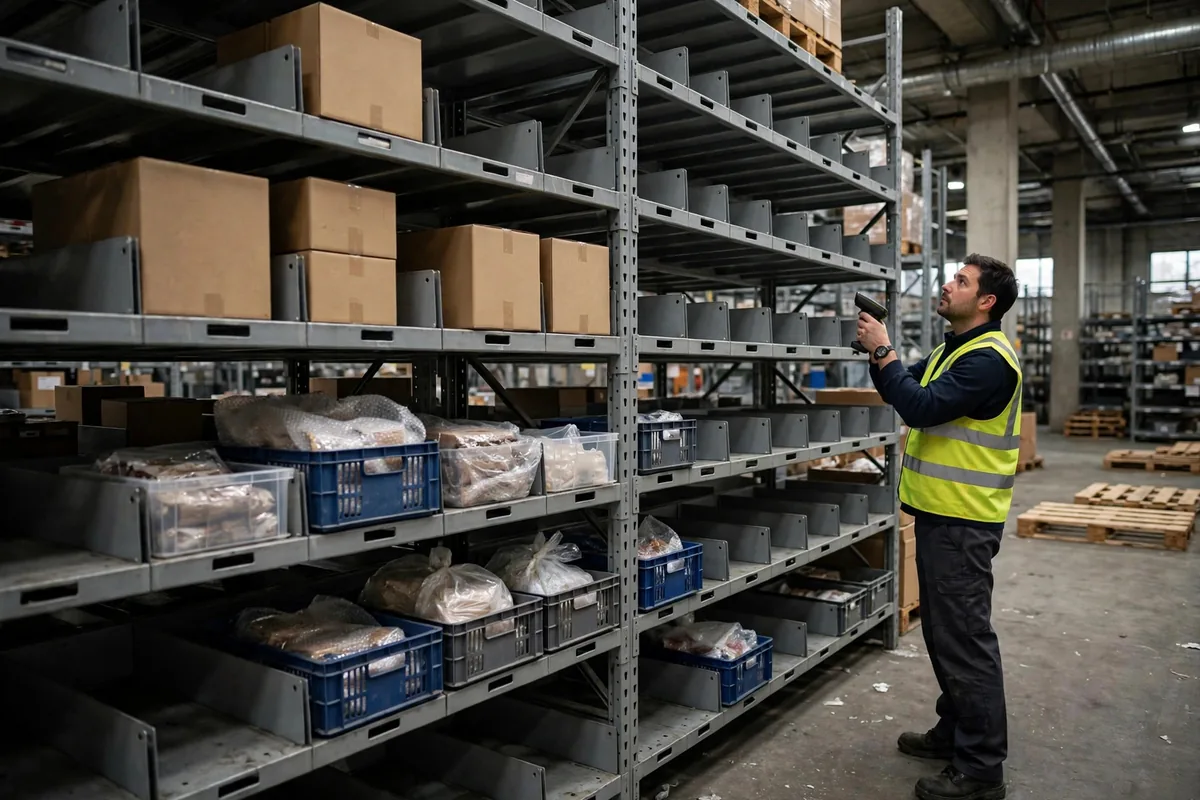
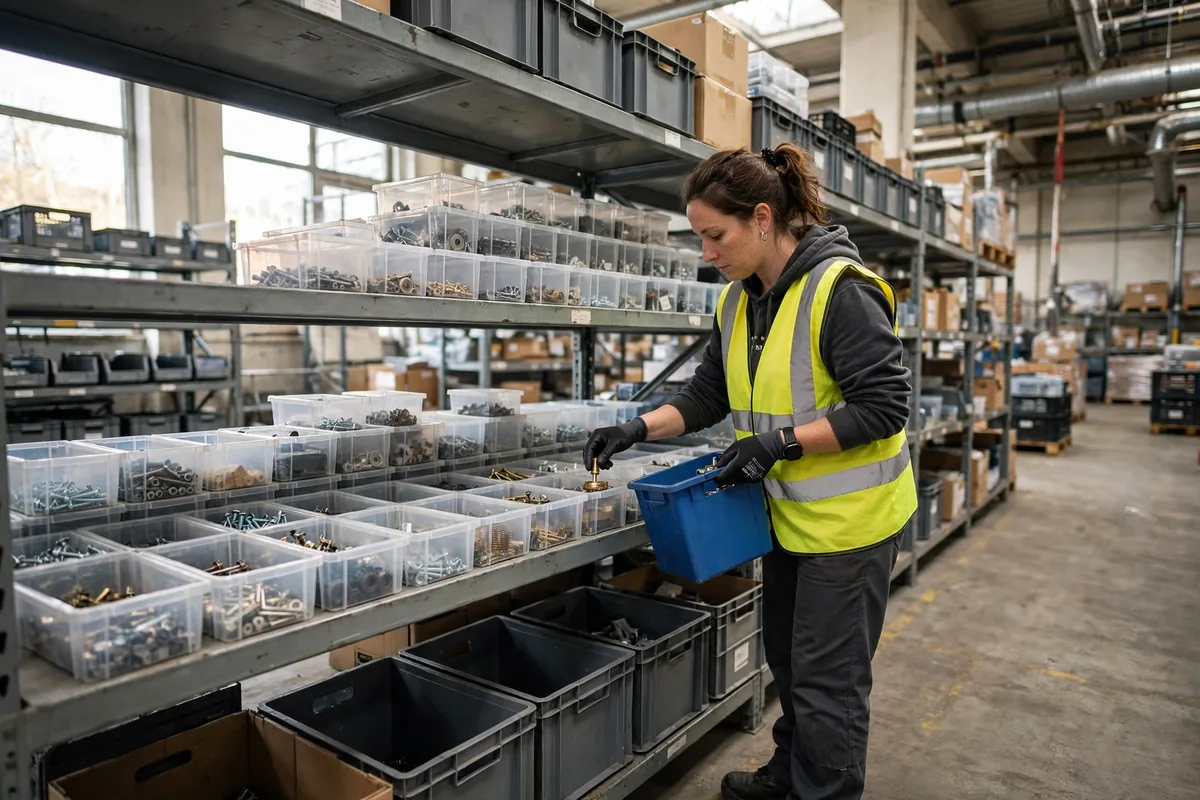
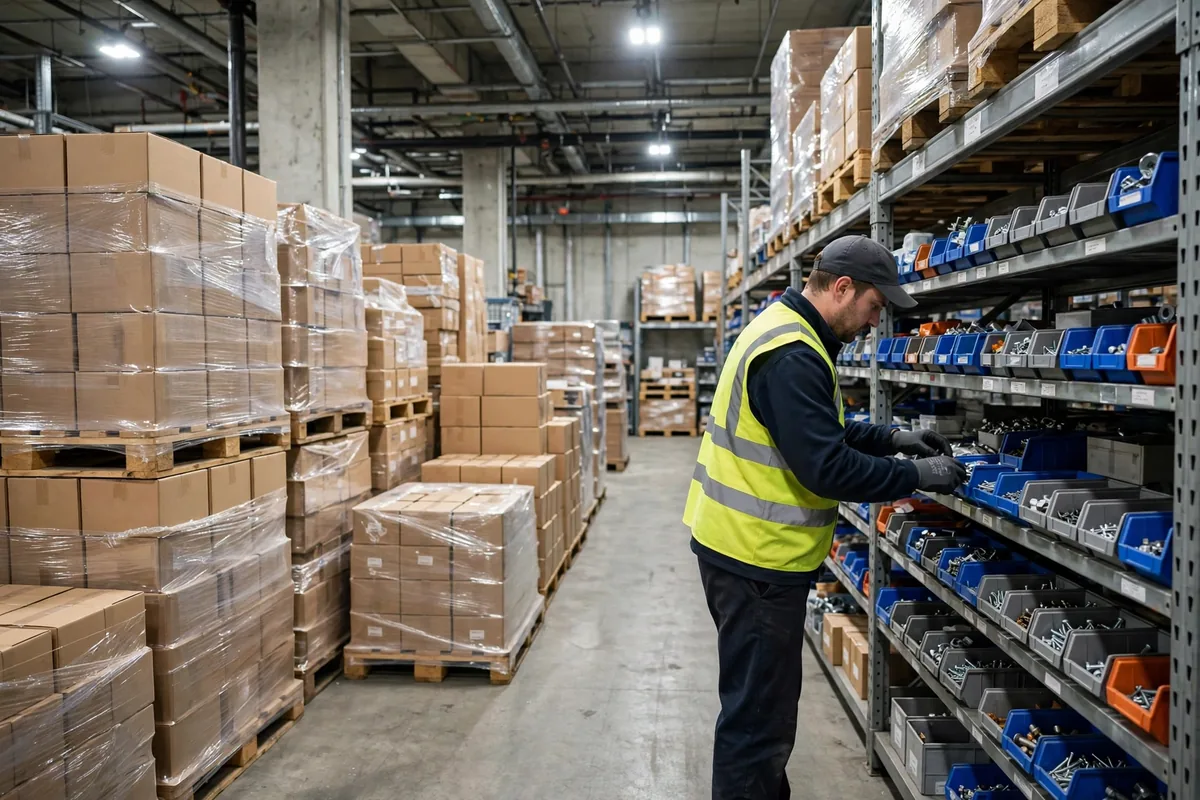
Think of it this way: a flow rack is a slide — stock goes in the back and rolls forward on its own, so the picker always takes the front unit without digging. A shelf rack is a bookshelf — stock sits still and the picker has to reach in and find it. Flow racks suit high-volume SKUs with fast batch rotation; shelf racks suit a wide range of low-volume SKUs you want to see at a glance.
Three numbers matter. Flow rack lanes usually run 1.2 to 1.5 meters deep — deeper than that and the back stock is out of reach. The shelf height has to leave room for a hand plus one unit; too low and you cannot reach in. Load capacity is typically around 100 kilograms per level; exceed it and the lanes deform. Shelf racks go the other way: levels can be packed tighter, fitting one or two extra levels in the same height, which pays off when SKU count is high.
I worked with an electronics-components warehouse holding 400 SKUs that started out all on shelf racks. Pickers complained they had to dig and stretch for everything, and wrists were sore by the end of the day. We switched the top 100 SKUs by volume to flow racks and left the other 300 on shelves. Pick speed rose by 30 percent. The equipment bill barely moved — the combination was right, so the result followed.
The maintenance trap: racking is not fit-and-forget
One last trap most people ignore: racking needs maintenance. Bent uprights, deformed beams, loose bolts — all of it needs regular inspection. On client inspections, the most common finding is a beam dented by a forklift strike that is still in service. Floor storage has no such problem; a broken pallet gets swapped.
So is the money worth it? Look at one number: your share of fast-moving SKUs. If class A is under a fifth of your range, racking-led with floor support is the right call. If your orders are mostly small-batch, multi-line, and fast movers dominate, push the floor share up. Run the data first, then choose the layout — never the other way around.
By Da Liu, Automation Engineer