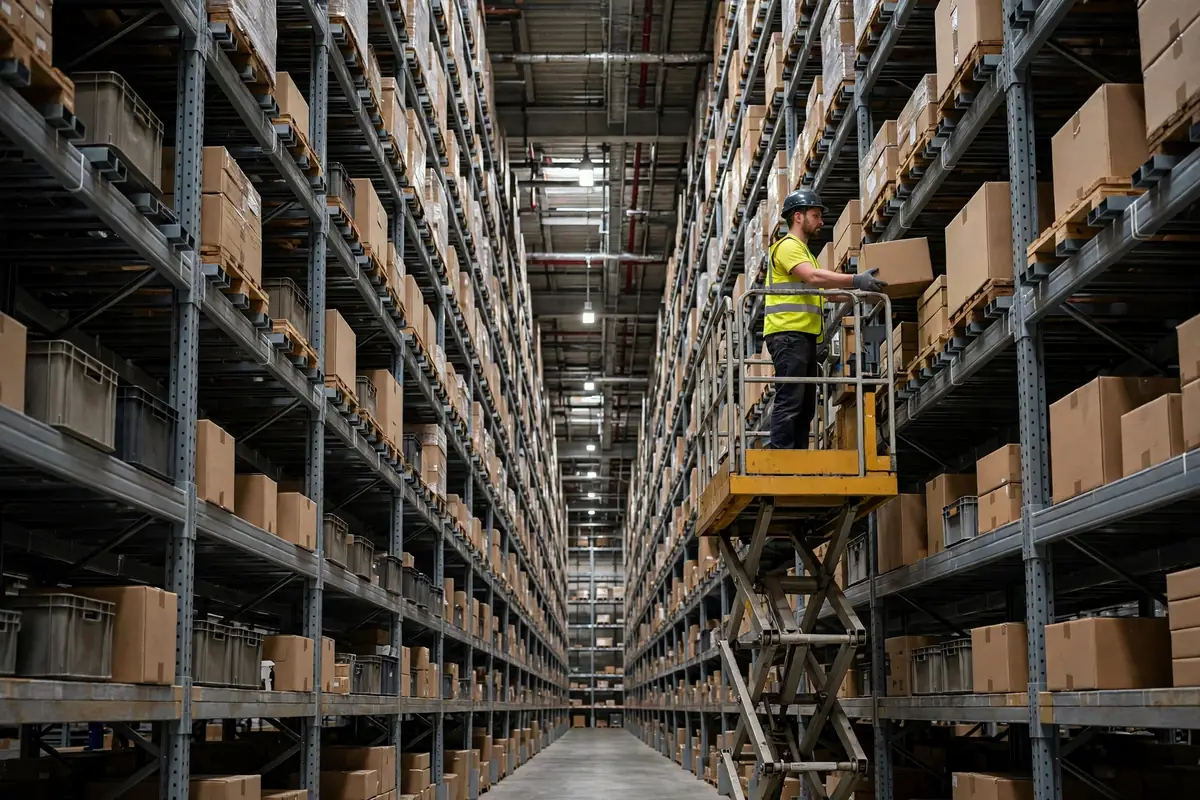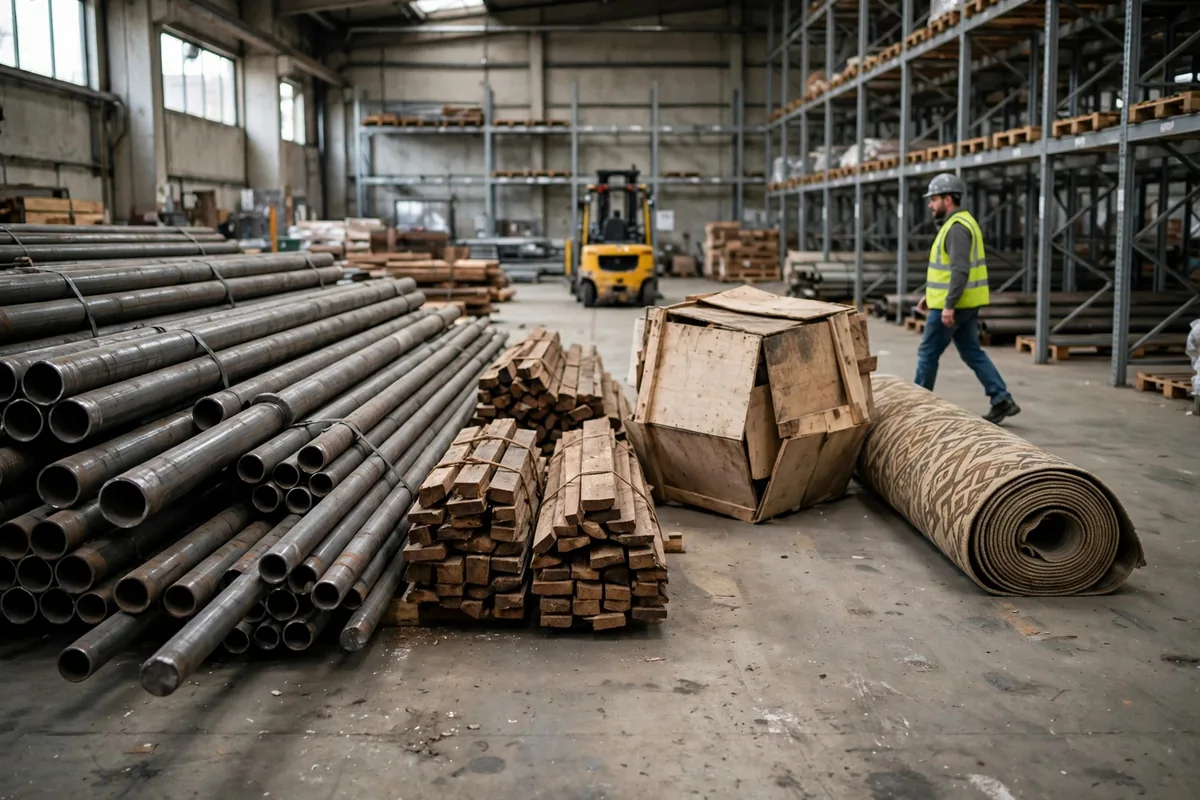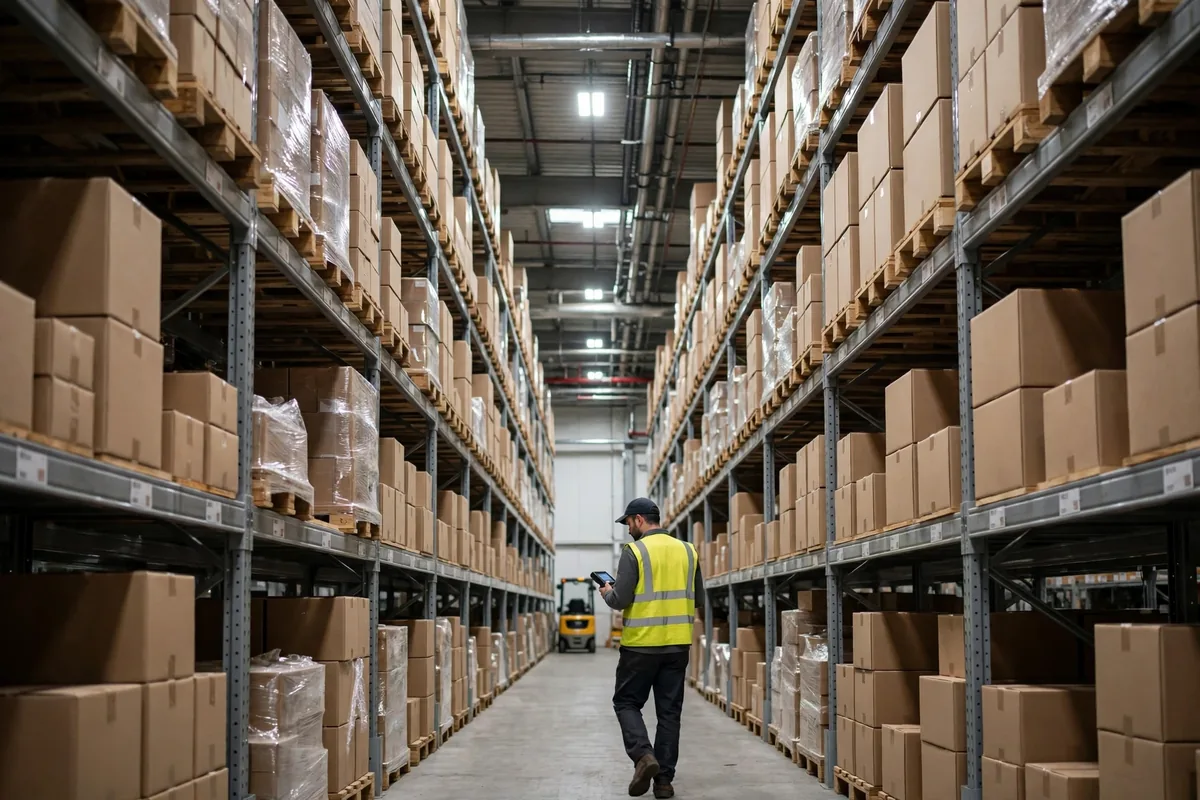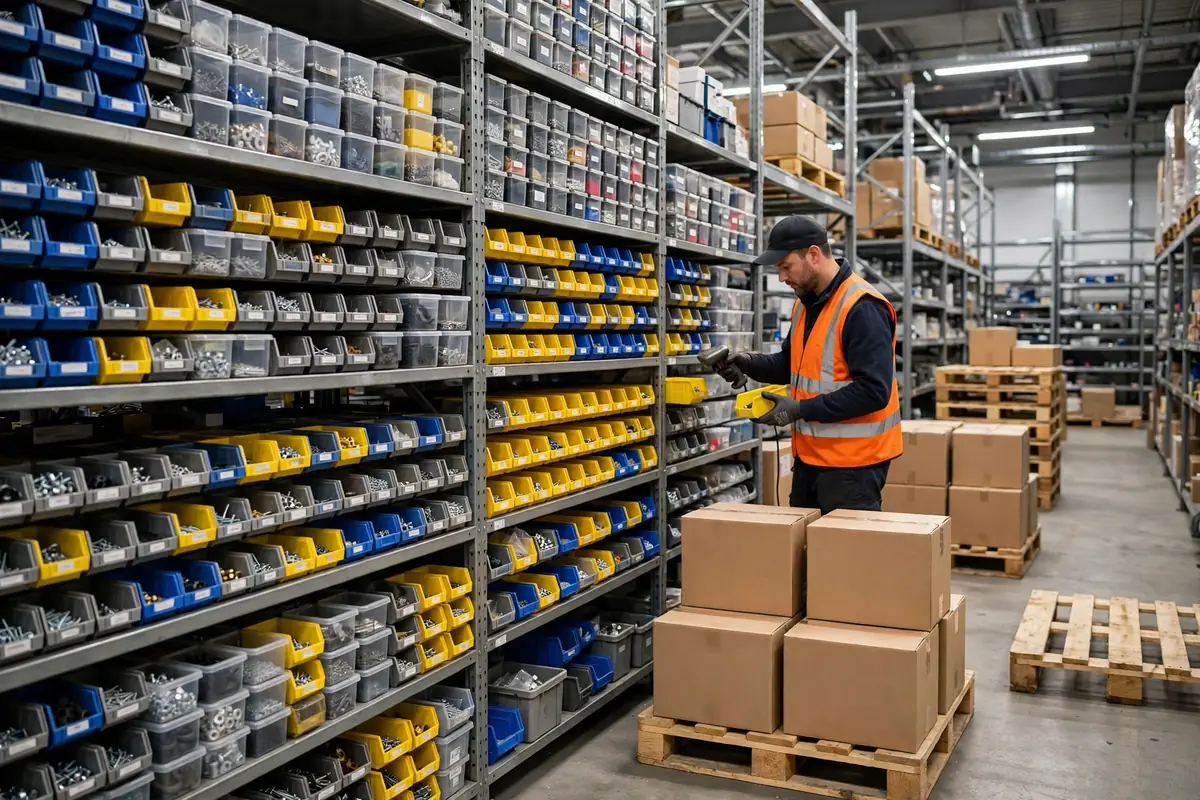
To be honest, the floor stack vs racking decision is the one that quietly sets your small-parts picking cost — and the hardest thing in a small-parts area is not a stockout. It is finding the stock.
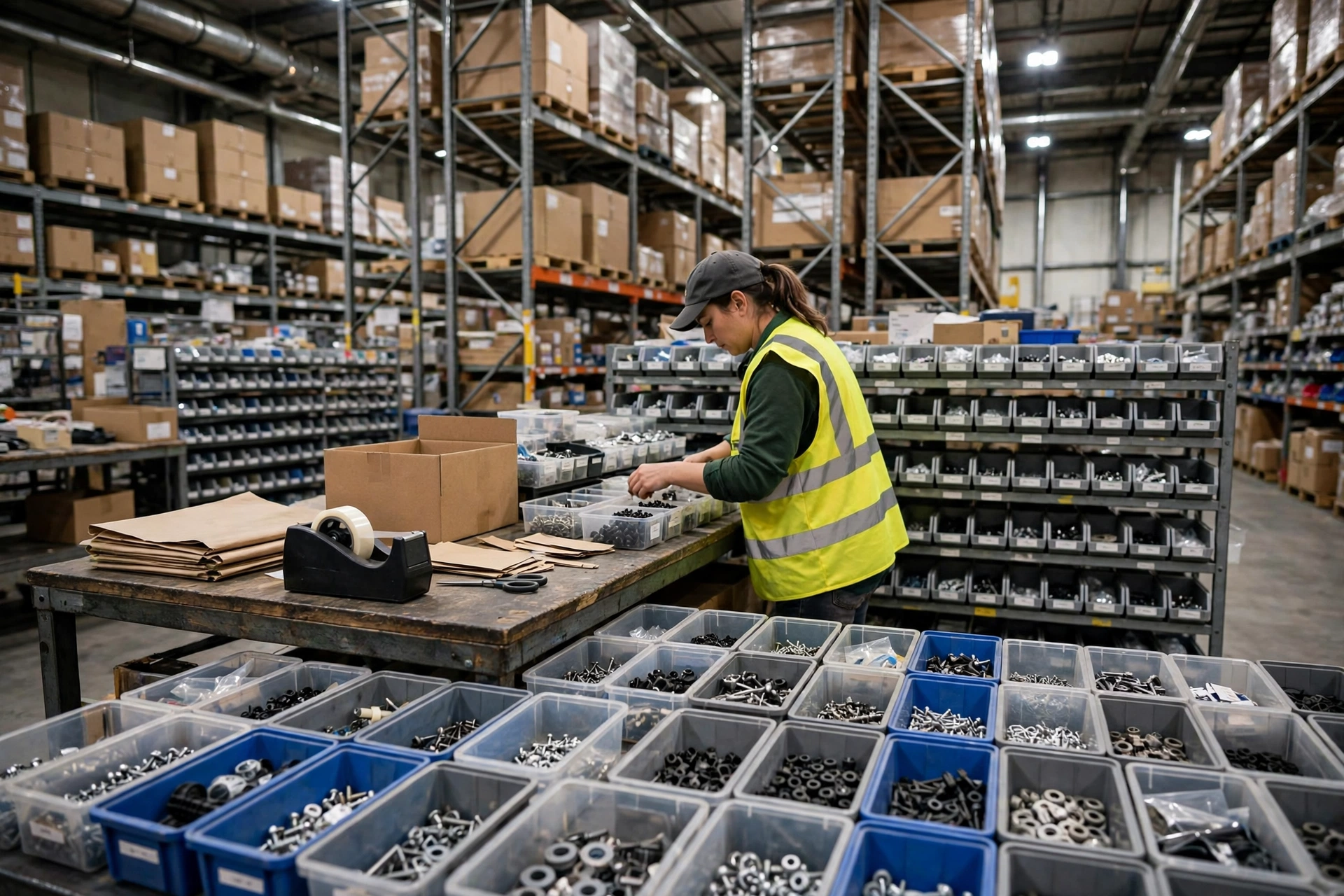
Before last year's peak season I took over an e-commerce warehouse in Dongguan, China. The small-parts area was about 800 square meters and everything sat in floor stacks. Every morning, pickers started their shift by moving boxes — the box they needed was always at the bottom. Once daily orders climbed, pickers spent more time searching than picking. One veteran told me: "Boss, half the walking I do every day is wasted." I remembered that. Over the next two months we converted half the area to racking. Picking speed went up, and crushed-packaging complaints disappeared. But I will be straight with you: the half we left as floor stack still has its reasons. Floor stack vs racking has no standard answer. Only a fit answer.
What Floor Stacking Is Actually Good For
Floor storage has two real advantages: cheap and fast. No racking to buy, no installation wait — freight arrives, it goes on the floor, work starts. When volumes swing, floor storage flexes with them: more freight takes more floor, less freight frees it up. For fast-moving, bulky, crush-proof goods, floor storage has nothing wrong with it.
But the cost of floor storage is not the cost you see on day one. Stack three layers high and the bottom cartons suffer. Before peak season in Dongguan, our count turned up two full pallets of crushed and deformed packaging. And there is the finding problem: floor storage has no fixed locations, so everything depends on the picker's memory. Veterans remember. New hires stare. Temporary peak-season workers spend their first three days asking for directions.
In October 2024 I visited a small-commodities warehouse in Yiwu, Zhejiang. The whole small-parts area was all floor storage, and a picker walked more than 40 meters per order on average — not because the warehouse was big, but because the stacks were a maze. The manager said: "It is not that I don't want racking. I am afraid volumes will change and the racking will sit empty." Fair point. But the full math told a different story: what his warehouse paid every month in extra searching time would have covered a good part of a racking set.
Floor Stack vs Racking, Side by Side
The table below is a worked example for a 500-square-meter small-parts area with around 3,000 SKUs. The numbers come from what we actually measured in our warehouse — treat them as reference values, not industry standards, and plug in your own numbers before deciding.
| Factor | Floor storage | Racking (light-duty shelving) |
|---|---|---|
| Space utilization | 2–3 layers on the floor, about 55–65% | 4–5 levels, about 75–85% |
| Walking distance per order | About 35–45 meters | About 15–25 meters |
| Searching share of pick time | About 30–40% | About 10–15% |
| Damage (crushing / wrong picks) | High, worse at peak | Low, fixed locations with scan verification |
| Upfront investment | Almost zero | A few hundred yuan per sqm, depending on levels and load |
| Flexibility | High, flexes with volume | Low, fixed positions, layout changes need dismantling |
| Best fit | Bulky, crush-proof, very fast-moving | Small parts, many SKUs, fragile, needs FIFO |
The row that matters most is the searching share. When pickers spend more than 30% of pick time searching, that is the real cost of floor storage — not the price of racking, but the labor you pay every single day. That said, racking is not a cure-all either: with fewer than 500 SKUs and volumes that swing hard, empty shelves hurt to look at.
Here is a rule you can use tomorrow: more than 1,000 SKUs, light single pieces, crush-sensitive, needs first-in-first-out — if three of the four apply, go racking. Few SKUs, bulky items, turnover so fast the stock leaves before the shelf warms up — stay with floor storage. Stuck in between, do what Dongguan did: split it. Fast movers on racking, slow movers and bulky items on the floor.
And don't try to convert everything at once. In Dongguan we piloted a single zone first: the 200 fastest-moving SKUs went on racking, and after three weeks the pickers in that zone were telling the other zones how easy it was to find things. The other zones asked to be converted next. A pilot keeps the investment small, and if the direction is wrong, undoing it is cheap. The worst move is racking the whole warehouse in one go and discovering the layout doesn't work — once it's bolted down, changing it hurts.
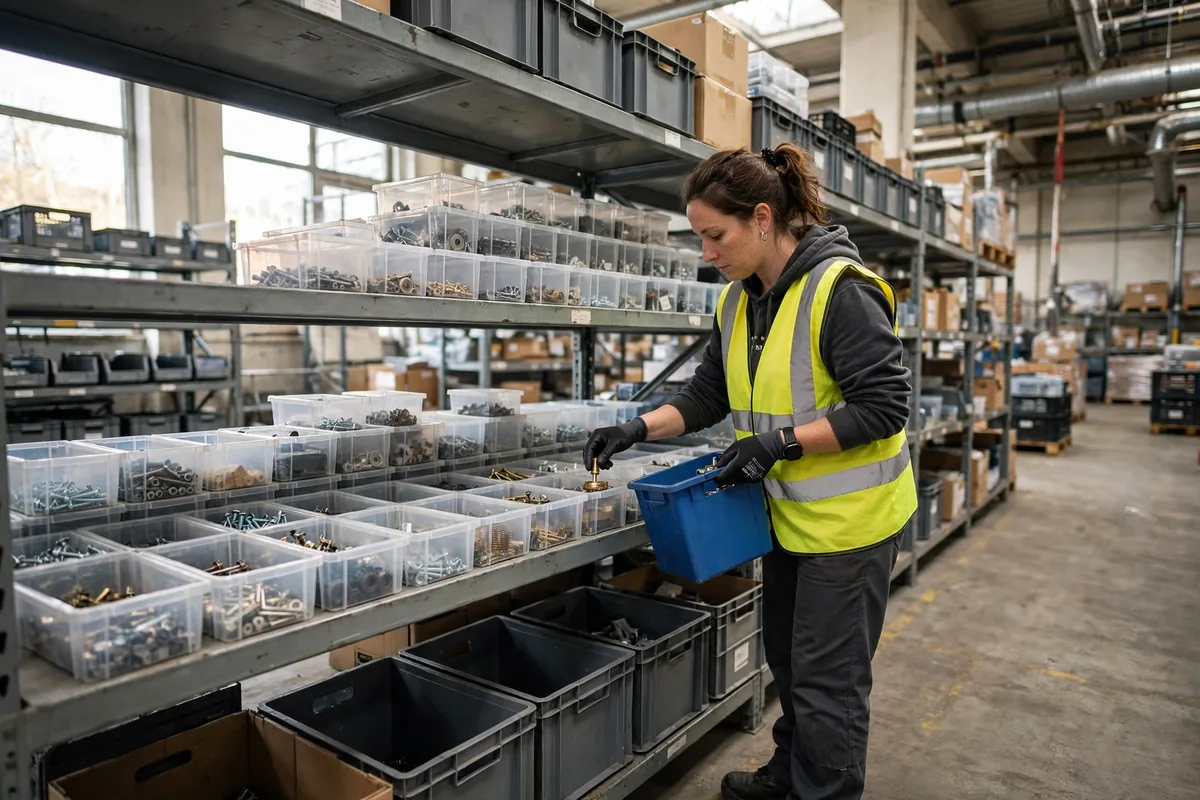
The racking itself deserves some thought too. Light-duty shelving typically carries a few dozen to just over a hundred kilograms per level — size it by your heaviest carton, not the average, because averages lie. Leave headroom above each layer so cartons don't jam against the shelf above; when a picker has to shove a box in, sooner or later one falls out. And keep the location code simple: zone, row, level, position — four segments is enough. The shorter the code, the better the pickers remember it.
How We Run It Now
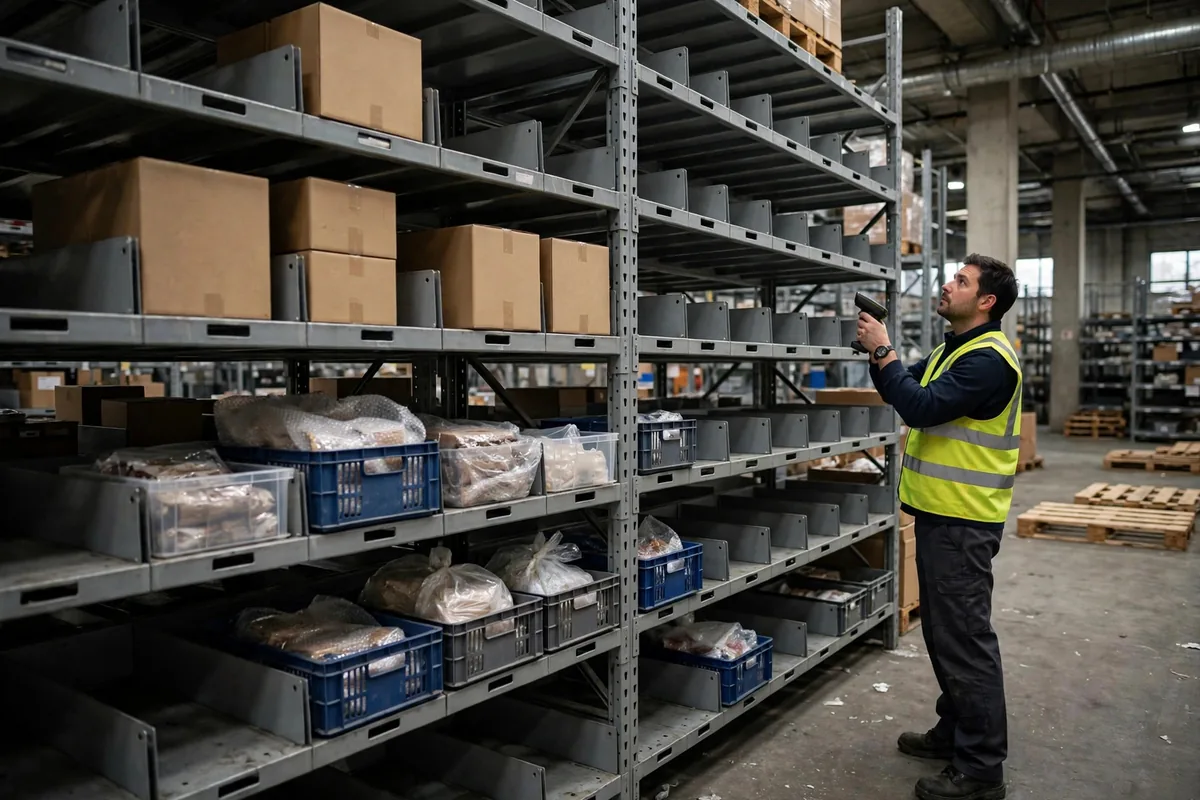
In Dongguan the small-parts area is split like this today: the top 30% of SKUs by velocity sit on racking, every location labeled, pickers scan to verify, and wrong picks have basically disappeared. The rest — slow movers and bulky items — stay in floor storage, but floor storage now has rules: never more than two layers high, forklift and walking aisles kept clear between stacks, and every stack tagged with its SKU and quantity. Before peak season we added one more rule: the last 15 minutes of every shift go to tidying the floor-stack area, moving tomorrow's outbound stock within easy reach.
I will not bore you with a pile of metrics. Here is the one that matters: a temporary worker can now pick independently on day one. Before, new hires spent three days asking for directions. Fixed locations turned memory into rules, and once the work no longer depends on who remembers what, the warehouse holds steady.
One reminder for fellow operators: do not take the racking vendor's word for it, and do not leave everything on the floor just to save trouble. Pull one month of your own picking data and work out three numbers: what share of pick time goes to searching, how much crushing costs you in a year, and how many days a temp worker needs before working alone. Once those three numbers are on the table, the answer gives itself. Choosing wrong is forgivable. Choosing wrong and never reviewing it for three years is not.
By Chen Feng, Warehouse Operations Manager