Let me start with the math, because that is what a failed first AI pilot project in a warehouse really costs. Say a mid-size operation puts $120,000 into its first pilot — software licenses, integration work, and the internal team's time. Four months later the project quietly dies. The $120,000 is gone, sure. But the real bill comes due later: for the next year, management flinches every time someone says "AI," IT gets branded as the team that burns money, and operations concludes AI "doesn't work here." The next proposal will take several times the effort to get approved.
So for your first pilot, which scenario you pick matters far more than which technology you pick. Below are six candidate scenarios, each with the numbers laid out: what it costs, how fast it pays back, and where the risk sits.
The Cost of Picking Wrong: A $150,000 Lesson
In the fall of 2024, a 3PL in the American Midwest — roughly 60,000 square feet, about 12,000 orders a day — made its move. The owner had just come back from an industry summit, full of AI keynotes, and green-lit "AI dynamic wave optimization" as the company's first pilot. It sounded cutting-edge. The slides looked great.
The problem was the data. Nearly a third of the site's order history was missing, and the SKU master data carried three different codes for the same product. The model was fed dirty data, and the wave plans it produced were worse than what the floor supervisor came up with off the top of his head. Five months in, accuracy never got there, and the project was quietly shelved. A $150,000-scale investment bought exactly one sentence: "AI isn't for us."
That money was wasted. Wasted because the company's first pilot was bet on the scenario with the highest data requirements.
Your First AI Pilot Project in a Warehouse: Six Candidates Compared
| Scenario | Investment scale | Payback period | Risk | Data requirements | Visibility |
|---|---|---|---|---|---|
| Visual check at pack-out | $30k–$80k | 3–6 months | Low | Low: a few thousand product photos gets you started | High: fewer mispicks, visible to everyone |
| AI labor scheduling | $20k–$50k | 3–6 months | Low | Medium: historical order volumes and labor hours | High: labor cost is a number everyone understands |
| Inbound document OCR | $10k–$30k | 2–4 months | Low | Low: document formats are fairly fixed | Medium: saves clerical time |
| Inventory anomaly detection | $20k–$60k | 4–8 months | Medium | Medium-high: continuous inventory movement records | Medium: prevents losses you can't see yet |
| Demand forecasting | $50k–$150k | 6–12 months | High | High: 2+ years of clean sales history | High, but slow to show |
| Voice picking | $40k–$100k | 6–9 months | Medium | Low: integrates with your existing WMS | High: picking speed gains are obvious |
(Figures are order-of-magnitude estimates based on publicly known projects of this type in recent years; get real quotes from vendors.)
Here's the logic behind the table. Visual inspection money goes mostly to cameras and the WMS interface; the payback comes from "fewer mispicks" — and any finance person can price one mispick's customer service, reshipping, and return handling in their sleep. AI scheduling money goes to software subscriptions and cleaning historical data; the payback comes from labor, the single biggest cost line in any warehouse — shaving 5% off it is real money. Document OCR is the cheapest with the thinnest return, but it is also the hardest one to kill: document formats barely change, so the AI has few ways to be wrong.
Demand forecasting is the mirror image: the biggest investment, the longest payback, the highest risk. It bets on "my historical data is clean enough" — and dirty data is usually one of the reasons you wanted AI in the first place.
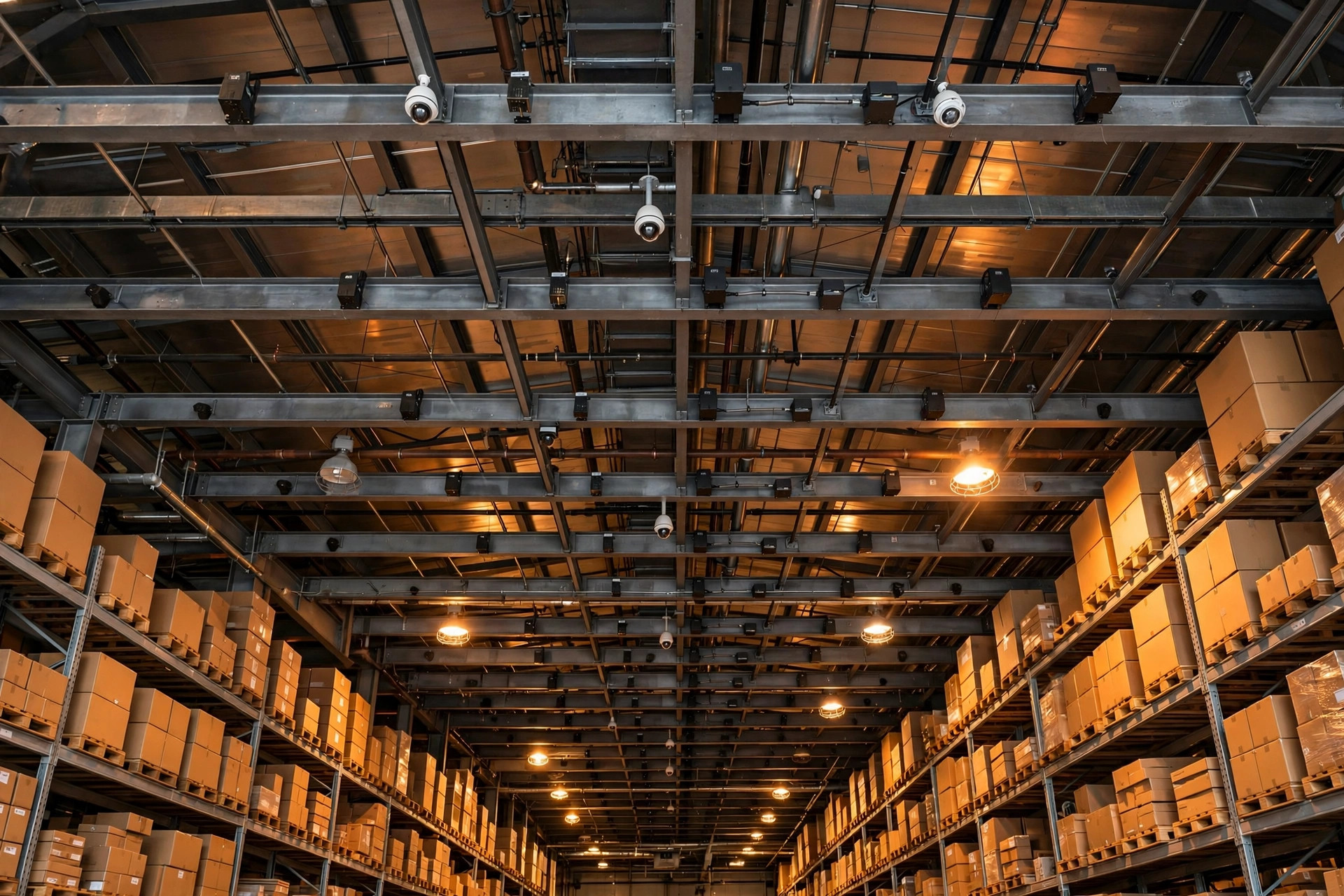
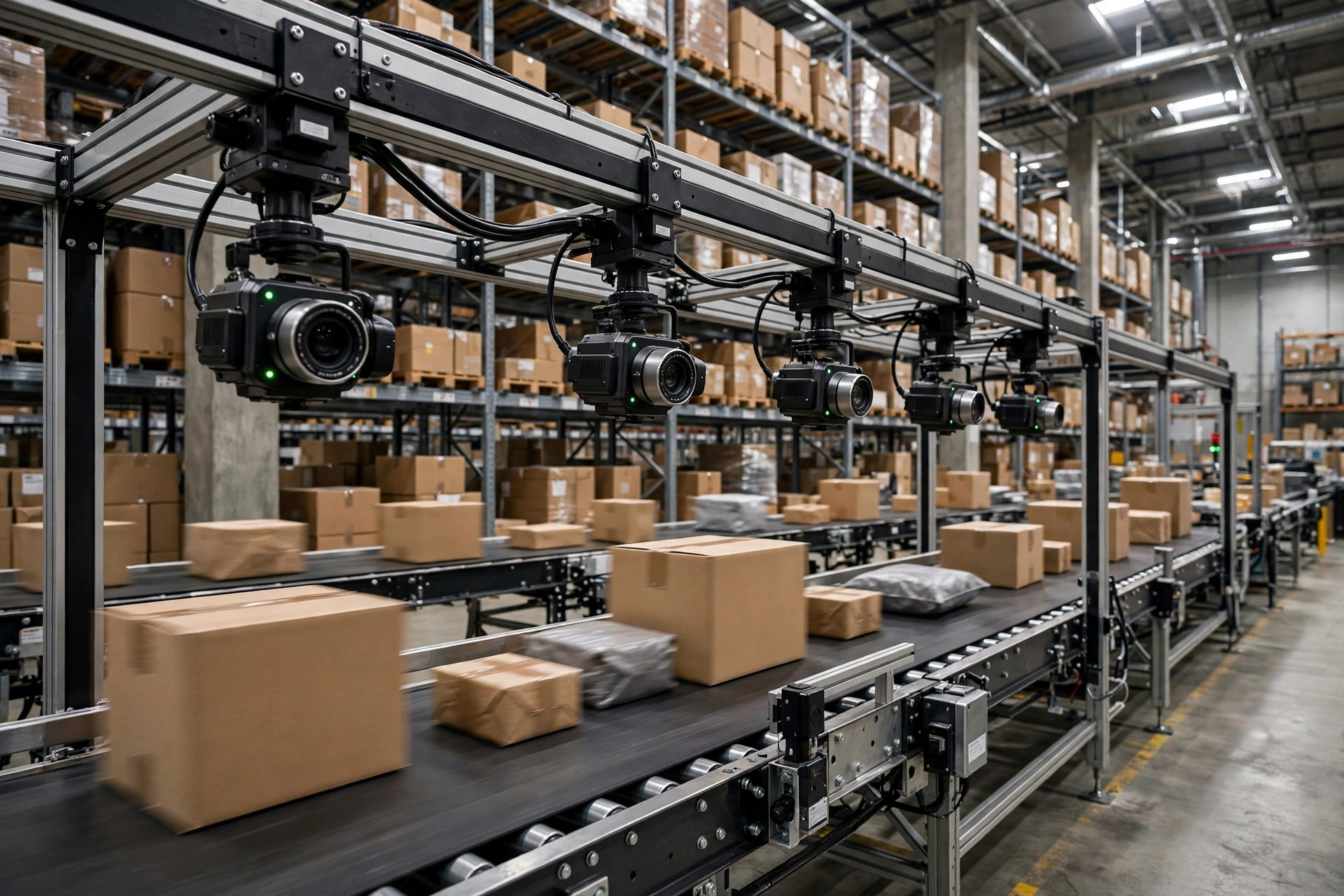
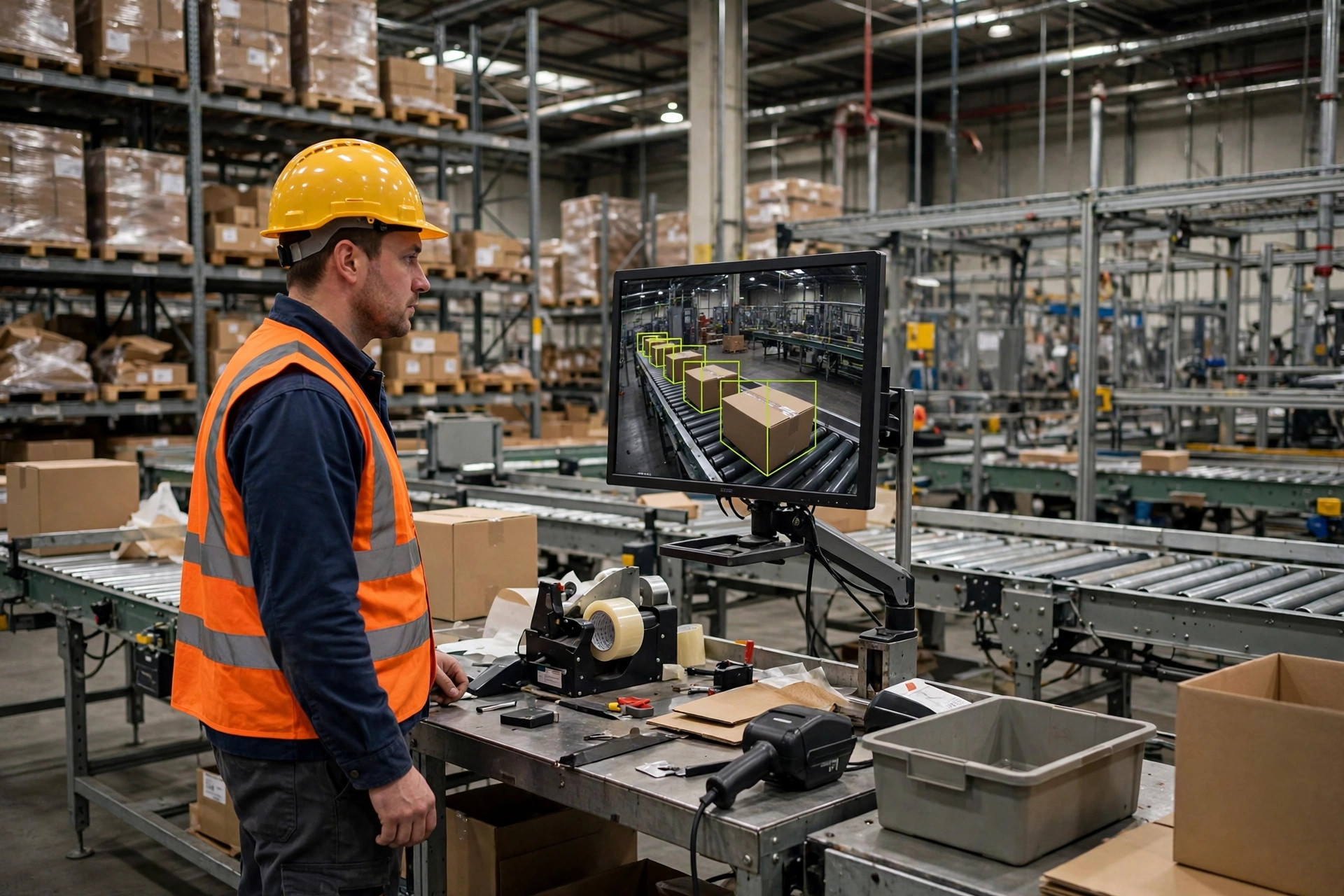
Now the counter-example — a pilot that worked. In early 2025, an e-commerce warehouse in California, about 9,000 orders a day, chose visual check at pack-out for its first pilot: cameras above the packing stations, automatically comparing the physical item against the order, alarming on mismatch.
Investment: roughly $50,000 for camera hardware, vision software licenses, and the WMS interface. Payback: returns-inspection headcount went from 6 people to 2, mispick-driven complaints fell by roughly 40%, and the project paid for itself in 5 months.
Why did it work? Three reasons. First, minimal data requirements — take photos, no history needed. Second, a painful problem — mispicks burned money every single day and everyone knew it. Third, cheap failure — if it hadn't worked, the cameras could simply be unbolted and reused. A first pilot should be exactly this: affordable to lose, unambiguous when it wins.
A Scoring Framework for Your First AI Pilot Project in a Warehouse
Six scenarios reviewed — so how do you choose? Here is a scoring sheet you can use directly, with just two dimensions:
Data readiness (1–5): 1 means data lives in people's heads and spreadsheets; 3 means systems capture it but with missing fields and gaps; 5 means complete, clean data ready to feed a model.
Pain intensity (1–5): 1 means "nice to have"; 3 means "it hurts now"; 5 means "this problem burns money every month and the whole company knows it."
Multiply the two scores. Below 6: don't start the pilot — spend a few months cleaning your data first. 6–12: try it in small steps. Above 12: worth pushing.
Run the two cases above through it. The 3PL's dynamic wave optimization: data readiness 2, pain intensity 4, product 8 — a "small steps" candidate, but they launched it as a $150,000 full-scale pilot. Too big a stride. The California warehouse's visual check: data readiness 4, pain intensity 5, product 20 — the kind you can approve with your eyes closed.
The Contrarian Take: Don't Pick the Smartest Scenario — Pick the Most Boring One
Most companies' first AI pilots die the same way: they pick the "smartest" scenario in the building — prediction, optimization, decision support. It sounds the most like AI, and it is exactly what you should not touch first.
Because the "smarter" the scenario, the higher its data-quality demands. And poor data quality is one of the reasons you wanted AI to begin with. It's a catch-22: you want AI to fix your data problems, but AI demands you fix your data problems first.
That money was wasted: $150,000 on demand forecasting when $30,000 on document OCR would have delivered. The first bets on "my data is clean enough" — an assumption. The second bets on "we really do process that many documents" — a fact.
What the boss wants isn't a trophy for "most advanced AI." It's evidence that "AI actually works." Boring scenarios happen to produce evidence the fastest.
One thing to take away: score the 2–3 scenarios you're considering on the two dimensions above and multiply. Anything under 6 — clean your data first; the pilot can wait.
Your first AI pilot project in a warehouse has exactly one job: prove, with the least money possible, that AI saves real money in your building. Once that's proven, go as ambitious as you want on pilot number two.
By Lao Zhou, Logistics Cost Analyst