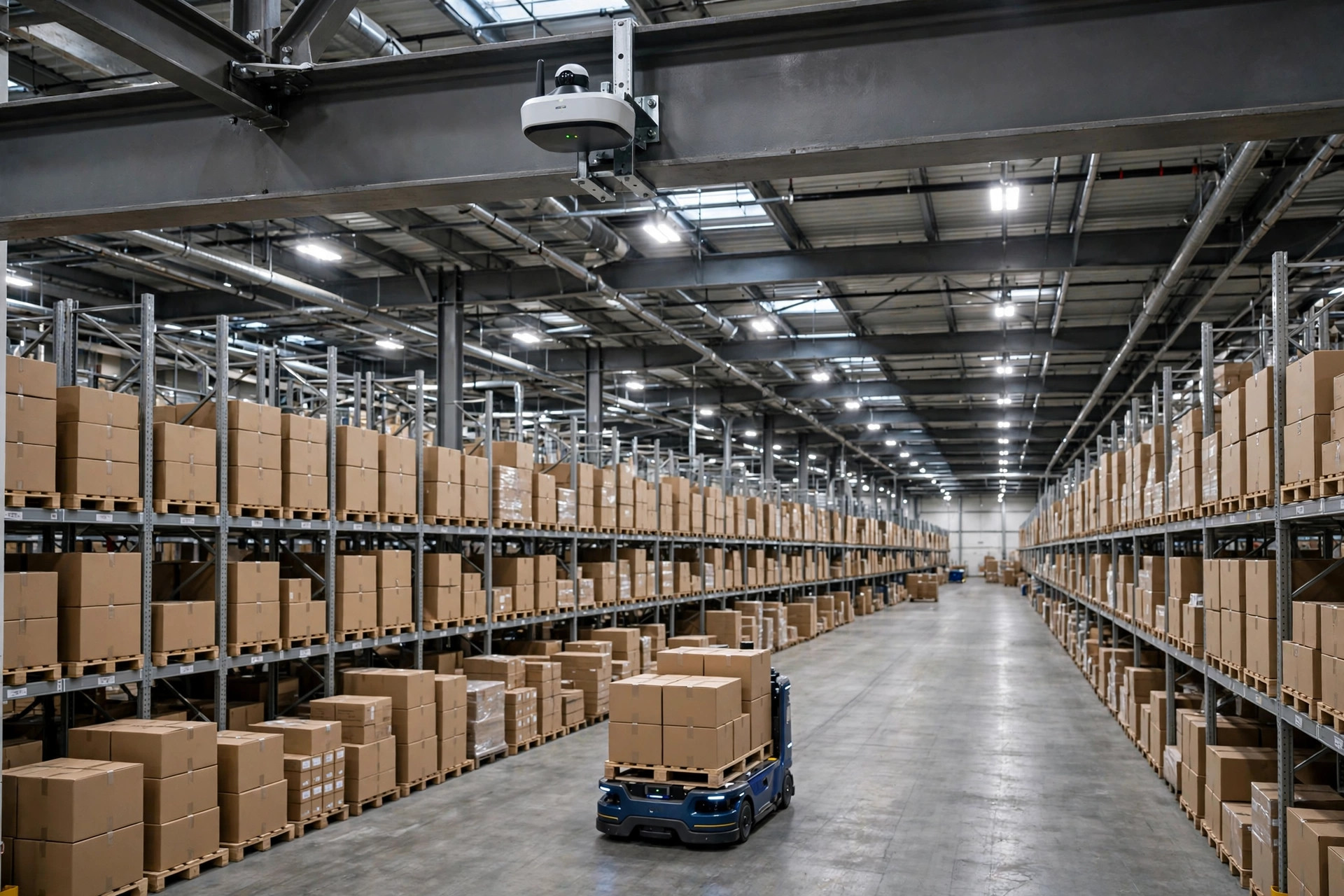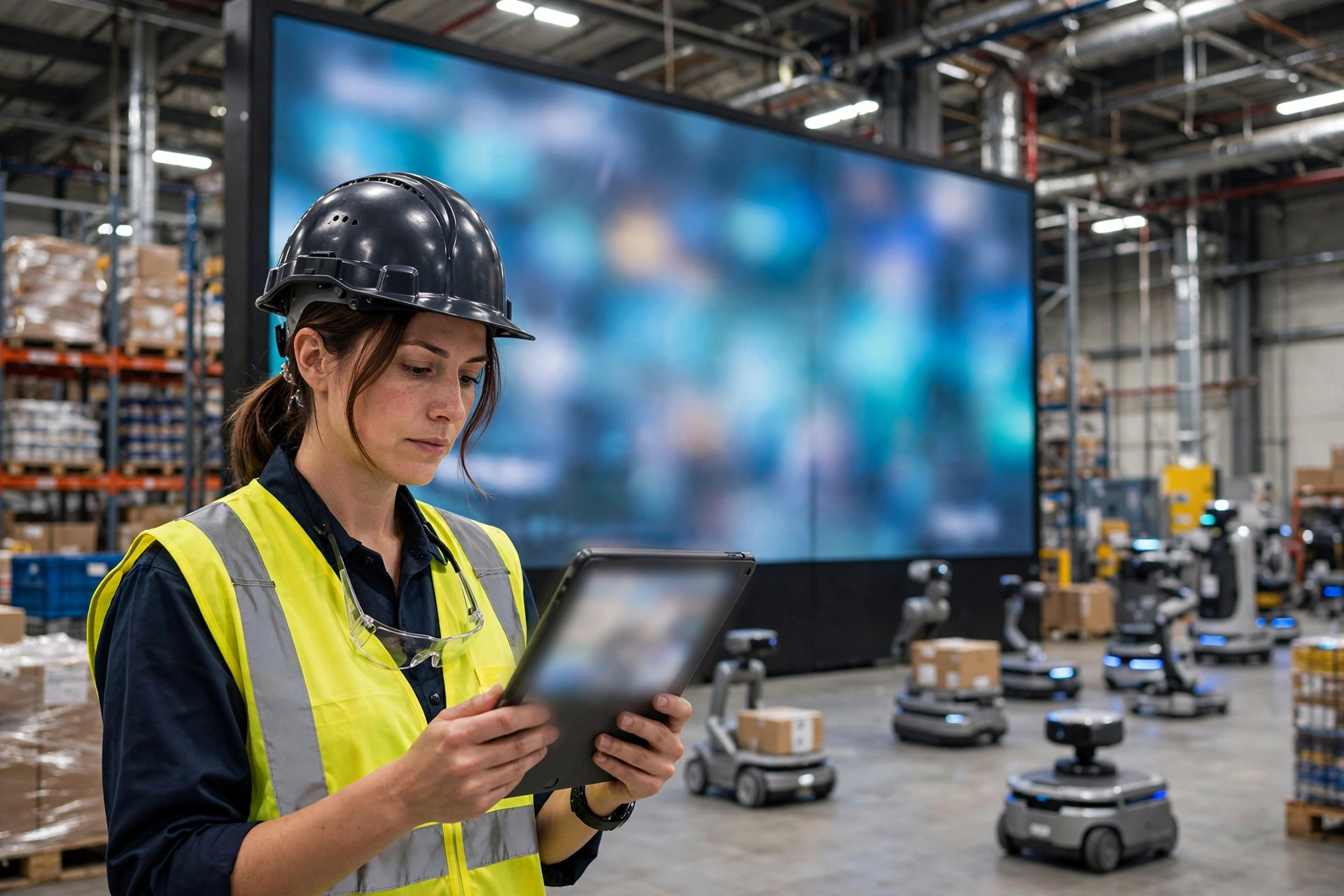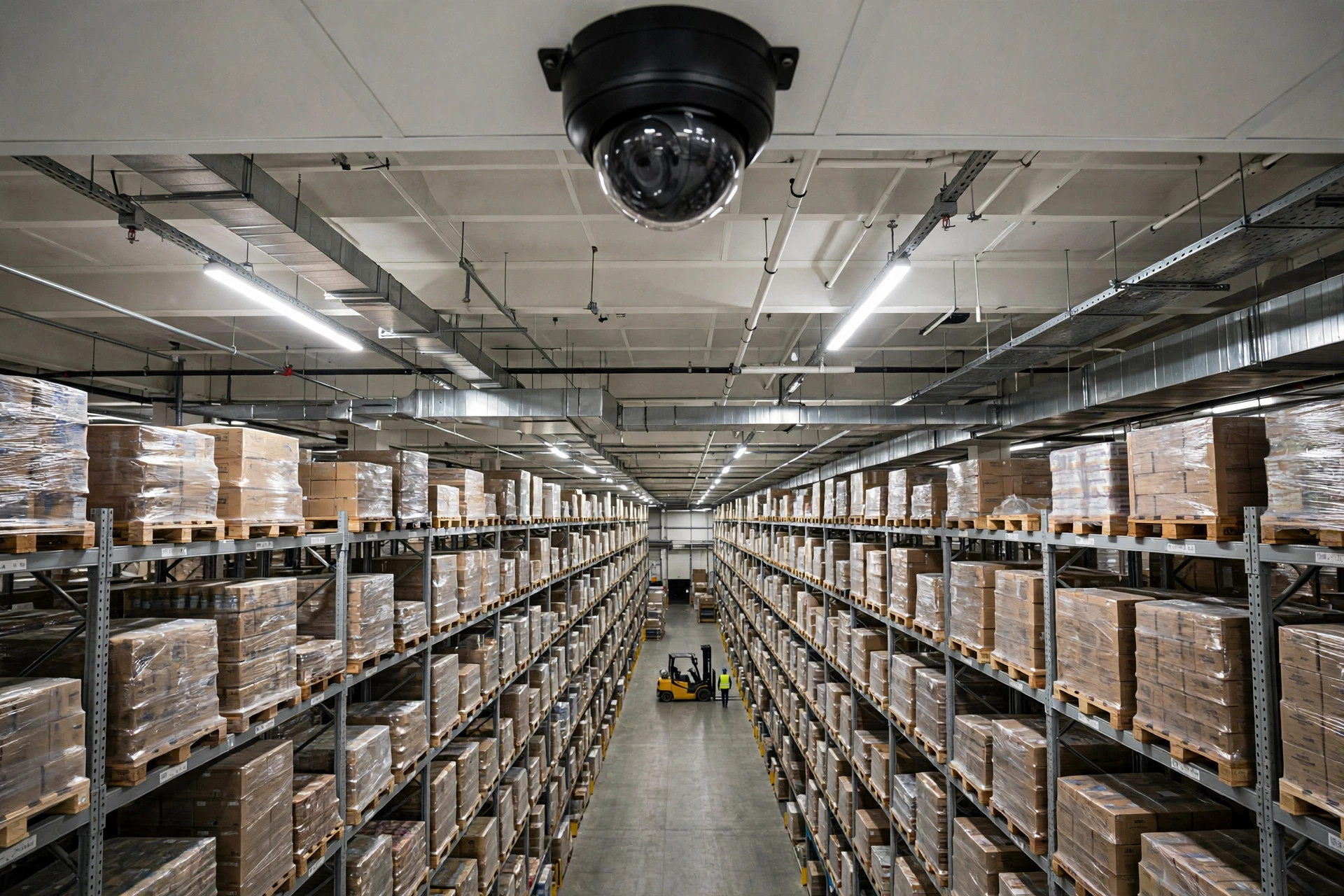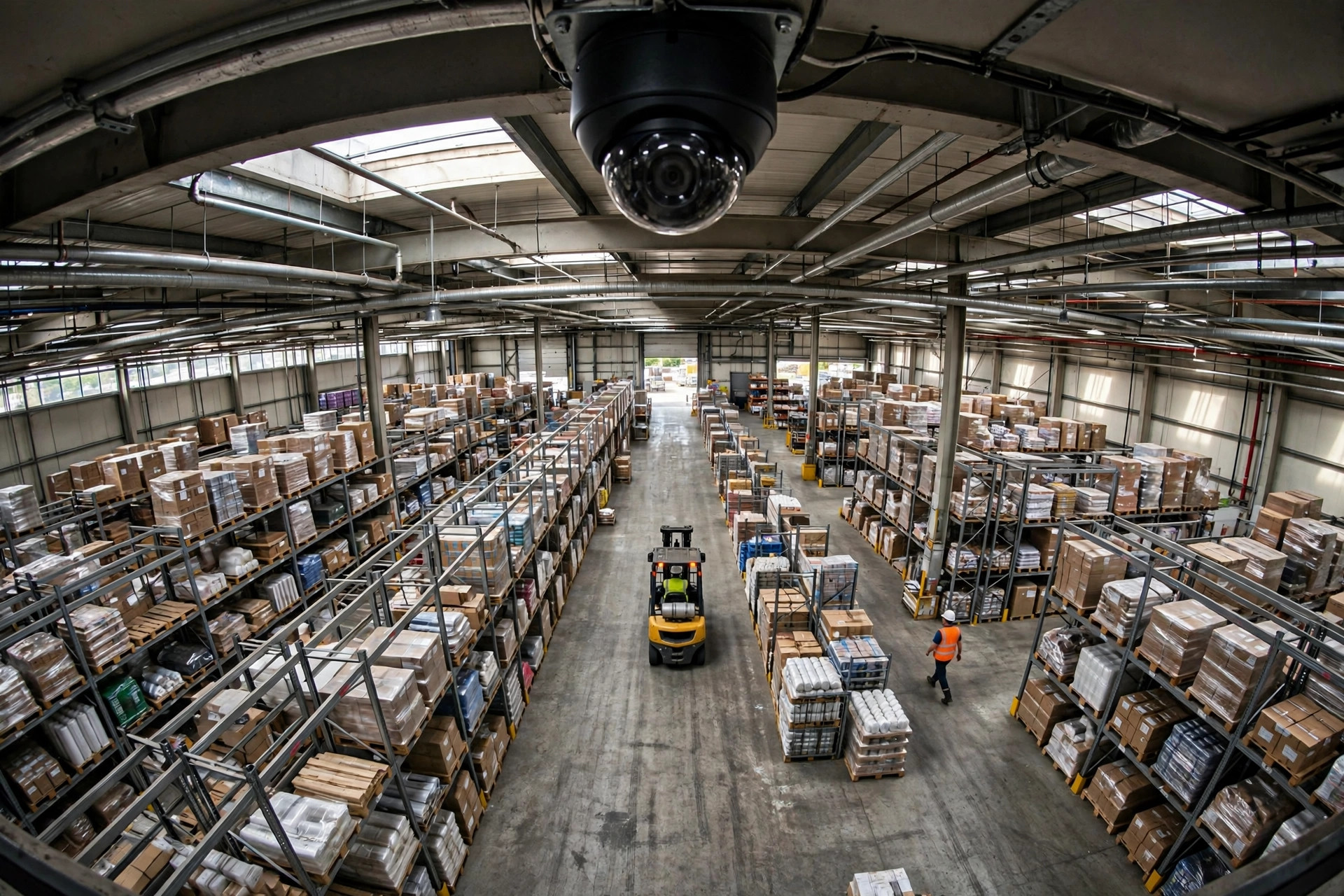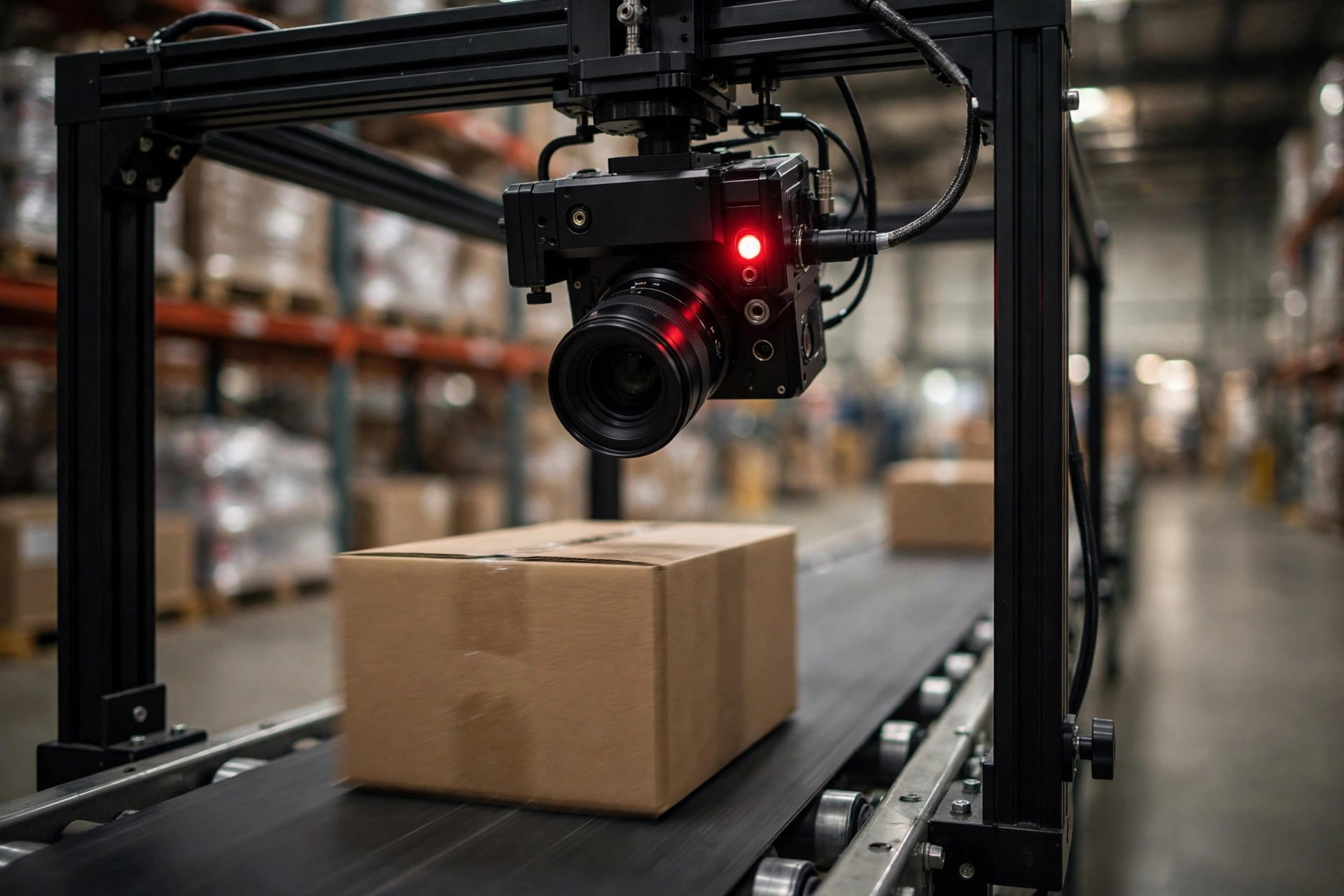
Picture a returns warehouse carrying 20,000 SKUs. The traditional computer-vision playbook says: photograph 500 training images per SKU. That's 10 million images. Let me save you the trouble of doing the math on that one — this road doesn't go anywhere.
Lately, more and more operators have been asking me about few-shot learning, and the pitch is always the same: "We have too many SKUs for traditional training. We hear few-shot only needs a handful of images per product — is this our way out?" My answer is always the same too: yes, it's a way out — for about half of your use cases. For the other half, it can't even get through the door. Today I'm drawing that line.
Few-shot, explained in one breath
Traditional deep learning memorizes. It has to learn what every SKU looks like from scratch, which means feeding it hundreds or thousands of images per product. Few-shot learning recognizes family resemblances instead. The foundation model has already seen tens of millions of images and learned the general grammar of shape, color, and texture. You show it 3 to 5 photos of each SKU, and it identifies products by similarity — more like recognizing a cousin than reciting a textbook.
This isn't new science. Researchers have been at it for years: the open SKU-110K dataset packs 11,743 images, over 1.7 million annotated boxes, and 110,000+ unique SKUs (CVPR 2019), and a 2024 paper pushed one-shot SKU classification from a single prototype image. What's changed is that foundation models got strong enough in the last couple of years to make this deployable. The technology was ready; what was missing was operators knowing where it belongs.
Where few-shot is good enough
My test is simple. Two questions: how much room for error do you have, and how fast does your SKU catalog churn?
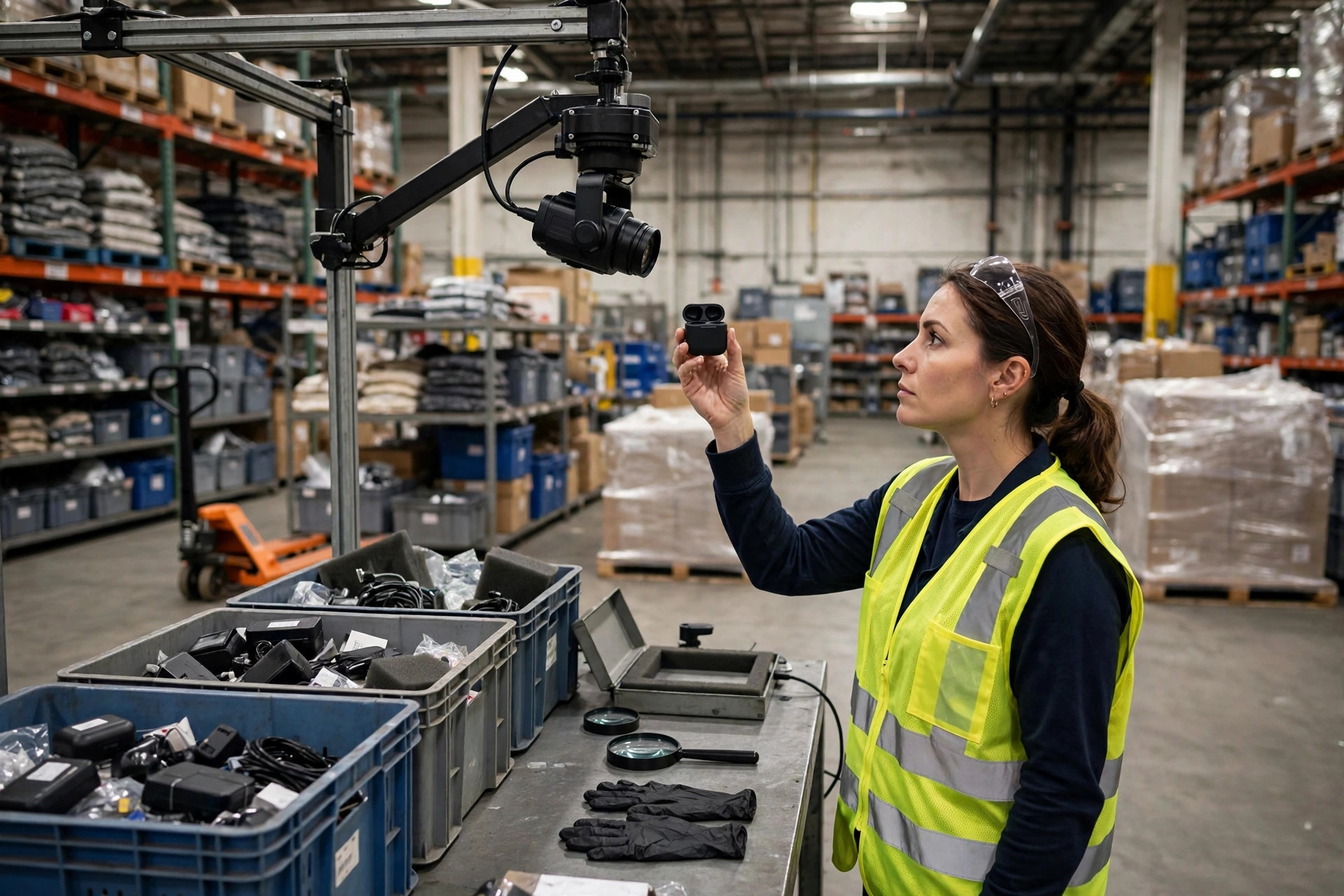
Returns inspection is the best fit I've seen. Returned goods are a messy, long-tail mix — plenty of SKUs sell a few dozen units a year, and you'll never collect hundreds of training images for them. An inspector holds the item in front of a camera, the system identifies the SKU and pulls up the product record, and the inspector gives it a glance to confirm. It gets one wrong? The human corrects it, the image flows back as a new sample, and the system gets sharper next time.
The other fit is visual sorting as a second opinion. Think of a cross-border warehouse full of unbarcoded loose goods, or cartons whose labels got slapped on crooked and won't scan. Few-shot vision offers a candidate; a person or a barcode scan makes the final call. Note the word "candidate" — it suggests, it doesn't decide.
What these scenes share: low speed, low volume, and a human safety net behind the model. The more SKUs you have, the fewer samples each one gets, the longer the tail — the bigger few-shot's advantage. In these scenarios the traditional approach isn't just expensive, it's unworkable. Nobody is photographing 500 images for a long-tail SKU that moves 30 units a year.
Where you should stay away
First, the obvious one: high-speed sortation. A sorter pushing hundreds of cartons a minute demands extremely high recognition accuracy (validate on your own data), and you're not getting that from a model that has seen three photos of each SKU. The honest approach for high-speed lines is full-scale labeled training, or skipping vision entirely in favor of barcodes fused with weight and dimension sensors. The faster the line, the less room few-shot has to breathe. That's physics, not a tuning problem.
Second trap: SKUs that look nearly identical. Two shampoos from the same brand line, same packaging, differing only in bottle size printed in small type — this is exactly where family-resemblance recognition is weakest. I've watched a team burn months here: the model misidentified products with total confidence, humans had to recheck every item, and the line ended up slower than pure manual work — plus the cost of the hardware.
Third: anywhere the imaging conditions won't stay put. A warehouse floor is not a lab. A camera over a conveyor, a flickering light, a tilted carton, and accuracy falls off a cliff. With only a few samples per SKU, one blurry photo can poison a fifth of your training data. Ironically, few-shot demands stricter shooting discipline than full training — which brings us to deployment.
Rolling it out: four steps
Step one: pick a foundation model; don't train from scratch. Open and commercial vision foundation models are all capable enough now. The real question is which one performs on product images, not which one tops generic benchmarks. Run your own goods through it for two weeks and measure top-1 accuracy yourself. Don't trust the vendor's slide deck. Two weeks of honest testing is cheaper than six months of rework.
Step two: lock down a shooting spec. This is the most underestimated part of the whole project. Fixed camera position, fixed lighting, fixed background, 3 to 5 angles per SKU. Every image has to count. Print the spec, laminate it, tape it to the inspection bench so it survives shift changes and new hires.
Step three: build the bad-case loop. Everything the model gets wrong or flags with low confidence goes into a review queue; once a human confirms the right label, the image flows back as a new sample. Once this loop is running, the model compounds — it gets better the more you use it. That's few-shot's biggest operational edge over traditional training: adding a new SKU means snapping a few photos and going live in minutes, not collecting a dataset and retraining.
Step four: keep a human in the loop, permanently. Anything below your confidence threshold goes to manual review. This line item is not optional. In a warehouse, AI's best seat is always the co-pilot's; the steering wheel stays with people.
The math: three approaches side by side
Full labeled training first. Industry pricing guides put basic image-classification annotation around $0.03 to $0.10 per image (per basic.ai's labeling cost guide). Sounds cheap — until you count collection: photographing, organizing, QA, version control, all human labor. 20,000 SKUs times 500 images is 10 million images. That labor bill crushes any mid-size operation. Full training only makes sense where SKUs are few, stable, and accuracy demands are extreme.
The few-shot route: 3 to 5 images per SKU turns 20,000 SKUs into 60,000 to 100,000 images — two orders of magnitude less. Annotation cost basically disappears, since labeling happens naturally at capture time. The real spend is the up-front work: validating a foundation model and enforcing the shooting spec. One-time investment, compounding returns.
And the third route people forget: barcodes and rules. If your products carry proper barcodes, just scan them — vision is pure overhead. My standing advice to clients: if a scanner solves it, don't build vision; if a rule solves it, don't build learning. AI can't fix operations. If your SKU master data is a mess and labels go on crooked, fix the process before you talk about AI. That order is non-negotiable.
Why returns deserves its own section
The NRF and Happy Returns put 2024 US retail returns at a projected $890 billion — 16.9% of retailers' annual sales. The returns area is the messiest corner of any warehouse: the wildest SKU mix, the most expensive labor, the least standardized process. Inspectors have to identify the item, judge its condition, and decide whether it goes back to stock or gets written off. Of those three jobs, identification is where few-shot vision earns its keep, because returns assortments are long-tail by nature.
One warning before you get excited: identifying the SKU is only half the inspection job. Judging condition — new, lightly used, damaged — is still beyond what today's few-shot models do reliably, whatever the vendor tells you. Do SKU recognition first, leave condition grading to humans, and walk it in two phases. Don't try to swallow it whole.
One thing you can do tomorrow
If you have a returns inspection bench, here's a one-afternoon experiment: pick your 50 most common returned SKUs, shoot 5 angles of each, and run them through an open vision foundation model as a similarity-retrieval test. Check the top-1 accuracy. It costs almost nothing, takes an afternoon, and it will tell you something no vendor pitch can: whether this road actually goes somewhere for your operation. Let the data talk.