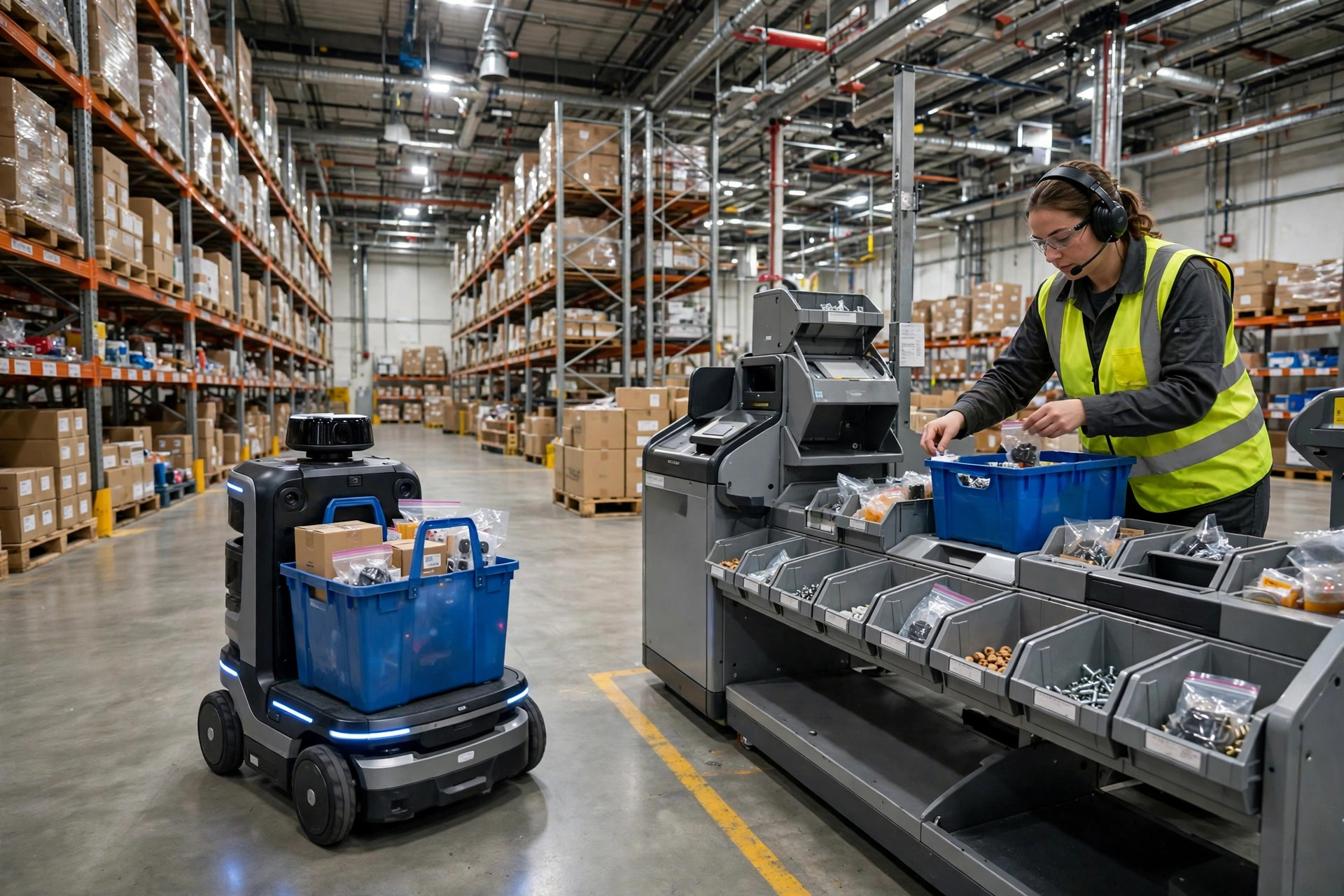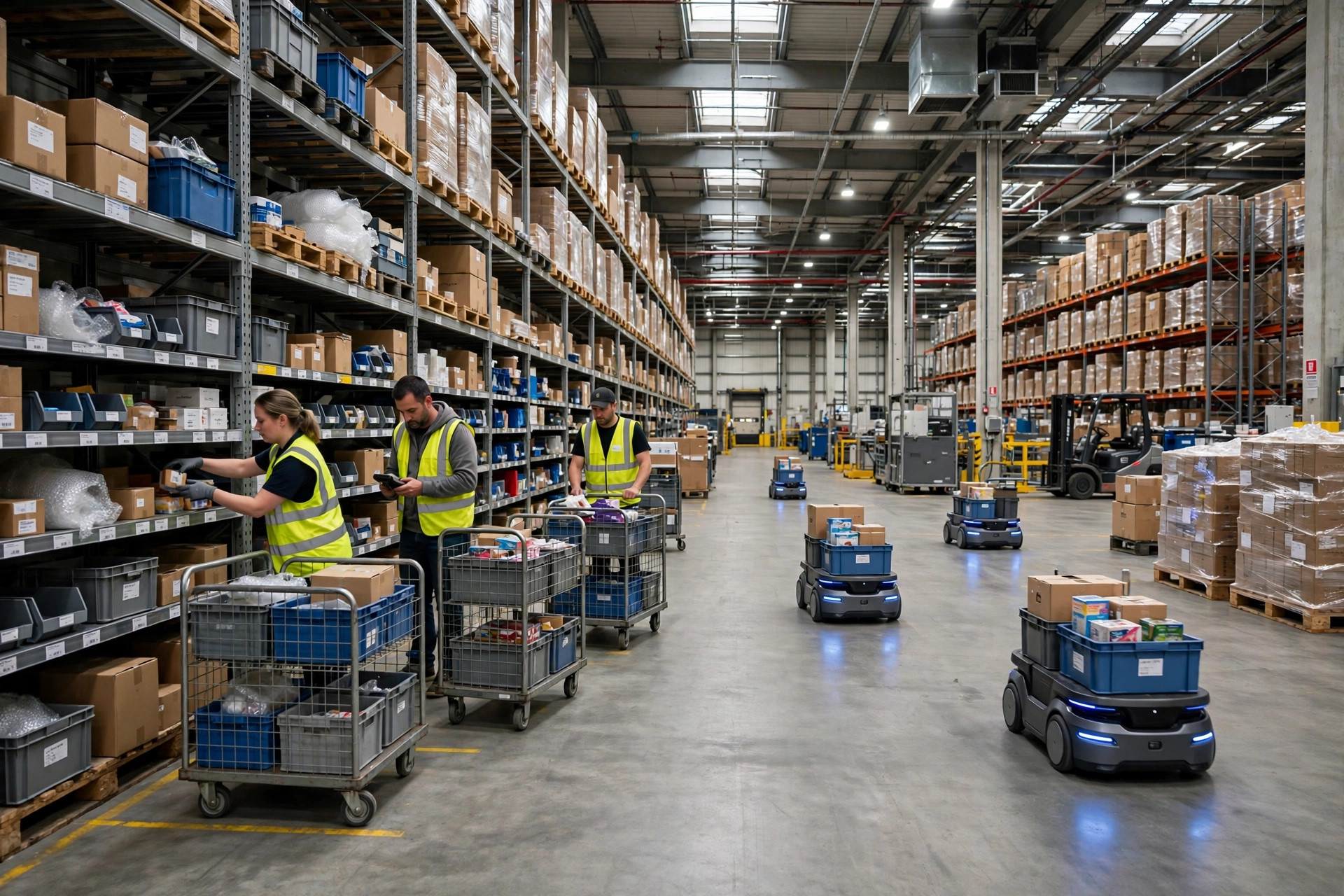
A pick-path optimization system that claims to cut walking distance by a fifth goes live, and three months later the pickers are still walking their old routes. This is not a people problem. It is a gap between two different definitions of "optimal" — the algorithm's and the shop floor's — and the technology, mature as it now is, has never been the part that gets stuck. The stuck part is adoption.
Consider the phenomenon first. In 2024, a 30,000-square-meter e-commerce warehouse in eastern China deployed an AI-driven pick-path optimization system that computed pick sequences in real time against order profiles, with a theoretical 15–20% reduction in walking distance per picker. The dashboard numbers in month one looked beautiful. The floor supervisor, however, noticed something else: pickers were quietly noncompliant — nodding along with the system while their feet followed the old routes. Three months in, an anonymous survey found that more than half admitted they "often" deviated from the recommended sequence.
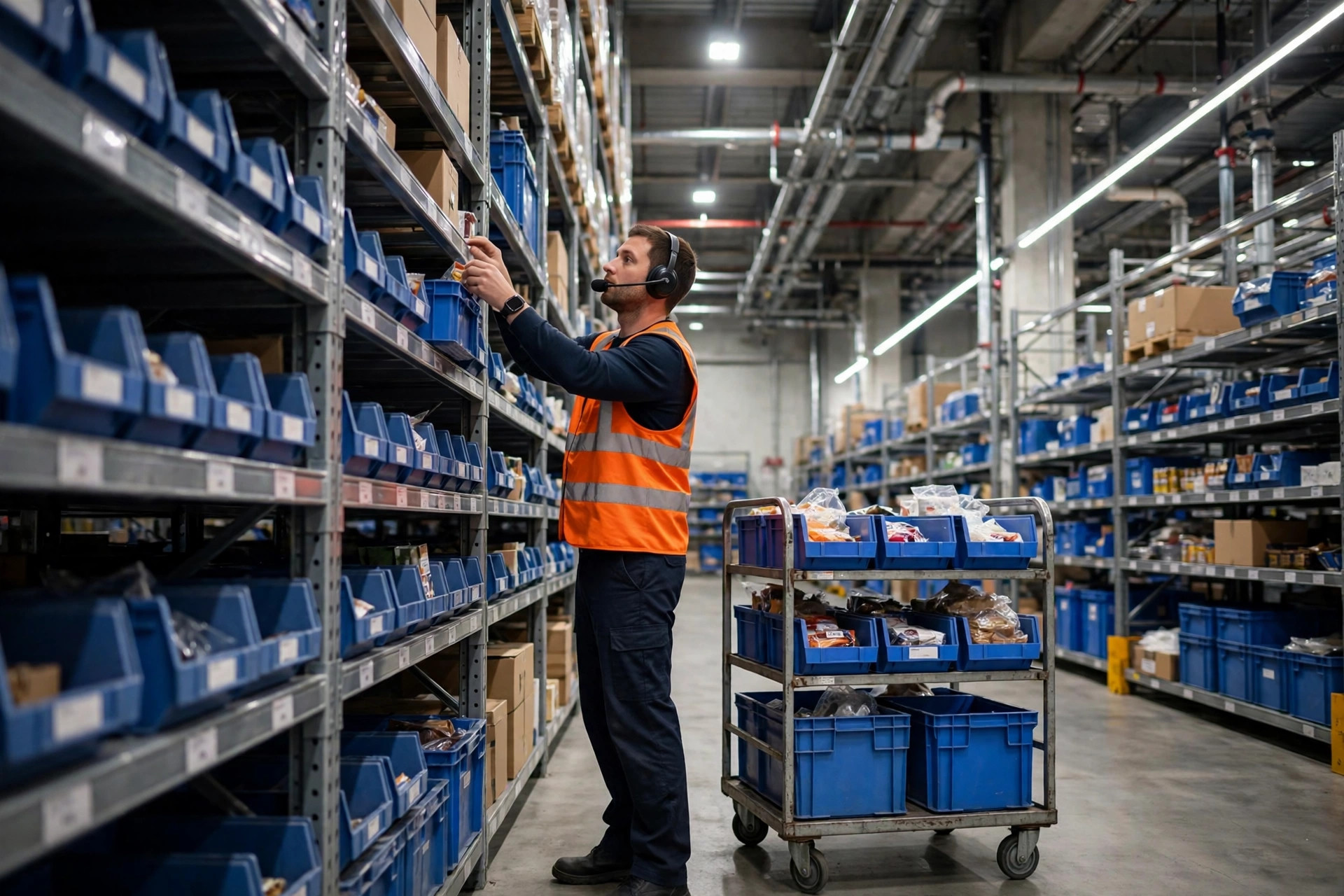
The same script played out again in the first half of 2025, this time at a regional distribution center of a retail chain piloting dynamic AI routing. The system recommended a shortcut through the staging area that would eliminate a long detour. The pickers collectively refused it and walked the long way instead. The reason was mundane: the staging area was perpetually stacked with inbound freight awaiting putaway, and a cart simply could not get through. The algorithm was reading a floor plan; the pickers were reading reality.
The data suggests this is not an isolated anecdote. In my review of a dozen or so publicly reported intelligent-routing projects from 2024–2025, nearly every case that disclosed real-world results mentioned some version of "frontline execution deviation." Trade press walkthroughs from the same period keep circling one widely cited figure: picking typically accounts for roughly half of a warehouse's labor cost, which is precisely why it is the segment automation vendors most want to crack — and the hardest to crack. The supply side of the technology is accelerating: path-planning algorithms, digital twins, and indoor positioning have all matured in recent years. But the adoption curve on the demand side is running noticeably flatter than the vendor narratives suggest.
Why does this "accurate but unused" gap persist? I would attribute it to three layers of causes, each closer to the root than the last.
The first layer is misaligned incentives, and it is the most commonly overlooked. In many warehouses, pickers are paid piece-rate. The picker's objective function is units picked per hour; the AI's objective function is total distance minimized. These two objectives frequently diverge: taking a slightly longer loop that lets a picker grab two extra items in one pass and skip a bend is the better deal for the picker, even though the system logs it as a deviation. When the algorithm and the human are optimizing against different KPIs, ignoring the algorithm is rational behavior, not laziness.
The second layer is a trust deficit. The algorithm cannot see transient floor conditions: where today's promotional endcaps are stacked, which aisle is slippery and worth avoiding, which bay door is blocked by freight waiting for putaway. None of that lives in the system; all of it lives in pickers' heads. It takes only one "followed the system and hit a dead end" to crack trust — and trust, once cracked, takes dozens of successes to rebuild. Post-mortems of failed rollouts keep converging on the same missing detail: the system gave pickers no channel to report field exceptions. When a route is impassable, the choice is to force through or quietly detour, and over time, everyone quietly detours.
The third layer, and the foundational one, is data quality. Pick-path optimization is, at its core, a garbage-in-garbage-out system. If the location master data is wrong — the system says SKU A is at B-03 while it physically sits at C-11 — then even a mathematically perfect route is the shortest path on the wrong map. In several projects I have followed, poor routing outcomes, when excavated one layer down, almost always exposed master-data problems: cycle-count variances persistently above a few percent, location changes never written back, new-SKU slotting done by tribal knowledge. Algorithms cannot fix data problems. They can only amplify them.
This leads to a counterintuitive conclusion worth stating plainly: the shortest path is not the fastest pick, and it is certainly not the path a picker will willingly walk. Algorithms optimize Euclidean distance; pickers optimize energy expenditure and ergonomic convenience — one fewer bend, one fewer climb, avoiding a congested aisle. Factors that carry near-zero weight in the distance formula carry heavy weight in human decision-making. A routing engine fluent in geometry but illiterate in ergonomics reads, to a picker, as theory divorced from practice — and theory gets voted down with feet.
So what should a team answer before launching a pick-path optimization project it actually wants to stick? The attribution above suggests three mandatory questions. First, what is the real accuracy of your location master data — have cycle-count variances been driven down to an acceptable band? Do not talk algorithms on a shaky foundation. Second, does the pickers' compensation scheme agree with the system's objective, or are the two KPIs fighting? Misaligned KPIs guarantee discounted execution. Third, does the system close the loop on field exceptions — can a picker flag "this route is blocked" in one tap and have the algorithm learn from it? An intelligent system without a feedback channel is an open-loop system, and open-loop systems drift in complex environments. That is not a hypothesis; it is control theory.
Looking toward 2026–2028, my read on the technology trajectory is that the industry will shift from computing the shortest route to computing the most agreeable one. Three observations support this: first, leading vendors have begun marketing "human-aware" routing that models ergonomic factors explicitly in the objective function; second, the spread of wearables and indoor positioning is giving systems their first real datasets of how pickers actually walk — algorithms can finally learn revealed routes rather than prescribed ones; third, digital twins are making transient floor states machine-readable, so a congested staging area may not have to live only in someone's memory. The timeline, admittedly, hinges on indoor-positioning hardware costs — if they do not fall within three years, the "most agreeable route" era may arrive later than hoped.
I will close with an open question rather than a verdict. When algorithms finally learn to think like veteran pickers — routing around congestion, favoring the ergonomic, conserving energy — the next question may be whether pick routing needs a single "optimal" answer at all. Perhaps the future system offers several routes with different trade-offs and returns the final choice to the person on the floor. The best relationship between technology and people, it seems to me, was never about who commands whom.
By Dr. Chen, Supply Chain Researcher