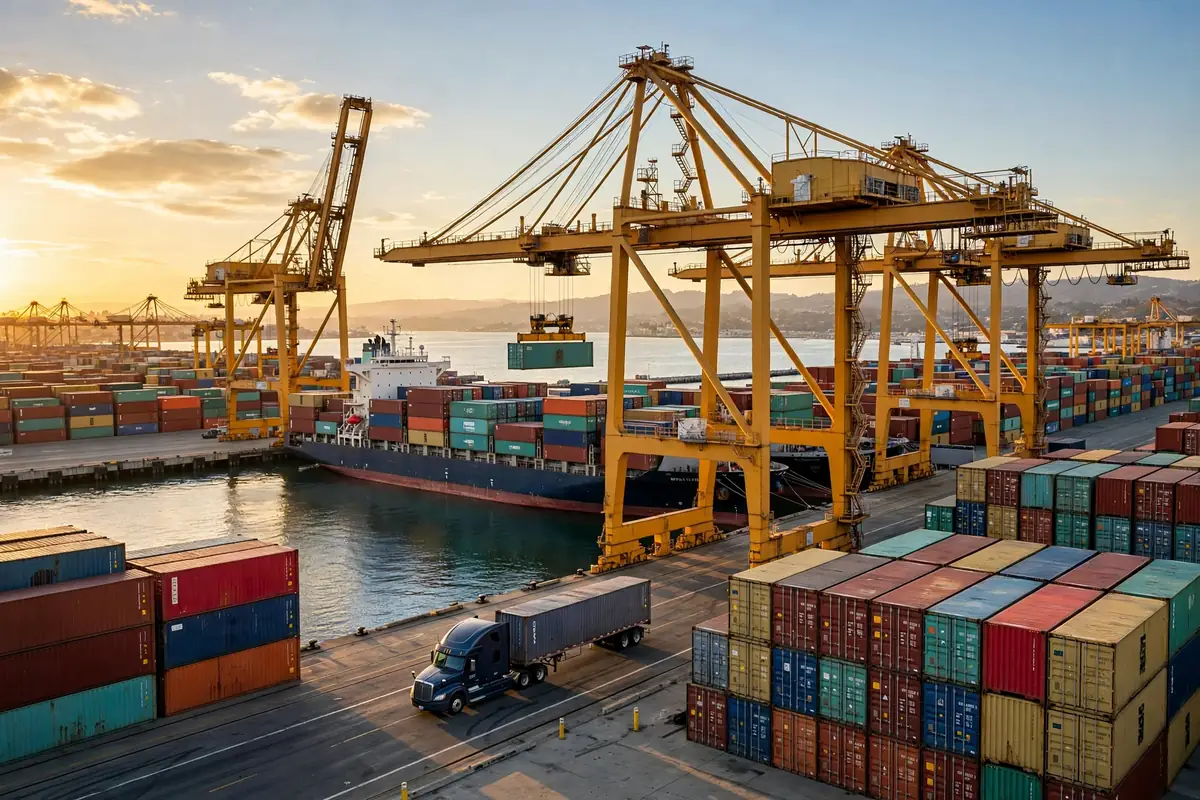
Bottom line first: the Felixstowe UK port warehouse calculation is really a rail calculation. The port handles around 4 million TEU a year — roughly 48% of the UK's container trade — making it the country's biggest container port. But that number alone tells you nothing useful. What decides where your warehouse should sit, how big it should be, and what your system must do is what happens after the box comes off the ship: road or rail into the interior. I have seen this mistake three times, always the same way — a lease signed on rent alone, and the rail timetable discovered only when operations start falling apart.
The basics first. Felixstowe has 3,773 metres of quay, 28 ship-to-shore cranes, 18 metres of water depth, around 2,000 vessel calls a year, and serves more than 30 shipping lines reaching over 700 ports. One honest caveat: the port does not publish official container volumes, and market estimates run between 3.5 and 4 million TEU — I use around 4 million TEU here on a market-estimate basis. London Gateway is gaining share behind it, but Felixstowe's number-one position has not moved yet.
In 2024 I worked on a project for a homeware importer bringing goods from China through Felixstowe for distribution across the Midlands and the North. Their original setup was all road: trucks from the port to a warehouse near Birmingham. Come peak season, truck rates doubled and drivers were hard to find. We changed part of the flow to rail — boxes onto a Felixstowe–Midlands service, then a short dray to the warehouse. Per box, rail was barely cheaper than road. But in peak season the rail slots were booked in advance at a fixed price — no surge, no rolled cargo. In peak season, that certainty is worth real money.
Where the cargo comes from
Three sources. Imports for UK consumption — homeware, consumer goods, electronics from Asia, discharged at Felixstowe. Transhipment cargo drawn in by the density of services. And exports — UK manufactured goods and agricultural products going out through the port.
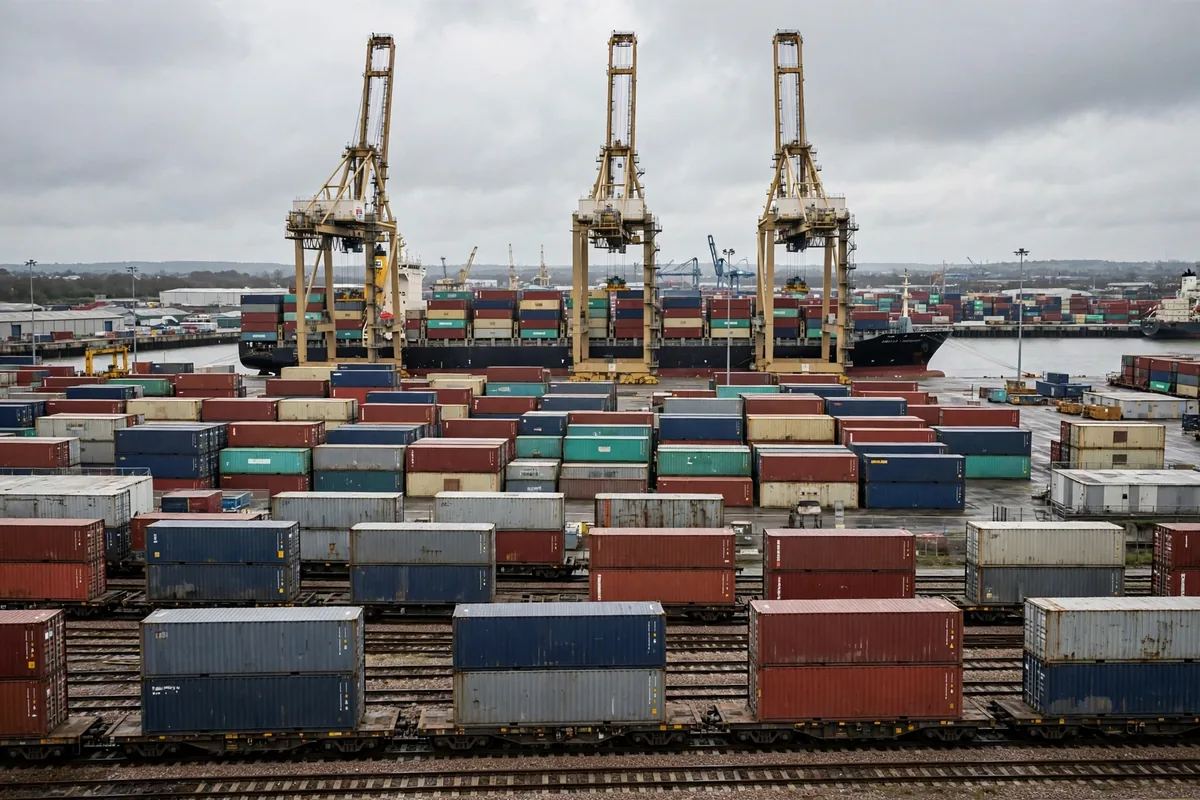
The Felixstowe UK port warehouse handover turns on two moments. First, how fast you can pull a container after the vessel berths — yard congestion in peak season turns into queues at the gate. Second, the departure time of the rail service. The Felixstowe–Midlands rail link is what sets this port apart from other UK ports: boxes ride the train to an inland terminal, then a short dray into the warehouse, bypassing the congested roads around the port.
I have seen the same failure three times, and the cause is always the same: the warehouse system has no rail timetable in it. Cargo arrives, the system dispatches trucks, nobody checks the train. The result is two extra days in the port yard, storage charges ticking, and a train that left half empty. Three times I have seen it. The third client's fix was a single system rule: when the arrival notice lands, check the rail service first, then dispatch the truck.
Felixstowe UK port warehouse: port-side or inland-terminal?
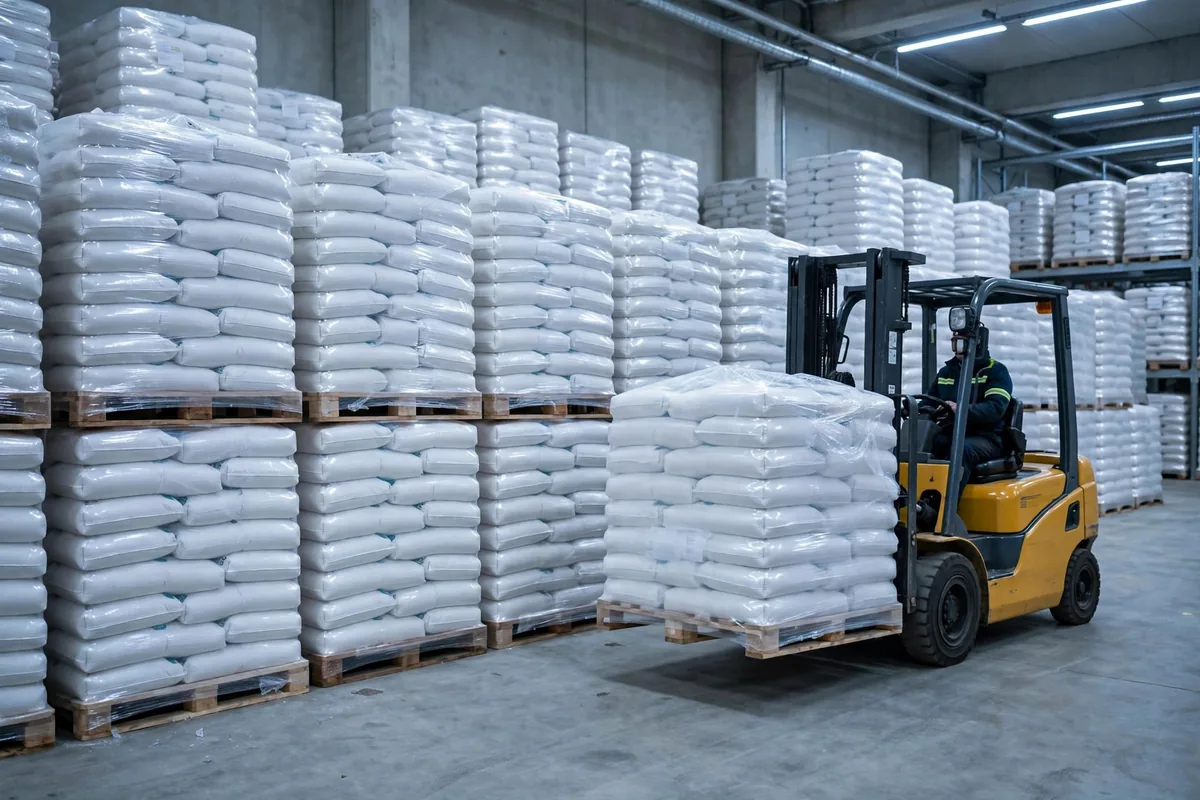
Felixstowe UK port warehouse choices fall into two types. Port-side sheds suit transhipment and fast break-bulk: cargo arrives, gets stripped, sorted, and dispatched the same day. Inland-terminal warehouses in the Midlands suit regional distribution: boxes come off the train and go straight into the racking, then out to the regions.
Choose by running three sums.
First, transport. A port-side warehouse means a short dray but a long line-haul into the interior; an inland-terminal warehouse gets cheap rail for the long leg but still needs a last-mile dray. Over 100 boxes a month the totals are close. The real difference is peak season: road rates spike when capacity tightens, pre-booked rail does not.
Second, inventory. Port-side warehouses turn fast with short stock cover — right for fast-moving and seasonal goods. Inland warehouses can hold deeper stock — right for staple lines. My rule: seasonal goods go port-side, in and out fast; staples go inland, with deeper cover.
Third, systems. Can your warehouse system receive the port's arrival notice automatically? Can it read the rail timetable? Can it compute cut-off times on its own? Those three answers decide whether peak season runs or collapses. A warehouse whose system can't do this runs on people watching screens — one shift watching 20 extra boxes, and one missed box is a delayed container.
| Warehouse location | Cargo it suits | Advantage | Risk |
|---|---|---|---|
| Port-side | Fast-moving, seasonal goods | Fast turnaround, close to the quay | Peak-season yard queues, higher rent |
| Inland rail terminal | Staples, regional distribution | Stable rail capacity, controllable cost | Depends on the timetable, dray must connect |
One more variable: London Gateway is catching up. It sits closer to the London consumer market and has pulled some cargo that used to come through Felixstowe. My judgement is that Felixstowe's moat is not location — it is rail plus service density. A network reaching more than 700 ports, plus rail distribution into the Midlands, is not something a competitor closes overnight. But if your cargo's final destination is London and the South East, run the two ports side by side before defaulting to Felixstowe. My 2024 homeware client did exactly that: one month on each route, then compared the data. London-bound cargo genuinely saved a dray leg through London Gateway; Midlands-bound cargo was still cheaper via Felixstowe and rail. Splitting the flow let each direction take the better route.
Felixstowe UK port warehouse: pre-go-live checklist
These go into my go-live checklist every single time:
- Confirm the port arrival-notice feed — the system must receive it automatically, not by someone refreshing an inbox.
- Confirm the weekly rail timetable and write it into the system rules: arrival first checks rail.
- Confirm the free storage days in the yard — demurrage is charged daily, so budget for it before peak season.
- Confirm the peak-season surcharge terms with your haulage provider, in the contract, not negotiated in peak season.
- Confirm the warehouse can slot by destination region — a warehouse that mixes destinations will mis-pick in peak season, guaranteed.
One last point: the port's numbers belong to the port. Your calculation starts when cargo reaches the quay and ends when it enters your inland warehouse. The rail leg is the biggest advantage this port gives you. If you don't use it, you might as well be shipping through any other port. Get the timetable into your system first — then talk about the lease.
By Lin Xiao, WMS Implementation Consultant