Let me guess how you pick head-haul freight: you look at the LCL quote — wow, only tens of dollars per CBM, cheap! Then you look at FCL — several thousand for a whole box, scary. So every time your cargo lands in that awkward 12-18 CBM zone, you flip a coin. LCL today, FCL tomorrow, depending on your mood and whatever your forwarder's sales rep says.
I've gambled. I've lost. Paid real tuition. Let me save you the money.
The 12-CBM lesson: cheap per-CBM rate, losing total bill
October 2024, peak-season restock. Shenzhen to my LA overseas warehouse, 12 CBM of goods.
LCL quote: $68 per CBM for the ocean leg (example rates from a Shenzhen-LA lane at one point in 2025 — examples only, always get live quotes from your forwarder). Twelve CBM, $816 ocean freight. My mental math: a full container costs four or five grand. What a steal! Booked LCL without a second thought.
Then the shipment landed in LA and the invoice arrived: destination devanning charges, terminal handling, storage (took 5 days to get the cargo released), final-mile trucking to the overseas warehouse. All in, the total bill came out a few hundred dollars MORE than a 20-foot full container, door to warehouse, would have cost at the same time.
That's when it clicked: with LCL, the trap isn't the ocean leg — it's the destination. Devanning, storage, delivery: a lot of these are charged per shipment, not discounted by your tiny volume. The smaller your cargo, the more those fixed charges inflate your per-CBM cost. And 12 CBM sits right in the "looks cheap, bills expensive" danger zone.
The second knife: one container, everybody waits
Same 12-CBM shipment, and it got worse. Another seller's cargo in the same box got pulled for customs exam. The entire container sat at the Port of LA for 9 days.
That's LCL life: seven or eight sellers stuffed into one box. One person's problem becomes everyone's delay. My peak-season inventory sat at the port for 9 days while my overseas warehouse flashed low-stock warnings and my ads kept burning cash.
With FCL? One box, one owner — your cargo. Lower exam odds to begin with, and even if you do get flagged, you're only waiting on yourself, never paying for someone else's mess.
Here's the counterintuitive truth: a cheaper per-CBM rate does NOT mean a cheaper total cost. Destination charges and shared-container exam risk are the two knives that most often stab LCL shippers in the back. Anyone choosing on ocean rate alone is basically donating money to their forwarder.
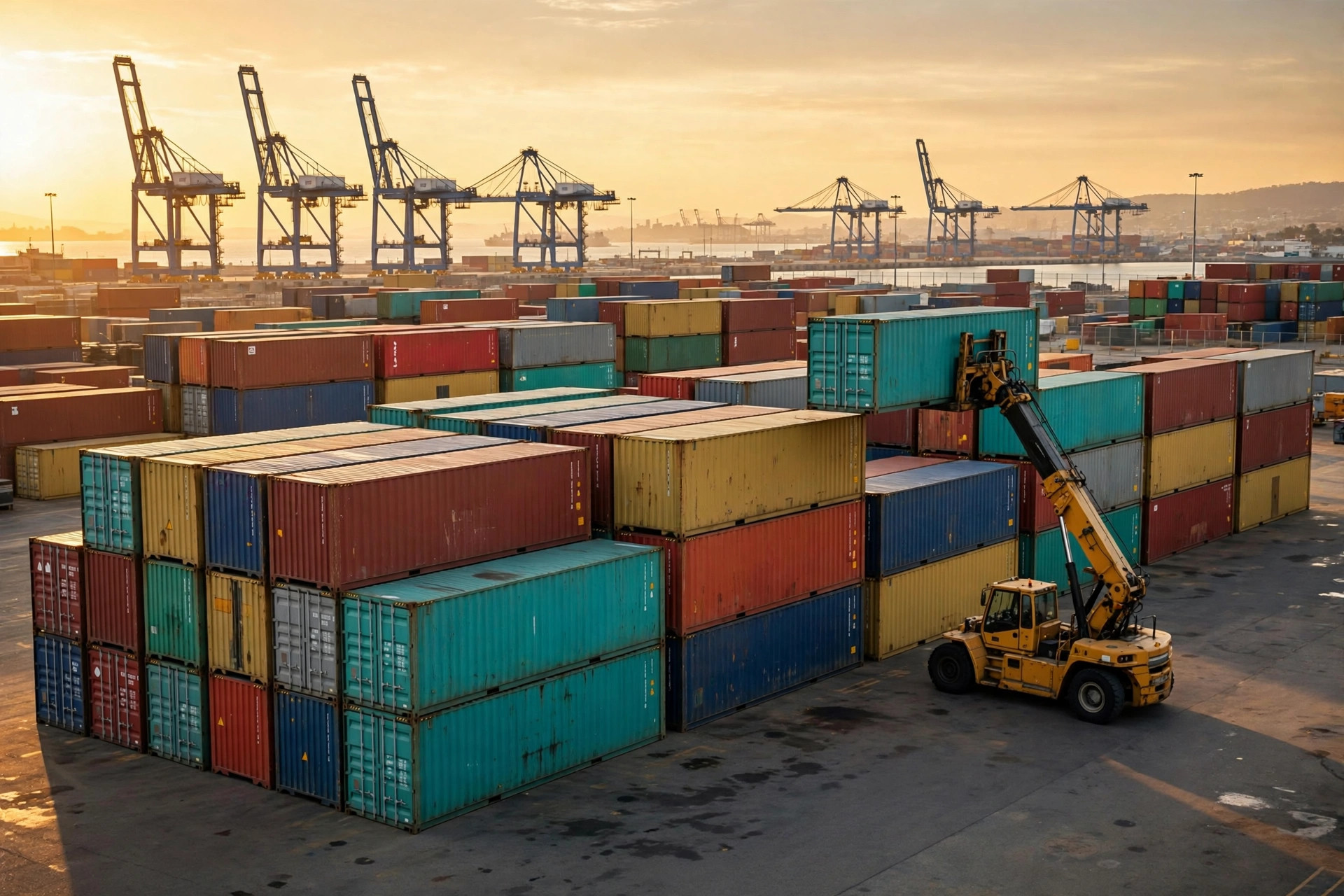
The 18-CBM shipment: this time I went FCL
March 2025, restocking my New Jersey warehouse on the East Coast, 18 CBM. No coin flip this time — straight to a 20-foot FCL.
Per the quotes I had then, the full door-to-warehouse FCL price worked out to nearly 20% cheaper per CBM than the LCL option. But the bigger win was time: FCL gets pulled and trucked straight to the warehouse — no devanning, no waiting on other sellers' cargo. Saved about 7 days. During peak season, 7 days of not stocking out is worth far more than the freight difference.
Two shipments, one lesson learned the hard way: the breakpoint isn't mysticism. It's a division problem.
FCL vs LCL: where the money actually goes
One table (example rates from a Shenzhen-LA lane at one point in 2025 — examples only, always get live quotes from your forwarder):
| Cost item | FCL (20GP) | LCL (15 CBM example) |
|---|---|---|
| Origin charges (booking/docs/drayage) | Bundled in one box price | approx. $35/CBM |
| Ocean freight | One flat box rate | approx. $68/CBM |
| Destination charges (THC/devanning/storage) | Lower, no devanning fee | approx. $45/CBM, plus minimums |
| Final mile to overseas warehouse | Full truck, cheap per CBM | Per shipment + volume, pricey per CBM |
| Total transit time | 5-10 days faster (no devanning wait) | 5-10 extra days for devanning |
| Shared exam risk | Your cargo only | One seller flagged, all wait |
| Sweet spot | Above 15 CBM | Below 15 CBM |
See it? Every "per CBM" LCL line hides per-shipment fixed costs. Bigger volume dilutes fixed costs — but LCL's fixed costs are charged per shipment and never dilute. That's the entire reason a breakpoint exists.
The 3-step formula for your own FCL/LCL head-haul breakpoint
Forget the internet's "15 CBM" rule of thumb. It's a decent guess — lanes, seasons, and forwarders move it around. Run your own numbers in 5 minutes:
Step 1: Get the "door-to-warehouse, all-in" FCL price. Ask for both 20GP and 40HQ. "Door-to-warehouse, all-in" means from your factory gate to your overseas warehouse gate, everything included. Any quote that only covers the ocean leg goes straight in the trash — that's bait pricing.
Step 2: Get the "door-to-warehouse, all-in" LCL rate per CBM. Same deal: origin, ocean, destination devanning, final-mile delivery — all in. Plenty of forwarders quote LCL ocean-only and mark destination charges "as per actuals." A breakpoint computed from that quote will skew dangerously low. That's a guaranteed trap.
Step 3: Breakpoint = FCL all-in price ÷ LCL all-in per-CBM rate. Example: $4,800 FCL all-in ÷ $320/CBM LCL all-in = 15. Fifteen CBM is your breakpoint: below it, go LCL; above it, go FCL.
One division problem. Decision paralysis, cured.
Pitfalls from the trenches
Light vs. heavy cargo: CBM isn't the whole story. LCL bills on chargeable weight — whichever is greater, volume or weight (kg ÷ 1000). Ten CBM of dumbbells and ten CBM of pillows get very different invoices. Confirm whether your cargo bills on volume or weight before running the formula.
LCL has minimums. Most forwarders bill a 1-CBM minimum — half a CBM still pays for a full CBM. Tiny 1-2 CBM shipments get murdered on per-CBM cost by the minimum. At that size, express couriers often win.
In peak season, LCL gets rolled first. When space is tight, carriers protect FCL customers; an LCL box that doesn't fill gets rolled to next week's sailing. November 2024, one of my 8-CBM LCL shipments got rolled twice — 16 days late to the warehouse. If you're racing peak-season listings and sitting near the breakpoint, just take the FCL. Don't gamble.
A half-empty FCL still costs a full FCL. Flip side: 13 CBM crammed into a 20GP (which holds about 28 CBM) means paying for air. Either consolidate with another seller or stick with LCL. The breakpoint is a guide, not gospel.
Don't forget the 40HQ. Above 25 CBM, ask for 40HQ pricing (holds 60-68 CBM). Sometimes the 40HQ beats the 20GP on per-CBM cost. Big shipment? Go straight there.
One last thing: every dollar saved on head-haul is profit. Before every shipment now, I spend 5 minutes on the 3-step formula and compute the breakpoint before booking. Tested it myself — it's already saved me from three "LCL costs more than FCL" disasters.
By Ah K, E-commerce Seller (5 yrs)