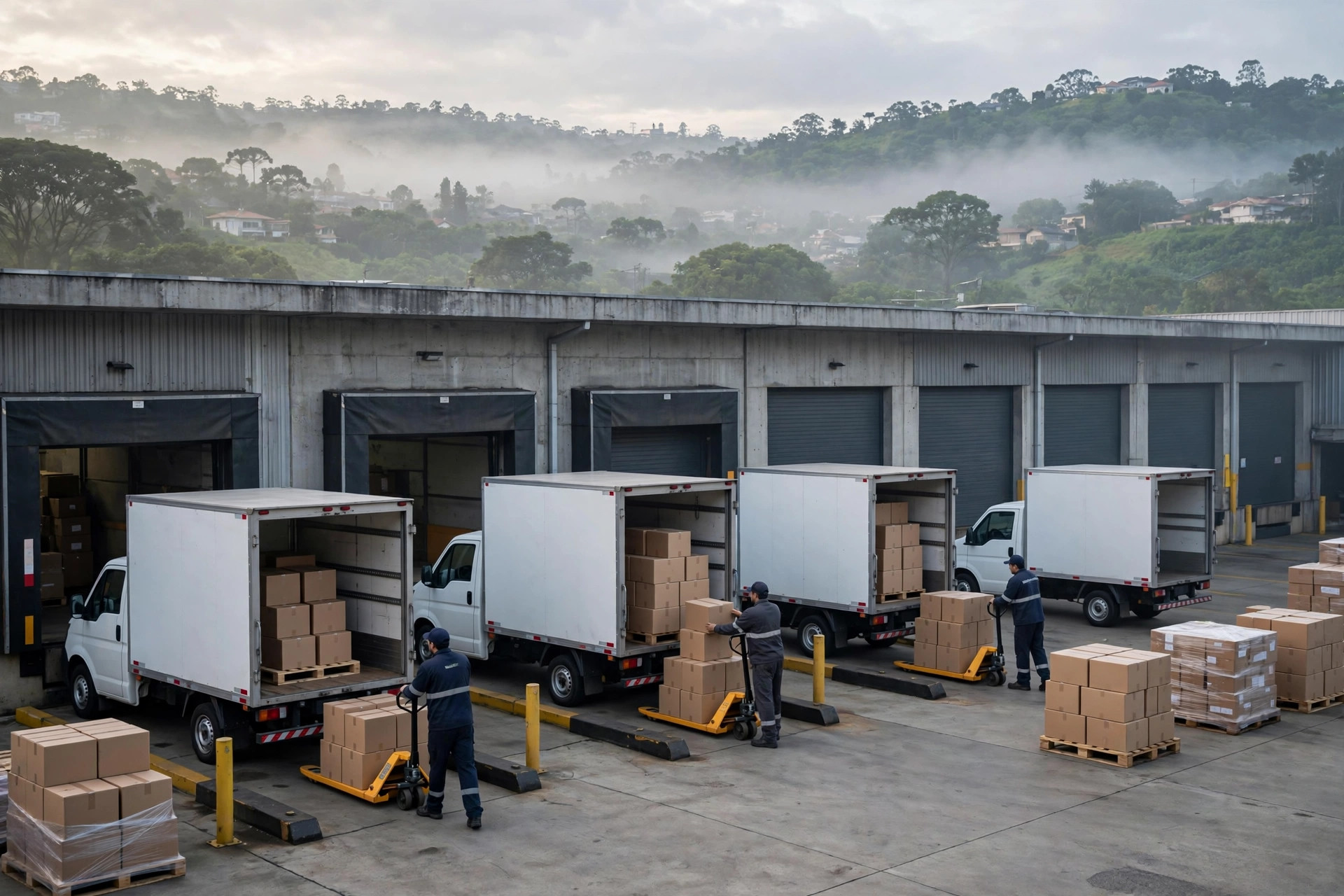
Listen, after all these years on the road, the most expensive lesson I ever learned in São Paulo wasn't fuel or tolls. It was a traffic fine — actually two of them — for breaking the São Paulo rodízio truck delivery restriction rules.
First time I ran a load into São Paulo, I had a big box truck and a warehouse customer breathing down my neck to get the goods to a supermarket depot downtown before noon. I left the warehouse at 4 a.m., smooth sailing, and rolled into the city center a little after 7. Thought I had it made. Next day the fleet boss called, furious: two fines for driving in a restricted zone. I was baffled — my plate's last digit wasn't even restricted that day. He told me one sentence that stuck with me: in São Paulo, the rodízio plate rotation is only the first gate for trucks. There's a second, tougher gate called the ZMRC. The zone I drove into bans trucks all day long, and your plate number doesn't matter one bit.
That incident taught me the real rule of the game: if you run a warehouse or do city delivery in São Paulo and your dispatchers only know rodízio, the fines will find you sooner or later. So here's the whole thing, plain and simple — when to dispatch, which truck to use, and how to price the fine risk into your quotes.
São Paulo Rodízio Truck Restrictions, Lesson One: Plates First, Clock Second
The rodízio is São Paulo's famous plate-rotation scheme, and a lot of people think it only applies to cars. Wrong — trucks are in it too. Two things to remember:
First, the day. Monday to Friday (holidays excluded), two plate endings rest each day: Monday 1 and 2, Tuesday 3 and 4, Wednesday 5 and 6, Thursday 7 and 8, Friday 9 and 0. Out-of-state plates get no mercy — the rule follows the truck, not the registration.
Second, the clock. Two windows each day: 7 a.m. to 10 a.m., and 5 p.m. to 8 p.m. On your plate's day, stay out of the restricted zone — the expanded city center (Centro Expandido), the ring drawn by the main avenues — during those hours.
One violation costs R$130.16 and 4 points on the driver's license — a mid-level infraction. And here's the kicker: morning and evening count separately, so you can collect two fines in one day. I've seen a driver dodge the cameras in the morning, go back in the afternoon, and find both tickets waiting when he got home.
ZMRC: The Tougher Half of São Paulo's Truck Restrictions
Here's the counter-intuitive part. Rodízio limits you by plate and by hour. But inside the ZMRC — the maximum truck restriction zone, roughly the expanded center — ordinary trucks are banned outright from 5 a.m. to 9 p.m. on weekdays, and from 10 a.m. to 2 p.m. on Saturdays. In plain terms: on a workday, the only legal window for a big truck is 9 p.m. to 5 a.m.
Got that? Even on a day your plate is fine, driving a full-size truck downtown in daylight still earns you a fine. Rodízio decides "which day, which hours." ZMRC decides "daytime, forget it." The two rules stack, and your dispatch board has to account for both.
There are two more zones worth knowing: ZERC (pure residential areas, trucks banned 24/7, no exceptions) and VER (the big structural avenues like the two Marginais, trucks banned 5 a.m. to 9 p.m. on weekdays). For warehouse distribution, ZMRC is the one you live with every day — learn it first.
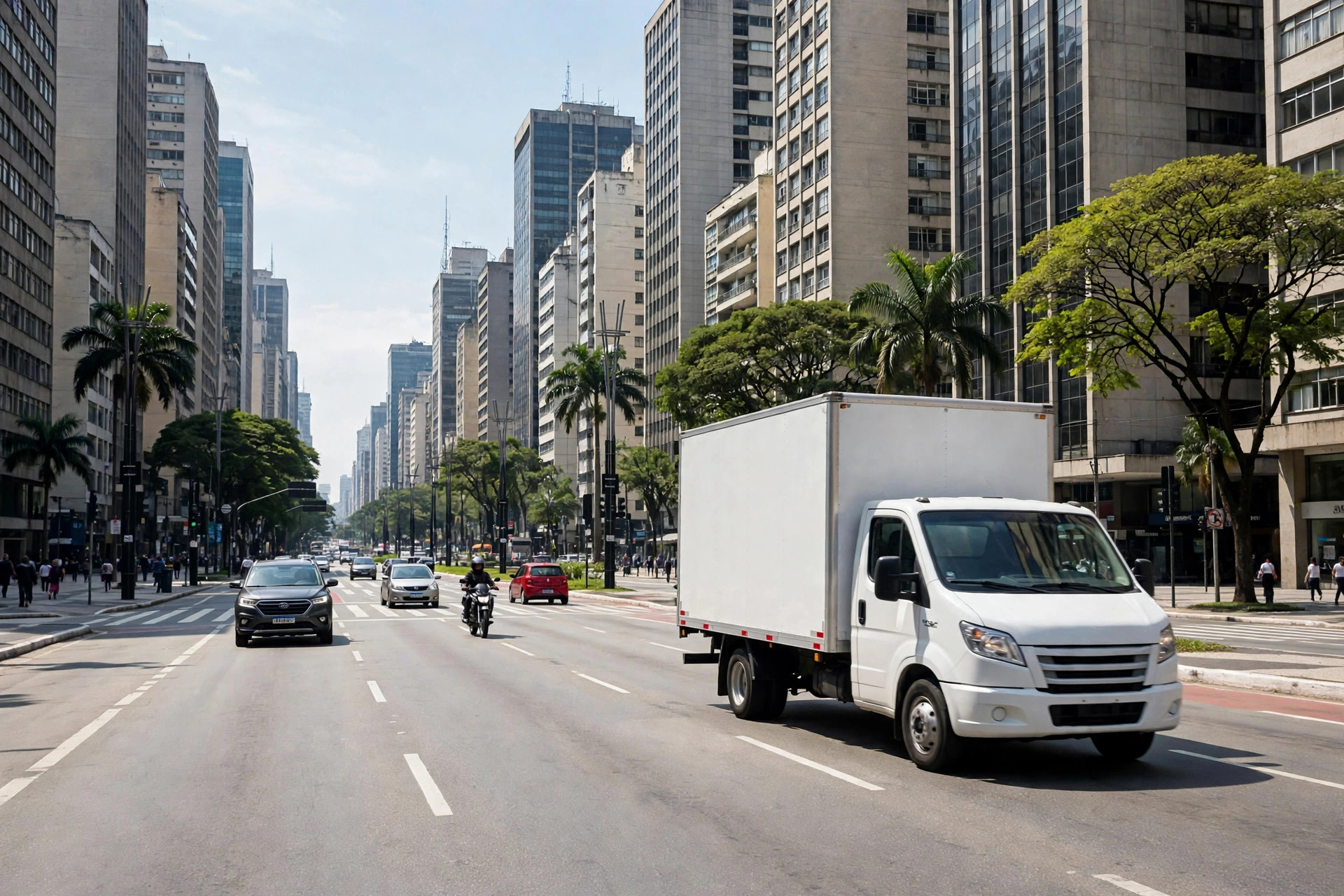
The VUC: The Little Truck That Can Enter by Day — With Three Hard Rules
So what do you do when downtown runs dry in the middle of the day? São Paulo built a door for that: the VUC, the urban cargo vehicle. VUCs are exempt from the ZMRC daytime ban — but watch out, they still have to obey the rodízio plate rotation. Dodge your plate's day, morning and evening peaks included.
What counts as a VUC? The CET (São Paulo's traffic engineering company) sets three hard requirements: body no wider than 2.20 meters, no longer than 7.20 meters, and built after January 2005. The truck also has to be registered with CET, and registration age can't exceed 15 years. Buying a small truck doesn't automatically qualify you — paperwork first.
So when you're assigning vehicles, do the math like this:
| Vehicle | Daytime ZMRC access | Rodízio peak hours on your plate day | Notes |
|---|---|---|---|
| Big truck (non-VUC) | No — only 9 p.m. to 5 a.m. | No | Saturdays after 2 p.m. and Sundays are free |
| Registered VUC | Yes | No — avoid 7–10 a.m. and 5–8 p.m. | Size, age, and registration must check out |
| Truck with DSV special permit | Per permit | Per permit | Perishables, moving services; file 15 days ahead |
Perishable food delivery and moving services have their own exception lane at CET: you can apply for a special permit. But file the paperwork at least 15 days ahead — approval takes 5 to 15 business days. Last-minute begging doesn't work. I know a cold-chain boss who files a month before peak season. That's called being prepared.
How Rodízio Fines Change Your Delivery Quotes
Now the money part. Too many warehouse distributors quote fuel, labor, and tolls — and leave the restriction cost out. That's a hole in the pocket. Here's how I do the math:
For each downtown delivery, first decide the vehicle and the window. Big trucks only run at night — night-shift drivers cost more, and customers don't love receiving at 2 a.m. That's the trade-off: you dodge the fine risk but pay more in labor and coordination. VUCs are flexible by day, but they're small — one load might take two trips, doubling fuel and driver time.
The fine itself? R$130.16 sounds small, but it's per hit — two in a day is over R$260, plus the points on the driver's license. Points pile up, and then your insurance and your hiring both get harder. My practice: put a separate "restriction compliance" line in the quote, folding in night-shift premiums and the extra VUC trips, and explain it to the customer. Customers get it instantly: daytime delivery means VUC and more trips; one-shot big-truck delivery means the night window. Lay out the choices, and the fine risk stops being something the distributor quietly eats.
At the end of the day, city delivery in São Paulo isn't won by who has the most trucks — it's won by whoever has the restriction timetable memorized. Rodízio runs on plates, ZMRC runs on the clock, VUC runs on dimensions. Pin those three timetables on the dispatch wall, and the fines will walk right past you.
There's an old saying where I come from: check the weather before you leave home, check your plate before you enter the city. Get the plate right, and business runs smooth.
By Shifu Zhao, Trucking Veteran (15 yrs)