Amazon changed the rules again — the prep requirements this month aren't the same as last month. Real talk: nine out of ten new sellers underestimate FBA prep. They think it's "grab stuff off the shelf, box it, ship it." That was me on my first batch. The whole shipment got rejected, came back, had to be redone — and I missed the Black Friday warm-up entirely. That batch was 800 units. The label station mixed up FNSKUs on two variants — black and navy, indistinguishable to the naked eye. Amazon rejected the whole thing. Ship it back, peel labels, re-apply: 12 days gone. Twelve days of stockout, the listing fell off the first three pages, and a month of ad spend went up in smoke.
Here's what prep actually involves, all four jobs: picking is only step one. Then labeling (FNSKU on every SKU), QC (appearance, count, accessories — none optional), and packing (box labels on mixed cartons, carton weight and size compliance). Miss any one of them and Amazon's warehouse shows zero mercy.
My Three-in-One FBA Prep Line: Four Stations
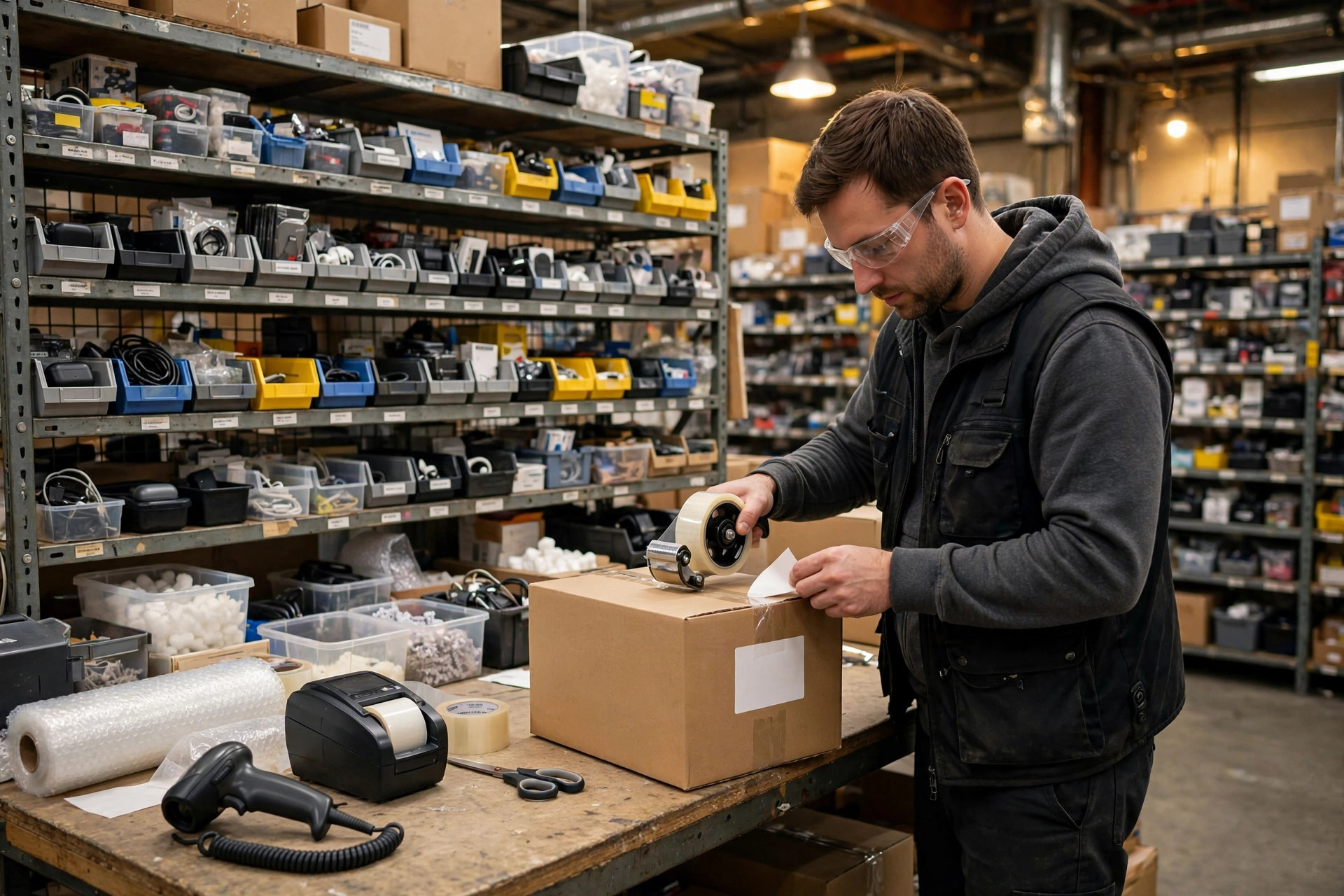
Here's how I run it now — prep broken into a mini assembly line, four stations back to back.
Pick station: pick in waves, not one SKU trip at a time. At small volumes, sort into bins by SKU while you pick, so nobody re-sorts later.
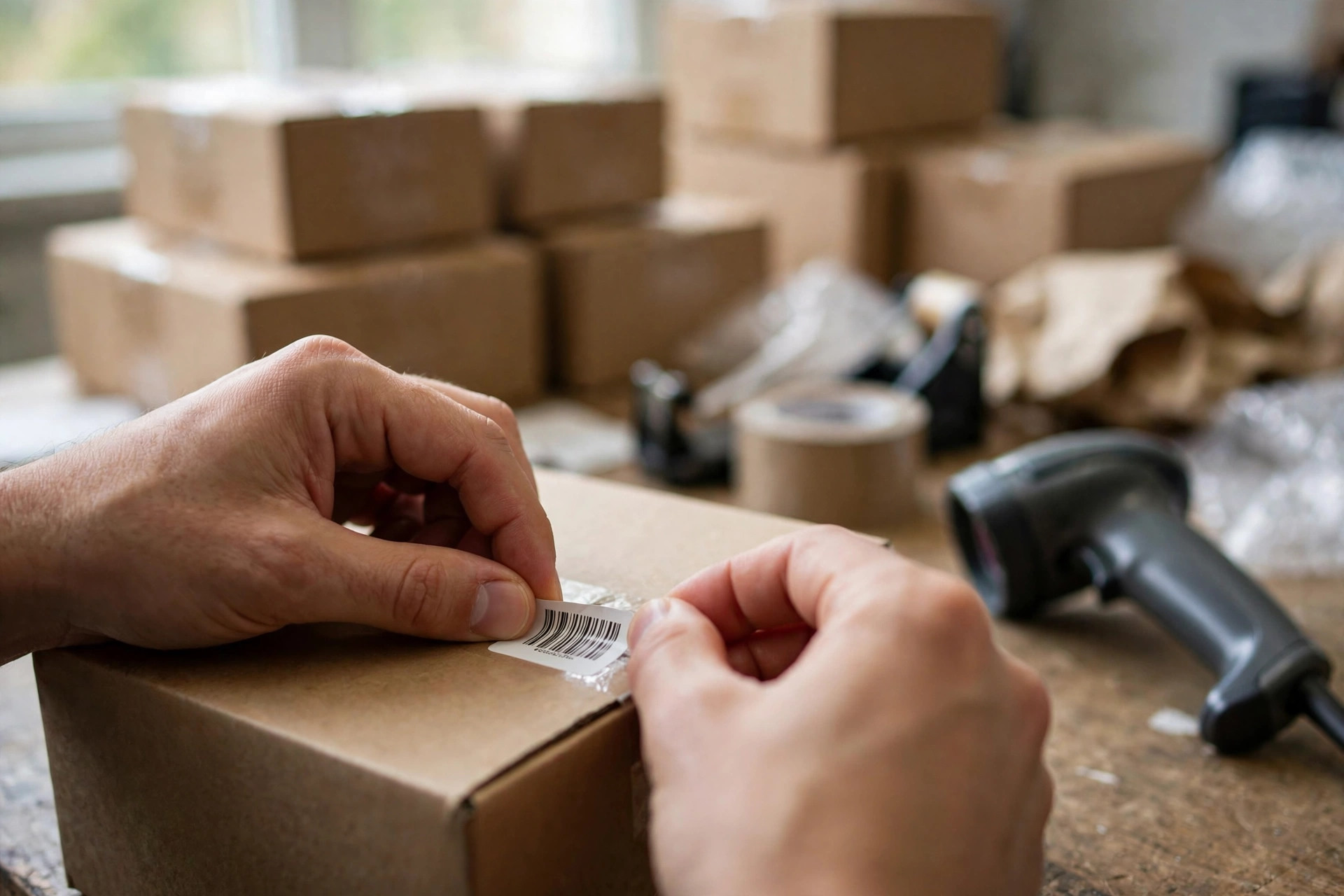
Label station: where everything goes wrong. My rule is "scan first, stick second" — pick up an item, scan its barcode against the SKU in the system, then apply the FNSKU. Never trust your eyes. Two SKUs that look identical, one wrong label, whole batch dead.
QC station: three checks — appearance (scratches, damage), count (no short packs), accessories (manuals, freebies). Small sellers love skipping this to "save labor." Wrong. Dead wrong. Everyone who skipped it ended up paying ten times the savings for the lesson. One batch, QC caught 3% of units missing the manual — half a day of rework in-house. Shipped to Amazon, that's 3% one-star reviews and returns.
Pack station: pack by box label, keep SKUs in separate layers in mixed cartons, weigh every finished carton. Carton weight and dimension limits change from time to time — go by Amazon's latest published policy, not some old forum post with numbers that expired two years ago.
On staffing: four people on my line — one picking, one labeling, two on QC and packing (QC and packing can merge into one station when it's slow). Everyone gets their own printer, scanner, and scale. Sharing equipment means standing in line, and standing in line is the dumbest waste of time there is.
On lead time: my rhythm is to start prep 45 days out. Ocean freight takes 25–30 days, and I leave a two-week buffer for Amazon receiving. Never cut it close before peak season — arriving 3 days late versus 10 days early is a world apart. Late means stockout; early just means a few extra days of storage fees.
The Numbers: DIY vs. Outsourcing FBA Prep
Math time. Q4 2024: one batch, 3,000 units, four people, three days. At our labor cost, per-unit prep came out to well under a dollar. The detailed math: 4 people × 3 days × 8 hours × $18/hour = $1,728, spread over 3,000 units — about $0.58 per unit. Add packaging materials and per-unit prep stays under a dollar.
Outsourcing? I got quotes from several prep warehouses: roughly $1 to $2+ per unit, negotiable at volume (going rate for reference only — get fresh quotes).
| DIY | Outsourced prep | |
|---|---|---|
| Per-unit cost | Low (cents) | High ($1–2+) |
| Speed | You control it — overtime can save a deadline | Their schedule — peak season means waiting |
| Quality | You watch it, you own the rework | Disputes when things go wrong; send-backs cost more |
| Best for | Steady volume, you have space and hands | Peak overflow, no space |
DIY looks way cheaper, right? But there's a second half to this math: rework. The most expensive part of FBA prep isn't labor — it's rework. Mislabel one batch and the return freight, re-labeling labor, and 9 days of stockout cost more than a year of outsourcing. My call: DIY for the everyday flow, but the process has to be right-first-time; outsource the peak-season overflow, but only to a warehouse you've worked with that actually does QC — never the cheapest quote. One more thing on quotes: ask whether packaging materials and re-labeling are included. Some warehouses quote $1.50 a unit, then charge extra for materials and extra again for fixing their own mislabels — ending up pricier than the $2 quote. Nail down the word 'all-in' when you ask.
The Prep SOP: Two Checkpoints That Catch 90% of Errors
Pre-label checkpoint: scan the FNSKU against the physical item, make sure the print is crisp (a blurry barcode that won't scan is the same as no label), and apply one at a time — don't batch them up.
Pre-pack checkpoint: box label matches the SKUs inside, mixed-carton layers are correct, full carton weighed and under the limit. Thirty seconds at each checkpoint stops ninety percent of rework.
Don't Make These Three Mistakes
Mistake one: wrong labels. September 2024, a 2,200-unit batch — the label station mixed up FNSKUs on two lookalike SKUs. Rejected at the warehouse, shipped back, labels peeled, re-applied: 9 days gone. Nine days of stockout, and the listing dropped two pages in rank. That disaster bought the rule I mentioned: scan first, stick second.
Mistake two: mixed SKUs in the wrong layer. Mixed cartons need box labels, and each SKU stays in its own layer — never tossed into the same compartment. Once we got lazy, two SKUs in one layer, and Amazon tore the whole carton open for re-inspection. An unplanned fee on top (check Amazon's latest policy for current amounts), plus 5 days late to go live.
Mistake three: overweight cartons. Packed too full, blew past Amazon's per-carton weight limit, rejected on arrival. Remember: limits per Amazon's latest published policy — check before you pack, don't go from memory. Our rule now: the current limit sheet is taped to the wall at the pack station, updated the day Amazon changes anything. Five minutes of work.
Counterintuitive truth: FBA prep isn't a speed game, it's a right-first-time game. Ten percent faster means nothing; one rework wipes out three months of margin. Small sellers shouldn't try to out-automate the big guys. Our edge is flexibility and attention — a right-first-time process is the lowest cost there is.
I've run this three-in-one line for over a year now — four straight batches, 12,000 units, zero rejections. Tested it myself — it works.
By Ah K, E-commerce Seller (5 yrs)