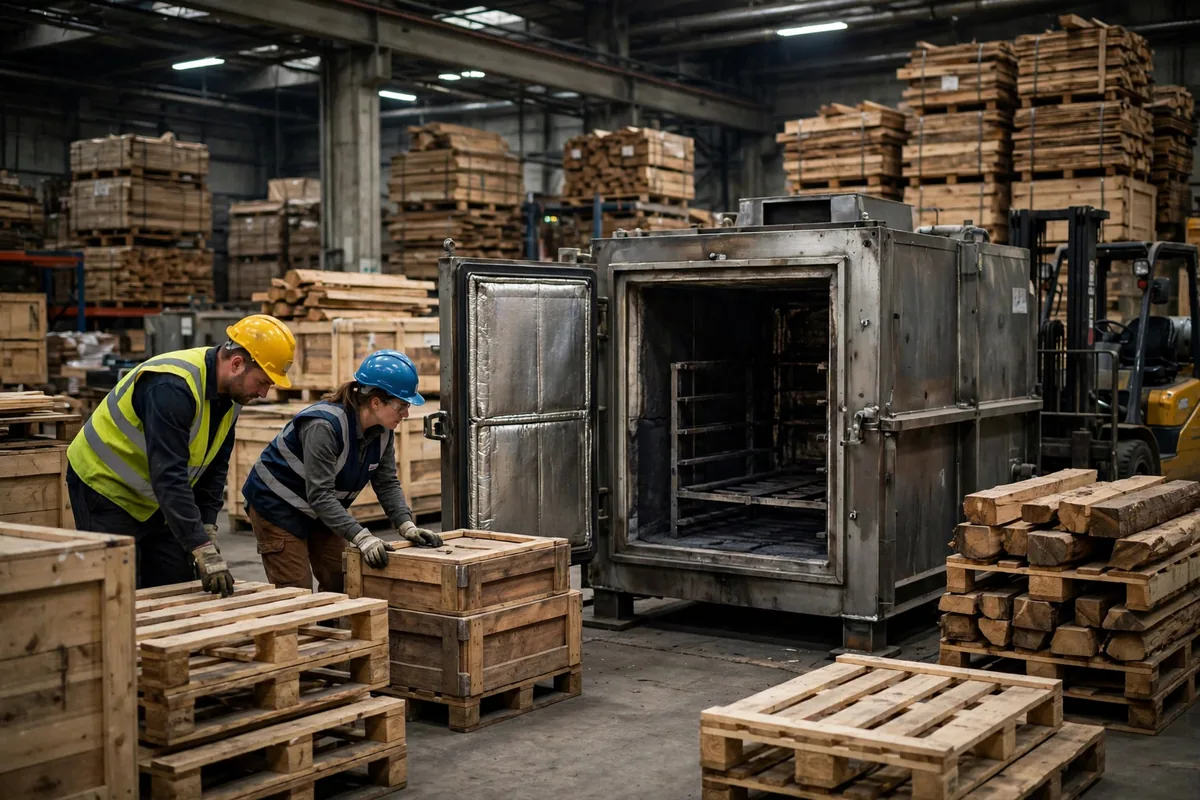
We had a client, an outdoor furniture shipper, who sent a full container to Europe in the autumn of 2024 on brand-new wooden pallets and crates. At the destination port, inspectors looked at the mark on the wooden packaging and found that the treatment details behind it did not line up with the registration. The whole container was held. The client called me that day, and I could hear the panic in his voice: every extra day in port cost money, re-treatment needed a new booking and a new site, and his next shipment was waiting on the empty container that was now stuck. A packaging fee he thought was settled turned into three bills — detention, re-treatment, and a late delivery — plus the trust he lost with his own customer.
That story is one I tell often, because it exposes an insider truth that sellers rarely hear from their own side of the table: with export wooden packaging, you are not really paying for the wood. You are paying for proof that the wood was treated. ISPM 15, the international standard for wooden packaging in international trade, requires regulated treatment and a compliant mark. The two common treatments are heat treatment and fumigation. Heat treatment brings the core of the wood to a specified temperature and holds it there for a specified time. Fumigation treats the wood with an approved fumigant under sealed conditions. The exact temperatures, durations, fumigants, and accepted practices vary by destination and change over time, so always check the latest official policy for the destination before you commit. Never copy last shipment's paperwork and assume it still applies.
Heat Treatment or Fumigation for Wooden Packaging: Decide on Three Questions First
Before choosing, answer three questions. Different answers point to different treatments.
First, where is the cargo going? Some destinations restrict certain fumigants, and some ports inspect fumigated packaging strictly for ventilation and residue, which makes heat treatment the simpler path there. Other cargo cannot take high heat: treatment may affect crate strength or the lining inside, and then fumigation deserves a serious look. Destination comes first. Treatment comes second.
Second, does the schedule actually fit? Heat treatment needs equipment time: heating, holding, and cooling a full batch runs on its own rhythm. Fumigation needs sealing, dosing, and ventilation time. When a sailing deadline is tight, the most expensive treatment is not the one with the highest unit price. It is the one that makes you miss the vessel. We had a client who pushed treatment to the day before the cutoff to save a fee, then found the treatment equipment fully booked. The container missed its sailing, and the rebooking cost several times what the saved fee was worth.
Third, can the supplier produce the full treatment record? The mark is only the visible result. The record is the evidence: which batch of timber, when it was treated, what parameters were used, who ran the process, and how the mark maps to that batch. If the record does not line up, a clean-looking mark will not hold up. When you vet a supplier, do not stop at a quotation that says "compliant included." Ask to see the complete record for their last batch. If they cannot show it, that tells you more than the price ever will.
Put those three questions together and the decision framework is straightforward:
| Factor | Heat treatment fits better when | Fumigation fits better when |
|---|---|---|
| Destination rules | Fumigants are restricted or tightly inspected | Fumigation is accepted and the process is mature |
| Cargo characteristics | The goods tolerate heat and the packaging stays stable | Heat would damage the goods or weaken the packaging |
| Schedule | Equipment slots can be booked in advance | Sealing and ventilation time fits inside the sailing window |
No single treatment suits every shipment. Choosing the wrong one always costs more than choosing the expensive one.
What a Rejected Wooden Packaging Shipment Really Costs
Here is the second client. In early 2025, a machinery-parts shipper bought crates from a small workshop at a price about 20% below the established supplier. The mark looked present, but no treatment record existed behind it. The destination port held the shipment on inspection. The client did the math afterward: the 20% saved on packaging did not cover even the first week of detention, and that was before re-treatment, re-declaration, and the risk of a late-delivery claim. The cheapest packaging became the most expensive line on the whole order.
That is the counterintuitive part of this business. Buyers negotiating packaging usually push on unit price, as if a wooden pallet were a commodity. But the real cost structure of wooden packaging is treatment, marking, record-keeping, and inspection risk, with the timber itself only one part. Shave 10% off the unit price, fail one inspection, and the profit on the whole order can disappear. When a supplier lists the treatment fee separately, buyers complain it looks expensive. When the fee is buried in the total, buyers have no idea where the risk sits. The question that matters in negotiation is not "can you go lower?" It is "who pays when this goes wrong?"
Automation helps here, but only in the right place. Some suppliers now manage treatment batches in a system: each batch's treatment record, mark number, and outbound destination are linked automatically, so an inspector's query can be answered in minutes instead of days of digging through paper. That reduces copied-number errors and speeds up evidence. But a system only makes the evidence chain solid. It cannot substitute for treatment done properly. Beautiful records behind untreated wood will still fail. Automation strengthens proof; it does not outsource compliance.
What to Lock Into the Contract: Ask These Three Questions
Next time you negotiate a contract, remember to ask these three questions, and get the answers written in before you sign.
First: what exactly is the treatment, and to what standard? Write the destination country, the treatment method, the mark format, and the form in which records will be delivered. All four items, no shortcuts. "Meets export requirements" on its own means nothing, because it cannot be tested when something goes wrong.
Second: are treatment records delivered with the goods, with each mark number matched to its treatment batch? Make missing records count as incomplete delivery, not as a document to be sent later. That single clause filters out most suppliers who assemble paperwork after the fact.
Third: who pays if treatment or marking problems cause detention, rejection, or re-treatment? Spell out detention, rebooking, re-treatment, and customer claims separately, and assign each one. Agreeing this at the negotiating table costs a fraction of arguing it afterward, when the container is already stuck.
Export wooden packaging is not a contest over who sells the cheapest timber. It is a contest over whose evidence chain survives inspection. Choose the right treatment, make the mark real, and keep the records aligned, and the container sails without drama. Get the treatment wrong or break the record chain, and every cent saved on packaging comes back doubled at the destination port.
By Susan, 3PL Sales Director