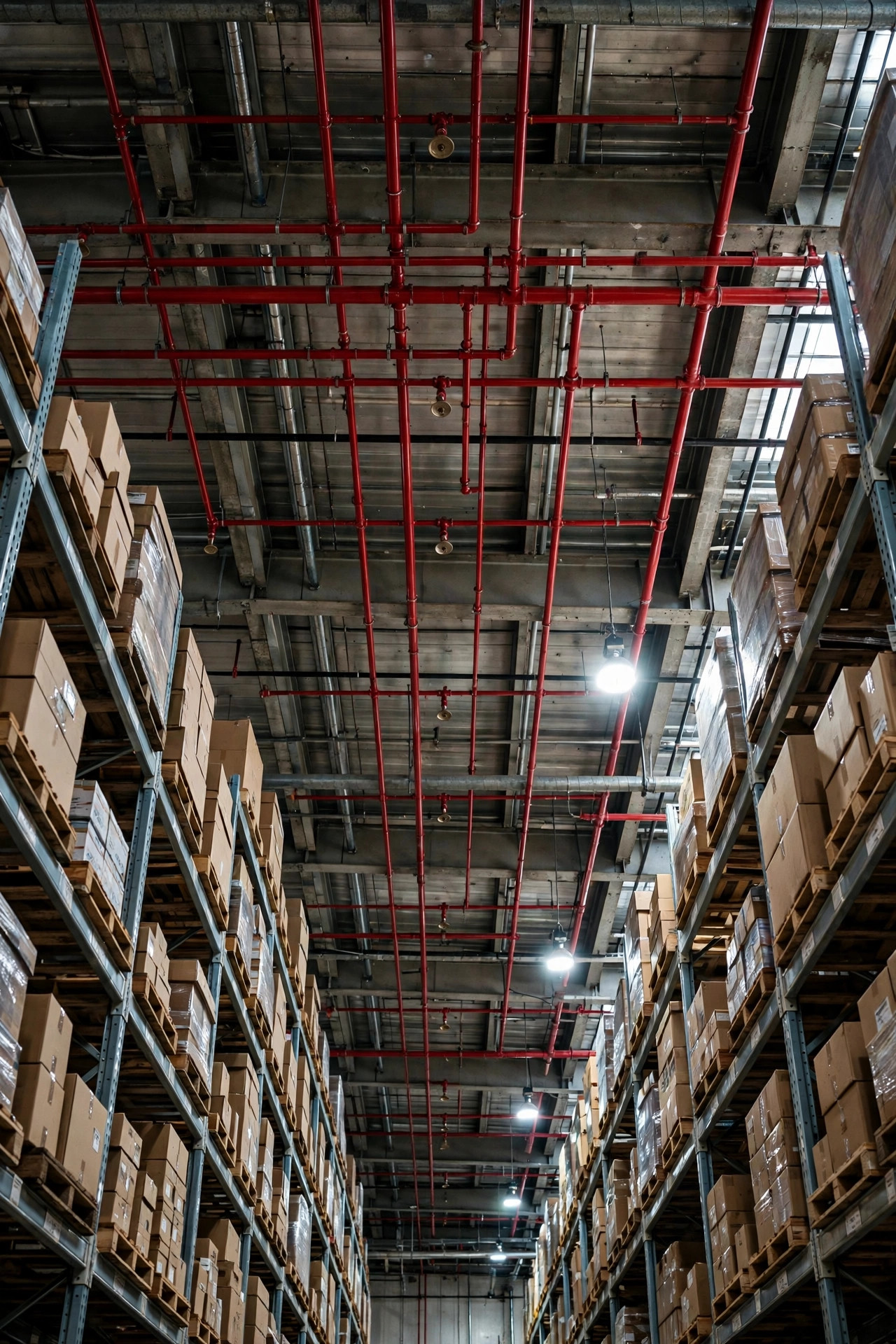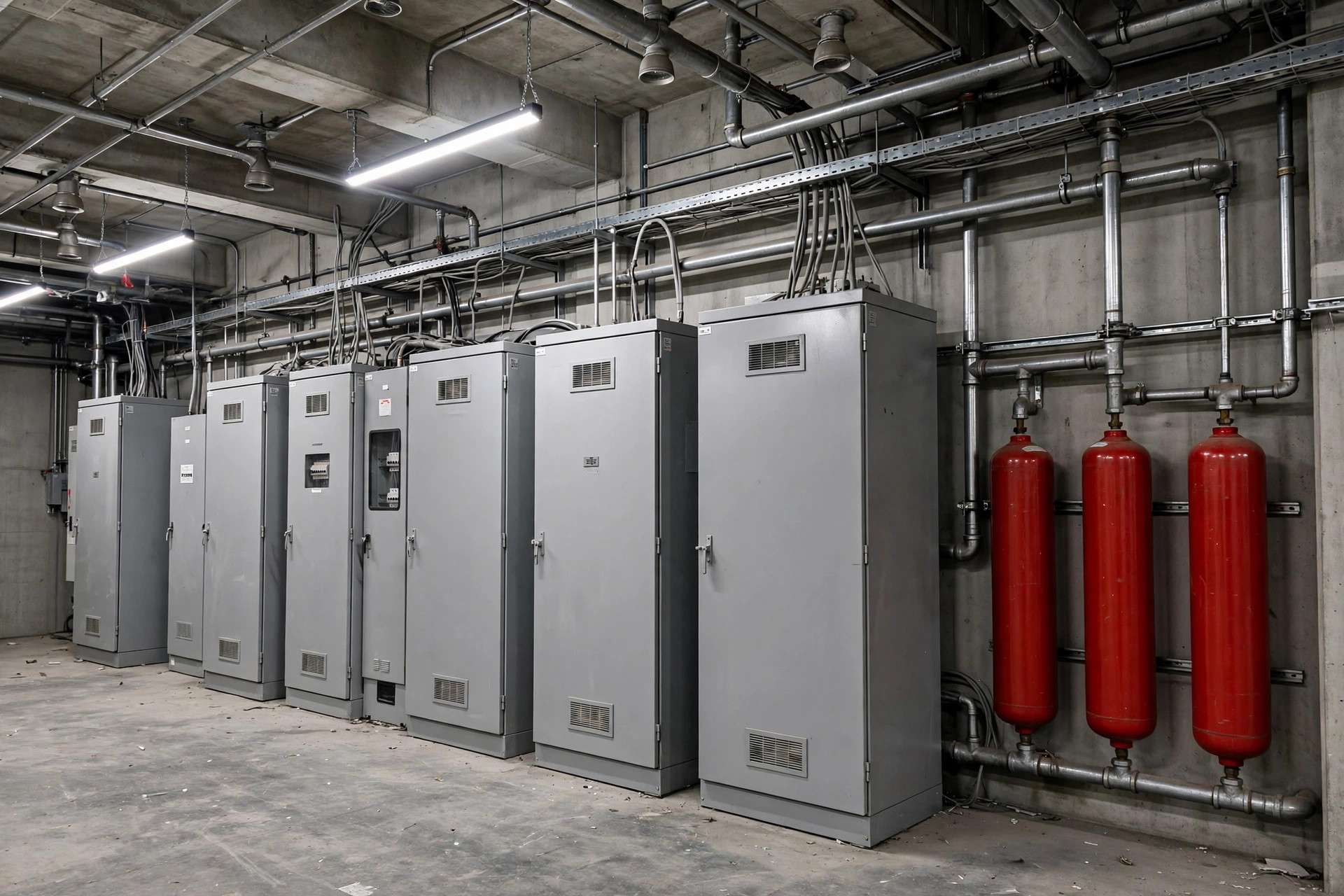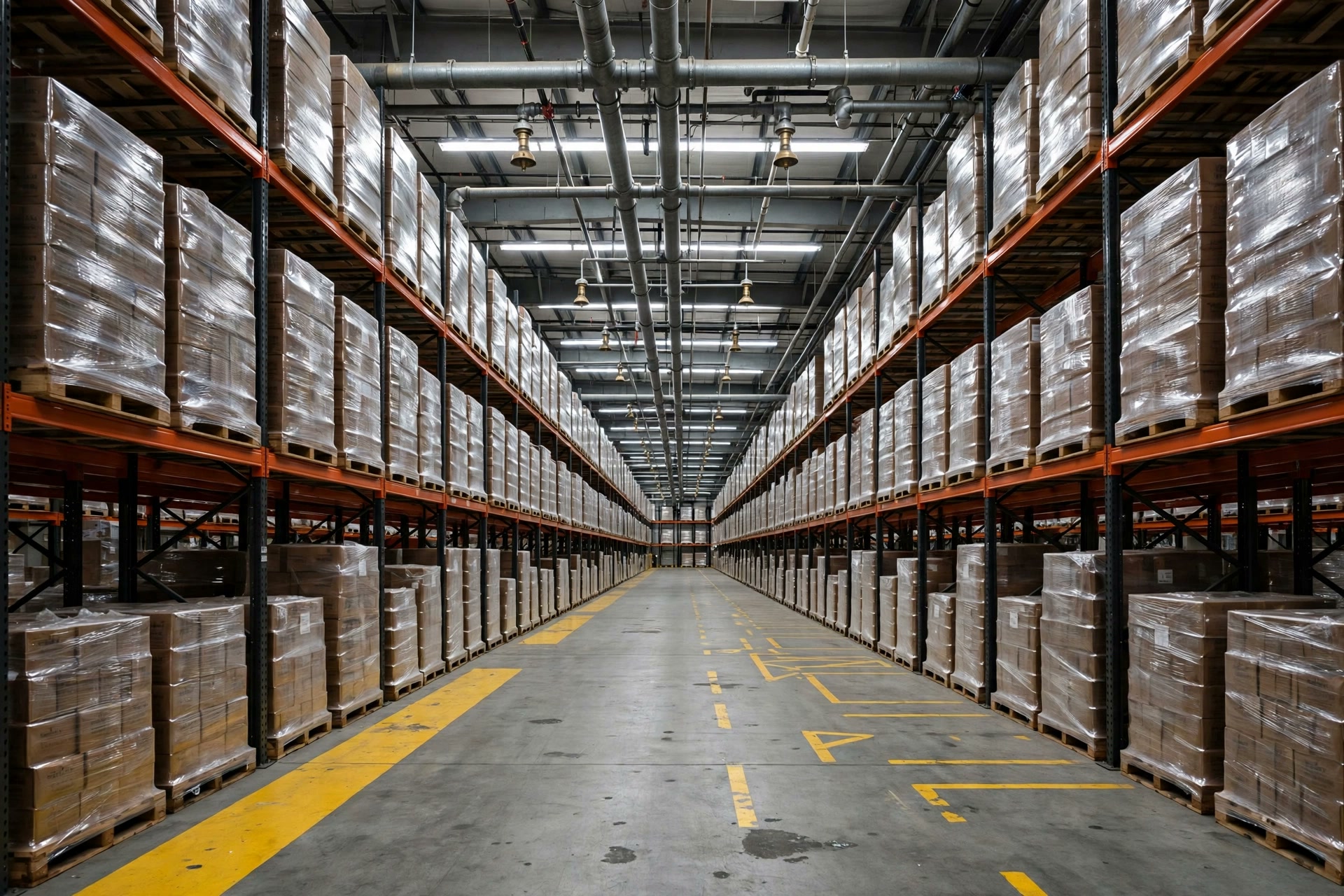
Two autumns ago I sat outside a warehouse in Ontario, California for two full days, waiting on a pickup. The freight was ready — the warehouse just couldn't ship it. The fire inspector had looked up at the racks and shut the operation down. "We only added one more rack level," the manager said. "Who knew the sprinklers had to change too?"
Fifteen years behind the wheel teaches you things no classroom can. I've watched warehouses burn and survive, and the difference usually hangs from the ceiling. So today: esfr sprinkler warehouse rack storage selection — plain talk on matching ESFR sprinklers to rack height in high-bay warehouses.
Two fires I saw with my own eyes
The first was outside Dallas. A paper-products warehouse caught fire at night — the blaze started on a ground-level pallet, and within seconds the ESFR heads above burst, water pouring down. The fire never reached the second rack level. They lost a few dozen pallets, the building was untouched, and they were shipping again three days later. "That sprinkler system saved every job in this building," the manager told me.
The second one went the other way. In the Inland Empire, around 2023, a home-goods warehouse was still running old conventional sprinklers — and its racks had crept from four levels to six over the years. An electrical fire started, the standard heads responded slowly with modest water flow, and flames climbed the cardboard like a ladder. By the time firefighters arrived, a steel frame was basically all that was left. I hauled one load of salvaged goods out of there; the whole place smelled like a campfire. Insurance eventually paid, the owner told a buddy over drinks — but every major customer walked away. Nobody stores freight in a building that already burned once.
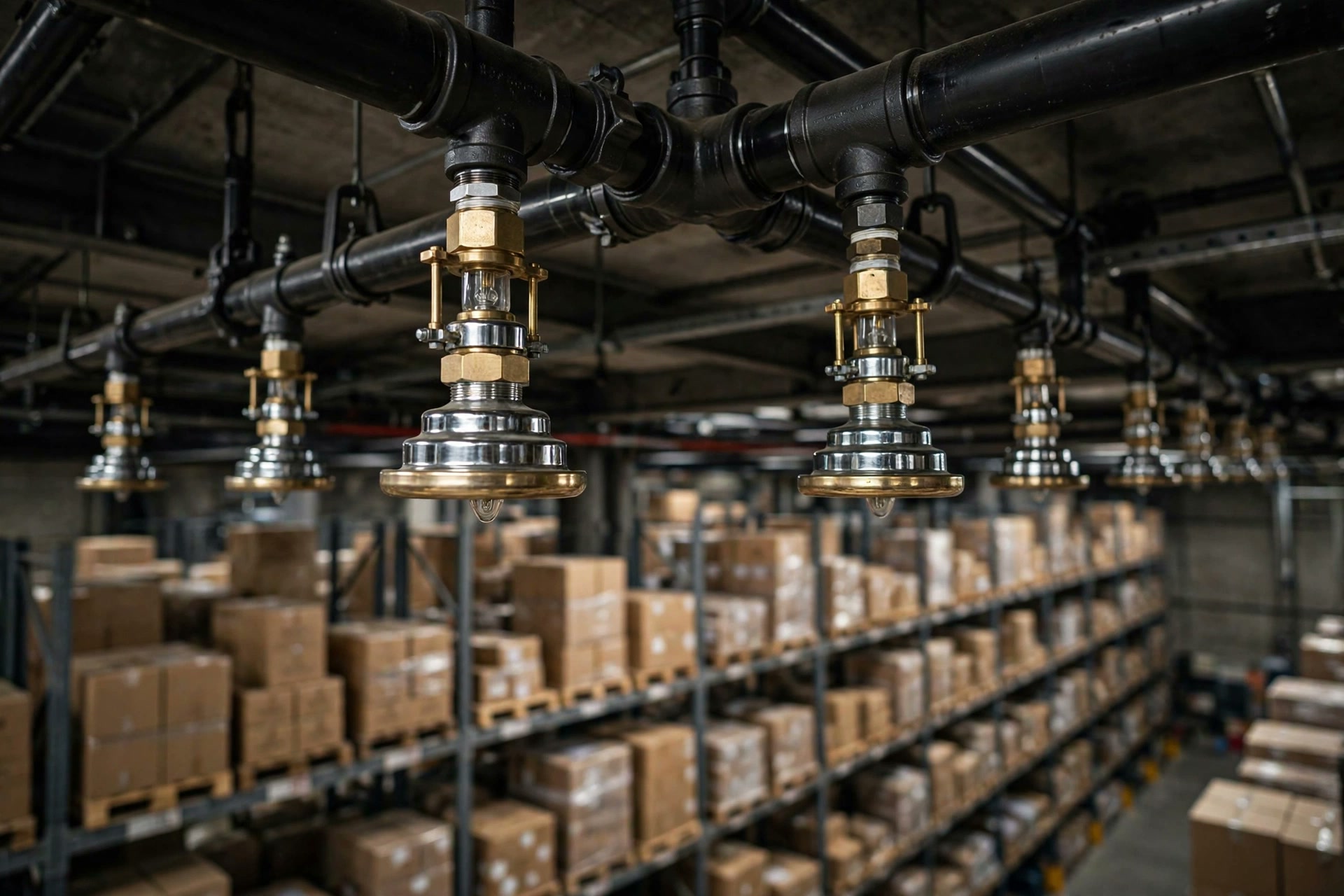
The lesson: sprinklers are invisible until the day they matter most. ESFR — Early Suppression Fast Response — is fast to trigger and heavy on water. A standard sprinkler's job is to control the fire until firefighters arrive; an ESFR head's job is to kill it itself. But that killing power has a condition — your rack height, your commodity, and your layout all have to sit inside what the head was designed to protect.
When the height changes, the heads have to change: the logic of esfr sprinkler warehouse rack storage selection
A lot of owners assume sprinklers are a one-time install — after that, raise racks and swap commodities however you like. Dead wrong. An ESFR head only recognizes your warehouse as it exists today. Change the height, the commodity, or the stacking, and your life-safety system can quietly become decoration.
Here's the selection logic, four steps, trucker-simple:
Step one: measure the top of the goods, not the top of the rack. What matters is how high the highest commodity sits off the floor — six rack levels can put top cartons over thirty feet up. Whether the sprinkler can reach the fire is judged against that number.
Step two: know what you're storing. Cartons, plastics, chemicals burn with completely different tempers. Plastics burn far hotter and faster than paper and demand far more from the system. Switch commodities and your protection requirements may be in a different league.
Step three: take those two numbers to the code. ESFR sprinklers fall under NFPA 13, the National Fire Protection Association standard governing sprinkler design for high-piled storage like warehouses. Each sprinkler model carries a rated protection height — push past it and the water can't punch through to the seat of the fire, which means the system is effectively useless. I'm deliberately not quoting specific heights or K-factors — the standard gets updated and local requirements vary. Take your storage height and commodity type to a fire protection engineer, or straight to your local fire department, and design to the latest NFPA 13 plus whatever your local authority requires.
Step four, and the one everybody forgets: any change means starting over. Raise the racks, add a level, switch commodity classes, change how you stack — any of those means re-checking whether the sprinklers still cover you. That Ontario warehouse where I lost two days added one rack level and nobody thought about the ceiling. One failed inspection, one stop-work order, years of regret.
Doing the math: does adding a rack level actually pay?
One extra rack level gives you a few hundred more pallet positions, and the added storage revenue looks sweet. But the sprinkler system may need a full rework — bigger heads, upsized piping, fresh hydraulic calculations — with part of the warehouse dark during construction. And if the inspector catches you unmodified, the stop-work order plus fines can wipe out half a year's gain from that new level in a single day.
A plain comparison makes the trade-off clear:
| Conventional sprinklers | ESFR sprinklers | |
|---|---|---|
| Strategy | Control the fire, wait for firefighters | Suppress it early, on its own |
| Response | Slower | Much faster |
| Water delivery | Modest | Far heavier |
| Protection height | Only suited to lower storage | Built for high-bay rack storage |
| In-rack sprinklers | High-piled storage often needs them | Usually not required — real savings |
See it? ESFR costs more up front but usually eliminates the in-rack sprinkler layer — simpler to install and maintain, and for high-bay warehouses the lifetime math often favors it. The counterintuitive part: ESFR is not "install and forget" — it's the most demanding system of all. Height, commodity, layout — all three must hold at once, and if one slips, performance falls off a cliff. Conventional heads are dumber but more forgiving. That's the trade-off: you buy ESFR's killing power, you accept its fussiness, and every warehouse change means re-validating the match.
In 2024 I picked up at a warehouse near Phoenix where the owner wanted two more rack levels. Before touching a wrench, he brought in a fire protection engineer, who found the old heads couldn't cover the new storage height — bigger heads, upsized mains. The owner did the three-week retrofit in the slow season and passed re-inspection on the first try. "Hurt to pay for it," he told me, "but I sleep at night." Same decision — raising racks — two opposite endings. The difference: ask the fire folks first.
Three pieces of advice — for shippers and warehouse operators
First, for shippers leasing space: before you sign, ask one question — "what height and commodity was this sprinkler system designed for?" If your goods stack higher or burn hotter than the original design, the inspector can freeze your freight inside. Don't assume it's the warehouse's problem — your cargo burns first.
Second, for warehouse operators: ask before you touch the racks. Raising, densifying, switching commodities — get a fire protection engineer's opinion first. That consultation is pocket change next to a stop-work order.
Third, for everyone: sprinklers feel expensive until the day you wish you had more of them. Fifteen years on the road, and I've watched too many warehouses save pennies on fire protection and lose whole businesses to fire. It boils down to one sentence: when the height changes, the heads have to change — and when in doubt, go by the latest NFPA 13 and your local fire department.
There's an old saying back home: better to have it and not need it than to need it and not have it. An ESFR system over your racks is exactly that kind of "have."
By Shifu Zhao, Trucking Veteran (15 yrs)