The call came at 2:30 in the morning, two weeks before peak season.
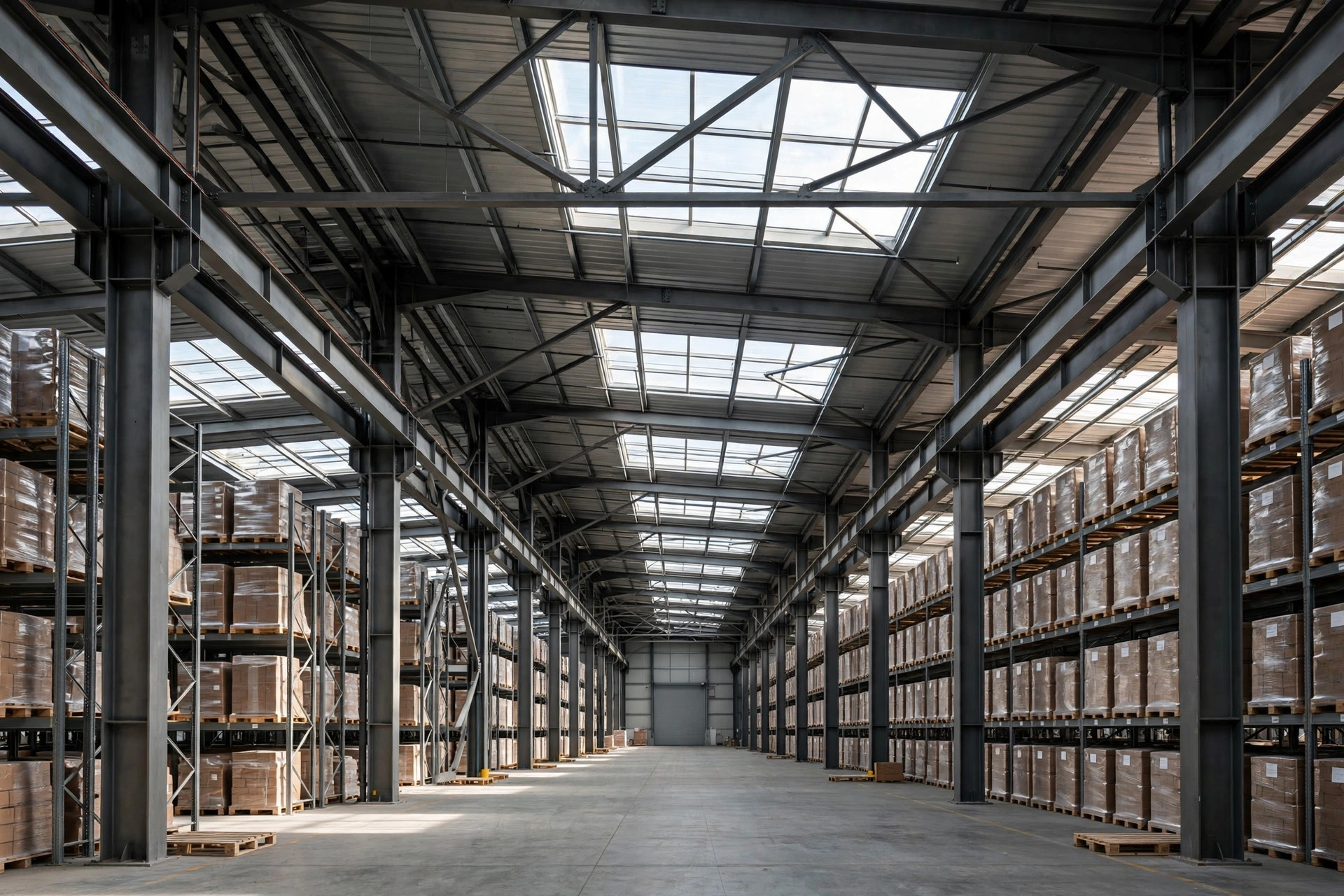
It was October 2021. Our 3PL warehouse outside Ontario, California — 38-foot clear height, about 200 people on the floor in peak. The night-shift lead called to tell me the fire inspector was coming back for a re-inspection at 8 a.m., and he wanted the top level of our six-high racks left exactly as it was.
Six levels. Top of storage sitting at about 32 feet. And the product? Plastic toys — Group A plastics, one of the nastiest commodity classes you can legally store. When we were at four levels, we'd passed inspection without a blink. We'd added two levels over the summer, and I'd had a bad feeling about it for months.
The inspector walked the aisles the next morning, looked up at the sprinklers, looked at the top of the racks, and shook his head. "Your system can't cover this height," he said, and handed me his dog-eared copy of NFPA 13, opened to the ESFR chapter. "Either drop back to four levels, or convert to ESFR."
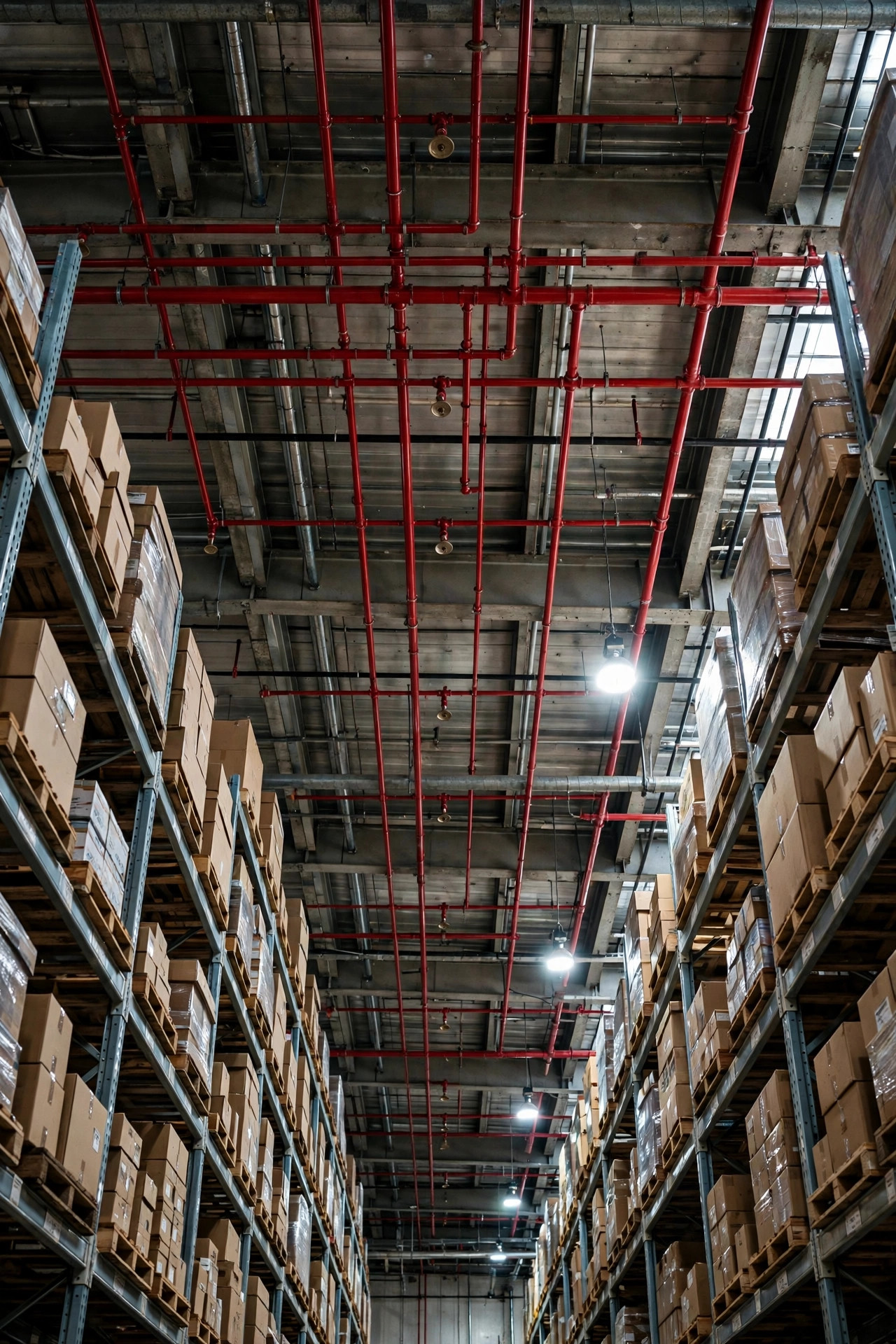
Let me be straight with you: in U.S. warehousing, the fire marshal is the one permit you can't sweet-talk your way around. ESFR — Early Suppression Fast Response — sounds like engineering jargon, but the idea is simple: big water, delivered fast, right at the ceiling, designed to knock down a high-rack fire before it runs. Whether you need it comes down to three lines you cannot cross: ceiling height, commodity class, and clearance. Miss one, and you're done.
How We Dug This Hole
We'd leased the Ontario building from a tenant who stored paper products — low-hazard stuff. The roof had standard-response sprinklers and a smattering of in-rack heads. In 2021 we landed a big account: plastic toys. Racks went from four levels to six. Storage height went from 22 feet to 32 feet.
Our insurance broker called first. Premium up 40 percent, he said — "commodity class changed, existing protection inadequate." I was annoyed. The sprinklers looked fine to me. Then the inspector's verdict landed, and I finally understood: a sprinkler system is designed around height plus commodity. It isn't install-and-forget.
We brought in a fire protection engineer. He spent an afternoon with a tape measure and came back with two options.
Option A: keep the standard sprinklers and add in-rack heads. At 32 feet of storage with Group A plastics, NFPA 13 wants in-rack sprinklers on three levels, full longitudinal and transverse coverage — more pipe inside the racks than the racks themselves. Price tag: roughly $380,000. The fire pump room needed an upgrade. Half the building shut down for three weeks during construction.
Option B: convert the roof to ESFR — K-25.2 large-orifice heads — and rip out every in-rack sprinkler. Price tag: roughly $450,000. Same pump upgrade, but only localized shutdowns over about ten days.
You'd think Option B was the expensive one. It wasn't — not when you do the five-year math:
| Option A: Standard + in-rack | Option B: ESFR | |
|---|---|---|
| Retrofit cost | ~$380,000 | ~$450,000 |
| Shutdown losses | Half the building, 3 weeks: ~$90,000 | Localized, 10 days: ~$30,000 |
| In-rack heads hit by forklifts | 4–6 heads/year, ~$8,000 each with water damage | Zero — forklifts can't reach the roof |
| Insurance | No discount | ~12% reduction for an FM-approved ESFR system |
| Five-year total | ~$670,000 | ~$520,000 |
The boss signed off on ESFR before the engineer finished the sentence. Here's the thing people miss: ESFR doesn't save you sprinkler money. It saves you "no-pipe-inside-the-racks" money. In-rack heads get clipped by forklifts every year — it's a matter of when, not if — and one accidental discharge soaks tens of thousands of dollars of product. The warehouse next door learned it in 2020: a forklift backed into an in-rack head on night shift, water ran for forty minutes before anyone shut it down, and two pallets of electronics were scrap. $120,000 gone.

The Three Hard Lines: Height, Commodity, Clearance
Line one: ceiling height. The ESFR chapter of NFPA 13 (Chapter 25 in the 2019 edition, Chapter 26 in the 2022 edition) draws the line at a 40-foot (12.2 m) ceiling, with storage generally capped at 35 feet (10.7 m) depending on commodity and aisle width. Above a 40-foot roof, ESFR can't do the job — you need a different approach. Treat those numbers as the code's ceiling, not a target: local authorities having jurisdiction can be stricter, so always check the latest NFPA 13 edition and your local fire marshal's requirements.
Line two: commodity class. Ordinary Class I through IV commodities and Group A plastics (non-expanded) are ESFR territory. But several storage types are explicitly off-limits: exposed expanded plastics, aerosols, flammable liquids, and high-piled lithium-ion batteries. Their fire growth outruns even ESFR's water delivery. Our plastic toys were solid molded pieces — non-expanded Group A — and the engineer gave us the green light. If they'd been foam, that $450,000 would have been wasted and the inspector would have failed us anyway.
Line three: clearance. From the deflector to the top of storage, you need a minimum of 36 inches (0.9 m) — not a fraction less. This is the line everyone forgets, and the one that bites hardest.
How 36 Inches of Clearance Burned Us Once
In 2022 we were looking at a building in California. The landlord swore up and down: "ESFR at the roof, you can move right in." We skipped the engineering review to save time — mistake. At the pre-inspection, the fire marshal measured 28 inches from our top-level product to the deflectors. Failed on the spot.
The landlord shrugged: "The heads are ESFR, sure. But your storage is too high." We walked away from the letter of intent and nearly lost our deposit. Since then, our rule is simple: before signing any lease, we run through the full esfr sprinkler requirements warehouse checklist — height, commodity, clearance — line by line, with an engineer. ESFR isn't "installed equals protected." It's installed plus the right commodity plus the right height plus enough clearance. Miss any one of them and the whole thing fails.
The Counterintuitive Truth: The Taller the Building, the Cheaper ESFR Gets
Most operators treat ESFR as the premium option — the expensive one. Let me be straight with you: it's the opposite. The taller the building, the cheaper ESFR gets relative to everything else.
Under 30 feet of ceiling? ESFR is overkill; standard sprinklers do fine. But at 35 to 40 feet, a conventional design needs two or three levels of in-rack sprinklers, and once the hydraulic calculations are done, the pump pressure it demands is often higher than ESFR's. The total installed cost comes out above ESFR — and then you get five years of forklift strikes, plugged heads, and accidental discharges. That maintenance bill alone would buy half an ESFR system.
Our standing procedure for any new lease is three questions: one, how high is the ceiling? Two, what's the commodity class — is it locked in? Three, can we keep a full 36 inches from the top of storage to the deflectors on the highest level? If we can't answer all three, we don't sign. And we always pay an engineer a few thousand dollars for a hydraulic review before the lease is final. It's the cheapest insurance in the whole project.
So here's my advice to fellow operators: before you add a rack level, call your fire protection engineer. Don't wait until the product is stacked to the roof and the inspector is shaking his head at you in the aisle. That lesson cost us $450,000 to learn. Yours can be free.
By Chen Feng, Warehouse Operations Manager