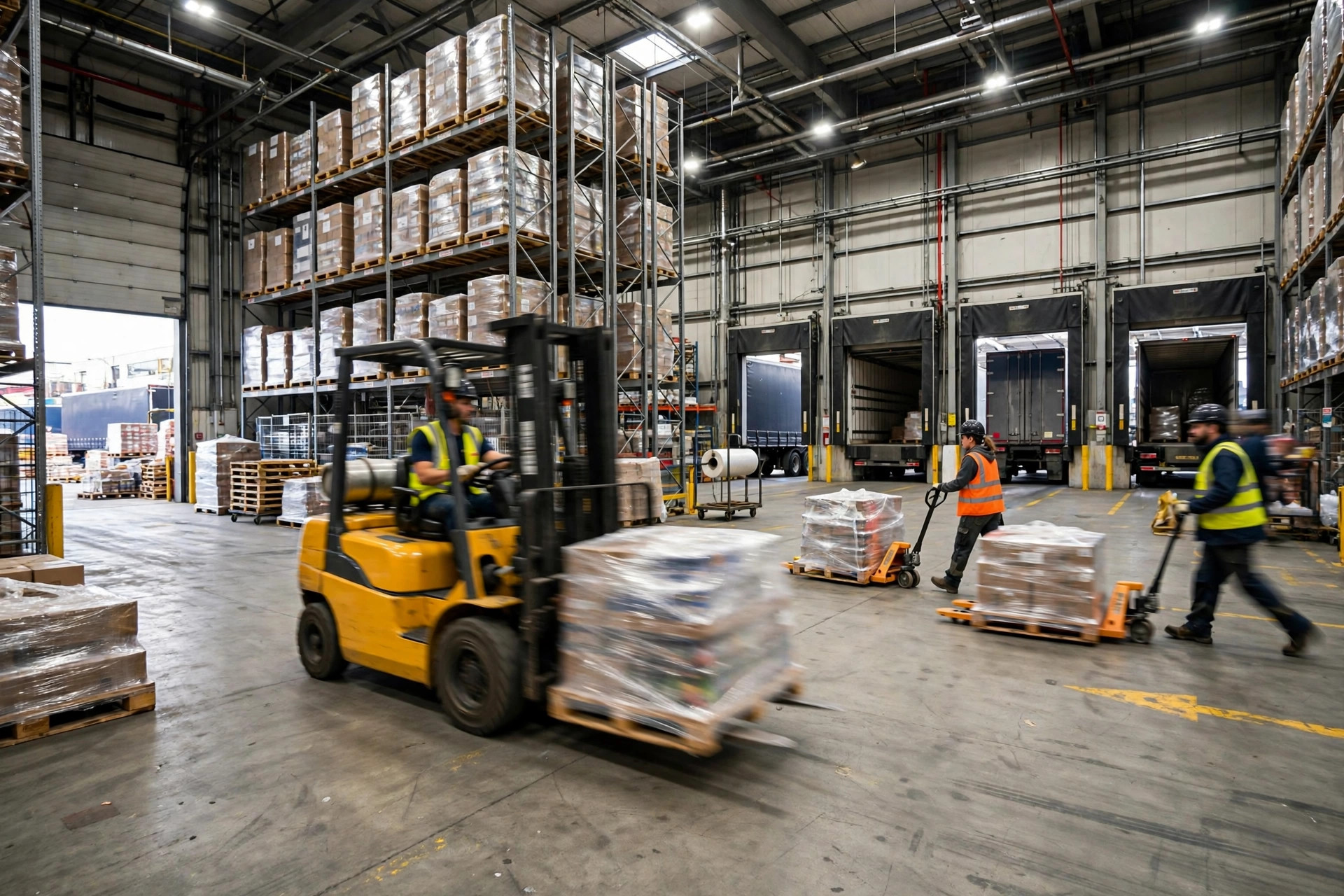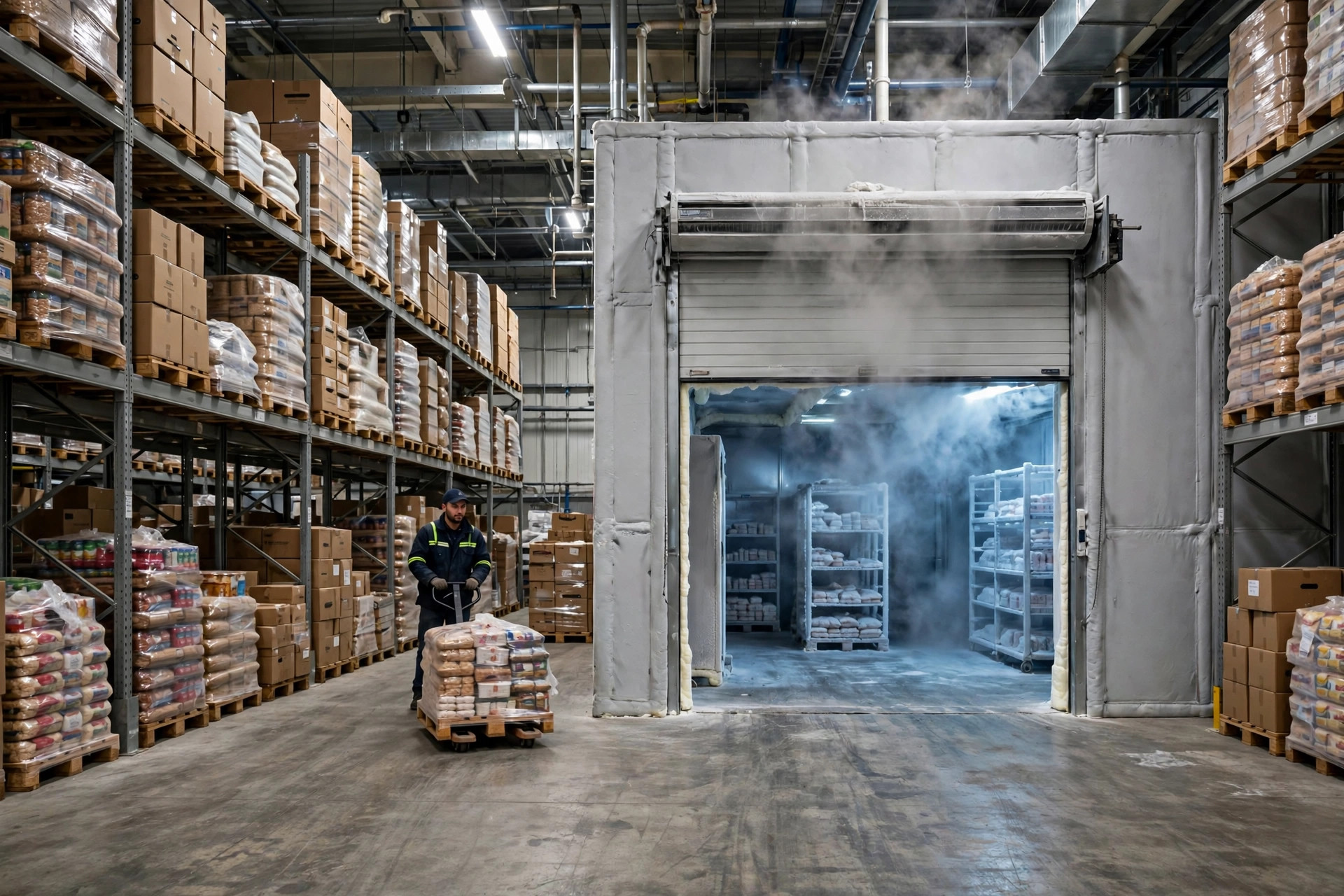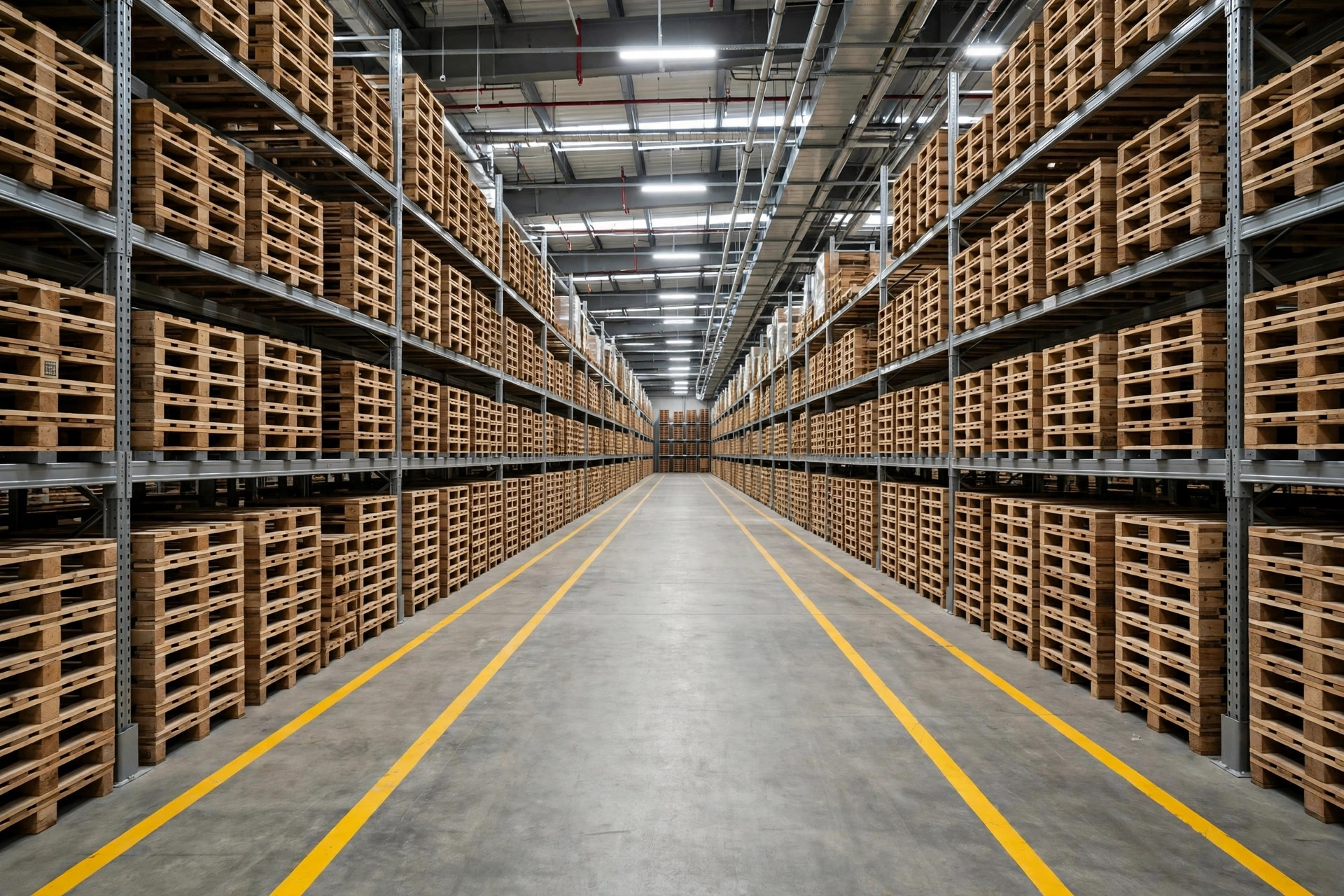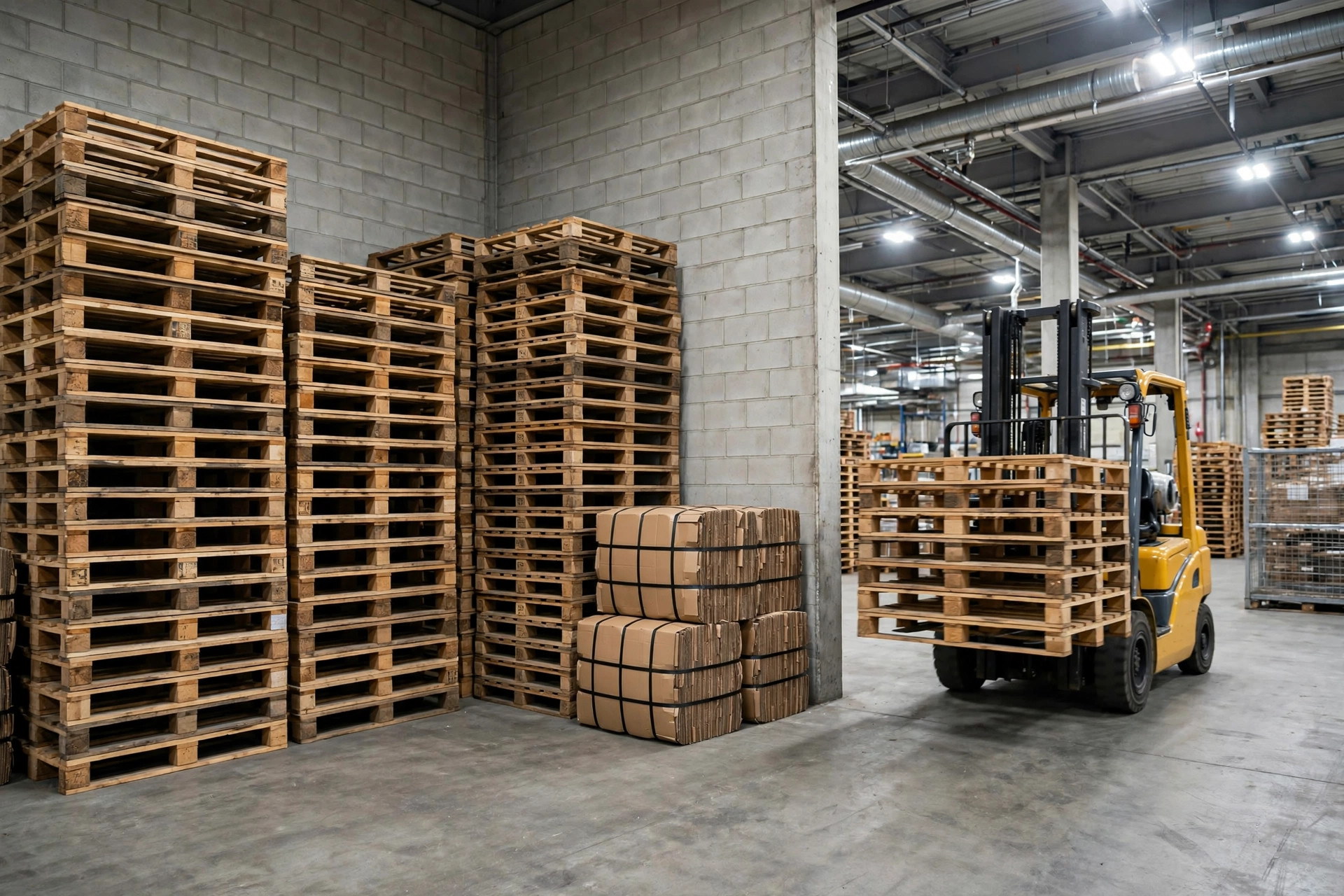
November 2024. Peak season. 2 AM on the night shift.
I'm in the office watching wave progress when my forklift driver calls. "Boss, the main aisle is dead. Somebody left a stack of empty pallets right in the middle. I can't get through, and the pickers are lining up behind me honking."
I walk out there. Sure enough. A leaning stack of empty pallets sitting dead center in the main aisle, a few stretch film cores and flattened cartons scattered around it. Forklifts can't pass. Pick carts can't pass. The whole aisle is frozen. That wave shipped 20 minutes late.
Honestly? That one was on me. Not on the driver.
How the problem snuck up on us
Here's how every warehouse does it: all eyes on the forward flow. Inbound aisles, outbound aisles, pick paths, drawn up nice and pretty. But what happens after the freight comes off the pallet? Empty pallets, stretch film, cardboard, banding. The reverse stuff. Who owns that?
Nobody. So it just lands wherever. Empty pallets from receiving get stacked along the aisle. Film from the pack stations gets balled up and dropped on the floor. Cartons get stomped flat and shoved in a corner. Nobody thinks it's a problem at first. Then peak hits, volume doubles, and waste volume doubles with it. The pallet stacks grow taller, the scrap spreads wider, and the main aisle goes from fitting two forklifts side by side, to one, to none.
The part that really stung: our forklifts were running back and forth moving this junk. Burning fuel and labor hours to relocate trash from point A to point B. Real talk, that's not logistics. That's expensive garbage relocation.
After that 2 AM blockage, I pulled the leads into a huddle. One sentence: empty pallets and waste get their own flow, and that flow never touches the main aisle.
Three mistakes we made getting there
Mistake one: we put the waste staging in the wrong spot.
We painted a yellow box near receiving, stenciled "WASTE STAGING" on the floor. Looked professional. Then the trucks showed up, the dock ran out of room, and drivers started dropping freight right inside our yellow box. Waste had nowhere to go, so it flowed back into the aisle. Lesson learned: never put staging next to a working dock. Working docks always get reclaimed by real work.
Mistake two: we guessed the pickup frequency.
One pickup a day sounded fine. On weekdays it was. Then the weekend hit, two days with no pickup, and Monday's day shift spent the first hour clearing scrap before they could start working. Morale tanked. We finally tied the pickup rhythm to actual waste volume, and that fixed it.
Mistake three: the scrap buyer taught us a lesson.
March 2025. We'd saved up two months of cardboard and called the recycler. The guy took one look and shook his head. "Your film's mixed in with the paper. Whole load gets downgraded." That truckload paid several hundred dollars less than we expected. After that, the whole building learned: film is film, paper is paper, separate bins, no exceptions.
What we run now
It took about half a year of trial and error. What follows is our standard today. Nothing fancy. It works.
1. Reverse flow: waste travels the back loop only
We drew a "reverse lane" on the site map. It uses the outer secondary aisles to connect the pack area, the receiving de-palletizing zone, and the returns rework area, ending at a waste shed by the back door. Empty pallets and waste travel this loop. They never enter the main aisle.
Every forklift driver gets a laminated pocket card with the loop on it. When our veteran driver trains a new hire, day one isn't about picking freight. It's about walking the reverse loop. His line: "Pick the wrong freight, we can find it. Put waste in the wrong place, the whole building jams."
2. Waste staging location: three hard rules
After getting burned, we set three rules:
One, keep it "one forklift trip" from where waste is generated. Too far and people won't bother carrying it there, it ends up in the aisle. Too close is worse: it becomes a toss-and-forget pile that never gets cleared. One forklift trip. Not too close, not too far, just right.
Two, never on the main aisle or at a working dock. We'd rather walk an extra 50 meters than take the shortcut. Aisles are the building's arteries. You don't stack garbage in an artery.
Three, cardboard needs a roof. Wet cardboard grows mold, and the recycler either rejects it or crushes your price. Our staging shed is a simple canopy by the back door. Cost almost nothing. Protects the cardboard's resale value.
3. Empty pallets: three grades, repair or scrap in one table
We grade every empty pallet. The whole building runs this standard now:
| Grade | Condition | Disposition |
|---|---|---|
| A | Deck solid, nails tight | Back into circulation |
| B | One or two broken boards, structure sound | Repair bay, batch the work |
| C | Wrecked, won't hold up | Scrap, sell as waste lumber |
Repair or scrap comes down to one comparison: the cost of one repair (labor plus materials) versus the price of a new pallet, and how many more trips the repaired pallet will survive. Our rule of thumb: if repair cost passes one-third of a new pallet's price, it's grade C. Don't get sentimental. A half-dead pallet that collapses mid-aisle with freight on it will cost you a lot more than a pallet.
One more hard rule: cap the empty pallet inventory. Ours is two stacks. Over the cap, it ships out. No "we'll deal with it later." Empty pallets look free, but they eat the square footage you're paying rent on. A building full of empty pallets is hidden inventory.
4. Pickup rhythm: fixed time, fixed route, fixed owner
Here's our current schedule:
- Empty pallets: twice a day, midday and before night shift, along the reverse loop
- Cardboard and film: once a day at 4 PM, twice during peak
- The owner is written into the shift roster. Whoever owns the shift owns the pickup. No handoff until it's done.
Something surprising happened once the rhythm was locked in: waste stopped piling up. Because everyone knows the 4 PM run always comes. Just get it to staging. Nobody has to think. The best thing a process can do for the floor is remove thinking.
5. Selling the scrap
This started as a cleanup project and turned into a revenue line:
- Bale the cardboard before selling. Loose cardboard versus baled cubes, the recycler's price can differ by double. We bought a used baler. It paid for itself in months.
- Separate film from paper. Baled together, you get the downgrade. Every time.
- Get two quotes. Don't marry one recycler. Rebid quarterly. Scrap paper pricing moves with the market.
- Keep the scale tickets. Every load weighed, every ticket filed, reconcile monthly. Boring. Worth it.
Quick math for the crew: a mid-size DC generates several tons of cardboard a month without trying. At going rates, that's a few thousand dollars a year back in your pocket. In our building, that money buys the whole crew drinks and a meal every month. Our veteran driver put it best: "Waste used to be our headache. Now it's our drink fund." Morale comes from funny places sometimes.
6. Aisle management, the 5S way
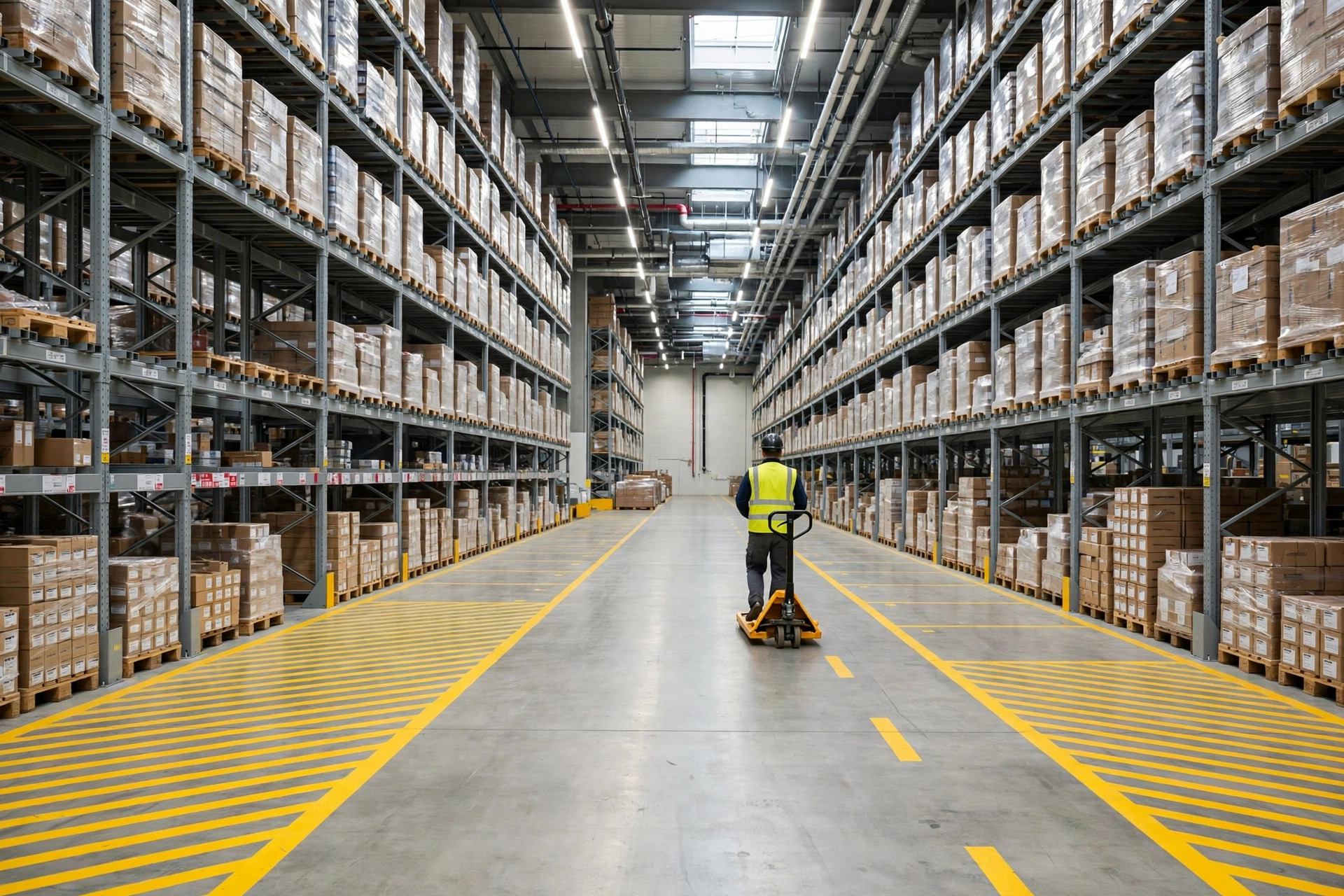
Painting lines on the floor doesn't make an aisle clear. Every shift change now, a lead walks the main aisle. Anything staged where it shouldn't be gets photographed and posted in the crew chat. After a month of that, people got embarrassed enough to stop.
New hire orientation, taught by the veterans: the first lesson isn't picking. It's the aisle. We have a saying in our building: an aisle holds exactly two things, moving vehicles and moving people. Everything else is trash.
Two counterintuitive lessons, for my fellow operators
First, putting waste staging too close to the source makes things worse. Everyone assumes closer is more convenient. Wrong. Too close means toss-and-forget, and the pile never gets cleared. Keep it one forklift trip away. That short walk forces the staging point to stay in rotation.
Second, empty pallets are a liability, not an asset. On the books they might be worth something. On the floor, every over-cap stack eats your space, blocks your aisle, and burns your forklift fuel. Don't hoard them. Clear them. Sell them.
One last reminder: walk your main aisle once a week yourself. Bend down. Check if the yellow lines are still there. Lines on the ground, aisle stays open. Lines gone, a blockage is coming. Don't wait for a 2 AM phone call to remember the waste exists.
By Chen Feng, Warehouse Operations Manager