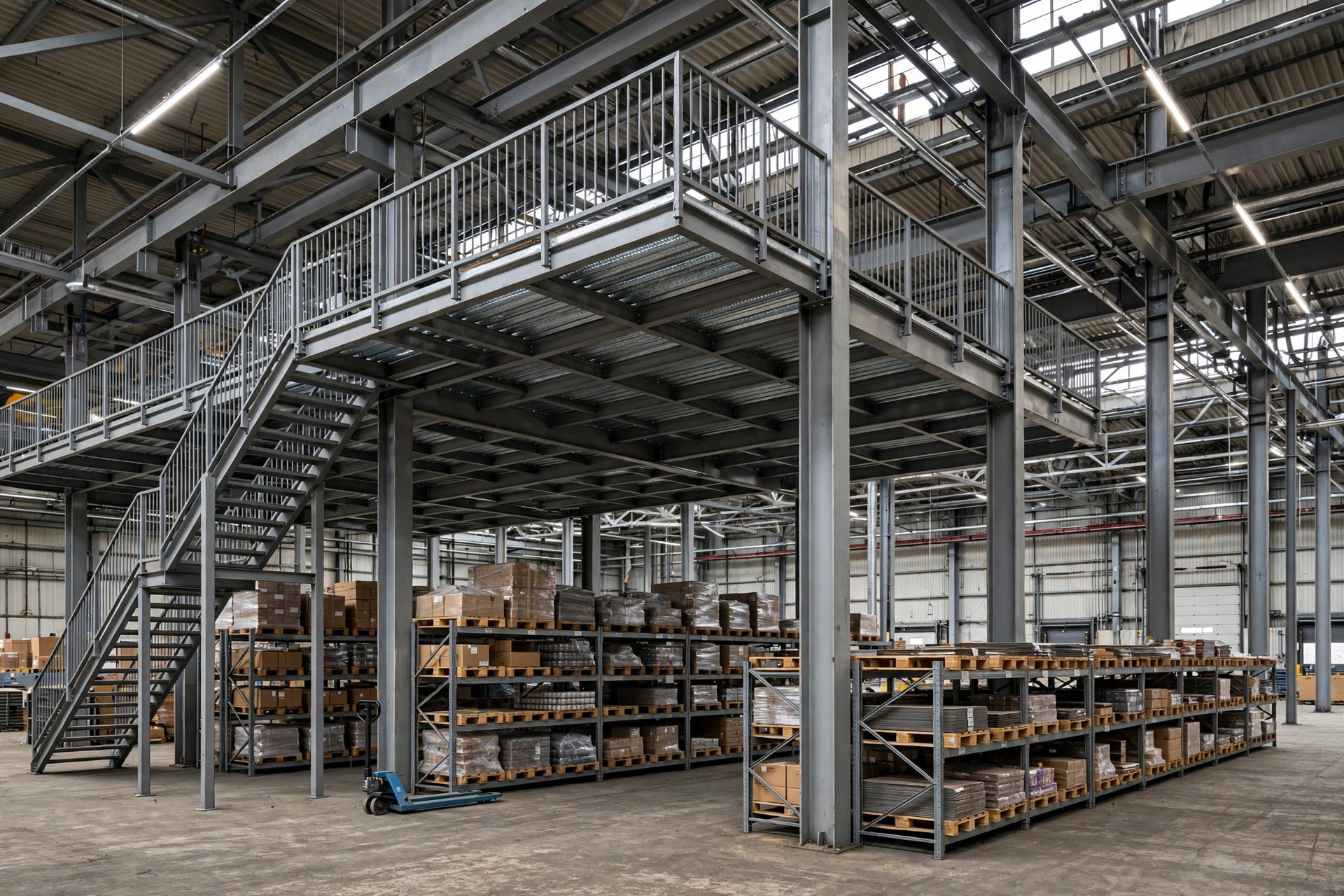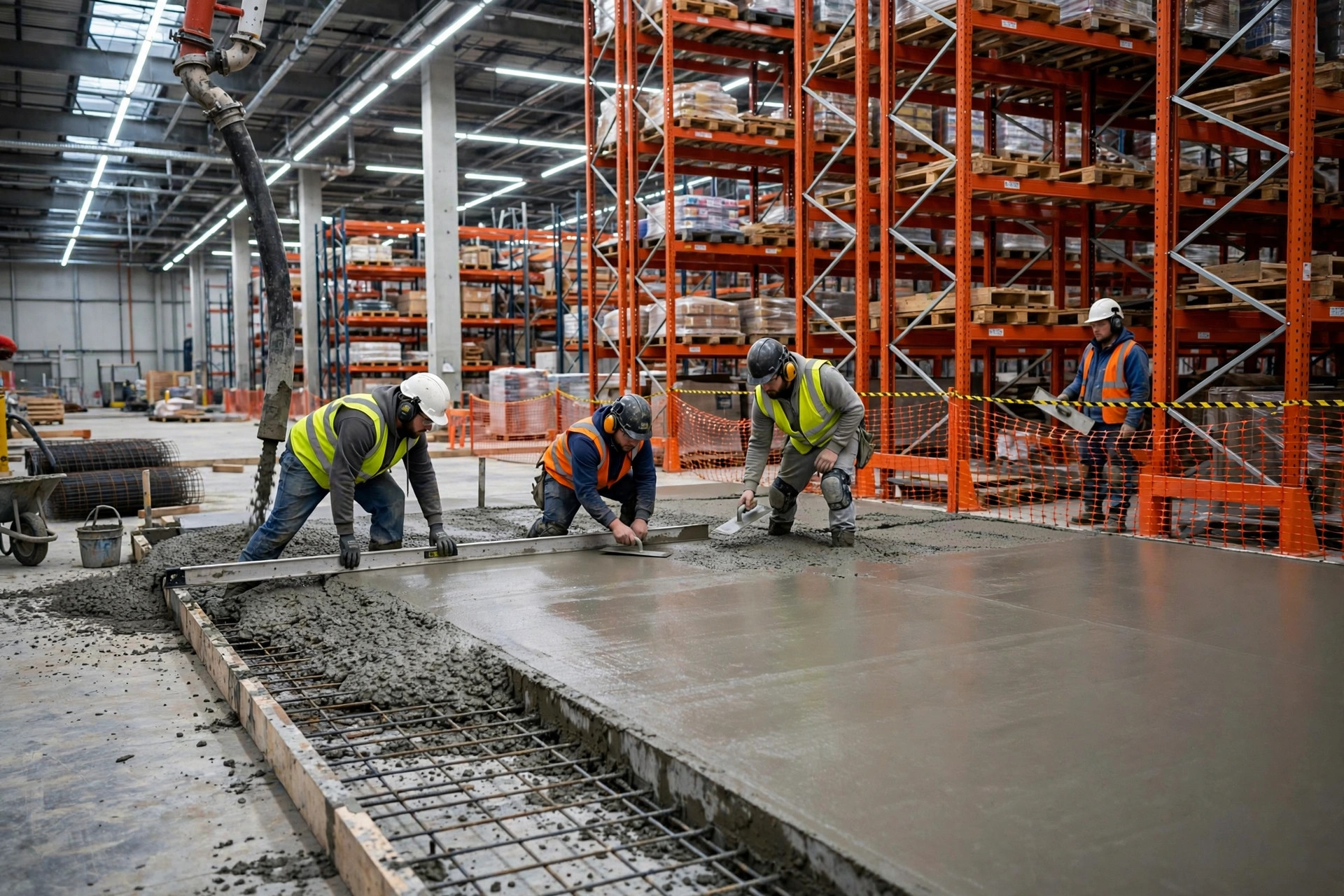
Let's start with the math. You have an 80,000-square-foot warehouse built in 1989. Five-inch unreinforced slab. You want six levels of heavy-duty selective racking. The structural engineer runs the numbers and the first line of the quote reads: floor reinforcement, rack zone, approximately $260,000.
Sign it, or don't?
Don't sign yet. At least a third of that $260,000 is avoidable — but only if you understand three things first: where the money actually goes, how much the three reinforcement methods differ in price, and which of the three paths — reinforce, downgrade the racking, or relocate — wastes the least money.
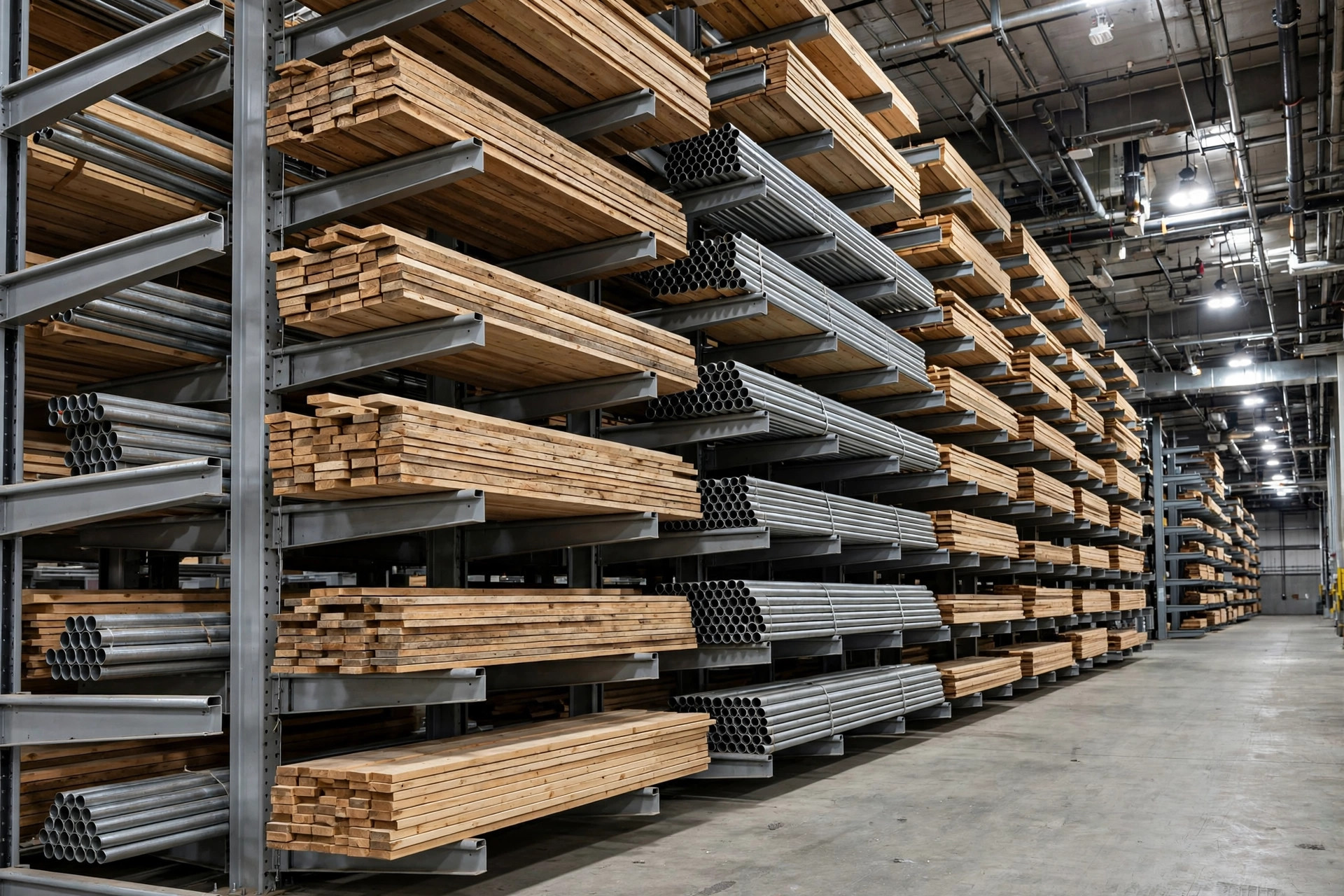
Two premises before we go further. First, why the old slab is always short. Per the ACI 360R-10 slab-on-ground design example, a single rack post delivering 15.5 kips (about 7 metric tons) of point load needs an 8.25-inch slab at 4,000 psi concrete with a subgrade k-value of 100. Speculative warehouses built in the 1980s and 90s typically got 5-inch slabs, some unreinforced. The load-class table in the British Design and Construction of Concrete Floors puts a single rack leg at 11,000 lb (about 5 tons) in the "Heavy" class — and notes that tenants routinely reject 5-inch slabs in 30-foot-clear-height buildings. Your building isn't unusually bad. It was never designed for this kind of load.
Second, the case figures below are anonymized approximations; engineering benchmarks come from published industry sources. I am allergic to "roughly" and "about," but anonymization is the rule here. The orders of magnitude are real.
Where Your Floor Reinforcement Money Actually Goes
Most people assume reinforcement is expensive because concrete is expensive. Wrong. Concrete material alone runs $2.50–$4.00 per square foot in 2026 U.S. Midwest pricing (per Evenson Concrete's line-item breakdown), while heavy-duty industrial slab work quotes at $8–$18 per square foot (per Wright Construction's 2026 equipment-pad installation guide). Material is roughly a quarter of the total. Where does the other three-quarters go?
Take that $260,000 quote apart — 24,000 sq ft of rack zone, 3-inch steel-fiber bonded overlay. About 30% was saw-cutting the existing slab and dowel/epoxy anchoring: crews cut a grid into the old floor, drill and epoxy dowels so old and new concrete lock together. That is the most labor-intensive part of the job. Roughly 20% was wire mesh and steel fiber. Another 20% was placing, screeding, and curing labor. Concrete material was about 15%. The rest: third-party testing, the engineer's stamp, and debris haul-off. Floor reinforcement isn't a concrete purchase. It's a labor and schedule purchase.
Fall 2023, Ontario, California. A home-goods 3PL leased an 80,000 sq ft building from 1989 — 5-inch unreinforced slab. They needed six-high selective racking at 2,800 lb per pallet. The engineer's calc: roughly 12,000 lb per leg, and the 5-inch slab failed punching-shear check. The fix covered only the rack zone — 24,000 sq ft of 3-inch steel-fiber bonded overlay with dowel anchoring, signed at about $11 per square foot, $264,000 total. Six zones, night shifts, three weeks, zero shutdown. The alternative was moving to the newer building next door: rent $0.35 more per square foot per month, which on 80,000 sq ft is an extra $336,000 a year. The reinforcement paid for itself out of the rent delta in nine months. Finance people can read that sentence without a second coffee.
Three Ways to Reinforce a Warehouse Floor, Priced Up to 2x Apart
Same goal — "make the floor strong enough" — very different price tags. Pick the wrong method and you're donating money.
Method one: full bonded overlay. Pour 3–4 inches of new concrete over the entire zone, dowel-anchored, with mesh or steel fiber. The most expensive and the most worry-free, suited to zones going fully heavy-duty where the existing slab is otherwise sound. That's the Ontario job above. One cost people miss: you lose 3–4 inches of clear height, and with racking already at 30-plus feet, forklift mast travel needs rechecking.
Method two: thickened strips under the rack rows (isolated footings). This is the one I'd run the numbers on first. Think about the geometry: a rack leg's load lands on a 36-square-inch baseplate. The loaded footprint across the whole rack zone is under 5% of the area. A full overlay means paying to thicken the 95% that carries nothing. Thickened strips cut slots only under the upright rows and pour reinforced thickened strips or isolated footings there. Far less concrete, far less labor.
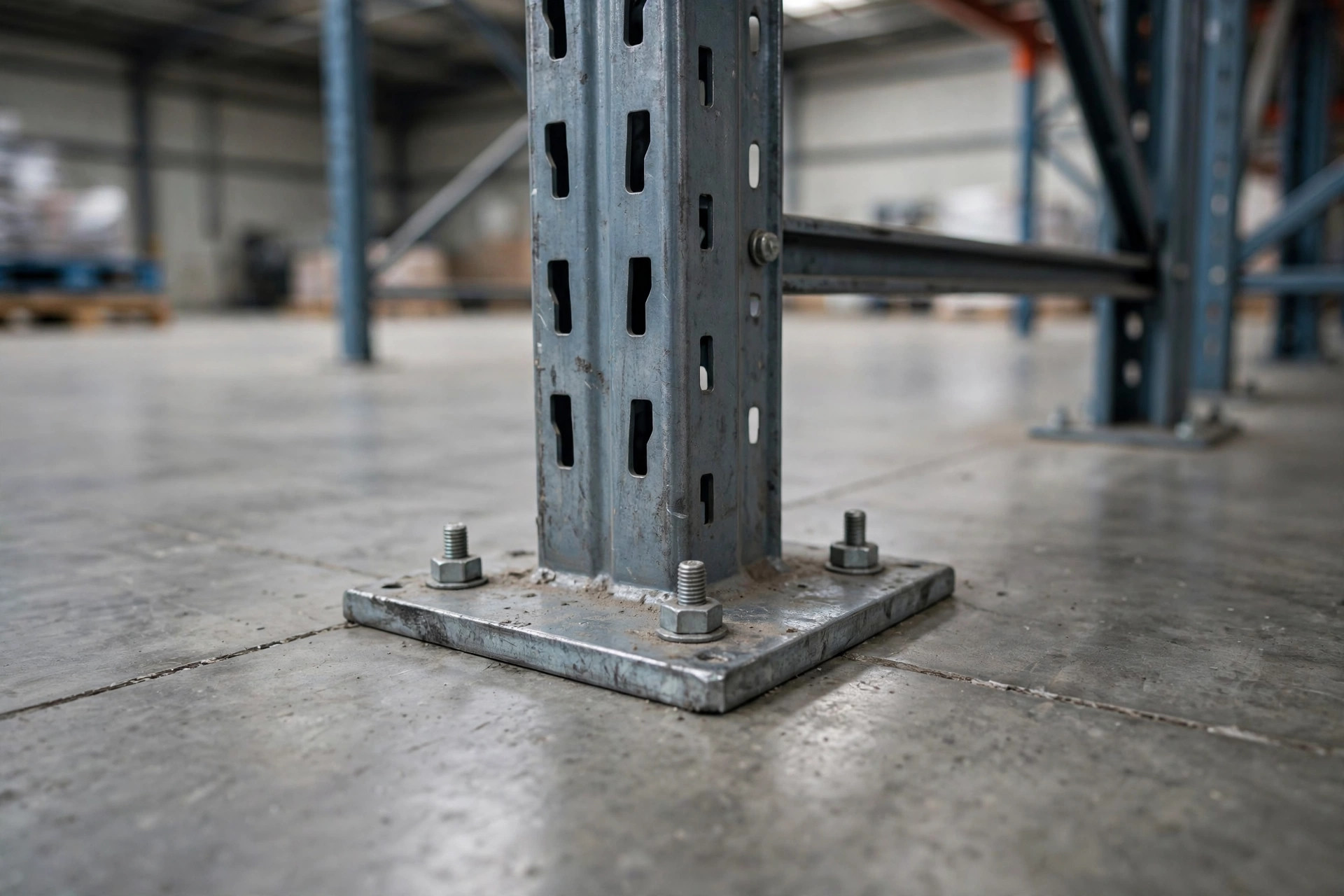
Spring 2024, Dallas, Texas. An auto-parts distributor owned its building outright — 6-inch slab, wanted double-deep heavy racking. The engineer priced two options: full bonded overlay on 18,000 sq ft of rack zone at about $190,000, versus thickened strips under the upright rows at $86,000 signed. More than half saved. The trade: messier site logistics and one extra week of schedule. For an owner-occupier, an extra week versus $100,000 saved is not a decision. It's arithmetic.
Method three: grouting / subgrade stabilization. This one is a trap — calling it out by name. Some contractors will sell you foundation grouting for tens of thousands of dollars, and the slab still cracks under the rack legs afterward. Why? Grouting fixes settlement. Your problem was never settlement — it's a thin slab failing in punching shear. Wrong diagnosis, expensive medicine, zero cure. Any contractor who leads with grouting and never mentions slab thickness or shear checks: show them the door.
Reinforce vs. Lighter Racking vs. Relocate: Which Dollar Isn't Wasted
An inadequate slab really gives you three options. Put them in one table:
| Reinforce the floor | Downgrade to lighter racking | Relocate | |
|---|---|---|---|
| One-time cost | $8–$18/sq ft (rack zone only) | Selective racking $25–$35 per pallet position installed (Dataintelo 2025 market report; heavy-duty 30–50% premium) | Move cost + double rent + shutdown losses, typically in the $300k–$600k range |
| Capacity loss | None | Dropping one level loses ~20–25% of positions | None, but the new building usually rents higher |
| Downtime | Zero with zoned night work | Partial zone shutdown 1–2 weeks during re-racking | Days to two weeks of real shutdown |
| Hidden cost | 3–4 inches of clear height gone | Lost positions = lost revenue every year — the line most people never calculate | Customers, staff, licenses, addresses all move |
| Fits whom | Owner-occupiers, long leases (5+ yrs), genuinely heavy product | 1–2 years left on the lease, product lighter than feared | Building failing on fire/structure in multiple ways |
Dwell on the middle column, because it's the most underestimated. Downgrading looks cheap — you only pay for racking. But 4,200 positions dropping to 3,100 means 1,100 positions gone. At the annual gross margin per position, three years of lost positions routinely exceeds the reinforcement cost. I've watched more than one operator "save" $200,000 on reinforcement and quietly lose $500,000 in storage revenue over three years — and feel clever about it. That's the price of never running the full TCO.
The decision framework is two variables: how long you hold the building and how heavy the product really is. Own the building, holding 5+ years, genuinely heavy product like auto parts, furniture, or building materials — reinforce, no hesitation; the annualized cost is the lowest of the three. One to two years left on the lease — don't reinforce; downgrade as a bridge, or negotiate with the landlord, since the improvement becomes their fixed asset (the Dallas operator got the landlord to cover 30% on exactly that logic). And if the product isn't actually that heavy and you just wanted heavy-duty racking "in case" — don't spend $200,000 on a "just in case." Lighter racking is fine.
The Money Hidden in the Construction Schedule
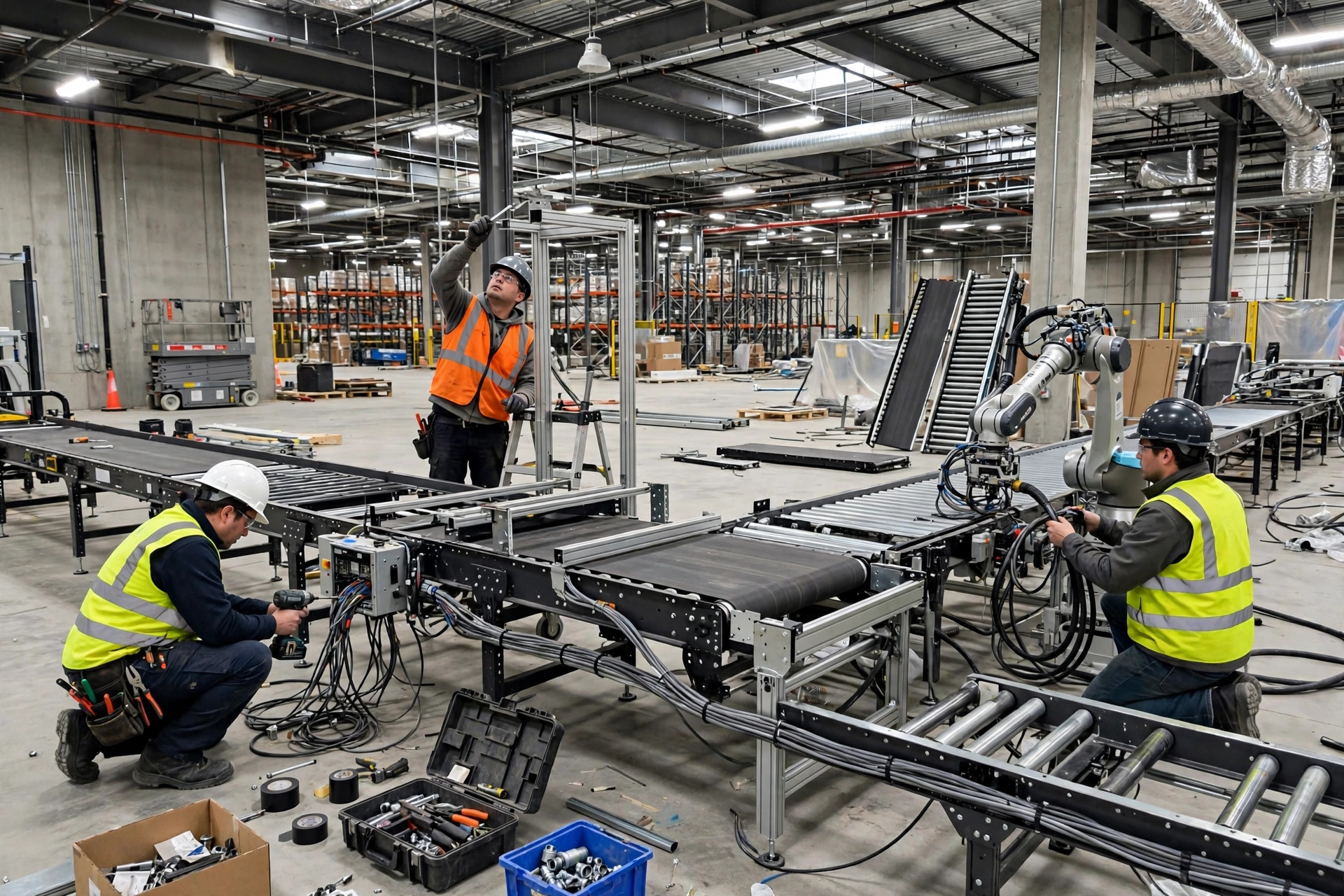
The biggest hidden cost of reinforcement isn't concrete. It's downtime. Zoned night-shift work carries roughly a 15–25% premium (per contractor quotes) — sounds like extra spending until you compare it against a single day of shutdown. The Ontario 3PL ran that number: one stopped day meant over $40,000 in penalties and idle labor. A $30,000-plus night premium for three weeks of zero shutdown? Money well spent.
Two technical items to nail down in the schedule. First, the curing window: standard concrete needs 7 days before heavy loading; fast-setting mixes take light loads at 3 days. Zone sequencing must be worked backward from that — which zone pours first, which last — written into the contract, not agreed over the phone. Second, pour sequencing has to dodge your outbound waves: SKUs shipping big that week get moved to finished zones ahead of time. Someone on your side must own that coordination full-time. The contractor won't think of it for you.
Here's the calculable conclusion. Let A = one-time reinforcement cost; B = annual rent premium of the alternative building; C = one-time relocation cost; N = remaining lease years in the building. If A < B×N + C, reinforce. Otherwise, move. Plug in Ontario: A = $260k, B = $336k/yr, C ≈ $400k (approx.), N = 5 → the right side is $2.08M. Reinforcement wins outright. Annualized: $52k/yr at N = 5 versus $130k/yr at N = 2 — with two years left on the lease, downgrading deserves a serious look.
Numbers don't lie — provided all of them are on the table. Run reinforce, downgrade, and relocate through a calculator side by side and the answer writes itself. Whether the money is well spent isn't a question for me. It's a question for the calculator.
By Lao Zhou, Logistics Cost Analyst