
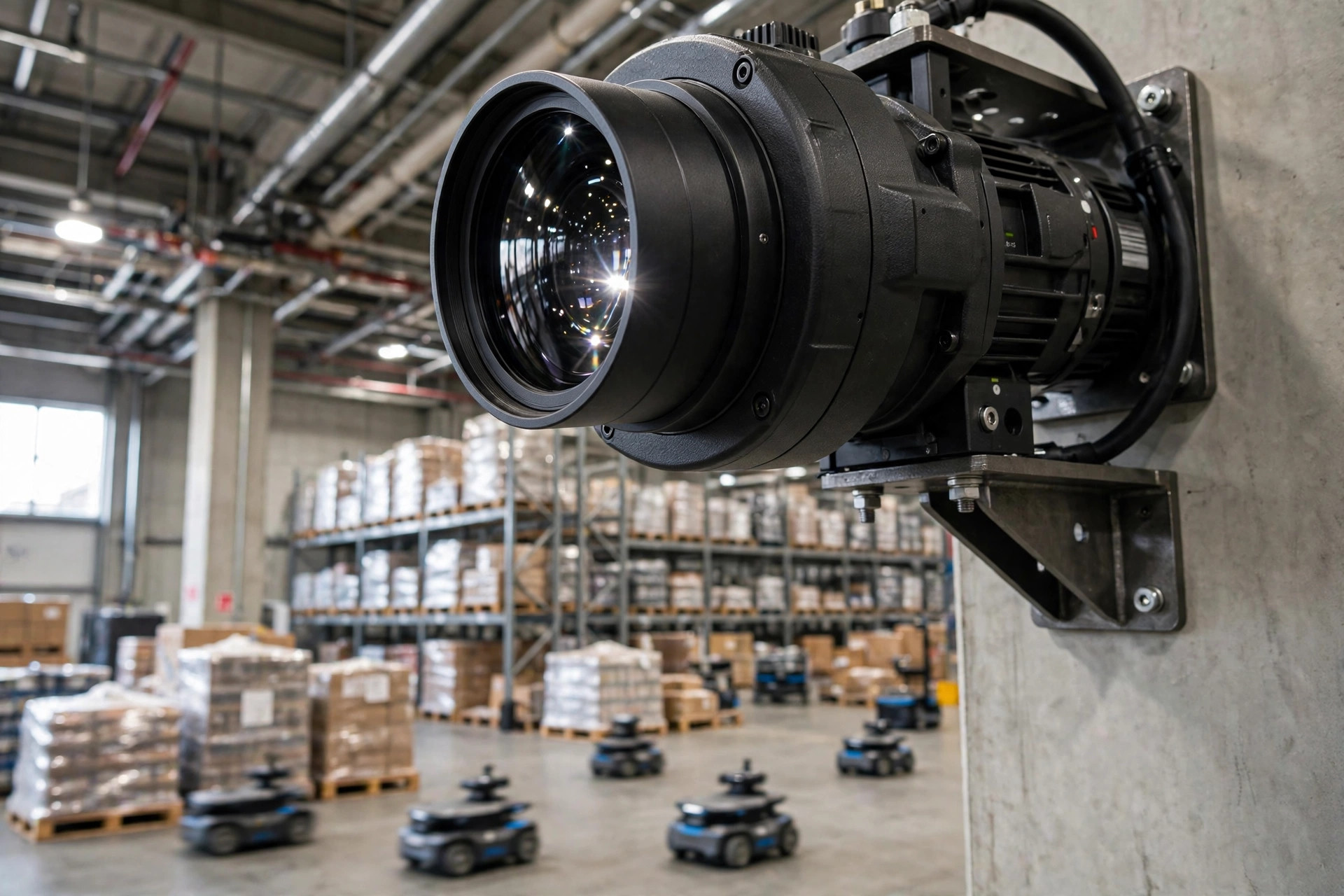
Most equipment importers first encounter the term "ECCN export control" on a CBP examination notice. Last fall, a friend who runs systems integration projects called me in a panic: his shipment of 3D lidar sensors from Shenzhen had been held at the Port of Long Beach, with CBP flagging it for export-control classification review. Forty-plus thousand dollars of sensors, and an AMR fleet at the project site waiting on those units to go live — every day of delay burned contract penalties.
His question: "Da Liu, ECCN is for exports. I'm importing. Why is this my problem?"
Good question. That misunderstanding is exactly what this guide tears apart.
What an ECCN Actually Is: A Serial Number for Your Lidar
Think of an ECCN — Export Control Classification Number — like a device's ID number. Five characters. The first digit is the "category," 0 through 9, and lidar and sensors land in Category 6: Sensors and Lasers. The second character is the "product group," A through E, with A meaning equipment and parts. The last three pin down the specific control entry. You can read it like a zip code: the first digits get you to the state and city, the last digits to the street.
The issuing authority is BIS — the Bureau of Industry and Security under the Department of Commerce — operating under the EAR (Export Administration Regulations, 15 CFR 730-774), with the controlled-items list called the CCL (Commerce Control List). If an item isn't on the CCL at all, it's classified EAR99 — think of it as an ordinary commercial good that generally moves freely.
Drop a lidar sensor onto the CCL and several entries become possible: optical sensors (6A002), optical equipment and components (6A004), lasers (6A005), radar systems (6A008 — where item j explicitly names "space qualified" laser radar/LIDAR equipment), and readout circuits for automotive 3D imaging (6A990). To be clear, I'm describing directions, not conclusions. Which entry your specific model falls under is a classification determination that belongs to a qualified trade professional or attorney, in writing. Anyone who glances at your spec sheet and declares your classification on the spot is doing you no favors.
And the obvious objection: this is export control — why should an importer study it? Three reasons you can't dodge.
First, if your imported sensors go into integrated systems that get resold overseas, or move together with software and technology, the export leg of that journey uses the same technical identity the shipment had at import. Confusion at import becomes doubled confusion at export — and penalties are assessed on the export.
Second, BIS's connected-vehicles final rule (published January 16, 2025, effective March 17, 2025) controls imports directly. It prohibits importing or selling connected vehicles and certain vehicle connectivity hardware with a sufficient nexus to China or Russia. The software prohibition kicks in starting with model year 2027, hardware with model year 2030, and it applies to passenger vehicles under 10,001 pounds GVWR. If your lidar ships inside an automated or connected vehicle sold into the U.S., that rule hits you head-on — a separate control regime running parallel to ECCN.
Third, at examination time, CBP officers read technical parameters, not your product name. Your entry documents say "safety scanner"; they see a 905-nanometer, 200-meter-range lidar. When the name and the specs don't match, a hold is one signature away.
The Decision Line: A Five-Step ECCN Classification Process
You can think of the classification process like airport security: one checkpoint asks "are you in my jurisdiction," the next asks "what's your risk level," the last asks "where are you going." For importers, I compress it into five steps:
Step 1: Confirm the shipment is subject to the EAR. The vast majority of civilian equipment manufactured outside the U.S. falls under EAR jurisdiction.
Step 2: Search the CCL by technical parameters, not by product name. Line up the hard specs — wavelength, peak power, range, angular resolution, frame rate — and walk them against each entry's technical thresholds. This is the most labor-intensive step in the whole process, and the one you can least afford to rush.
Step 3: Determine the ECCN — or EAR99. Three sources: your own research, the manufacturer, or a qualified professional. One warning: a manufacturer's ECCN is a reference, not a shield. CBP does not take the manufacturer's word for it.
Step 4: Check "reason for control × country chart" for license requirements. The ECCN is only a classification; whether you need a license depends on the reason for control (national security, anti-terrorism, regional stability, and so on) and the destination. The same shipment can get a different answer depending on where it's ultimately going.
Step 5: Screen the Entity List and the end user. If the consignee or end user sits on BIS's Entity List and you missed it, steps one through four were wasted.
The Examination Trap: Your Cargo Sits, Your Money Burns
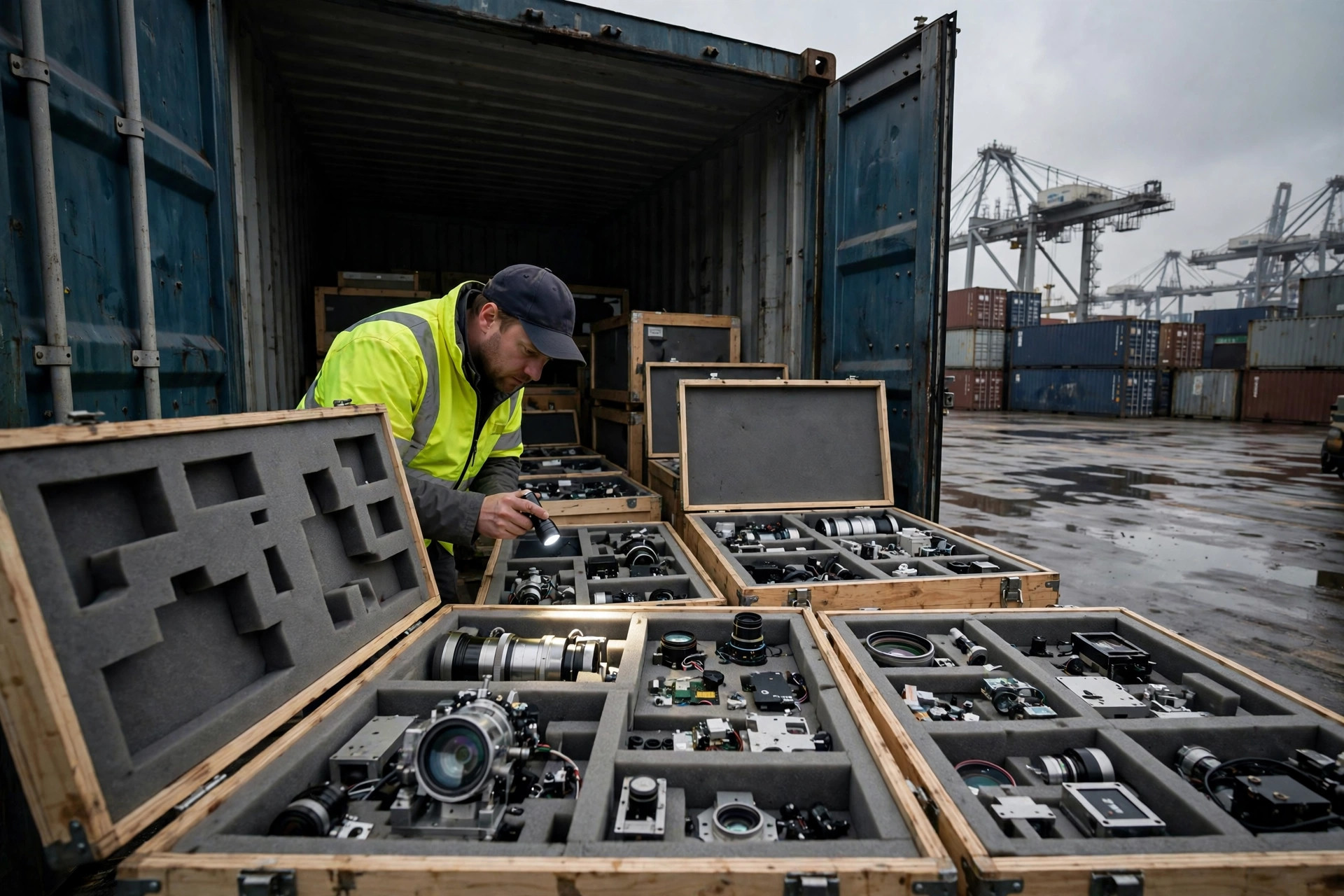
Here's a case I watched unfold. In 2024, a Florida equipment importer brought in a batch of 2D safety lidars. The customs broker filed them under a generic optical-instrument HTS code and left the ECCN field blank. CBP opened the container, found the specs tripping a controlled entry's technical thresholds, and held the shipment for classification review. Twenty-one days in the port. The line retrofit at the project site sat idle waiting on parts. The classification came back clean in the end — but demurrage, storage, rescheduling, and project-delay costs added up to more than the shipment's entire margin.
That's the math every lidar importer should run: the cost of an examination. Port storage burns by the day, project delay penalties burn by the contract — and then there are CBP penalties. Under 19 CFR 162.73, violations of 19 U.S.C. 1592 come in three tiers:
| Culpability | Maximum penalty (revenue loss) | Maximum penalty (no revenue loss) |
|---|---|---|
| Fraud | Domestic value of the merchandise | Domestic value of the merchandise |
| Gross negligence | Lesser of domestic value or 4× lost duties/taxes/fees | 40% of dutiable value |
| Negligence | Lesser of domestic value or 2× lost duties/taxes/fees | 20% of dutiable value |
Note the last column: even with zero lost revenue, penalties can still scale with merchandise value. On a $400,000 shipment, a negligence finding at 20% is $80,000 — that's a lot of lidar units.
The good news: both the EAR and customs law offer a way back. Prior disclosure — reporting the problem yourself before CBP comes knocking — can reduce negligence and gross-negligence penalties to interest only. Find a filing problem, disclose early. The earlier, the cheaper. That's iron law.
Five Compliance Moves for Importers
Theory covered, decision line drawn — now the playbook. Five moves, in order:
One, build a technical-parameter file for every imported model. Wavelength, power, range, field of view, frame rate, angular resolution, software functions — one sheet per model. Classification runs on parameters, not on your product story.
Two, classify before the cargo lands, and get it in writing. Settle the ECCN or EAR99 determination before arrival, not after the examination notice shows up. Get the opinion from a qualified professional or trade attorney — "we've always filed it this way" from the manufacturer doesn't count.
Three, keep your filing package consistent. Commercial invoice, packing list, HTS code, ECCN, technical-parameter file — five documents telling one story about one shipment. Most examination problems trace back to documents contradicting each other.
Four, screen the Entity List and end users on every order. Run every shipment against BIS's Entity List and keep the record. Ten minutes of work that prevents catastrophe.
Five, disclose immediately if something's wrong. Don't wait for CBP to find it. Self-reporting changes the penalty by an order of magnitude.
Finally, let me take direct aim at two pseudo-shortcuts I keep hearing. First: "route it through a third-country port and the controls disappear." Origin is determined by substantial transformation, not by which ports the cargo touched. A false origin declaration is itself fraud — and per the table above, fraud penalties scale with merchandise value. Second: "undervalue the shipment so any penalty is smaller." Undervaluation is itself a fraud trigger, which jumps the penalty straight to the top tier. Transshipment and tax planning have exactly one legal lane: genuine substantial transformation, genuine origin rules. Anything fabricated, stay away from.
So is the compliance spend worth it? It comes down to one number: a written professional classification opinion typically costs a few thousand dollars. One held shipment — 21 days of demurrage plus project delays — easily tops 10% of cargo value. On $400,000 of sensors, that's $40,000. Run it on a calculator and the answer is obvious.
By Da Liu, Automation Engineer






