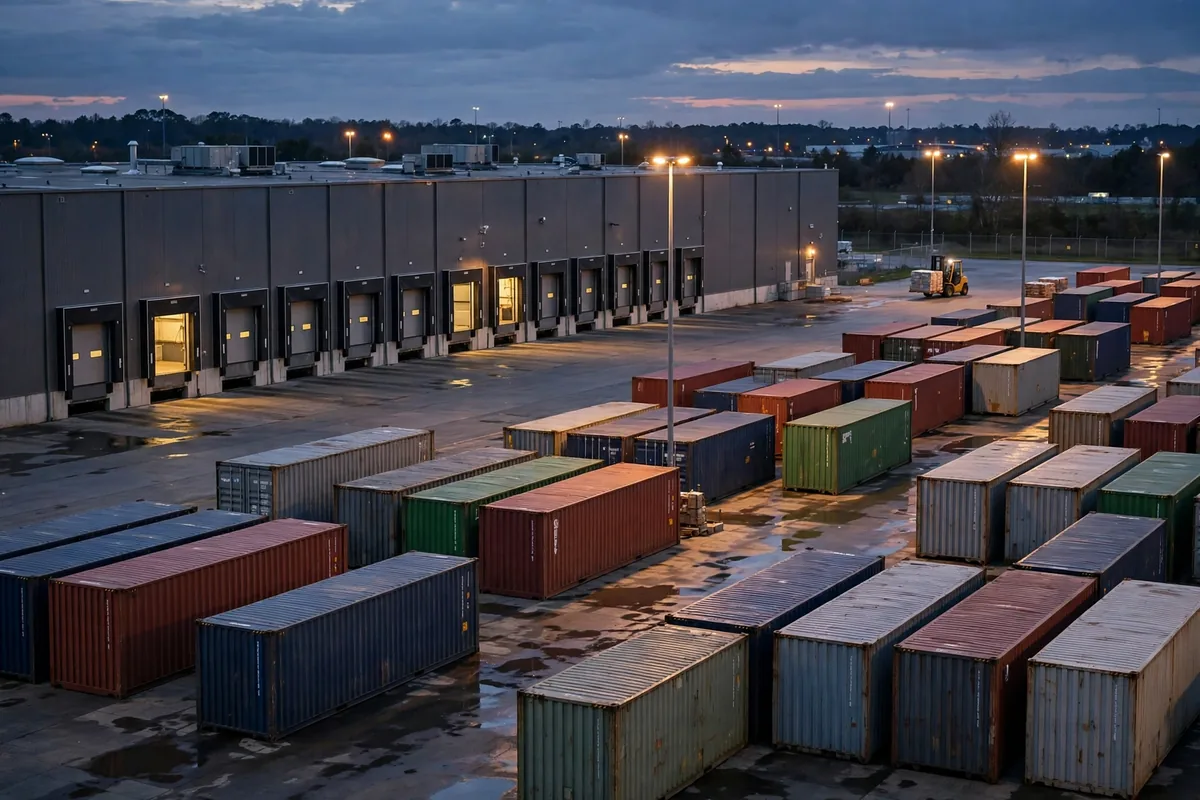
Bottom line first: duty drawback is decided in the warehouse. When imported goods are later exported, the duties paid at import may be recoverable in part, but only if the warehouse can prove, lot by lot, that the exported goods are the same goods that were imported. You will hear a 99% figure quoted in conversation; treat that as a maximum, not a promise. The exact percentage, eligibility rules, and filing deadlines change, so confirm the current official rules before you act. The warehouse owns one job: make the import record, the inventory record, and the export record agree on the same lot.
Why Duty Drawback Gets Stuck in the Warehouse
A filing is only a summary. The evidence lives in daily warehouse records. What product name, quantity, and lot arrived under the import entry? Was that lot booked into stock under its own identity? Was stock deducted by lot when the goods were picked? Does the export paperwork point back to that same lot? Break any one of those links and the whole chain breaks.
I have seen this pitfall three times, and the cause is always the same: a shortcut taken at receiving that cannot be undone six months later. In the fall of 2024, a home-goods importer in California received freight through the Port of Long Beach and, to save time, mixed two import lots of the same product into one location and recorded only the total quantity. Months later, when part of that stock was exported to Mexico, the warehouse could not show which export cartons came from which import lot. The goods were fine. The evidence was not. That portion of the claim had to be dropped.
Contrast that with an outdoor-gear client from the same period. Their rule was one entry, one code: every import lot got its own location, its own lot label, and its own stock record. Picks deducted by lot, first in first out, and the packing list carried the lot numbers. When filing time came, matching the three records took two days. Same business, different warehouse discipline, completely different outcome.
Building the Three Lines of the Evidence Chain
Line one is the import record. When freight arrives, check three things against each other before putaway: the product name, quantity, and lot information on the entry paperwork; the labels on the cartons actually received; and the receiving slip. If they disagree, stop. Photograph the discrepancy, log it, and confirm with the importer or broker before the goods go into stock. Your receiving slip must have a field for the import lot number. If your system has no lot field, you are building evidence on sand.
Line two is lot-level inventory tracking. Different lots of the same product must be stored separately and booked separately, even when space is tight. Use dividers and zone labels if you have to, but never co-mingle lots in one location. Cycle counts must be counted by lot, and count variances must be recorded at lot level, not at total product level. Every move, every split, every repack must carry the lot number with it, and the lot ledger must be able to tell the full story at any moment: when it arrived, where it sat, when it left, how much left, and how much remains.
Line three is export proof. At outbound packing, the packing list, the bill of lading, and the export entry information must carry the same lot numbers that inventory deducted. Once the truck leaves, the warehouse must keep a copy or scan of the export documents filed under that lot. The classic failure here is paperwork that scatters after departure: the import papers sit with the broker, the inventory sheet sits in the warehouse, the export papers sit with the forwarder, and at filing time nobody can assemble one complete set. The rule must be absolute: export documents travel with the lot file, and the lot file stays intact until the lot is closed out.
The Duty Drawback Pre-Filing Checklist
This is the page I keep in my go-live-night checklist, and it must be walked by two people together, the warehouse lead and the filing lead. Any unchecked box means the lot waits. Do not file around it:
- Import lot list complete: every import lot has entry information, a receiving record, and a lot number, all three present.
- Lot ledger closed: import quantity minus outbound quantity equals current stock plus exported quantity. A nonzero difference means the ledger is not closed.
- Export lots traceable: every export shipment points to specific import lots, and the lot numbers on the packing list and bill of lading match the system.
- Moves, splits, and repacks fully logged: every handling event carries a lot number, an operator, and a timestamp.
- Damage and scrap booked separately: broken, lost, or scrapped units sit in their own records, never blurred into outbound totals, or the math will never reconcile.
- Documents filed as one set per lot: import, inventory, and export papers for the same lot live together and can be pulled in one go.
If the checklist still shows a gap, the fix order is fixed: check the physical stock and the records first, and hold any lot you cannot reconcile. Filing a questionable lot mixed into a clean claim can drag the whole filing down. Leaving one lot out costs one lot. Filing it badly can cost the batch.
Five Break Points I Keep Finding
First, co-mingling at receiving, stacking different lots together to save a location. Second, a system with no lot field at all, where only total quantities exist and lot evidence was never created. Third, a packing list with no lot numbers, so the goods leave and the proof chain ends at the dock door. Fourth, returns and exchanges that bypass the lot process, with returned goods restocked under no lot or the wrong lot. Fifth, documents held by different parties with no single owner of the complete set.
Here is one more break point I watched happen in real time. An export load was already staged, the driver was waiting at the gate, and the warehouse realized the packing list had no lot numbers. The truck could not wait, so it left, and the lot numbers were added afterward — with one digit wrong. The filing check caught the mismatch and the claim circled for another round. After that, we set a hard rule: no lot numbers on the packing list, no departure. Holding a truck for five minutes at the gate is cheaper than weeks of back-and-forth months later.
The counterintuitive truth is that most people treat this as a finance or broker task, with the warehouse just receiving and shipping. It is the other way around. The warehouse produces the evidence; finance only uses it. The quality of warehouse records sets the ceiling for the whole claim. Good records make filing a formality. Bad records make filing impossible, no matter how good the filer is.
One last note before you start: policy details move. Eligibility, caps, and deadlines must be checked against the official source at the time you file, not from memory and not from hallway talk. What the warehouse can control is its own chain of evidence, kept complete, lot by lot, ready to be shown and ready to be checked. When the chain holds, the claim has something to stand on. When it breaks, nothing else matters.
By Lin Xiao, WMS Implementation Consultant