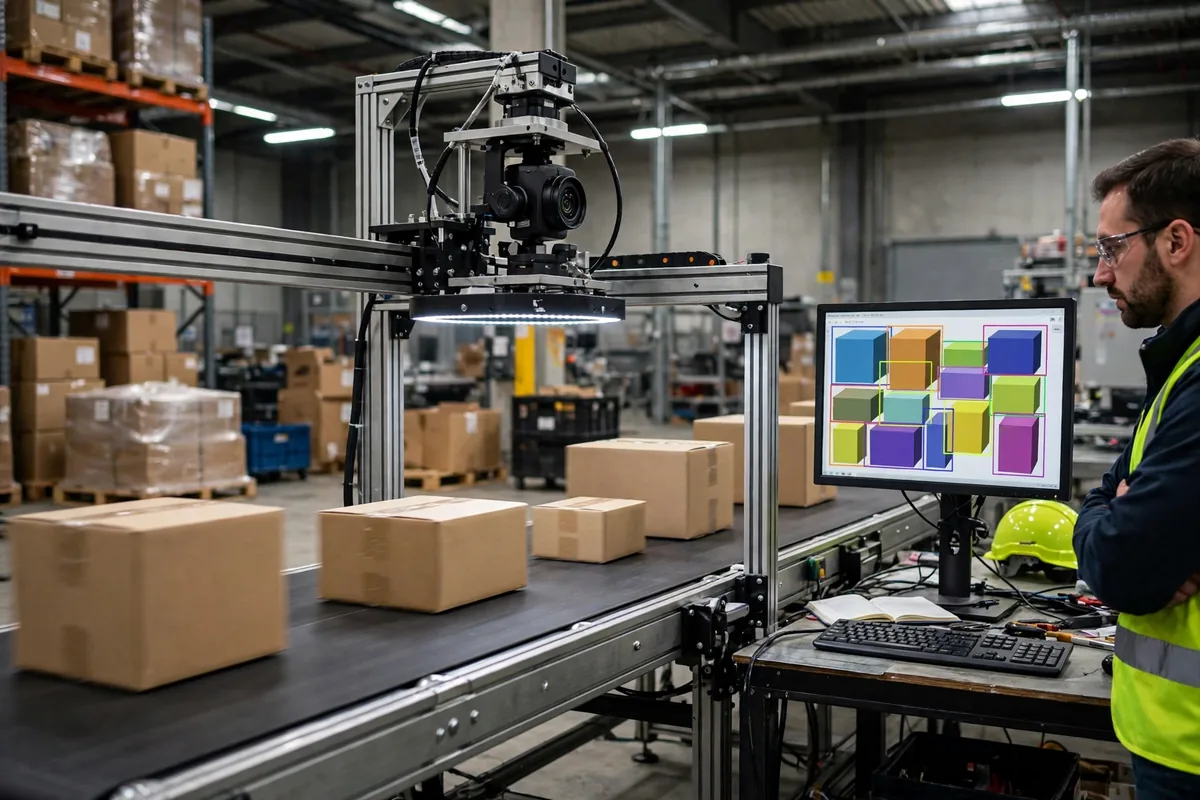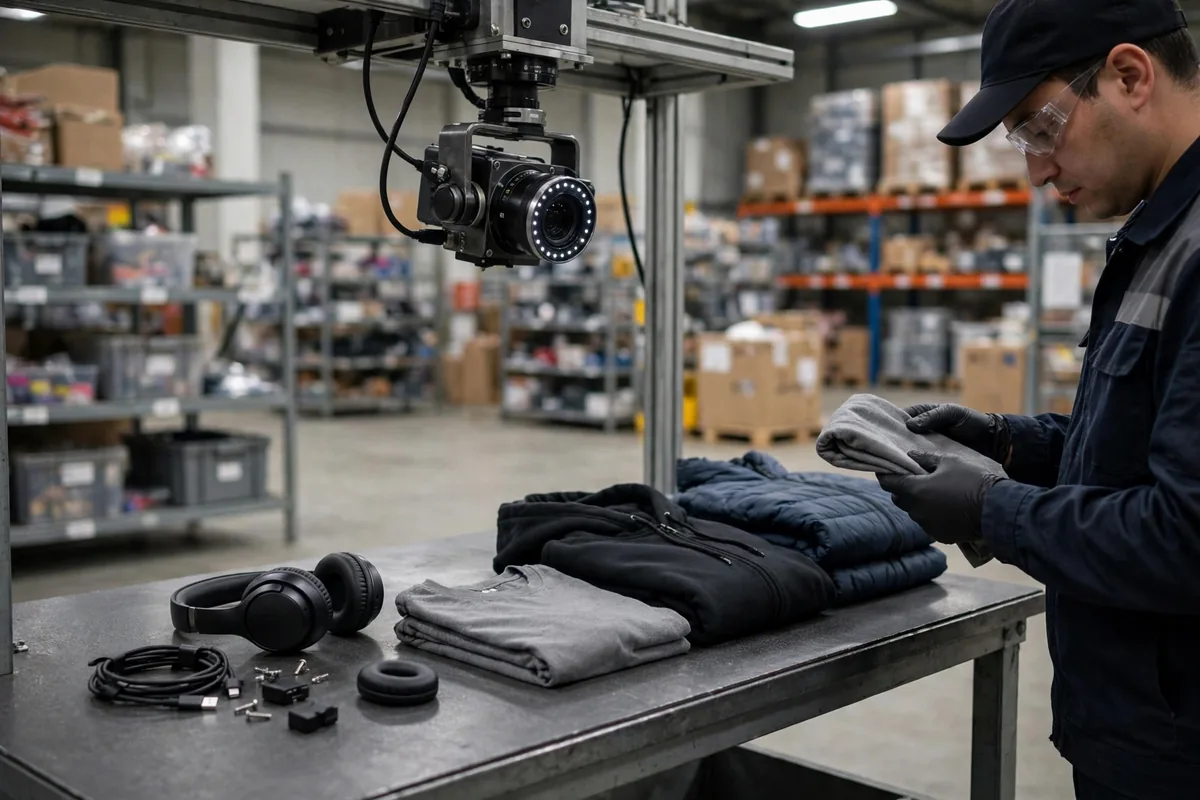
Over the past two years, AI HS code classification tools have moved into the import warehouse and the customs brokerage: feed one a product description, materials, and intended use, and within seconds it returns an HTS code, complete with a confidence score. Some people call it the end of the classifier. Based on what I have seen across the industry over the last two years, that verdict is premature. Classification was never hard because looking up a code is hard. It is hard because when the code is wrong, someone has to pay.
Start with a basic fact. The HTS system contains more than five thousand six-digit subheadings, and once you go down to the ten-digit statistical level, the combinations run into the tens of thousands. Which code a product takes depends not only on what it is, but on the proportions of its materials, the relative importance of its functions, the degree of processing, and even how it is meant to be used. The same pair of wireless earbuds can classify differently with and without a charging case. That is why the classifier's job has survived decades of spreadsheets and databases: it is fundamentally a judgment job, not a lookup job.
What AI HS Code Classification Actually Saves
The savings are easy to calculate. On the human side, an experienced classifier spends roughly 10 to 20 minutes on a routine entry, and a complex new product — checking explanatory notes, reading past rulings, calling the supplier to confirm composition — can take one or two hours. On the AI side, the answer comes back in seconds, and hundreds of entries can run in a single batch. Take a worked example with stated assumptions: a warehouse processing 1,000 import entries a month, at an average of 15 minutes of manual classification per entry, spends 250 hours a month on classification, roughly one and a half full-time positions. AI compresses the first pass to seconds and leaves human review for the difficult cases only. The hours saved are real.
| Factor | Manual classification | AI classification + human review | | Speed | 10–20 minutes per entry | First pass in seconds, difficult entries reviewed by a person | | Consistency | Varies by individual | Stable results for similar goods | | Cost | Grows linearly with hours | Upfront investment plus per-entry fees | | Risk | Errors trace to one person's judgment | Errors trace to systematic bias — one mistake can repeat across a whole batch |
But there is a condition attached to this math: what gets saved is the time of the first pass, not the liability. A single digit in a code can move the duty rate by several percentage points — that is a basic structural fact of the tariff system, and the actual rate for any product must be checked against the official tariff schedule. The labor hours AI saves and the cost of one corrected entry are often not on the same scale. An ROI calculation that counts the hours saved and ignores the cost of being wrong is not an ROI calculation.
Consider an illustrative scenario. An importer uses AI to classify a pair of wireless earbuds sold with a charging case. The model returns a code with 92 percent confidence, the operator sees a high score and releases it. At examination, customs determines the product should have been classified as a complete unit with a lithium battery rather than as ordinary earphones, and the importer faces back duties plus penalties — more on that single entry than the company saved in labor over half a year. The problem is not that the model was "dumb." A 92 percent confidence score is not low in statistical terms. The problem is that nobody had written down whether 92 percent is enough to release.
There is a second kind of error whose root is not in the model at all, but in the upstream data. A jacket described as 60 percent cotton and 40 percent polyester can take a different code from one described as 40 percent cotton and 60 percent polyester. If the supplier's composition sheet is wrong in the first place, the AI reads a wrong input, and the most accurate model in the world can only return a wrong answer. The source of classification errors is often the data chain, not the algorithm.
What One Wrong AI HS Code Classification Costs
First, back duties and penalties. U.S. customs law provides penalties for false statements in entry, scaled by the degree of fault, and the liability falls on the importer of record — not on the software vendor. Unless the contract says otherwise, the vendor almost certainly does not pay. That makes the liability clause in an AI classification contract worth reading more carefully than the accuracy figures.
Second, the examination rate. Once a category of goods has been found misclassified, the probability that later shipments of the same goods get examined goes up, and the warehouse's turnaround plans and the customer's delivery dates go with it. This hidden cost is harder to calculate than back duties, and harder to explain to a customer: the goods are fine, only the code on the last shipment was wrong.
Third, the carry-over effect. If one wrong classification goes unnoticed, the same wrong code gets copied onto every later entry of the same product. AI's efficiency cuts both ways here: when it is right, it is right in bulk, and when it is wrong, it is wrong in bulk. In the manual era, one person's error had a limited blast radius. In the AI era, a systematic bias can contaminate a whole product category's classification records within weeks.
Where Human Review Belongs
In my view, human review should not sit at the end as a final glance. It should be tiered by confidence score and by product risk.
| Product type | AI confidence | Handling | | Routine goods with classification history | High | Human spot-check | | New products, borderline composition | Medium | Human review required | | Trade-remedy goods, lithium batteries, food and drugs | Any level | Full human review, AI as reference only |
The critical step is to write the rules down: what counts as "high," which product categories route automatically to human review, and who has the authority to override the AI's answer. "Human plus machine" without written rules eventually slides into a person whose only job is clicking confirm. And in a liability dispute, clicking confirm is treated the same as classifying the goods yourself. In other words, a human review step that is only theater is the same as no human review at all.
What AI Should Not Classify Yet
There are four categories of goods I would not let AI classify on its own at this stage. First, new products with no ruling history: the model has no precedent to learn from, so the confidence score itself is meaningless. Second, chemicals and textiles with borderline composition, where the deciding evidence sits in a lab report rather than in the product description. Third, goods subject to trade remedies such as antidumping and countervailing duties, where the code depends on ruling documents and case law the model cannot see. Fourth, food, pharmaceuticals, and medical devices under complex regulatory conditions, where a wrong code is not only a money problem.
These four share one trait: the evidence that decides the classification is not in the product description, so the AI's input is incomplete from the start. With incomplete input, even the best model can only guess. And in classification, a correct guess earns no reward, while a wrong one costs money.
So back to the opening question: AI for HS code classification saves labor, but who pays when the AI gets it wrong? For now, the answer is the importer of record. Over the next three to five years, AI classification will most likely become standard equipment in the import warehouse — but "standard" means every warehouse has it, not that every warehouse can stop paying attention. The question worth thinking about may not be whether the AI is accurate, but who covers the remaining 5 percent when the AI is 95 percent accurate. That question does not have a standard answer yet.
By Dr. Chen, Supply Chain Researcher