Start with a bill. Take an importer receiving 5 shipments a week. Over 52 weeks, that is 260 shipments, and filing each one separately means paying the entry filing fee 260 times. Move the operation into a Foreign Trade Zone, switch to one consolidated weekly entry, and the count drops to 52 filings a year — 208 fewer filings, before a single dollar of duty has even been counted. That is the starting point for the foreign trade zone vs bonded warehouse question: the two tools do not save the same kind of money, and the wrong pick turns a money-saving tool into a money-burning one.
Run the Numbers First: Foreign Trade Zone vs Bonded Warehouse on the Same Shipment
A Foreign Trade Zone and a bonded warehouse both let an importer pay duty later, but the mechanics are entirely different. A bonded warehouse works on a simple idea — store now, pay later. Goods sit in the warehouse with duty deferred, and the bill only comes due when the goods actually enter the U.S. market for sale. If the goods are ultimately re-exported, no U.S. duty is owed at all. The advantage is simplicity; the ceiling is low: goods may be stored for a maximum of 5 years from the date of importation, and when year five arrives, the goods must go somewhere.
An FTZ works on a different legal idea: for customs purposes, the zone is treated as outside the U.S. customs territory. Goods inside can be stored, inspected, labeled, and assembled, then re-exported without paying duty — and there is no 5-year limit. Goods can stay as long as needed. More importantly, an FTZ allows manufacturing and assembly inside the zone. A bonded warehouse allows only light handling — sorting, repacking, cleaning, labeling — and no manufacturing or assembly. That single difference decides how much money each route can save.
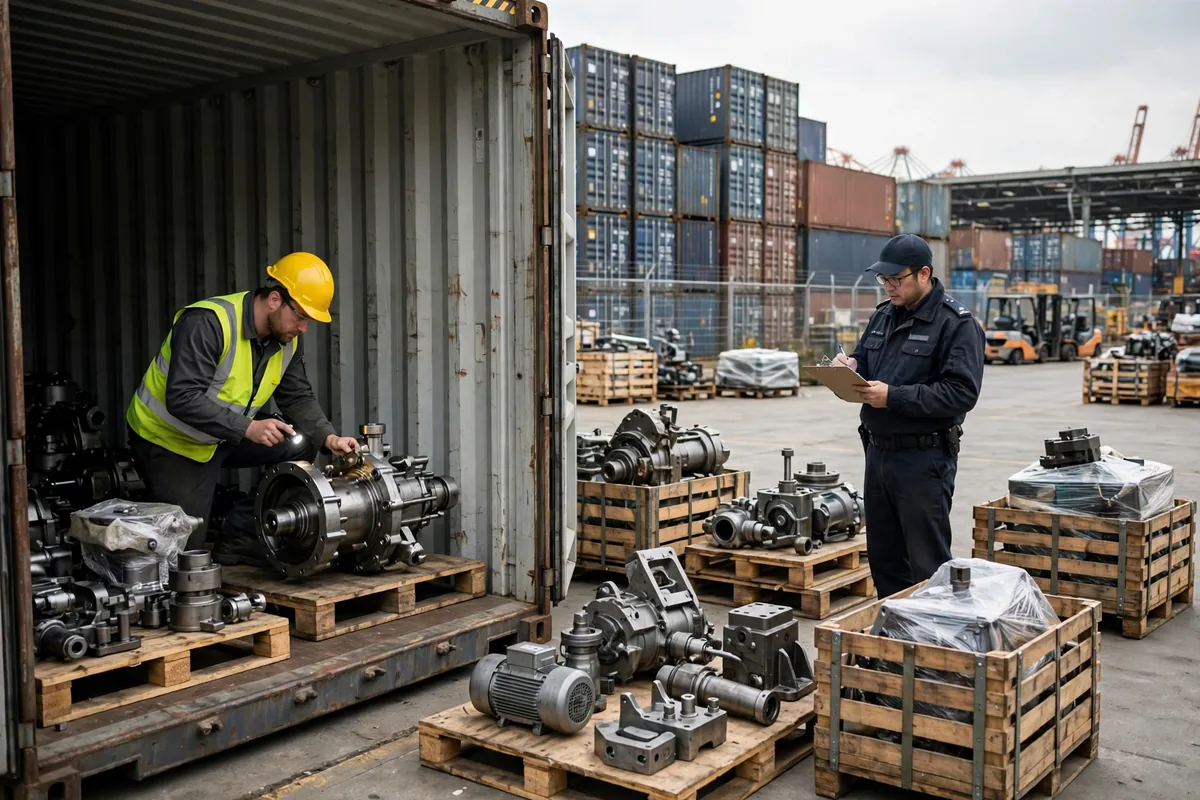
Consider an illustrative scenario: an importer in Los Angeles brings in components from Asia, assembles them into finished goods, and sells them domestically. Here is a hypothetical example, offered only to demonstrate the method: if the duty rate on the components is higher than the duty rate on the finished product, the goods enter the FTZ as components, get assembled inside the zone, and leave it taxed at the finished-product rate. That is inverted tariff relief, and the difference between the two rates is money saved outright. Send the same shipment through a bonded warehouse instead, and assembly inside is not allowed — the components leave the warehouse exactly as they arrived and pay duty at the component rate, so not a cent of inverted relief is captured. Flip the case: another importer only breaks down full containers, sorts, labels, and ships them onward, with no processing at all. The FTZ's assembly capability is worth nothing to them. What they need is deferral plus duty-free re-export, and a bonded warehouse covers that completely.
So the conclusion of the first bill is blunt: how much you save depends not on the tool but on whether your goods need to change form inside the zone. Goods that transform belong in an FTZ. Goods that do not belong in a bonded warehouse.
The 5-year clock deserves its own calculation: the limit runs from the date of importation, not from the day the goods were shelved. Goods imported on January 15, 2026, must have a destination by January 15, 2031 — pay the duty and enter the market, or re-export. Treat that date as a problem for later and year five arrives with the goods still on the rack, no sailing arranged, and no cash set aside for the duty. An FTZ carries no such deadline, so slow-moving goods can wait for the market — an ability worth money in itself, especially for seasonal goods.
The Comparison Table: FTZ and Bonded Warehouse Side by Side
Put the two routes in one table and the foreign trade zone vs bonded warehouse differences are hard to miss.
| Factor | Foreign Trade Zone (FTZ) | Bonded Warehouse |
|---|---|---|
| Customs status | Treated as outside the U.S. customs territory | Inside the customs territory, duty deferred |
| Storage limit | No 5-year limit | Maximum 5 years from date of importation |
| Work allowed inside | Storage, inspection, labeling, assembly | Sorting, repacking, cleaning, labeling only; no manufacturing or assembly |
| Re-export | No U.S. duty owed | No U.S. duty owed |
| Inverted tariff relief | Yes — pay the finished-product rate when it is lower than the component rate | No |
| Filing fees | Weekly entry can reduce Merchandise Processing Fee (MPF) costs | Filed per entry |
| Setup and compliance cost | High — application, approval, and ongoing compliance management | Relatively low — public bonded warehouse space can be rented directly |
Two cost items in this table are easy to overlook. The first is setup and compliance cost. An FTZ is not a warehouse you simply rent: the application, the approval, the system integration, and the annual compliance management are a continuing expense, and that money has to be subtracted from the duty saved before anyone calls the result a net gain. If the volume is too small or the tariff difference too thin, the FTZ math does not work — that money was wasted. Break the cost structure open: FTZ costs come in three parts — a one-time application and approval investment, system integration, and compliance management every year. Only the first is one-time. A bonded warehouse is far simpler: mostly storage and handling fees, pay for what you use, no large admission fee. Different cost structures mean different break-even points. The FTZ break-even sits on volume and tariff differences; the bonded warehouse barely has one, because there is almost no barrier to entry. The second item is time. The bonded warehouse's 5-year limit looks generous until the goods are slow-moving, and when the deadline arrives the choice is binary — pay duty or re-export — with no third option. Wait until the last day to decide and there is no negotiating room left.
One counterintuitive point: the filing fee, a small line item, becomes a large one in the hands of a high-frequency importer. On the hypothetical example above, 260 entries a year become 52 weekly entries, cutting 208 filings, and the specific MPF amount per filing is subject to the latest official policy — but the difference in count is real. The more shipments, the stronger the FTZ's weekly-entry advantage; for an importer with only a dozen shipments a year, that advantage is close to zero.
Three Importers, Three Answers
The first type — high-frequency importer, selling mainly into the U.S. market, assembling or processing goods domestically — should choose the FTZ. The volume supports the setup cost, the processing captures inverted tariff relief, and the shipment count makes weekly entry pay real money. All three levers point the same way, and the FTZ's net benefit is at its largest.
The second type — goods stored long-term after import, possibly re-exported in the end, with only sorting and labeling inside — should choose the bonded warehouse. The core needs are deferral and duty-free re-export, with no assembly required. Public bonded warehouse space can be rented directly, the setup cost is low, and the operation is quick to start. Only one thing needs watching: the 5-year clock. Write the expiry date into the system on the day the goods arrive, and start deciding their destination a full year early. Here is another illustrative scenario: a transshipment trader moving goods from Asia through the United States on their way to Latin America. The cargo sits in the U.S. warehouse for a few weeks, gets sorted and relabeled once, and leaves without ever entering the U.S. market. The bonded warehouse's duty-free re-export fits exactly, no duty is owed at any point, and the FTZ's assembly and weekly-entry capabilities are all surplus configuration.
The third type — small volume, fast turnover, only a handful of shipments a year — should choose neither and clear customs directly. Spread the FTZ's setup and compliance cost across a dozen shipments and the cost per shipment is absurd. Deferral is meaningless for a bonded warehouse when the goods sell within days of arrival; deferring duty by a few days saves almost nothing in financing cost. Direct entry has the fewest steps and the lowest cost.
Here is the final computable conclusion. Calculate your own three numbers: shipments a year, goods needing processing inside the zone, and goods ultimately re-exported. Multiply the shipment count by the per-filing fee saved, the processed goods' value by the inverted rate difference, and add the duty avoided on re-exports. Then subtract the FTZ's annual setup and compliance cost. Above zero, take the FTZ. Near zero, take the bonded warehouse. Below zero, take neither. The choice stops being a judgment call and becomes a calculation.
By Lao Zhou, Logistics Cost Analyst