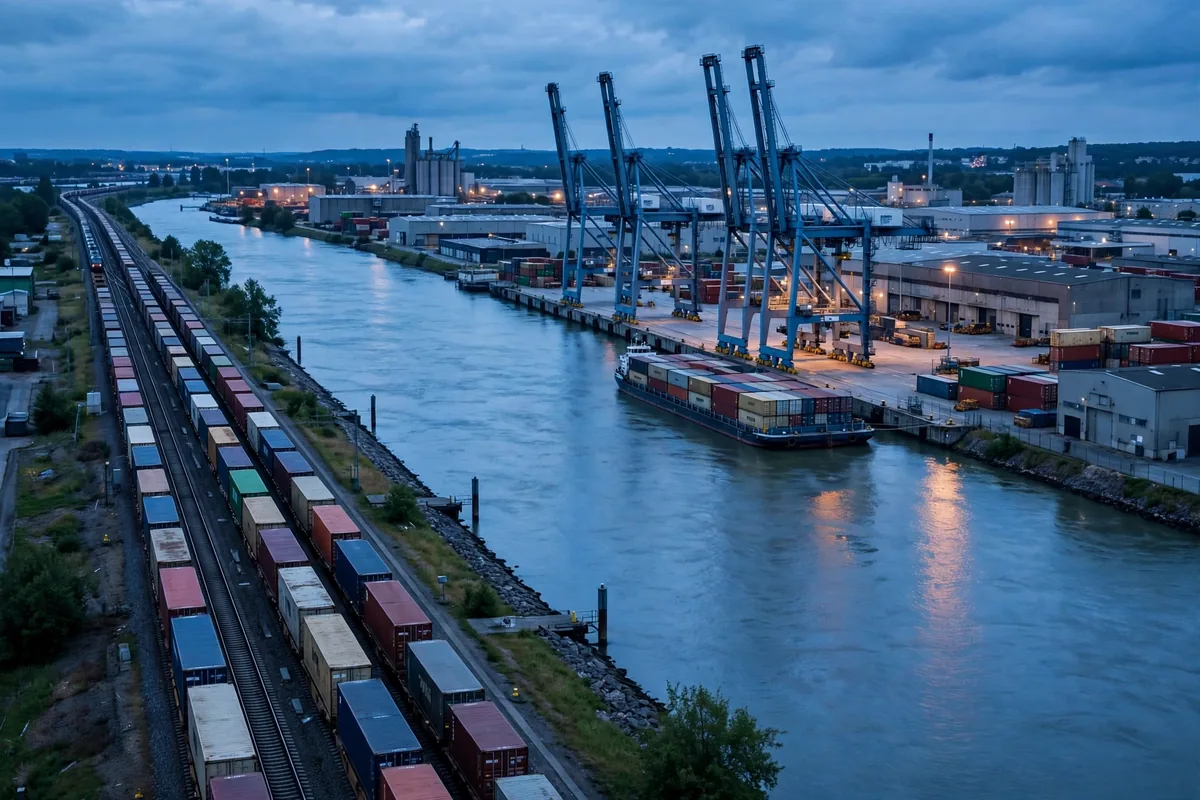
A China-Europe freight train leaves Xi'an and rolls into Duisburg, Germany, roughly two weeks later, after crossing Kazakhstan, Russia, Belarus, and Poland. Many shippers assume that once the cargo reaches Duisburg, the European leg is essentially done. The reality is the opposite: arrival is only the first half. The real cost and the real transit time are decided by what happens after the train stops — the warehousing, the customs treatment, and the onward distribution.
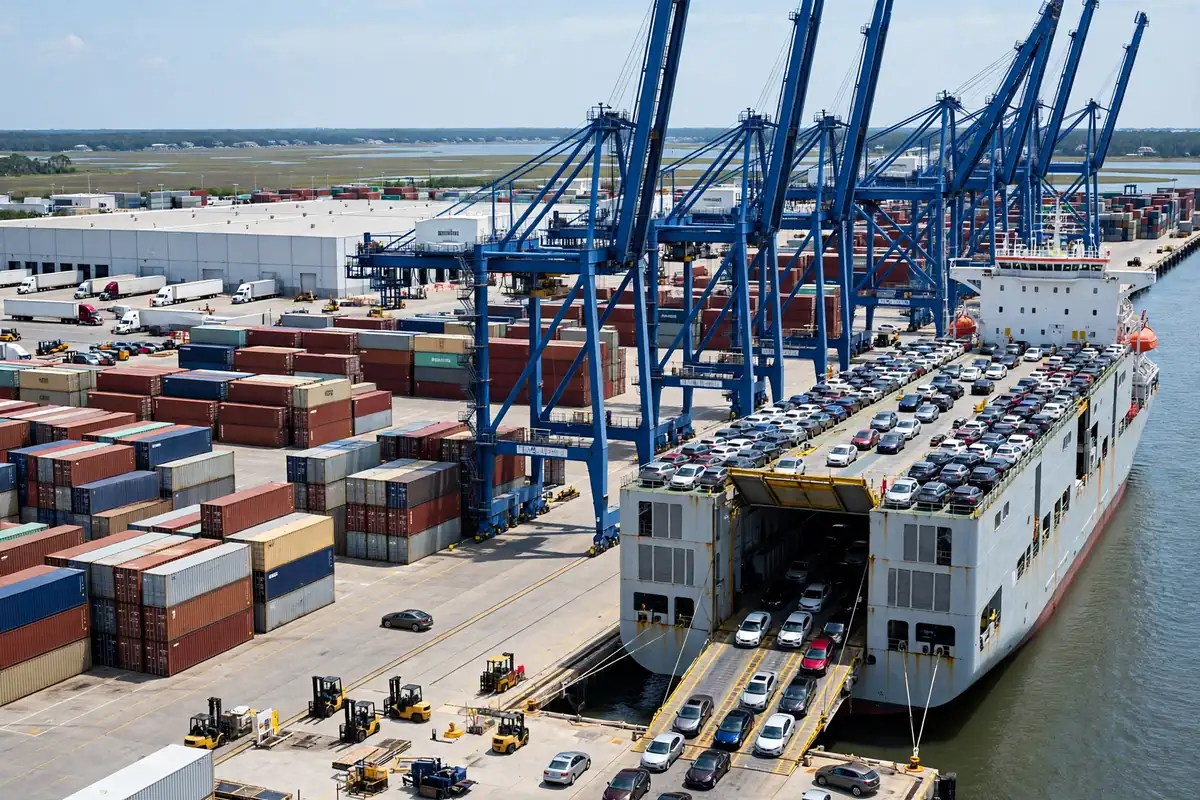
Duisburg's hub status rests, first, on numbers. The port area covers about 10 square kilometres with 21 public harbour basins — Europe's largest inland port. Duisburg handles roughly 30% of all China-Europe rail freight and about 80% of China-Germany rail traffic. In 2025, China-Europe trains ran more than 20,000 trips in a year, and cumulative trips passed 140,000 by October 2026; the port handles around 4.0 million TEU a year. Together they point to one conclusion: Duisburg is not the terminus of a single line, but the European anchor of a rail network reaching 237 cities in 26 countries.
Where Duisburg's Hub Status Comes From: Geography, Port Scale, and Sustained Investment
Duisburg's hub status was not planned into existence. It is the product of three layers stacking on top of each other. The first is geography. Duisburg sits at the confluence of the Rhine and the Ruhr, which makes it both an inland port and a rail hub. Down the Rhine, barges run directly to Rotterdam and Antwerp, giving Duisburg a dual identity as a land port and a river port at the same time.
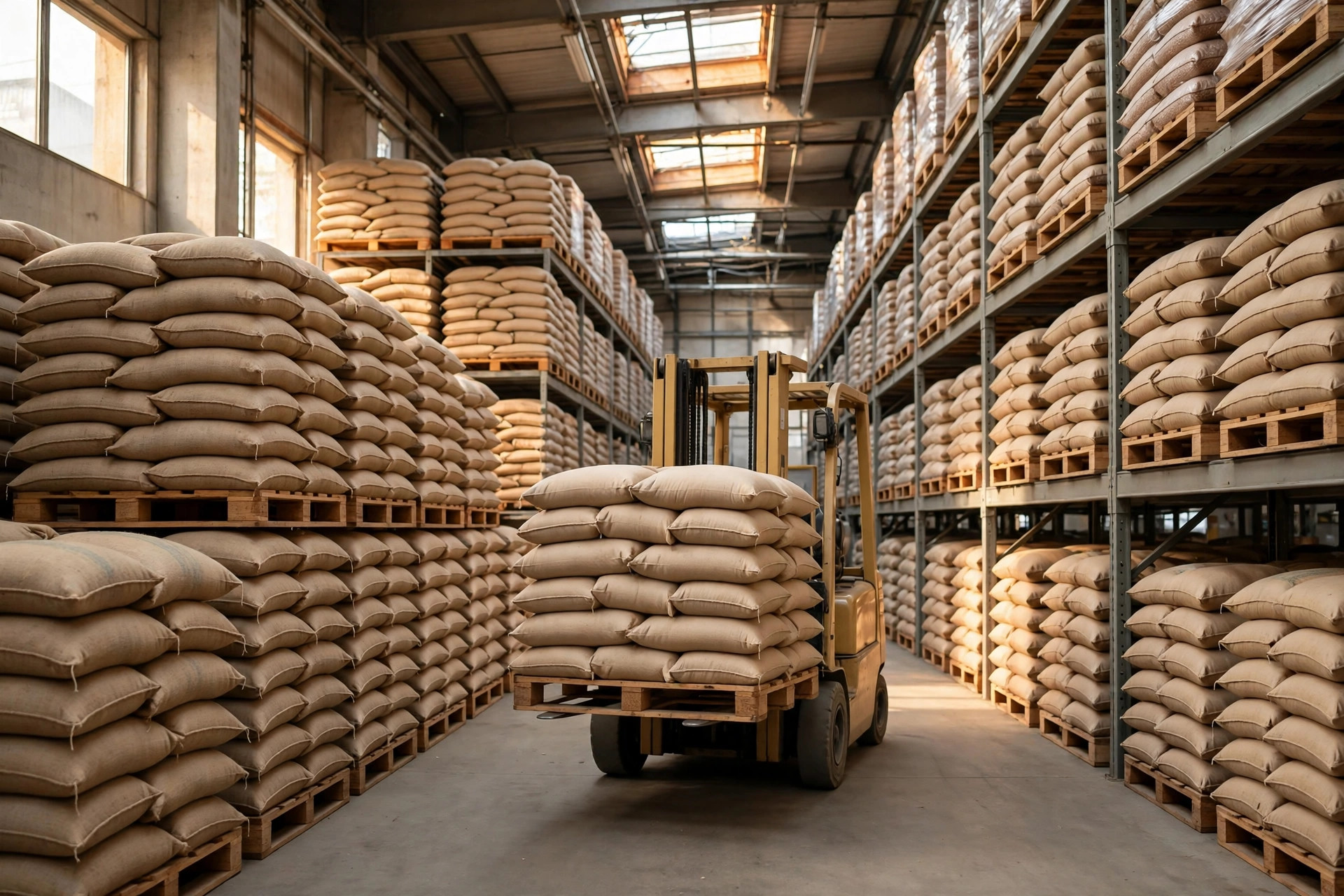
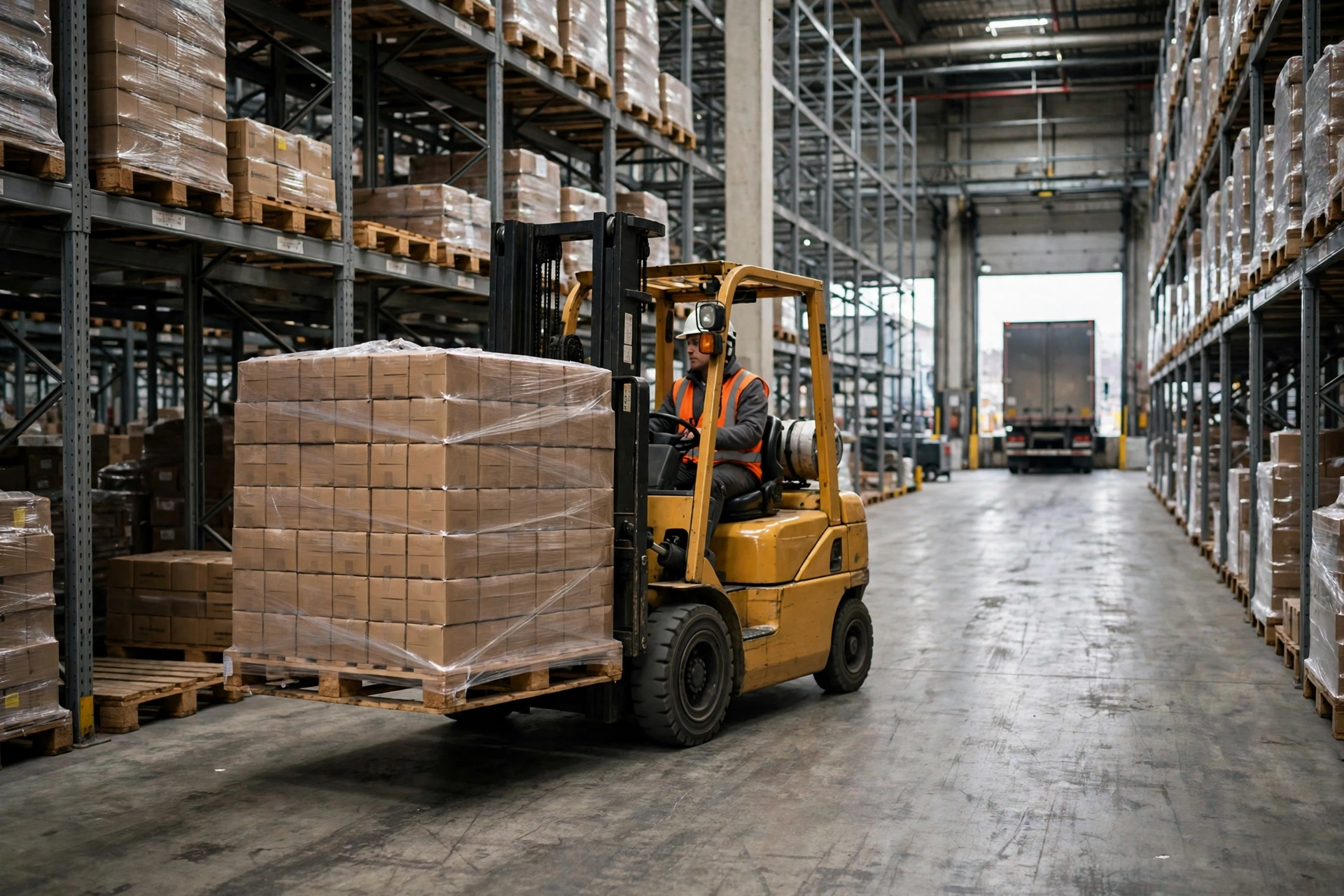
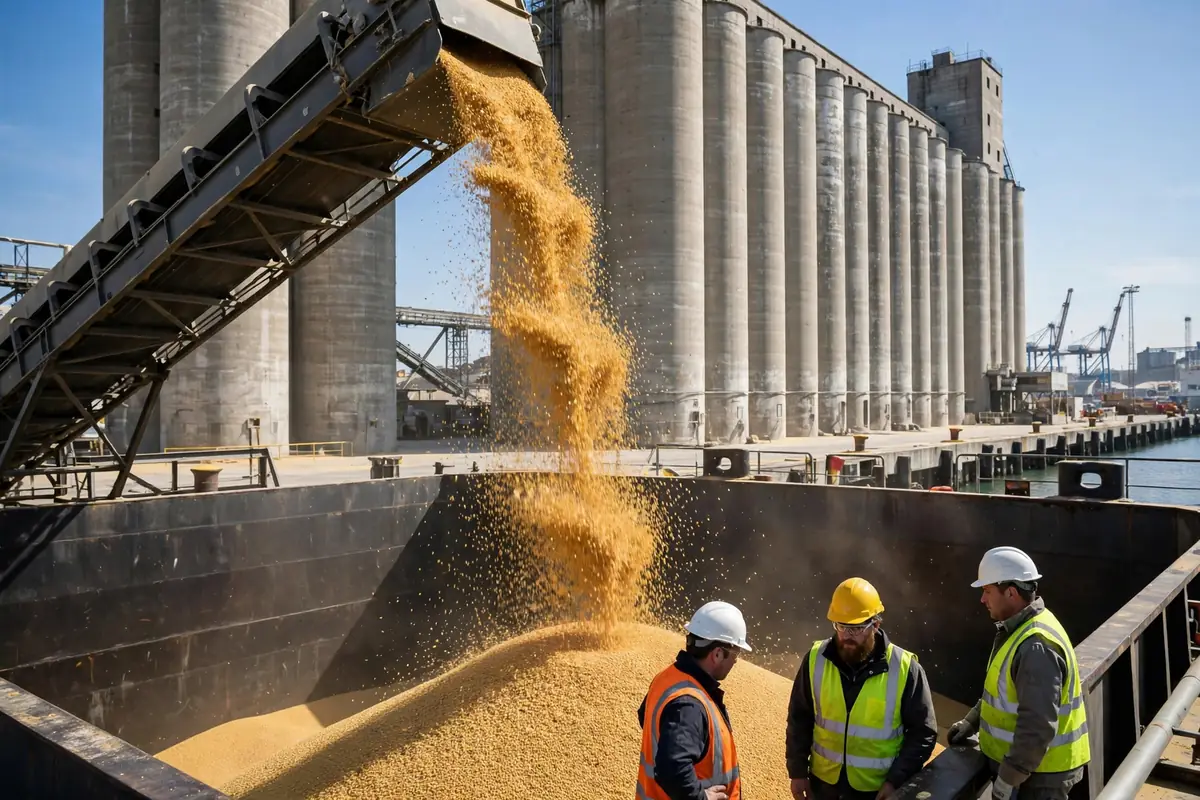
The second layer is the port itself: warehousing, bonded storage, rail sidings, and container yards concentrated in one port area. Cargo comes off the train and can move into a warehouse, clear customs, and be broken down without ever leaving the port zone — the sharpest difference between Duisburg and an ordinary rail terminus.
The third layer is policy and capital, applied continuously. The Duisburg Gateway Terminal (DGT), now being built, is the largest container terminal in the European hinterland: about 240,000 square metres, up to 100 trains a week at full build-out, an investment of roughly 100 million euros, with COSCO Shipping holding about 30% at the project's launch. Its design target is revealing: 40% of onward transport by rail, 40% by barge, only 20% by truck — a hub announcing its shift from road distribution centre to intermodal rail-barge centre.
After Arrival in Duisburg: Three Warehousing Routes
From the shipper's point of view, cargo arriving in Duisburg generally takes one of three routes, and the choice depends on where the goods are ultimately going and how fast they sell.
The first route is direct dispatch from port warehousing: goods unloaded, broken down, sorted, and labelled inside the port area, then trucked to customers in Germany and neighbouring countries. It suits mid-value cargo with concentrated destinations and fast turnover — home appliances and auto parts for German distributors, for example. Fewest links in the chain, but port warehousing is not cheap: every extra week adds rent and handling to the bill.
The second route is bonded warehousing, deferring import duty and VAT until goods leave the warehouse. It suits seasonal cargo: Christmas toys and home goods can travel by rail two months early, sit in bonded storage, and clear customs in batches as retail orders arrive — securing the selling window without tying up duty cash in advance. The value is not in the storage fee. It is in the cash flow.
The third route is the distribution-centre model: Duisburg as the European master warehouse, cargo split by country and moved on by truck to Germany, by rail or barge to France, Poland, and the Czech Republic. One master stock pool covering several national markets, with lower stock-out and overstock risk than separate warehouses in each country.
None is better in the abstract. The cost of choosing wrong shows up in inventory, not freight: a shipment sitting in a port warehouse for two months eats its rail-versus-ocean time saving in rent and capital cost several times over.
A Shipper's View: A Ningbo Home-Goods Exporter Counts Its Peak Season
Before the 2025 peak season, a home-goods exporter in Ningbo worked through its numbers. Its goods ship to European retail chains in a narrow window, September to November, and the Christmas shelf dates are fixed. Arrive a week late, and the shelf space goes to someone else.
Their solution combined rail with a bonded warehouse. Trains left in late July, arrived in Duisburg in about two weeks, and the cargo went into bonded storage; from September it cleared customs and moved to regional warehouses in Germany, France, and Poland in step with retail orders. The full rail journey takes about 12 to 20 days — roughly half the ocean transit time, at a fraction of air freight cost. The decisive factor was predictability: a train's arrival can be planned to the day, an ocean vessel's only to the week.
The same plan included a barge leg: cargo for the Netherlands and Belgium moved down the Rhine to Rotterdam instead of by truck. The barge is a day or two slower, but one barge carries hundreds of TEU, the cost per box is low, and emissions are lower. For replenishment cargo that is not time-critical, the barge is a cheap option only an inland port can offer.
The broader point: Duisburg's arithmetic is not a freight calculation, it is an inventory calculation. The rail service's real value is not the days saved against ocean freight, but arrival times predictable enough to cut safety stock and treat a bonded warehouse as a forward stocking point for Europe.
Rail, Ocean, and Air: The Comparison That Matters
Put the three modes side by side, and the comparison should cover more than freight rate and transit time. Reliability and cargo fit belong in the table too.
| Mode | Door-to-door transit | Cost level | Reliability | Best fit | | China-Europe rail via Duisburg | About 12–20 days | Between ocean and air | High — arrival plannable to the day | Mid- to high-value, seasonal cargo with tight order windows | | Ocean to Rotterdam / Hamburg | Around 30 days | Lowest | Medium — port congestion and schedule swings | Bulk, low-value cargo insensitive to transit time | | Air to Frankfurt / Liège | About 3–7 days | Highest | High, but exposed to capacity and security screening | High-value, urgent, small-batch shipments |
The ocean row is the most often misread: its per-box freight is the lowest, but the hidden cost of its uncertainty — safety stock, lost sales from stock-outs, emergency air freight in peak season — routinely exceeds the freight gap between ocean and rail. Choosing rail or ocean is not a freight-rate decision. It is a total supply-chain cost decision.
The counterintuitive judgment: the train's value is not speed. The significance of the China-Europe rail service for Duisburg is not that it is faster than ocean freight. It is that it turns an inland European location into a plannable node.
Ocean freight works on a "deal with it on arrival" logic: cargo reaches Rotterdam, and inland distribution is arranged afterward, with port congestion, barge scheduling, and trucking capacity each able to slip. Rail works on an "arrive and enter the warehouse" logic: cargo reaches Duisburg, where warehousing, bonded storage, and the distribution network sit at one node, so plans can be set weeks ahead and variability is contained inside the terminal.
The other side is risk: the more concentrated the hub, the heavier the single-point dependence. Duisburg handles about 30% of China-Europe rail freight, so route disruption, border congestion, or geopolitical friction hits hardest where the volume is. The answer is not to abandon Duisburg, but to keep a fallback — some cargo via Malaszewicze into Poland, some by ocean to Rotterdam — with Duisburg primary and an alternative available when things go wrong.
Looking ahead, two trends are worth watching. First, new terminals like the DGT will push Duisburg's rail-barge share higher still, and barge frequency to Rotterdam and Antwerp may become a new point of competition. Second, the network itself is widening: in the first nine months of 2026, the southern corridor's train count more than doubled year on year. Duisburg's role as anchor will grow heavier — and it will also share volume with more hubs.
For shippers, the question comes back to an open one: as the train behaves more like a scheduled liner service, should the European warehouse network move with it — shifting the master warehouse from the coastal ports toward the inland hub, and safety stock from a monthly buffer to a weekly cycle? Different product categories and company sizes will answer differently. The warehouse arithmetic of Duisburg is where that calculation starts.
By Dr. Chen, Supply Chain Researcher